
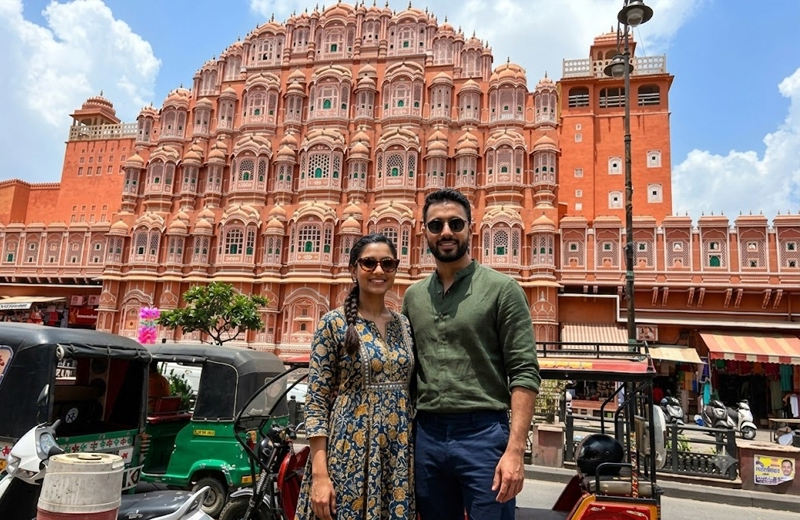
Can You Visit the Golden Triangle Without a Tour Guide?
Yes, you can visit Delhi, Agra and Jaipur without a tour guide. You do not need a guide to enter the Taj Mahal, Agra Fort, Amber Fort or the main monuments in Delhi. You can arrange your own hotels, train tickets, local transport and sightseeing.
The route is manageable, but independent travel takes more preparation than a guided package. You need to understand train bookings, station transfers, monument timings, local transport and common tourist-area hassles before you arrive.
A guide does not give you special access to the Golden Triangle. A good guide gives you context, saves time and helps you understand what you are seeing. Whether that is worth paying for depends on your experience, available time and travel style.
This guide explains what self-guided travel really looks like, who it suits, what it costs and where a private driver or local guide can still make sense.
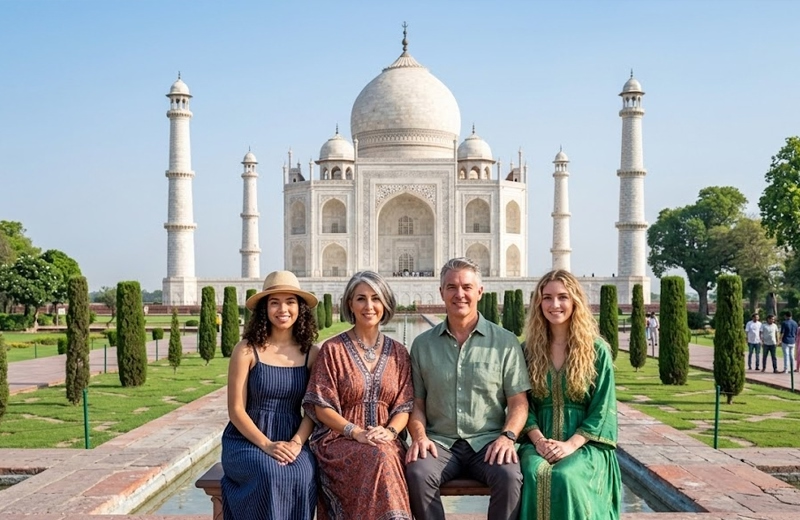
Quick Answer
Can You Do the Golden Triangle Independently?
Yes. Independent travel works best when you have six or seven days, book key journeys in advance and are comfortable handling local transport and basic travel decisions yourself.
Best for experienced planners
Fully Self-Guided
Usually Best For
- Budget-conscious travellers
- People who enjoy trip planning
- Travellers with flexible schedules
- Those comfortable solving small problems
Best middle ground
Private Driver, Local Guides as Needed
Usually Best For
- First-time visitors who want flexibility
- Couples and families
- Travellers with limited time
- People who want easier luggage handling
Understand the Service
What Does a Tour Guide Actually Add?
A guide does not replace your ticket and does not control whether you can enter a monument. Their value comes from explanation, organisation and local knowledge.
Historical Context
A knowledgeable guide connects buildings, rulers, architecture and events. This can make Agra Fort, the Taj Mahal and Amber Fort much more meaningful.
Efficient Sightseeing
A local guide knows practical entrance points, walking routes, suitable visit order and how long each part usually takes.
Communication Help
Guides can assist with simple conversations, local customs and practical questions during the sightseeing period.
Photography Assistance
Good guides know common viewpoints and may help couples, families and solo travellers take photos together.
A Driver and Guide Are Different
A driver handles the vehicle and road journey. A licensed local guide normally joins you inside monuments and explains the destination. Confirm which service your quotation includes.
Honest Comparison
Pros and Cons of Visiting Without a Guide
Advantages
- You control your pace
- You can skip places that do not interest you
- You avoid guide fees
- You can change plans more easily
- You may feel more connected to the everyday journey
Drawbacks
- You must research transport and tickets
- You may miss important historical context
- Station transfers can take time
- Tourist-area touts may approach you
- A rushed itinerary becomes harder to manage
Travel Style
Who Can Manage the Golden Triangle Without a Guide?
Independent Travel Usually Works Well If
- You enjoy researching routes and tickets.
- You have travelled independently before.
- You can handle a delayed train or changed plan calmly.
- You have at least six days for Delhi, Agra and Jaipur.
- You are comfortable using maps, ride-hailing apps and public transport.
- You do not mind asking hotel staff or station officials for help.
You May Prefer Some Guided Help If
- This is your first visit to India and you have limited time.
- You are travelling with young children or older relatives.
- You want detailed history instead of only seeing the buildings.
- You dislike negotiating transport or checking several bookings.
- You are arriving late at night or leaving on a tight flight connection.
- You want a smoother experience with fewer daily decisions.
Getting Around
How to Travel Between Delhi, Agra and Jaipur on Your Own
The route can be completed by train, bus or private car. Flights are usually unnecessary because the cities are close enough for rail and road travel.
| Transport | Best For | Main Advantage | Main Drawback |
|---|---|---|---|
| Train | Solo travellers and couples | Fast and usually affordable | Requires station transfers and advance booking |
| Bus | Travellers on the lowest budget | Low fares and several route options | Longer journey and less comfort |
| Private car | Couples, families and small groups | Door-to-door convenience | Higher cost than public transport |
| Mixed transport | Travellers balancing price and comfort | Use trains where they work best and a car where it saves time | More separate bookings |
Delhi to Agra
Fast trains make this the simplest rail journey on the route. Book through the official Indian Railways ticketing system and check the departure station carefully because Delhi has several major railway stations.
Agra to Jaipur
Train and bus options are available, but a road transfer is useful if you want to visit Fatehpur Sikri between the two cities. Confirm whether your vehicle and luggage can wait during the visit.
Jaipur to Delhi
Train and road travel are both practical. Allow a generous buffer before an international flight because road traffic and railway delays can affect arrival time.
Use Official Booking Channels
IRCTC is the official Indian Railways online ticketing portal, including a foreign tourist booking facility. Book popular journeys early when your dates are fixed.
What It Feels Like on the Ground
Delhi, Agra and Jaipur Without a Guide
Delhi Without a Guide
Delhi has the best public transport of the three cities. The metro is useful for many areas, and app-based taxis can cover places that are not close to a station.
Old Delhi takes more patience. Chandni Chowk, Jama Masjid and the surrounding lanes are crowded and easy to misread on a map. That does not make them unsafe by default, but you should keep valuables secure and avoid accepting unsolicited “special tour” offers.
Agra Without a Guide
The Taj Mahal and Agra Fort are straightforward to visit independently when you have official tickets and know the correct entrance. The main challenge is dealing with unofficial guides, transport offers and sales pitches near tourist areas.
The Taj Mahal does not require a guide. You can enter independently and explore at your own pace. A licensed guide is useful when you want a deeper explanation of the site’s design, symbolism and history.
Jaipur Without a Guide
Jaipur requires more local transport because Amber Fort is outside the central old city. City Palace, Jantar Mantar and Hawa Mahal are closer together, so parts of the day can be explored on foot.
Hiring a car or auto-rickshaw for several attractions may be easier than booking every ride separately. Agree on the route, waiting time and final price before starting.
The Practical Middle Option
Private Driver Without a Full-Time Guide
A private driver can remove the most tiring part of independent travel without turning the trip into a fixed guided package.
The vehicle collects you from each hotel, carries your luggage between cities and waits during sightseeing. You can enter monuments alone and add local guides only where you want them.
What the Driver Handles
- Hotel and airport transfers
- Travel between the three cities
- Luggage during road journeys
- Agreed sightseeing transfers
- Stops included in the route
What You Still Handle
- Monument tickets
- Historical information
- Hotel bookings unless packaged
- Meals and personal expenses
- Local guides unless added
Read our Delhi Agra Jaipur private-driver cost guide before comparing quotations.
Budget Comparison
Does Travelling Without a Guide Save Money?
Yes, but the saving depends on what you replace the guide with. A train-based self-guided trip can cost much less than a complete private package. A private driver without guides may cost only slightly less than a private guided tour because the vehicle and hotels remain the largest expenses.
| Travel Style | Typical Cost Level | Planning Required | Best For |
|---|---|---|---|
| Fully independent | Lowest | High | Experienced and budget-focused travellers |
| Independent with private driver | Moderate | Medium | Couples and families wanting convenience |
| Private driver with selected guides | Moderate to high | Low to medium | First-time visitors wanting flexibility and context |
| Complete guided private tour | Higher | Low | Travellers who want full support |
For a detailed budget comparison, read how much a 7-day Golden Triangle tour costs and the cheapest way to do the Golden Triangle.
Suggested Route
A Practical 7-Day Self-Guided Golden Triangle Itinerary
Day 1
Arrive in Delhi
Use the Airport Express, a pre-booked transfer or an app-based taxi according to your arrival time. Keep the first day light.
Day 2
Old and New Delhi
Combine Old Delhi with selected New Delhi attractions. Avoid trying to cover every monument in one day.
Day 3
Train or Drive to Agra
Check into your hotel, visit Agra Fort and consider a Yamuna-side Taj Mahal viewpoint around sunset.
Day 4
Taj Mahal and Travel to Jaipur
Visit the Taj Mahal early, return for breakfast and continue to Jaipur. Add Fatehpur Sikri if travelling by road and time allows.
Day 5
Amber Fort and Jaipur Highlights
Start with Amber Fort, then visit selected old-city attractions such as City Palace, Jantar Mantar and Hawa Mahal viewpoints.
Day 6
Jaipur at a Slower Pace
Use the second day for markets, museums, local food, craft areas or attractions you skipped on the previous day.
Day 7
Return to Delhi
Take a train or private transfer. Do not plan a tight same-day connection with an international departure.
Six to seven days normally works well for independent travel. See how many days you need for the Golden Triangle before shortening the route.
Official Entry Planning
How to Handle Monument Tickets Without a Guide
- Use official ticket channels. Avoid links sent by unknown sellers or people approaching you outside monuments.
- Check the visit date. Monument opening days and timings can change around maintenance, events or local restrictions.
- Carry accepted identification. Foreign and Indian visitor categories may require different proof.
- Check extra-access tickets. Some areas may require an additional ticket beyond general entry.
- Read prohibited-item rules. Large bags, food, tobacco and certain equipment may be restricted.
- Keep the ticket available. Save a copy offline in case mobile data is weak at the entrance.
Be Careful With Lookalike Ticket Websites
Use official government or monument booking channels. Do not rely on the first advertisement or unofficial booking page that appears in search results.
Travel With Confidence
Is It Safe to Visit the Golden Triangle Without a Guide?
Many travellers complete the route independently. A guide is not a security requirement. Safe travel depends more on reliable transport, sensible accommodation, awareness in crowds and avoiding unofficial offers.
- Use registered taxis, hotel transfers or recognised ride-hailing services.
- Book accommodation with recent reviews and a practical location.
- Keep your passport, cash and cards secure.
- Carry small cash separately from your main wallet.
- Do not give your phone or documents to unsolicited helpers.
- Confirm your train number, station and platform independently.
- Save hotel addresses and important contacts offline.
- Share your itinerary with someone you trust.
- Drink safe water and choose freshly cooked food.
Women travelling independently may find our women-friendly Golden Triangle guide useful.
Avoid These Problems
Common Mistakes Independent Travellers Make
- Booking trains too late: preferred seats and timings may no longer be available.
- Choosing the wrong Delhi station: several major stations serve different trains.
- Accepting unofficial help: some people direct visitors toward shops, agents or unnecessary services.
- Planning too many sights: traffic, security checks and walking take more time than expected.
- Leaving no flight buffer: a delayed road or rail journey can create a missed connection.
- Ignoring monument closure days: always verify current opening information before travel.
- Booking a remote cheap hotel: daily transport can remove the saving.
- Confusing a driver with a guide: confirm services before assuming historical explanations are included.
Independent Travel Essentials
What to Carry
Daily Sightseeing
- Comfortable walking shoes
- Modest, lightweight clothing
- Refillable or sealed safe water
- Sun protection
- Small secure day bag
Travel Organisation
- Offline maps
- Portable phone charger
- Digital and printed booking copies
- Passport and visa copies
- Hotel addresses in writing
Related Planning Guides
Useful Guides for Independent Golden Triangle Travel
Want Independence Without Transport Stress?
Get a Flexible Driver-Only or Guided Golden Triangle Plan
Tell us your dates, group size and how independently you want to travel. We can compare trains, a private driver and selected local guides without adding services you do not need.
- Driver-only and guided options
- Flexible Delhi, Agra and Jaipur route
- Clear inclusions and exclusions
- Hotel and transport choices for your budget
Common Questions
Frequently Asked Questions About Visiting Without a Guide
Open any question below for a direct answer. Confirm current train schedules, monument rules and ticket details shortly before travelling.
Can you visit the Golden Triangle without a tour guide?
Yes. You can independently book hotels, trains, local transport and monument tickets in Delhi, Agra and Jaipur.
Do I need a guide to enter the Taj Mahal?
No. A guide is not required for entry. You need a valid ticket and must follow the current visitor rules.
Is the Golden Triangle safe without a guide?
Many travellers complete the route independently. Use reliable transport, secure your valuables and avoid unsolicited offers around stations and monuments.
Can a first-time visitor to India manage the route alone?
Yes, but careful planning helps. Allow enough time, book important journeys early and consider a driver or local guide for the parts that feel difficult.
How many days are needed for a self-guided Golden Triangle trip?
Six to seven days normally provides enough time for Delhi, Agra and Jaipur without making every transfer and sightseeing day feel rushed.
Is public transport good enough for the Golden Triangle?
Trains work well between the cities, while Delhi Metro and app-based taxis help with local travel. Jaipur and Agra may require more road transport.
Is a private driver a good alternative to a guide?
Yes. A private driver handles transport and luggage while allowing you to explore monuments independently. Add local guides only where you want historical context.
Does travelling without a guide save money?
It can, especially when you use trains and public transport. Hotel and vehicle costs may still form the largest part of the total budget.
Can I hire a guide for only the Taj Mahal?
Yes. Many travellers hire a licensed local guide in Agra and explore Delhi and Jaipur independently.
Should I book train tickets in advance?
Yes, especially for popular routes, preferred classes, winter travel and holiday dates. Use the official Indian Railways booking system.
Do I need to speak Hindi?
No. English is commonly used in hotels, ticket offices and tourist services, though a few basic Hindi phrases can still be helpful.
What is the hardest part of independent travel?
For many visitors, the hardest parts are station transfers, transport negotiation, identifying official services and keeping the itinerary realistic.
Final Advice
You Can Travel Independently, but You Do Not Have to Do Everything Alone
The Golden Triangle is one of India’s most manageable first-time routes. Delhi, Agra and Jaipur are well connected, accommodation is widely available and the main attractions can be entered without a guide.
The real trade-off is between money, time and effort. A fully independent trip usually costs less, but you spend more time researching and coordinating. A guide or private driver costs more, but can remove confusion and help you use limited days more effectively.
A flexible approach often works best. Book your own hotels and tickets, use a private driver for difficult transfers, and hire a licensed local guide only at the places where the history matters most to you.