
Abhaneri Festival 2026: 12–13 October Dates, Chand Baori, Tickets, Jaipur Taxi & Complete Travel Guide
Abhaneri Festival 2026 is listed for Monday, 12 October and Tuesday, 13 October 2026, in Abhaneri village, Dausa district, Rajasthan. The two-day cultural festival is built around Chand Baori, the village’s famous 9th-century stepwell, and brings Rajasthani folk dance, music, puppetry, handicrafts and rural food culture to a setting most visitors would otherwise only see as a quick photo stop.
Abhaneri sits conveniently between Jaipur and Agra, which is exactly why so many travellers ask about it: it works as a standalone day trip from Jaipur, and it works even better as a cultural stop on the Jaipur–Fatehpur Sikri–Agra road route. Rajasthan Tourism lists Chand Baori as roughly 88 km from Jaipur, though several independent measurements put the figure anywhere between 87 and 95 km depending on the exact route and starting point.
This guide sets out what is actually confirmed about the 2026 festival, what is typical based on how the event has run in previous years, and what you need to know to plan the journey itself — Jaipur distance and travel time, taxi costs, the RTDC bus option, Chand Baori’s own entry and timing details, food, weather, photography etiquette, and full itineraries for both a Jaipur day trip and a Jaipur–Agra road journey.
Quick Answer
When Is Abhaneri Festival 2026?
The current Rajasthan Tourism fairs-and-festivals calendar lists Abhaneri Festival 2026 on 12 and 13 October 2026. The festival is organised by the Rajasthan Tourism Department, in coordination with the Dausa district administration, and is held in and around Chand Baori in Abhaneri village. It was first introduced in 2008 to promote rural heritage tourism in Dausa, and it has typically run for two days in September or October each year since.
2026 Festival
12–13 October 2026
- Monday, 12 October 2026
- Tuesday, 13 October 2026
- Duration: Two days
- Venue: Abhaneri, Dausa district
- Main landmark: Chand Baori
- Organiser: Rajasthan Tourism Department
Best For Visitors
Culture + Chand Baori
- Rajasthani folk dance and music
- Chand Baori sightseeing
- Harshat Mata Temple
- Craft bazaar and puppet shows
- Traditional Rajasthani food
- Jaipur–Agra road travellers
Festival Overview
What Is Abhaneri Festival?
Abhaneri Festival is a two-day heritage and folk-culture event held in Abhaneri, a village in Dausa district roughly midway between Jaipur and Agra. Rajasthan Tourism started it in 2008 specifically to draw visitors into rural Dausa rather than leaving Abhaneri as a five-minute photo stop on the way to somewhere else. The festival’s centrepiece is Chand Baori itself: performances are staged in and around the stepwell, so the backdrop for the dancing is a 1,200-year-old geometric stairway rather than a generic festival stage.
What makes it different from a big city event like Jaipur’s Elephant Festival or the Pushkar Camel Fair is scale. Abhaneri is a small agricultural village, so the festival keeps a village-fair character — craft stalls, camel-cart rides, street performances and food alongside the formal dance programme — rather than large staged concerts.
| Abhaneri Festival Information | Details |
|---|---|
| Festival | Abhaneri Festival 2026 (Abhaneri Mahotsav) |
| Dates | 12–13 October 2026 |
| Duration | 2 days |
| Venue | Abhaneri village, Dausa district, Rajasthan |
| Main Heritage Site | Chand Baori |
| Nearby Temple | Harshat Mata Temple |
| Organiser | Rajasthan Tourism Department, with Dausa district administration |
| First Held | 2008 |
| Distance from Jaipur | Approx. 88 km (Rajasthan Tourism figure; some sources give 87–95 km) |
| Nearest Railhead | Bandikui Junction, roughly 8–10 km away |
| Nearest Airport | Jaipur International Airport, roughly 90 km away |
| Best For | Culture, heritage architecture, photography, families and Golden Triangle travellers |
2026 Dates
What Are the Abhaneri Festival 2026 Dates?
Rajasthan Tourism’s official fairs-and-festivals calendar lists Abhaneri Festival 2026 on Monday, 12 October, and Tuesday, 13 October 2026. This is corroborated by the department’s own current festival page, which uses the same two-day window.
| Date | Day | Plan |
|---|---|---|
| 12 October 2026 | Monday | Festival Day 1 |
| 13 October 2026 | Tuesday | Festival Day 2 |
It’s worth knowing that Abhaneri Festival has not always fallen on the exact same dates from year to year — Rajasthan Tourism’s multi-year festival calendar shows it moving between late September and mid-October depending on the year, which is normal for a state-run cultural calendar built around the wider festival season. Some older travel articles online still quote dates from 2022–2024, so lean on the current calendar rather than an older post that happens to rank well in search results.
Best Booking Advice
Plan around 12–13 October 2026 for now, but reconfirm with Rajasthan Tourism (or a local Dausa/Jaipur contact) closer to your travel date if you’re locking in a non-refundable hotel, train ticket or private vehicle specifically for the festival days.
Background
Why Does Abhaneri Hold This Festival?
Abhaneri’s stepwell has quietly worked as an unofficial tourist magnet for years, partly because of its striking geometry and partly because it has appeared in a handful of well-known films, including Bhool Bhulaiyaa, Bhoomi, The Fall, The Best Exotic Marigold Hotel and The Dark Knight Rises. Rajasthan Tourism’s festival was designed to convert that curiosity into an actual overnight or full-day visit, rather than a ten-minute stop on a highway drive to Agra.
The event also gives Rajasthan’s rural performing artists — Kalbeliya dancers, Kachhi Ghodi troupes, puppeteers, folk musicians — a paid platform outside the bigger city festivals, and it gives local artisans a direct sales opportunity through the craft bazaar. For Dausa district, which doesn’t otherwise see much tourist footfall compared with Jaipur or Jodhpur, the festival is a genuine, if modest, economic event.
Festival Timings
What Time Does Abhaneri Festival Start?
A detailed, hour-by-hour 2026 programme has not been published on the main official listing at the time of writing. Based on how the festival has typically run in past years, the daily programme runs roughly from mid-morning to early evening, commonly cited as around 10:00 AM to 5:00 PM, with performances, the craft bazaar and camel-cart rides spread across that window rather than concentrated at one fixed hour.
Because the exact 2026 schedule wasn’t confirmed at the time of writing, treat any specific performance time you read as indicative rather than guaranteed, and build in a flexible morning-to-afternoon visit rather than timing your arrival to a single act.
Recommended Arrival
- Leave Jaipur around 7:00–8:00 AM
- Reach Abhaneri by mid-morning, before the site gets busy
- Visit Chand Baori first, while the light and temperature are both easier
- Check the day’s live festival programme on arrival
- Keep the late morning through afternoon free for performances and the craft bazaar
Festival Admission
What Is the Abhaneri Festival 2026 Ticket Price?
No separate paid admission ticket for the Abhaneri Festival itself is currently published on the main official event listing. Rajasthan’s district-level folk festivals of this type are typically free to attend, with the festival funded through the tourism department and district administration rather than gate tickets — but don’t assume this carries over automatically to every year, and don’t assume it covers monument entry.
Treat festival admission, Chand Baori’s own entry arrangements, any optional guided tour, and your Jaipur transport as four separate costs when budgeting your trip.
| Cost | 2026 Planning Status |
|---|---|
| Abhaneri Festival Admission | No separate paid ticket currently published; treat as free unless told otherwise on arrival |
| Chand Baori Entry | Reports vary — confirm the current rate at the site (see next section) |
| Guided Tour | Optional, arranged locally or through a tour operator |
| Food & Shopping | Personal expense |
| Jaipur Transport | Separate — see taxi and RTDC sections below |
Monument Entry
Chand Baori Entry Fee and Timings
Don’t assume the festival ticket and Chand Baori’s monument entry are the same thing — they aren’t. Chand Baori is a protected heritage structure with its own visiting arrangements, separate from whatever the festival itself charges (or doesn’t charge).
Published entry-fee information for Chand Baori is genuinely inconsistent across sources at the moment. Some current travel guides describe entry as free for all visitors; others quote a nominal fee, most commonly cited in the range of roughly ₹20–25 for Indian nationals and ₹250–300 for foreign nationals, which would be consistent with typical Archaeological Survey of India (ASI) ticket structures at similar centrally protected monuments. Because ASI ticket pricing is reviewed periodically and different sources appear to have been updated at different times, the safest approach is to treat this as a small, variable amount and confirm it at the ticket counter on the day.
Reported opening hours are similarly close but not identical across sources — most place Chand Baori’s daily visiting window somewhere between 7:30 AM and 6:30 PM, commonly rounded to roughly 8:00 AM–6:00 PM. Harshat Mata Temple, adjoining the stepwell, does not appear to carry a separate entry fee in any source reviewed.
| Detail | What’s typically reported |
|---|---|
| Daily timings | Roughly 7:30/8:00 AM to 6:00/6:30 PM |
| Entry fee (Indian visitors) | Free in some sources; a nominal ~₹20–25 in others |
| Entry fee (foreign visitors) | Free in some sources; roughly ₹250–300 in others |
| Harshat Mata Temple | No separate fee reported |
| Managing authority | Archaeological Survey of India (ASI) |
| Photography | Personal still photography generally allowed; professional/commercial shoots typically need separate ASI permission |
Culture & Activities
What Happens at Abhaneri Festival?
The strongest reason to time a visit around the festival rather than an ordinary day is the concentration of traditional Rajasthani performance styles you can see back-to-back, staged with Chand Baori as the backdrop. Based on how the festival has run historically, expect a mix of the following.
Kalbeliya
Often called the “snake charmer’s dance,” performed by dancers from the Kalbelia community. Recognised for its fast, fluid spins and dark, mirror-worked costumes. UNESCO has recognised Kalbeliya as part of India’s intangible cultural heritage.
Kachhi Ghodi
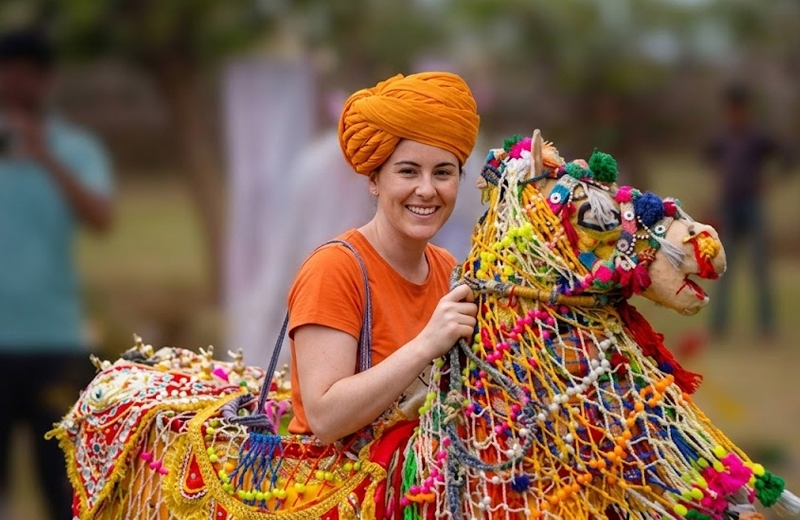
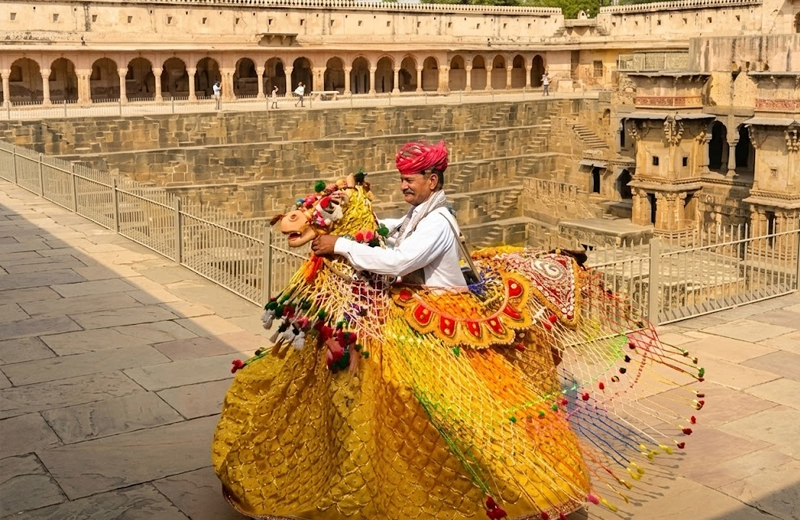
A dummy-horse dance historically associated with the Rajasthan bandit and warrior tradition. Dancers wear decorated fake horses around their waists and often mime sword fights while musicians narrate stories of valour.
Ghoomar
A circular Rajasthani folk dance performed mainly by women in flowing ghagras, built around swirling skirt movement and rhythmic clapping. One of the most recognisable Rajasthani dance forms outside the state.
Bhawai
A balancing dance in which performers dance while carrying stacked pots, or even dance on the rims of glasses or swords, on their heads. It’s one of the more technically demanding folk forms you’ll see at these festivals.
Chakri, Terahtali & Behrupiya
Other folk forms historically associated with the festival, ranging from the spinning Chakri dance to Terahtali’s rhythmic cymbal work and Behrupiya’s costumed street-theatre performances.
Puppetry, Street Theatre & Craft Bazaar
Rajasthani puppet (kathputli) shows, street plays and Raas Leela performances typically run alongside a bazaar of local handicrafts, textiles and jewellery, plus camel-cart rides through the village.
Not every performance style listed above necessarily appears in every edition — line-ups vary year to year — but this is the realistic range of what a two-day Rajasthan folk festival of this size draws on.
Main Attraction
Why Is Chand Baori Famous?
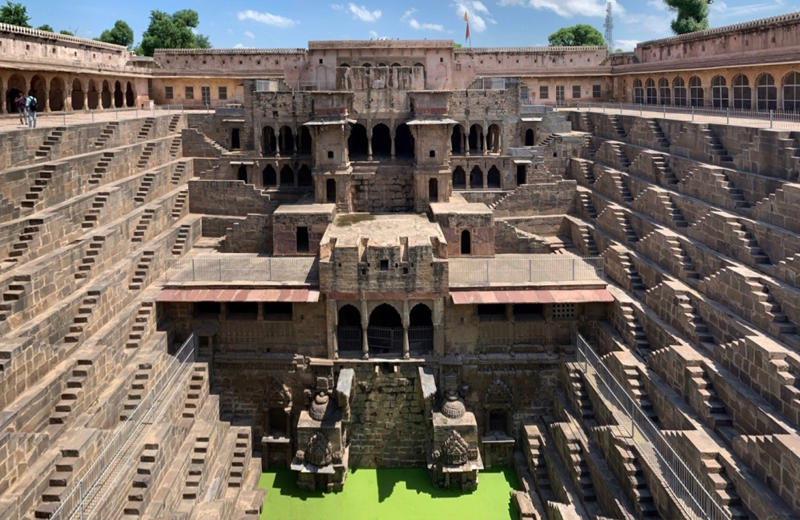
Chand Baori is one of India’s oldest and largest stepwells, built by King Chanda (also referred to as Chand Raja) of the Nikumbha Dynasty, generally dated to the 8th or 9th century CE, with later additions credited to the Gurjara-Pratihara rulers. It predates the Taj Mahal by roughly six centuries. Three of its four sides descend through a dizzying, symmetrical maze of narrow steps — commonly quoted at around 3,500 steps across 13 storeys — while the fourth side houses a multi-level pavilion with carved galleries and jharokha windows, originally used as a cool retreat by royal visitors.
It was built primarily as a water-conservation structure: descending deep enough to reach the water table meant the temperature at the bottom stays noticeably cooler than the surface, which made it functional as well as ornamental in Rajasthan’s dry climate. Visitors are generally not permitted to walk down the stepped sides themselves for safety reasons; viewing is from the surrounding walkways and pavilion level.
Chand Baori Quick Facts
- Located in Abhaneri village, Dausa district
- Roughly 88–95 km from Jaipur depending on route
- Built around the 8th–9th century CE
- Approximately 3,500 symmetrical steps across 13 storeys
- Managed by the Archaeological Survey of India
- Featured in films including Bhool Bhulaiyaa and The Dark Knight Rises
- Famous for light-and-shadow photography, especially in the morning
- Harshat Mata Temple sits directly opposite the stepwell
Nearby Heritage
Should You Visit Harshat Mata Temple?
Yes — it stands directly opposite Chand Baori, and skipping it means missing half of the site’s story. The temple is generally dated to the 9th–10th century and is dedicated to Harshat Mata, worshipped locally as a goddess of joy and happiness. The festival itself is traditionally held partly in her honour.
Dress modestly, remove footwear where indicated, and avoid loud conversation or flash photography inside the shrine area. Because the temple and stepwell sit in the same small complex, allow enough time to see both properly rather than rushing through on the way back to the car.
Planning
How Much Time Should You Allow at Abhaneri?
For an ordinary sightseeing visit, most travellers spend roughly 45 minutes to an hour at Chand Baori and Harshat Mata Temple combined. On festival days, plan for considerably longer — realistically two to four hours if you want to watch performances, browse the craft bazaar, eat, and still see the stepwell without feeling rushed.
If your only goal is the monument and you have no interest in the festival programme, a shorter visit is fine. If you’re specifically travelling out for the festival, treat it as the anchor of your day rather than a quick add-on.
Jaipur Distance
How Far Is Abhaneri Festival from Jaipur?
Rajasthan Tourism’s own figure for Chand Baori is approximately 88 km from Jaipur. Independent sources measuring from different Jaipur starting points quote figures ranging from about 87 km up to roughly 95 km, so treat 88–90 km as a reasonable planning distance and expect your own GPS reading to vary slightly depending on your exact hotel location.
The typical route runs Jaipur → Dausa → Sikandra Mod → Goolar Chauraha → Abhaneri, largely following the Jaipur–Agra highway (NH21) before a short turn-off toward the village.
| Route | Approximate Distance |
|---|---|
| Jaipur city → Chand Baori / Abhaneri | 88 km (Rajasthan Tourism); 87–95 km range across other sources |
| Jaipur hotel → Abhaneri | Varies slightly by pickup location |
| Abhaneri → onward Agra corridor | Continues along NH21, suitable for Golden Triangle road travel |
Travel Time
How Long Does Jaipur to Abhaneri Take by Car?
Plan on roughly 1.5 to 2.5 hours each way, depending on your Jaipur starting point, traffic through the city outskirts, and how busy the highway is on the day. Festival days can add extra time near the village itself because of parking and local traffic control.
Don’t schedule your arrival for the exact minute a performance is meant to start — a 30–45 minute buffer protects your plan against Jaipur’s morning traffic or a slower stretch of road.
Private Car
Is a Jaipur to Abhaneri Taxi the Best Option?
For couples, families, photographers and most international visitors, a private car is the simplest way to attend Abhaneri Festival. Rajasthan Tourism itself notes taxi hire from Jaipur as a standard way to reach Chand Baori, and it remains the most flexible choice on a festival day when public transport schedules won’t necessarily match performance timings.
Why a Private Car Works Well
- Direct Jaipur hotel pickup
- Door-to-door travel with no transfers
- Flexible departure and return time
- Driver can wait on-site during the festival
- Easier with luggage if continuing onward
- Simple to add Harshat Mata Temple
- Can continue directly toward Fatehpur Sikri and Agra
Car Rental Cost
How Much Does a Jaipur to Abhaneri Taxi Cost?
Fares vary by operator, vehicle type, waiting time, and whether you return to Jaipur or continue to Agra. Current listings from Jaipur-based operators and online travel platforms show sedan day trips typically starting from around ₹1,200 one way, with round-trip packages including waiting time from roughly ₹2,200 upward. Guided day tours booked through international platforms (which usually include pickup, fuel, tolls and a driver) tend to run higher — commonly in the $35–$85 per person range depending on vehicle size and whether a guide or monument tickets are included. These figures are market examples rather than fixed or government-regulated rates, so treat them as a starting point for comparison rather than a quote.
| Vehicle / Journey | Indicative Market Level | Best For |
|---|---|---|
| Sedan One Way | From around ₹1,200 | 1–3 passengers |
| Sedan Round Trip | From around ₹2,200 | Jaipur day trip |
| MPV / Ertiga | Higher than sedan | Families / extra luggage |
| Innova / Crysta (SUV) | Higher premium category | 4–6 travellers |
| Tempo Traveller | Usually per-km group pricing | Groups |
| Jaipur → Abhaneri → Agra | Higher than a Jaipur round trip; one-way drop pricing | Golden Triangle travellers |
Confirm These Before Booking
- Total fare, including taxes/GST
- Vehicle model and category
- Fuel, tolls and parking — included or extra
- Driver allowance and waiting-time policy
- Festival-day surcharge, if any
- Jaipur hotel pickup point and time
- Final Jaipur or Agra drop location
- Whether monument entry tickets are included
Government Tourism Option
Is There an RTDC Bus Tour to Abhaneri?
Rajasthan Tourism Development Corporation (RTDC) has historically run a Jaipur → Bhangarh → Abhaneri Baori → Jaipur A.C. day tour, typically timed 9:00 AM to 6:00 PM and previously listed at around ₹700 per person, with monument entry and any camera charges kept separate. RTDC’s exact tour roster and pricing are reviewed periodically, so check current availability and fare directly with RTDC before relying on this option for a specific festival date.
| RTDC Tour Detail | Typical Listing |
|---|---|
| Route | Jaipur → Bhangarh → Abhaneri Baori → Jaipur |
| Timing | 9:00 AM–6:00 PM |
| Historical Fare | Around ₹700 per person (confirm current rate) |
| Monument Entry | Extra |
| Camera / other site charges | Extra where applicable |
This is a reasonable budget option for an ordinary sightseeing day, but it is not built specifically around the festival’s own programme. If you want to linger for a particular performance, or continue toward Agra afterward, a private vehicle gives far more control over timing.
Public Transport
Can You Travel from Jaipur to Abhaneri by Train or Bus?
Yes, but there’s no railway station inside Abhaneri itself, so public transport means combining rail or bus travel with a final short taxi or auto ride.
Train
Bandikui Junction, roughly 8–10 km from Abhaneri, is the closest useful railhead and sees reasonable connectivity from Jaipur. From Bandikui, arrange a local taxi or auto-rickshaw for the final stretch.
Bus
State and private buses running toward Dausa or Sikandra can cut costs, but the final connection to Abhaneri village needs more planning and time than a direct taxi, especially on a festival day when local transport may be busier than usual.
Which Is Best?
| Transport | Cost | Convenience |
|---|---|---|
| Private Car | Higher | Best — door to door, flexible |
| RTDC Tour | Budget-friendly | Good, but fixed programme |
| Train + Taxi | Moderate | Requires connections at Bandikui |
| Public Bus | Lowest | Least flexible, more time needed |
Wider Route Planning
Can You Reach Abhaneri from Delhi or Agra Instead of Jaipur?
Most travellers approach Abhaneri from Jaipur simply because it’s the nearest major hub, but it also works from the other direction. Coming from Agra, Abhaneri sits on the same NH21 corridor used for Jaipur–Agra road journeys, so travellers doing the Golden Triangle in reverse — Agra to Jaipur — can stop at Abhaneri and Fatehpur Sikri on the same drive. Coming directly from Delhi without a Jaipur stopover is a long single day (Delhi to Abhaneri is considerably farther than Jaipur to Abhaneri), so it’s generally more practical as part of a multi-day Delhi–Agra–Jaipur loop rather than a standalone day trip from Delhi.
Arrival
What Should Drivers Know About Parking at Abhaneri Festival?
Festival days bring noticeably more vehicles than an ordinary Chand Baori sightseeing day. Arrive earlier than you would on a routine weekday, and follow whatever local police or tourism department instructions are in place for parking and vehicle movement.
Don’t expect your vehicle to be able to stop directly at the entrance if temporary traffic controls are operating around the village during the festival.
- Save your driver’s phone number before you set off
- Agree on a pickup point before leaving the vehicle
- Photograph the parking spot or note a nearby landmark
- Keep valuables with you rather than in the car
- Allow extra walking time between parking and the festival area
Jaipur Day Trip
Best Jaipur to Abhaneri Festival One-Day Itinerary
| Approximate Time | Suggested Plan |
|---|---|
| 7:00–8:00 AM | Leave Jaipur after breakfast |
| 9:00–10:00 AM | Arrive in Abhaneri |
| Morning | Visit Chand Baori while it’s cooler and less crowded |
| Late Morning | Visit Harshat Mata Temple |
| Midday | Festival programme and cultural activities |
| Lunch | Festival food stalls or a planned local meal |
| Afternoon | Performances, craft bazaar and village experiences |
| Late Afternoon | Depart for Jaipur |
| Evening | Return to Jaipur hotel |
Keep this loose rather than fixed to the minute — the actual festival performance schedule on the day may not match planning-stage timings exactly.
Golden Triangle Route
Can You Visit Abhaneri Festival While Travelling from Jaipur to Agra?
Yes — Abhaneri’s position on the Jaipur–Agra corridor makes it a genuinely efficient stop for Golden Triangle travellers, rather than a detour that adds significant extra distance.
A practical route looks like this:
Jaipur → Abhaneri Festival → Chand Baori → Fatehpur Sikri → Agra
| Stop | Main Experience |
|---|---|
| Jaipur | Start of the road journey |
| Abhaneri | Festival and Rajasthan folk culture |
| Chand Baori | Historic stepwell |
| Harshat Mata Temple | Temple heritage |
| Fatehpur Sikri | Mughal heritage city |
| Agra | Taj Mahal and Agra Fort |
Don’t Overload Festival Day
If you spend several hours enjoying the festival, it’s usually better to skip Fatehpur Sikri that same day rather than rushing both. Arrive in Agra comfortably in the evening and visit the Taj Mahal fresh the following morning.
Read our Jaipur to Agra via Abhaneri travel guide for the full road route, distances and sightseeing plan.
Rajasthani Food
What Can You Eat at Abhaneri Festival?
Food is a genuine part of the appeal, not an afterthought. Rajasthan Tourism’s own festival material highlights regional cuisine as part of the experience, with dishes such as dal baati churma and the sweet, syrup-soaked ghewar commonly associated with the state’s festival food culture.
Foods Travellers May Look For
- Dal Baati Churma
- Ghewar
- Kachori
- Traditional Rajasthani snacks
- Local sweets
- Seasonal festival food stalls
Food Safety Tips
- Choose busy stalls with fast, fresh turnover
- Prefer freshly cooked, hot food over items sitting out
- Stick to sealed bottled water
- Ask about spice levels if you’re sensitive to heat
- Keep some packed snacks in the car for children
- Plan a proper sit-down meal if you’re continuing on to Agra the same day
Accommodation
Where Should You Stay for Abhaneri Festival 2026?
Most travellers don’t need to sleep in Abhaneri itself. Given how close it sits to Jaipur, staying in the city and doing a dedicated day trip, or continuing onward to Agra the same evening, both work well without an overnight stop in the village.
Jaipur
Best overall. Largest choice of hotels, restaurants and private transport, and the easiest base for a day-trip festival visit.
Dausa or Nearby
Best for local access. Worth considering if you specifically want to attend both festival days without a long daily drive.
Agra
Best for Golden Triangle travellers. Attend the festival, then continue east and overnight in Agra for the Taj Mahal the next morning.
Heritage Property
Best for atmosphere. A suitable nearby heritage stay can keep rural Rajasthan part of the experience if you’d rather not return to a city hotel the same night.
October Weather
What Is the Weather Like During Abhaneri Festival in October?
October marks the start of Rajasthan’s more comfortable sightseeing season, though afternoons can still feel warm, particularly early in the month. Daytime temperatures in this part of Rajasthan in mid-October typically sit in a warm-but-manageable range, cooling noticeably by evening.
An early start still pays off even in this season — morning light at Chand Baori is more comfortable to stand and walk in than the middle of a sunny October afternoon.
Practical October Advice
- Start early to avoid the warmest midday hours
- Wear breathable, light-coloured clothing
- Use sunscreen even on a cloudy-looking day
- Carry a hat or cap
- Stay hydrated throughout the day
- Pack a light layer for the cooler evening drive back
Packing List
What Should You Wear to Abhaneri Festival?
- Comfortable, closed walking shoes — the stone areas can be uneven
- Light cotton or breathable clothing
- Modest clothing for the temple visit (shoulders and knees covered)
- Hat or cap
- Sunglasses
- Sunscreen
- Small backpack or day bag
- Phone and a power bank
- Valid photo ID
- Small denomination cash for stalls and monument entry
- Sealed bottled water
- Light layer for the evening
Photography
Is Abhaneri Festival Good for Photography?
Yes — it’s one of the strongest reasons photographers specifically plan around the festival dates rather than an ordinary weekday. Chand Baori’s geometric stairways and the festival’s colourful costumes give you two very different subjects on the same trip: architectural symmetry in the morning light, and portrait and movement photography once performances start.
Best Photography Subjects
- Chand Baori’s stair geometry, especially in morning light
- Light and shadow patterns across the stepwell walls
- Kalbeliya performers mid-spin
- Ghoomar costumes and skirt movement
- Kachhi Ghodi performances
- Handicraft stalls and textiles
- Traditional musicians
- Harshat Mata Temple architectural details
- Village life around the festival grounds
- Festival decorations and the craft bazaar
Ask before taking close-up portraits of individual performers or local residents, and follow any monument or festival photography restrictions posted on site — professional or commercial shoots at Chand Baori typically need separate clearance from the ASI.
Practical Facilities
What Facilities Are Available, and How Accessible Is the Site?
Abhaneri is a rural village, not a purpose-built tourist complex, so facilities are basic compared with a major city monument. Expect small food and drink stalls, particularly during the festival, along with mobile phone coverage that is generally workable but not always fast. Formal restroom facilities are limited outside festival days, so plan around stops in Dausa or on the highway if needed, and use festival-day facilities when they’re set up.
Chand Baori itself is not step-free. The main viewing areas around the stepwell involve walking on uneven stone, and descending into the stepwell is generally restricted for safety rather than being an option at all. Travellers with mobility limitations can still see and appreciate the site from the upper walkways and pavilion level, but should not expect to explore the lower steps.
Family Travel
Is Abhaneri Festival Suitable for Families and Seniors?
Yes — the mix of architecture, dance, music and food makes it an easier day for families than a schedule built purely around historical monuments.
Travelling with Children
- Use a private car for maximum flexibility around nap times and moods
- Carry snacks and water rather than relying entirely on stalls
- Keep children close and supervised near the stepwell’s open edges
- Avoid trying to stand through every single programme item
- Take shade and seating breaks between activities
Travelling with Senior Citizens
- Choose a comfortable, air-conditioned vehicle
- Don’t rush the walking sections around the stepwell
- Arrive before the midday heat builds
- Build in regular sit-down breaks
- Be willing to skip additional stops if the day is becoming tiring
Foreign Visitors
What Should International Tourists Know About Abhaneri Festival?
Abhaneri Festival is particularly useful for international visitors who want Rajasthan culture beyond Jaipur’s main tourist circuit — it’s a genuine village event rather than a performance staged mainly for tourists, even though visitors are welcome.
- Keep your passport or other ID secure and on you
- Travel with a trusted, pre-arranged driver rather than hailing transport locally
- Confirm festival dates shortly before travel, since local scheduling can shift
- Carry Indian rupees in small denominations — card payment is unreliable at village stalls
- Dress modestly and respectfully, especially for the temple
- Ask before photographing people up close
- Stick to sealed drinking water
- Build in extra time for festival-day traffic and parking
- Save your Jaipur or Agra hotel address and phone number offline, since connectivity can be patchy in parts of the village
Avoid These
Common Planning Mistakes to Avoid
- Assuming the 2026 dates or programme are locked months in advance without a final check closer to travel
- Booking a non-refundable train or hotel around a specific performance time that hasn’t actually been confirmed
- Treating the festival ticket and Chand Baori’s monument entry as the same thing
- Arriving at midday in October and underestimating the heat while standing outdoors for performances
- Trying to combine Abhaneri, Fatehpur Sikri and Agra sightseeing all in one tight afternoon
- Relying on public buses for a same-day return without checking last-departure timings
- Not confirming the driver’s pickup point before wandering off into the festival grounds
Nearby Attractions
What Else Can You Combine With Abhaneri?
Beyond Chand Baori and Harshat Mata Temple, a handful of nearby stops are commonly paired with Abhaneri on a longer day trip or road journey:
- Bhangarh Fort — Rajasthan’s well-known “haunted fort,” roughly on the way if approaching via Alwar/Dausa, often combined with Abhaneri on RTDC and private tours
- Fatehpur Sikri — the abandoned Mughal capital, a natural stop between Abhaneri and Agra
- Dausa town — useful for a meal stop or fuel/rest break between Jaipur and Abhaneri
- Bandikui — the nearest railhead, worth knowing if you’re arranging a train-plus-taxi combination
Should You Go?
Is Abhaneri Festival Worth Visiting in 2026?
Yes — especially if your Rajasthan or Golden Triangle dates line up with 12–13 October 2026. It packages three different experiences into one journey: Chand Baori’s architecture, genuine Rajasthani folk culture, and a rural village atmosphere you won’t get from Jaipur’s city monuments.
It’s Particularly Worth Visiting If You:
- Are already based in Jaipur
- Are travelling by road from Jaipur to Agra
- Enjoy traditional Rajasthani dance and music
- Want strong, distinctive photography subjects
- Are travelling as a family looking for variety beyond forts and palaces
- Want an alternative to Jaipur’s standard sightseeing list
- Are specifically interested in folk dance, crafts or rural heritage tourism
Plan Your 12–13 October Trip
Need a Private Jaipur to Abhaneri Festival Car?
Share your festival date, Jaipur pickup location, number of travellers and whether you want to return to Jaipur or continue toward Agra. We can help you plan a comfortable private route around Chand Baori and your wider Golden Triangle itinerary.
- Private air-conditioned vehicle
- Professional driver
- Jaipur hotel pickup
- Abhaneri Festival visit
- Chand Baori sightseeing
- Harshat Mata Temple
- Optional Fatehpur Sikri stop
- Jaipur return or Agra drop
People Also Ask
Frequently Asked Questions About Abhaneri Festival 2026
Direct answers to common questions about dates, tickets, Chand Baori, Jaipur transport and festival planning.
When is Abhaneri Festival 2026?
The current Rajasthan Tourism calendar lists Abhaneri Festival 2026 on Monday, 12 October, and Tuesday, 13 October 2026. Reconfirm nearer your travel date if you’re booking non-refundable arrangements around it.
Where is Abhaneri Festival held?
The festival is held in Abhaneri village, Dausa district, Rajasthan, centred on the heritage setting of Chand Baori.
Who organises Abhaneri Festival?
The Rajasthan Tourism Department organises the festival, in coordination with the Dausa district administration. It was first introduced in 2008.
How many days is Abhaneri Festival?
It’s a two-day cultural event, though in some past years the festival window has extended slightly longer.
How far is Abhaneri from Jaipur?
Rajasthan Tourism states Chand Baori at Abhaneri is approximately 88 km from Jaipur; other sources put the figure between roughly 87 and 95 km depending on the exact route.
How long does Jaipur to Abhaneri take?
Allow roughly 1.5 to 2.5 hours by road, depending on your Jaipur pickup point, traffic and festival-day conditions.
What is the Abhaneri Festival ticket price?
The main current official listing does not publish a separate paid festival admission ticket. This is separate from Chand Baori’s own monument entry, which should be confirmed on-site.
Is there an entry fee for Chand Baori?
Reports vary. Some current sources describe free entry for all visitors, while others quote a nominal fee (commonly cited around ₹20–25 for Indian nationals and ₹250–300 for foreign nationals). Confirm the current rate at the ticket counter when you arrive.
How many steps does Chand Baori have?
Chand Baori is commonly described as having approximately 3,500 symmetrical narrow steps arranged across 13 storeys.
What dances can I see at Abhaneri Festival?
Past festival programmes have featured Kalbeliya, Ghoomar, Kachhi Ghodi, Bhawai and other Rajasthani folk forms, along with puppet shows and street theatre.
Is there an RTDC tour to Abhaneri?
RTDC has historically run a Jaipur–Bhangarh–Abhaneri Baori–Jaipur A.C. bus day tour from around 9:00 AM to 6:00 PM, previously listed near ₹700 per person with monument fees extra. Confirm current availability and pricing directly with RTDC.
How much is a Jaipur to Abhaneri taxi?
Local sedan fares commonly start from around ₹1,200 one way and around ₹2,200 for a round trip with waiting time, though this varies by operator, vehicle and date. Guided day tours booked internationally often cost more once a guide and tickets are included.
Can I visit Abhaneri Festival from Jaipur in one day?
Yes. Abhaneri is close enough to Jaipur for a comfortable full-day festival and Chand Baori excursion, with time left for the return drive in the evening.
Can I visit Abhaneri Festival while going from Jaipur to Agra?
Yes. Abhaneri sits on the Jaipur–Agra highway corridor and works well as a cultural and heritage stop during a private road transfer, ideally combined with Fatehpur Sikri if time allows.
What should I wear to Abhaneri Festival?
Wear breathable clothing, comfortable closed shoes, sun protection, and modest attire suitable for visiting Harshat Mata Temple.
Is Chand Baori accessible for visitors with mobility limitations?
The upper walkways and pavilion level can be viewed without descending into the stepwell, but the site involves uneven stone surfaces and is not step-free. Descending the stepped sides is generally restricted for safety in any case.
Where should I stay for Abhaneri Festival?
Jaipur is the easiest base for most travellers. Golden Triangle visitors can also attend the festival and continue to Agra for an overnight stay the same evening.
Is Abhaneri Festival worth visiting?
Yes, particularly if your Jaipur or Golden Triangle itinerary falls on 12–13 October 2026 and you enjoy folk culture, heritage architecture and photography.
Final Recommendation
Should You Visit Abhaneri Festival on 12–13 October 2026?
Yes. Abhaneri Festival is a strong addition to a Rajasthan or Golden Triangle trip because it pairs an actual cultural event with one of the region’s most distinctive heritage monuments.
If you’re staying in Jaipur, make it a full-day trip: leave early, see Chand Baori and Harshat Mata Temple while the morning is still cool, spend the middle of the day at the festival, and return to Jaipur in the evening.
If you’re travelling through the Golden Triangle, the stronger route is often Jaipur → Abhaneri Festival → Agra, adding Fatehpur Sikri only if your festival time leaves room for it. Otherwise, prioritise Abhaneri and reach Agra comfortably for a fresh Taj Mahal visit the next morning.
For 2026 planning, work with 12–13 October as the current festival dates, but verify the final official programme again shortly before your journey.