
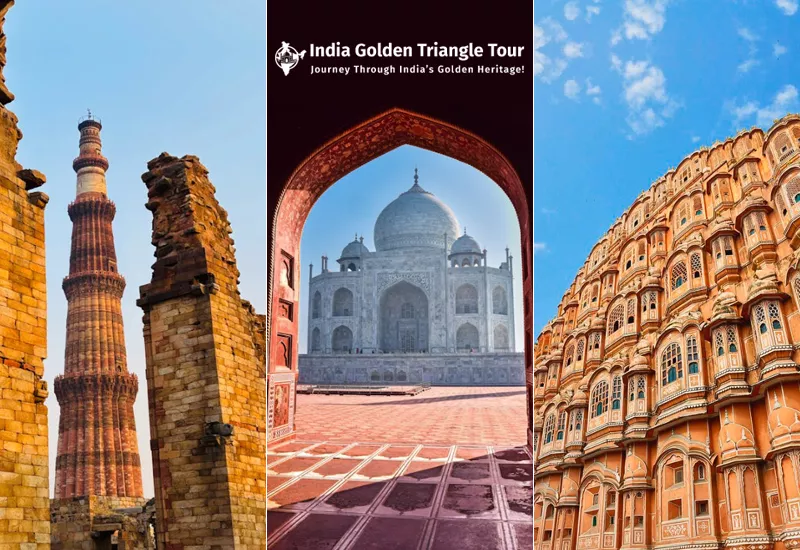
India’s Golden Triangle Travel Guide: Delhi, Agra & Jaipur
India’s Golden Triangle is one of the most rewarding ways to experience the country for the first time. The route connects Delhi, Agra and Jaipur, bringing together centuries of history, Mughal architecture, royal palaces, bustling bazaars, distinctive regional food and three very different versions of urban India within one manageable journey.
Delhi introduces you to the contrast between historic neighbourhoods and the modern capital. Agra brings the story of the Mughal Empire into focus through the Taj Mahal, Agra Fort and nearby Fatehpur Sikri. Jaipur then changes the mood completely with hilltop forts, pink-painted streets, royal residences, traditional crafts and Rajasthan’s unmistakable character.
The route can be completed quickly, but it becomes far more rewarding when you allow enough time to understand each city rather than simply photograph its most famous monument. For most first-time visitors, around five to seven days gives the best balance between sightseeing, travel time and rest.
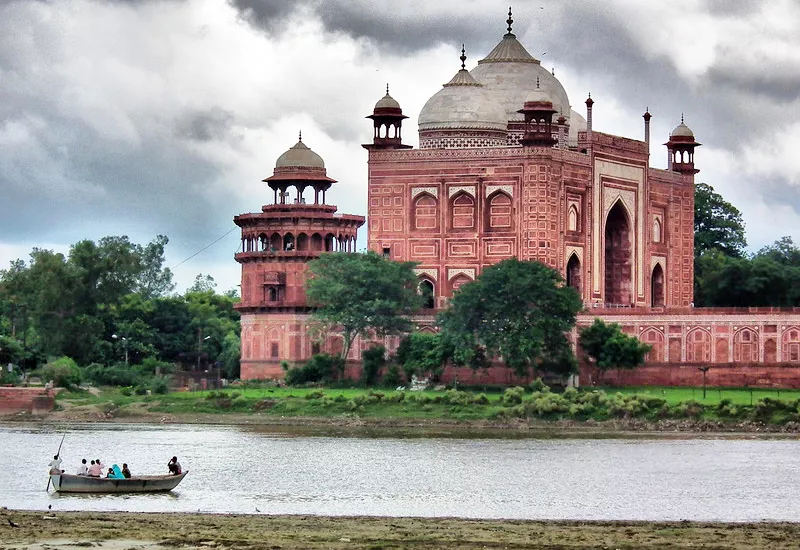
Quick Travel Guide
What Is India’s Golden Triangle?
India’s Golden Triangle is the popular travel circuit connecting Delhi, Agra and Jaipur. The cities form a roughly triangular route on the map and give first-time visitors an accessible introduction to North India’s history, architecture, food and culture.
Best for most first-time visitors
5 to 7-Day Golden Triangle
What you experience
- Old and New Delhi
- Taj Mahal and Agra Fort
- Amber Fort and Jaipur’s old city
- Markets, food and local culture
Classic travel direction
Delhi → Agra → Jaipur
Popular transport choices
- Train or private car from Delhi to Agra
- Road transfer via Fatehpur Sikri to Jaipur
- Train, road or flight from Jaipur to Delhi
- Private car for maximum flexibility
Understanding the Route
What Is the Golden Triangle in India?
The Golden Triangle is a classic North India travel route joining three of the country’s best-known tourism cities: Delhi, Agra and Jaipur. Draw the three cities on a map and their positions form a broad triangle, which is where the circuit gets its name.
The route has remained popular because each destination adds something genuinely different. Delhi is the political capital and one of India’s most historically layered cities. Agra is inseparable from the Taj Mahal and the story of the Mughal Empire. Jaipur introduces visitors to Rajasthan through massive forts, royal palaces, pink façades, jewellery markets and traditional crafts.
Together, the three cities offer an unusually concentrated introduction to Indian history. Mughal emperors, Rajput rulers, colonial-era planning, religious traditions and modern city life all appear within the same trip.
That does not mean the Golden Triangle should be treated as a history lesson. Some of its best moments are much simpler: eating in Old Delhi, watching Jaipur’s bazaars open in the morning, seeing the Taj Mahal change colour with the light or stopping for chai during a road journey.
Golden Triangle at a Glance
- Delhi: Old Delhi, Mughal monuments, New Delhi landmarks, food and markets
- Agra: Taj Mahal, Agra Fort, Mughal architecture and Fatehpur Sikri
- Jaipur: Amber Fort, Hawa Mahal, City Palace, Jantar Mantar and bazaars
- Best duration: Around five to seven days for most first-time visitors
- Popular transport: Train, private car or a combination of both
Why This Journey Works
Why Is the Golden Triangle So Popular?
India is difficult to summarise in one journey. Languages, food, architecture and traditions change dramatically from one region to another. That variety is exciting, but it can also make planning a first visit confusing.
The Golden Triangle solves part of that problem. Instead of attempting to cover half the country, you focus on three cities that are relatively close to one another but still feel completely different.
Delhi throws you straight into the scale of India. Ancient tombs, Mughal mosques, colonial-era avenues, modern neighbourhoods and crowded commercial streets exist within the same enormous city.
Agra concentrates the story. The Taj Mahal may be the main reason travellers arrive, but Agra Fort, Itmad-ud-Daulah and nearby Fatehpur Sikri reveal far more about the Mughal period.
Jaipur then shifts the focus towards Rajasthan. Amber Fort rises above the surrounding hills, Hawa Mahal looks over the old-city streets, City Palace reflects Jaipur’s royal history and the bazaars introduce you to textiles, jewellery and traditional crafts.
It Works for Different Travel Styles
The same route can be done very differently depending on your budget and interests. Backpackers can use trains, metros and guesthouses. Couples can combine boutique hotels with private transport. Families often prefer a larger vehicle and a slower pace. Luxury travellers can build the journey around heritage hotels, palace stays and private guides.
Independent travellers can also complete the route without joining a fixed package. If you are considering that approach, read Can You Visit the Golden Triangle Without a Tour Guide? before deciding how much support you actually need.
First Stop
Delhi – Where Old India and the Modern Capital Meet
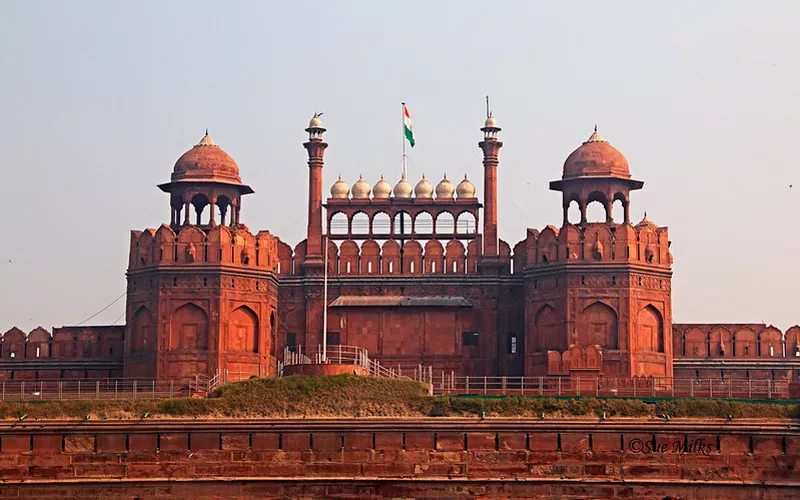
Most Golden Triangle trips begin in Delhi because the capital is the main arrival point for international visitors and has excellent onward connections. It is also the city most likely to overwhelm first-time travellers if they underestimate its size.
Delhi is not one compact sightseeing centre. Historic Old Delhi, Mughal tombs, modern government districts, markets and southern monuments sit across a huge urban area. A good itinerary groups attractions logically instead of zigzagging across the city all day.
Explore Old Delhi
Old Delhi gives you the most intense introduction to the city. Chandni Chowk is packed with shops, food stalls, religious buildings, wholesale businesses and narrow lanes that have carried commercial life for generations.
Jama Masjid remains one of the area’s defining landmarks. Nearby, the Red Fort represents the political and architectural power of the Mughal period and gives useful context to the history you will encounter again in Agra.
The most memorable part of Old Delhi is often not one monument. It is the combination of cycle rickshaws, spice markets, crowded alleys, street snacks and everyday life happening around the historic buildings.
Explore New Delhi
New Delhi changes the rhythm completely. Broad avenues, government buildings, landscaped areas and major monuments replace Old Delhi’s dense commercial streets.
India Gate and the Kartavya Path area are among the capital’s best-known ceremonial spaces. Humayun’s Tomb is one of Delhi’s most rewarding heritage visits, combining Mughal architecture with large formal gardens.
Qutub Minar in southern Delhi offers another major historical layer. The monument complex is worth giving proper time rather than squeezing it between several unrelated stops.
Delhi Planning Tip
Do not try to see every famous Delhi attraction in one day. A focused combination of Old Delhi and selected New Delhi monuments usually produces a better experience than an itinerary built around constant driving.
Mughal Heritage
Agra – More Than Just the Taj Mahal
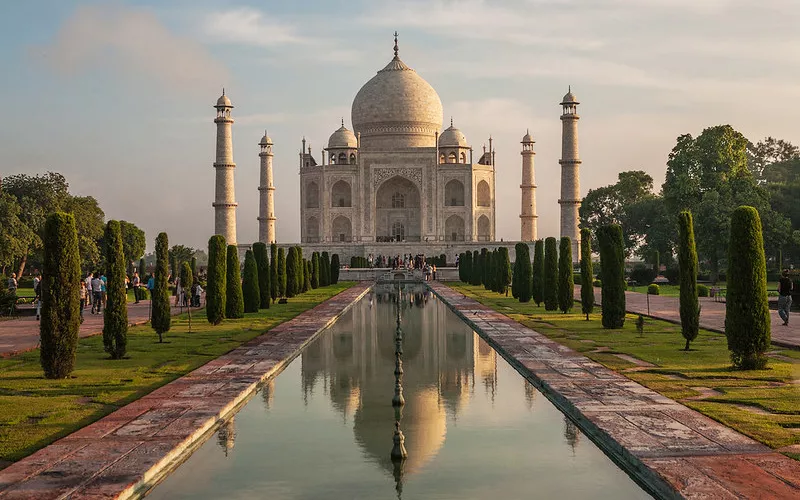
The Taj Mahal is one of those monuments that remains impressive even after years of photographs have made its shape familiar. The scale, symmetry, marble work and garden layout are difficult to understand properly until you are standing inside the complex.
Commissioned by Mughal Emperor Shah Jahan in memory of Mumtaz Mahal, the monument stands beside the Yamuna River and remains one of the world’s most recognisable examples of Mughal architecture.
When Should You Visit the Taj Mahal?
Early morning is popular because the temperature can be more comfortable and the light softer. Crowd levels vary by season and day, so sunrise should not be treated as a guarantee that you will have the monument to yourself.
Important Taj Mahal Planning Note
The Taj Mahal is closed to general visitors on Fridays. Check your travel dates before confirming your Agra hotel and onward journey.
Agra Fort
Agra Fort deserves more attention than it sometimes receives on fast itineraries. Its massive red sandstone walls contain palaces, audience halls and courtyards connected with generations of Mughal rulers.
Visiting the fort before or after the Taj Mahal helps connect the monuments historically. Instead of seeing two isolated attractions, you begin to understand the political and personal world in which the Taj Mahal was created.
Itmad-ud-Daulah
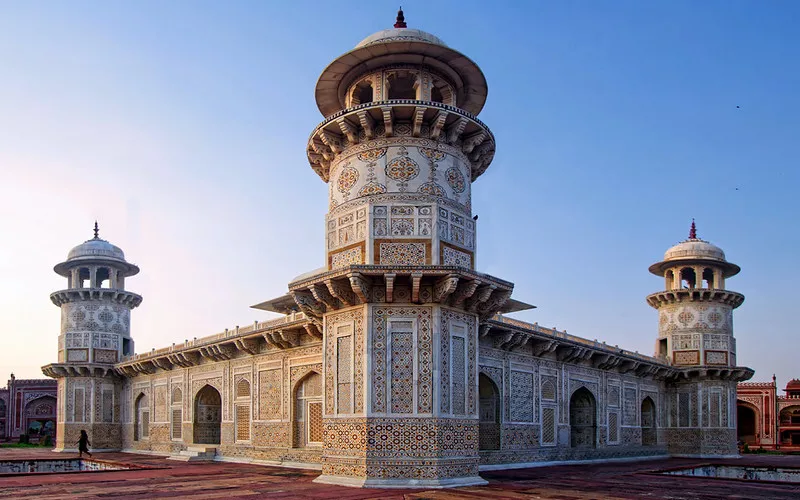
Often called the Baby Taj, Itmad-ud-Daulah is smaller but beautifully detailed. Its marble surfaces and decorative work make it a useful stop for travellers who want to see more of Agra than the two headline monuments.
Fatehpur Sikri
Fatehpur Sikri lies outside central Agra and fits particularly well into a road journey from Agra towards Jaipur. The former Mughal capital contains monumental gateways, palaces, courtyards and religious architecture associated with Emperor Akbar.
If you are travelling by private car, visiting Fatehpur Sikri on the Agra–Jaipur transfer is generally more efficient than making a separate return trip from Agra.
Royal Rajasthan
Jaipur – Forts, Palaces, Markets and the Pink City
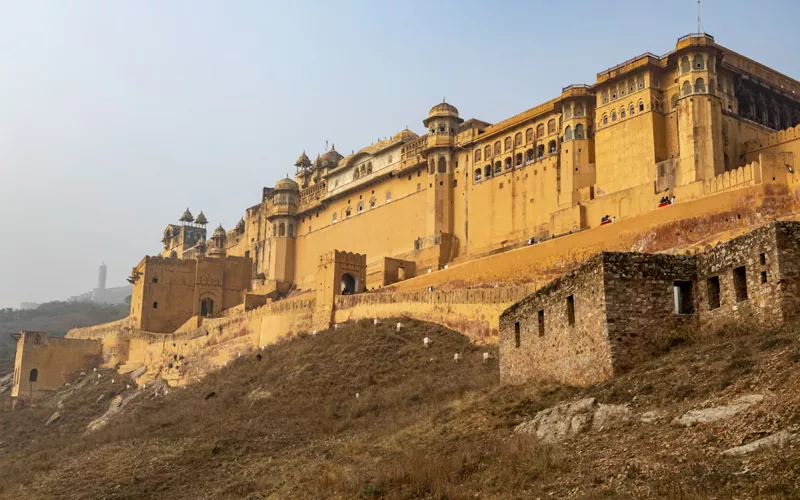
Jaipur is the capital of Rajasthan and the final point of the classic Delhi–Agra–Jaipur route. After Delhi’s urban scale and Agra’s concentrated Mughal heritage, Jaipur feels like the beginning of an entirely different part of India.
Amber Fort
Amber Fort is one of Jaipur’s major landmarks and should normally be given the first part of your sightseeing day. The fort sits outside the central old city, overlooking Maota Lake and the surrounding hills.
Inside, courtyards, gateways and decorative rooms reflect the wealth and political importance of Jaipur’s rulers. Start early when possible, particularly during warmer months.
Hawa Mahal
Hawa Mahal is Jaipur’s most instantly recognisable façade. Its rows of small windows were designed to allow women of the royal household to observe activity on the streets while remaining screened from public view.
The building sits within Jaipur’s old-city environment, so it works naturally with nearby City Palace and Jantar Mantar.
City Palace
City Palace remains closely connected with Jaipur’s royal history. Parts of the complex function as museum spaces displaying textiles, weapons, artworks and objects associated with the former royal household.
Jantar Mantar
Jantar Mantar is one of Jaipur’s UNESCO-listed sites and contains large-scale astronomical instruments created under Maharaja Sawai Jai Singh II. It becomes much more interesting when you understand what individual instruments were designed to measure.
Jal Mahal, Nahargarh and Jaigarh
Jal Mahal usually works best as a short scenic stop rather than a major half-day attraction. Nahargarh Fort offers elevated views over Jaipur, while Jaigarh Fort gives another perspective on the city’s military history.
Jaipur’s Markets
Jaipur is one of the Golden Triangle’s strongest shopping destinations. Textiles, block prints, jewellery, gemstones, blue pottery, rugs and other handicrafts fill its established bazaars and specialised shops.
If shopping matters to you, use the Golden Triangle shopping guide before making expensive purchases.
Getting Around
How to Travel Between Delhi, Agra and Jaipur
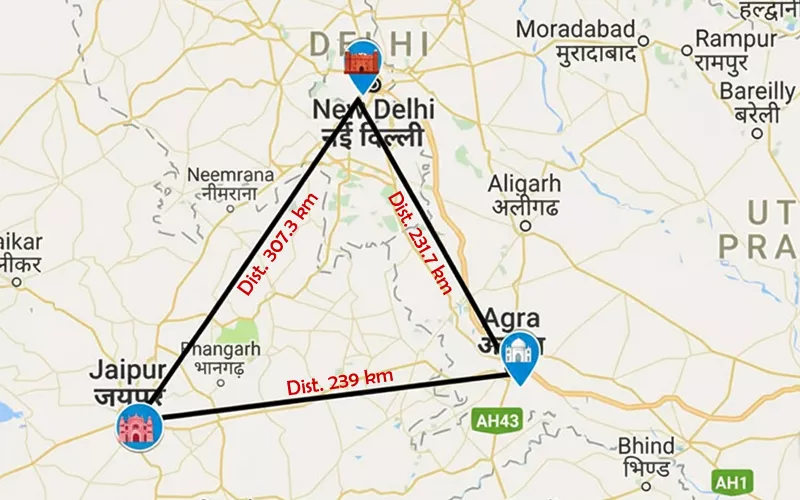
Delhi to Agra
Delhi to Agra is well suited to either train or private road travel. Premium daytime trains can make the railway journey relatively quick, while a private car gives you door-to-door convenience and avoids station transfers.
Agra to Jaipur
Road travel is especially useful on this sector because Fatehpur Sikri can be incorporated naturally into the journey. You can leave Agra, visit Fatehpur Sikri and continue towards Jaipur rather than returning to Agra afterward.
Jaipur to Delhi
Road and rail are both practical choices. Flights can make sense when schedules align with an onward domestic or international connection, although airport transfers and check-in time reduce some of the apparent time advantage.
A Practical Combination
Many travellers use a fast train from Delhi to Agra, a private road transfer from Agra to Jaipur via Fatehpur Sikri, and train, road or flight for the final Jaipur–Delhi sector.
For a detailed comparison, read How to Travel Between Delhi, Agra & Jaipur: Train vs Car vs Flight.
Trip Length
How Many Days Do You Need for the Golden Triangle?
Most first-time visitors will enjoy the route more with five to seven days. Shorter itineraries are possible, but each reduction in time means giving up flexibility, secondary sights or rest.
| Duration | Pace | Best For | Main Compromise |
|---|---|---|---|
| 3 Days | Very fast | Visitors with extremely limited time | Long days and rushed sightseeing |
| 4 Days | Fast | Main highlights | Very little local exploration |
| 5 Days | Moderate | Experienced travellers | Limited spare time |
| 6 Days | Balanced | First-time visitors | Some selective sightseeing required |
| 7 Days | Comfortable | Most first-time travellers | Requires a full week |
For a deeper comparison, see How Many Days Do You Need for the Golden Triangle Tour in India?.
Suggested Itinerary
Sample 7-Day Golden Triangle Itinerary
Day 1
Arrive in Delhi
Use your arrival day according to your actual flight time. Check in, rest and keep sightseeing light. If you have several free hours, choose a central attraction or relaxed neighbourhood instead of racing across Delhi.
Day 2
Old Delhi and New Delhi
Start with Old Delhi, combining Jama Masjid, Chandni Chowk and the wider historic district. Later, move towards selected New Delhi landmarks such as Humayun’s Tomb, India Gate or another attraction that fits your interests.
Day 3
Delhi to Agra
Travel to Agra in the morning. After hotel check-in, visit Agra Fort and add Itmad-ud-Daulah or Mehtab Bagh if your schedule and energy allow.
Day 4
Taj Mahal, Fatehpur Sikri and Jaipur
Visit the Taj Mahal early, return for breakfast and then continue towards Jaipur. Travellers using a private car can include Fatehpur Sikri during the transfer.
Day 5
Amber Fort and Jaipur Heritage
Begin with Amber Fort, then return towards Jaipur for Hawa Mahal, City Palace, Jantar Mantar and a brief Jal Mahal stop where appropriate.
Day 6
Jaipur Markets and Local Experiences
Use the second Jaipur day for markets, crafts, food, museums, Nahargarh Fort or a cultural activity instead of repeating another rushed monument-heavy schedule.
Day 7
Jaipur to Delhi or Continue Rajasthan
Return to Delhi for your onward journey or continue deeper into Rajasthan towards destinations such as Pushkar, Jodhpur or Udaipur.
Where to Stay
What Should You Look for in Golden Triangle Accommodation?
Location and Access
A slightly more expensive hotel in the right location can save hours of unnecessary transport. Think about where you will actually spend your sightseeing time rather than choosing accommodation purely by room price.
Style and Atmosphere
The route offers modern hotels, guesthouses, restored havelis, luxury resorts and heritage-style properties. Choose the atmosphere that adds something to your trip rather than assuming the most expensive option is automatically the best.
Comfort and Amenities
Reliable air-conditioning during warmer months, Wi-Fi, breakfast, clean bathrooms and helpful staff often matter more than decorative extras.
Delhi Accommodation
Central locations are useful when you want easier access to both major sights and restaurants. Travellers specifically interested in historic atmosphere may prefer a heritage stay around Old Delhi, while others choose quieter modern neighbourhoods.
Agra Accommodation
For a sunrise Taj Mahal visit, staying in an established tourist area with straightforward monument access can make the morning significantly easier.
Jaipur Accommodation
Jaipur offers some of the route’s most atmospheric heritage stays. Decide whether you want old-city access, a quieter residential area or a resort-style property outside the centre.
Before Booking a Hotel
- Read recent reviews
- Check exact location on a map
- Confirm breakfast and taxes
- Check early check-in and late-arrival rules
- Look at transport access
- Confirm whether the room has seasonal heating or air-conditioning when needed
Weather & Seasons
Best Time to Visit India’s Golden Triangle
October to March is generally the most comfortable period for long sightseeing days across Delhi, Agra and Jaipur. That does not mean every winter day is perfect or that the route cannot be travelled at other times.
October and November
Temperatures are generally more comfortable than summer, making outdoor monuments and markets easier to explore. Festivals and holiday periods can increase crowds.
December and January
Delhi and Agra can experience cool mornings and winter fog. Bring a warm layer and avoid planning very tight transport connections.
February and March
These months can offer a useful balance between cooler conditions and longer comfortable sightseeing hours before the strongest heat arrives.
April to June
Summer can be extremely hot, particularly during the afternoon. Begin outdoor sightseeing early, carry water and schedule indoor breaks.
July to September
Monsoon weather brings humidity and periodic rain. The route remains possible, but flexibility becomes more important.
Eat Along the Route
Food Experiences in Delhi, Agra and Jaipur
Delhi
Delhi is the route’s strongest city for variety. Old Delhi is famous for snacks, sweets and historic food businesses, while other parts of the capital offer everything from regional Indian cooking to international restaurants.
Agra
Agra is associated with Mughlai food and sweets such as petha. A relaxed meal after sightseeing can be a welcome contrast to the busier monument schedule.
Jaipur
Jaipur introduces you to Rajasthani flavours. Kachori, dal baati churma and other regional dishes add a different food identity to the final part of the route.
Food Safety Tip
Choose busy places with good food turnover, prefer freshly cooked dishes served hot and use safe bottled or properly filtered drinking water.
Markets & Crafts
What Should You Buy on a Golden Triangle Trip?
| City | Popular Shopping | What to Remember |
|---|---|---|
| Delhi | Textiles, spices, handicrafts, clothing | Compare different markets before buying |
| Agra | Marble inlay, leather goods, handicrafts | Quality varies widely |
| Jaipur | Gemstones, jewellery, textiles, blue pottery, block prints | Take extra care with expensive purchases |
Shopping can be one of the highlights of the route, especially in Jaipur, but it should remain optional. You should never feel required to visit a shop because a driver or guide recommends it.
For detailed market recommendations, buying advice and authenticity tips, read The Best Shopping in India’s Golden Triangle.
Practical Advice
Essential Golden Triangle Travel Tips
- Start early: Early sightseeing can help with heat and crowds.
- Protect your belongings: Keep valuables secure in crowded markets and transport hubs.
- Use reliable transport: Choose established drivers, app-based cabs or recognised railway services.
- Dress appropriately: Lightweight, modest clothing works well for religious and heritage sites.
- Carry safe water: Stay hydrated, particularly during warmer months.
- Do not over-plan Delhi: Travel distances within the capital can be substantial.
- Remember Friday in Agra: The Taj Mahal is closed to general visitors on Fridays.
- Confirm current tickets: Monument rules and prices can change.
- Be cautious with unsolicited help: Verify information at official counters or through trusted sources.
- Leave airport buffers: Do not plan a long road transfer to finish immediately before an international flight.
- Keep shopping optional: Never feel pressured to enter a particular showroom.
- Use guides selectively: A knowledgeable guide can add valuable context at important monuments.
Extend Your Journey
Where Should You Go After Delhi, Agra and Jaipur?
Rishikesh
Rishikesh gives the trip a completely different direction. Yoga, ashrams, the Ganges and the Himalayan foothills create a spiritual and more relaxed contrast to the Golden Triangle cities.
Varanasi
Varanasi is suited to travellers looking for a deeper spiritual and cultural experience. The ghats, old lanes, temples and rituals along the Ganges make it unlike any of the Golden Triangle cities.
Pushkar
Pushkar is a smaller Rajasthan destination known for its sacred lake, temples and market streets. It works naturally after Jaipur.
Jodhpur
Jodhpur is a strong continuation for travellers who leave Jaipur wanting more forts and Rajasthan heritage. Mehrangarh Fort dominates the city and provides a dramatic contrast to Jaipur’s architecture.
Plan Your Journey
Build Your Own Delhi, Agra and Jaipur Trip
The best Golden Triangle itinerary is not the one with the most attractions. It is the one that fits your arrival time, travel pace, hotel style and interests. Choose the cities and experiences that matter most and leave enough space to enjoy them properly.
- Private air-conditioned transport
- Flexible Delhi, Agra and Jaipur sightseeing
- Budget, mid-range and luxury hotel options
- Optional local guides
- Airport and railway transfers
- Ranthambore, Udaipur and Rajasthan extensions
Common Questions
Frequently Asked Questions About India’s Golden Triangle
Practical answers to the questions travellers usually ask before planning Delhi, Agra and Jaipur.
What is the Golden Triangle in India?
The Golden Triangle is the travel route connecting Delhi, Agra and Jaipur in North India. The three cities form a broad triangle on the map and combine Mughal heritage, Rajasthan’s royal architecture and modern Indian city life.
How many days are enough for the Golden Triangle?
Five to seven days works well for most first-time visitors. Three or four days is possible, but the itinerary becomes significantly faster and leaves less time for markets, food and rest.
What is the best route for the Golden Triangle?
The classic route is Delhi → Agra → Jaipur. Delhi is the natural starting point for many international visitors, followed by Agra for the Taj Mahal and Jaipur for Rajasthan’s forts and palaces.
What is the best way to travel from Delhi to Agra?
Train and private car are both practical choices. Premium trains can be fast, while a private vehicle provides direct hotel-to-hotel travel and greater flexibility.
Can I visit Fatehpur Sikri between Agra and Jaipur?
Yes. Fatehpur Sikri fits naturally into a private road transfer from Agra to Jaipur and is one of the most efficient ways to include the site.
Is the Taj Mahal open every day?
No. The Taj Mahal is closed to general visitors on Fridays, so check your itinerary before booking your Agra hotel and onward transport.
What is the best time to visit the Golden Triangle?
October to March is generally the most comfortable period for sightseeing. Winter can bring cool mornings and fog, while April to June can be extremely hot.
Is Jaipur worth two days?
Yes. One day can cover Amber Fort and the main old-city sights, while a second day gives you time for markets, crafts, food, museums and a more relaxed experience of Jaipur.
Do I need a private driver for the Golden Triangle?
No. The route can be completed by train and local transport. A private driver becomes useful when you value door-to-door travel, luggage convenience and flexible stops between cities.
Can I travel the Golden Triangle without a tour guide?
Yes. Independent travel is possible, although hiring a knowledgeable local guide at selected monuments can add useful historical context.
What should I buy in Jaipur?
Jaipur is known for textiles, block printing, jewellery, gemstones, blue pottery and handicrafts. Take extra care when making expensive jewellery or gemstone purchases.
What can I add to the Golden Triangle?
Popular extensions include Ranthambore for wildlife, Udaipur and Jodhpur for more Rajasthan heritage, Pushkar for a smaller-town experience, Varanasi for spirituality and Rishikesh for yoga and the Ganges.
Final Planning Advice
Use the Golden Triangle as an Introduction, Not a Race
The Golden Triangle works because Delhi, Agra and Jaipur are close enough to combine but different enough that the journey never feels repetitive. Delhi gives you scale and contrast. Agra concentrates the Mughal story around some of India’s most important monuments. Jaipur introduces the colour, architecture and traditions of Rajasthan.
The biggest mistake is trying to see everything simply because a place appears on a list. Give Delhi enough time, build Agra around your Taj Mahal visit and let Jaipur be more than a collection of quick photo stops.
Five to seven thoughtfully planned days can give you a far stronger introduction to India than a packed itinerary that rushes through the same three cities in half the time.