
Best Places to See and Things to Do in Agra: Complete 2026 Travel Guide
Most travellers arrive in Agra with one name in mind: the Taj Mahal. It deserves every bit of that attention, but treating Agra as a single-monument city means missing much of what makes it worth visiting. Agra Fort, Itmad-ud-Daulah, Mehtab Bagh, Akbar’s Tomb and nearby Fatehpur Sikri reveal a much broader story of Mughal architecture, royal life, craftsmanship and the city that grew beside the Yamuna River.
A well-planned Agra visit can be done in one full day if your schedule is tight, but staying overnight gives you a better experience. You can visit the Taj Mahal early, explore Agra Fort without watching the clock, taste local food, see marble-inlay artisans at work and end the day with a quieter riverfront view rather than spending most of your visit travelling to and from Delhi.
This updated 2026 Agra travel guide focuses on what is genuinely worth your time, how to arrange the sights in a practical order, how Agra fits into the Delhi–Agra–Jaipur Golden Triangle route, and the small planning details that can make the difference between a rushed Taj Mahal stop and a memorable visit to the city.

Quick Agra Guide
How Much Time Do You Really Need in Agra?
One full day is enough for the Taj Mahal and Agra Fort, but one night or two days gives you a much better chance to experience Agra without turning the visit into a race.
Best for most travellers
1 Night / 2 Days in Agra
What you can include
- Taj Mahal early in the day
- Agra Fort
- Itmad-ud-Daulah
- Mehtab Bagh
- Food and local craft experiences
Golden Triangle travellers
Delhi → Agra → Jaipur
Practical route
- Delhi to Agra by train or private car
- Overnight near the Taj Mahal
- Early Taj Mahal visit
- Agra to Jaipur via Fatehpur Sikri
Beyond the Famous Photograph
Why Agra Deserves More Than a Quick Taj Mahal Stop
The Taj Mahal is the reason many travellers first put Agra on their itinerary. That is understandable. Few monuments have been photographed, written about and imagined as much as this white-marble mausoleum beside the Yamuna.
But the Taj makes more sense when you see the city around it. Agra Fort shows where Mughal emperors actually lived and governed. Itmad-ud-Daulah reveals an earlier phase of delicate marble architecture. Akbar’s Tomb reflects the tastes of a different emperor, while Fatehpur Sikri takes you into an abandoned imperial capital associated with Akbar’s reign.
Agra was a major Mughal centre long before tourism turned the Taj Mahal into its international identity. The monuments are not separate museum pieces. They are connected by people, dynasties, artistic traditions and the Yamuna River.
That is why a slower Agra visit feels very different from a same-day photo stop. You start recognising recurring materials, floral motifs, carved screens, geometric gardens and the gradual shift from red sandstone towards increasingly sophisticated marble work.
Agra at a Glance
- Main attraction: Taj Mahal
- Second essential sight: Agra Fort
- Best smaller monument: Itmad-ud-Daulah
- Best Taj view away from the main complex: Mehtab Bagh
- Best road extension: Fatehpur Sikri
- Recommended stay: One night or two days
- Golden Triangle route: Delhi → Agra → Jaipur
Agra Essential
Taj Mahal – The Monument That Defines Agra
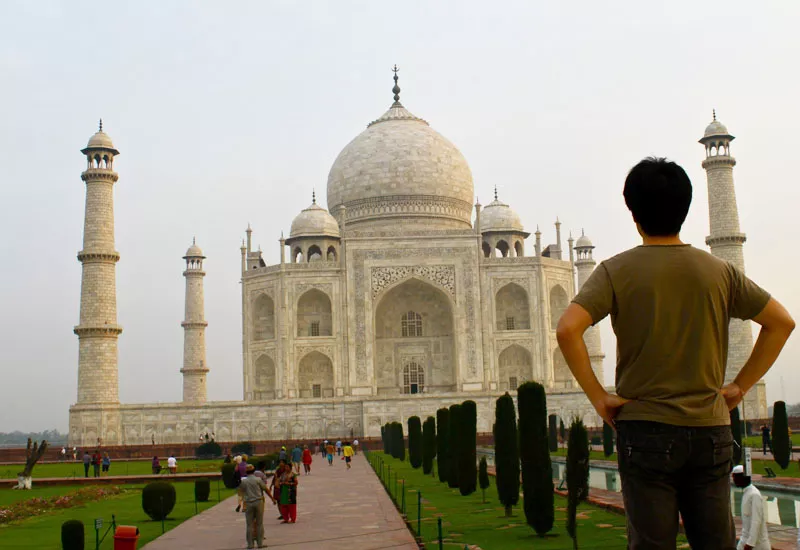
Commissioned by Mughal emperor Shah Jahan in memory of Mumtaz Mahal, the Taj Mahal is a mausoleum complex rather than simply the white building seen in photographs. The main tomb sits within a carefully ordered landscape of gateways, gardens, water channels, minarets and supporting structures.
The first full view is deliberately theatrical. You pass through the monumental gateway and the white marble building appears framed through the arch. Walk forward slowly instead of immediately joining the rush for the classic reflection-pool photograph.
At closer range, the character of the monument changes. What looks almost perfectly white from a distance becomes a surface of carved marble, calligraphy and intricate stone inlay. The scale is enormous, yet many of the most impressive details are surprisingly small.
What Is Worth Looking For?
- The changing perspective as you walk through the main garden
- Quranic calligraphy around the entrances
- Floral marble carving
- Pietra dura stone-inlay decoration
- The marble screens inside the mausoleum
- The mosque and matching guest-house buildings
- The Yamuna River behind the main platform
Is Sunrise Really the Best Time?
Early morning is popular for good reason. Temperatures can be more comfortable, the light is soft and you still have most of the day available for other Agra sights.
Do not, however, assume that sunrise automatically means an empty monument. The Taj Mahal is internationally famous and early morning is itself a popular visiting period.
Taj Mahal Friday Closure
The Taj Mahal is closed to general visitors on Fridays. This is one of the most important details to check before building an Agra or Golden Triangle itinerary.
How Long Should You Spend at the Taj Mahal?
Allow roughly two to three hours if this is your first visit. Travellers deeply interested in architecture or photography may want longer, while a rushed itinerary can technically be completed faster.
If you are planning Agra from Delhi in a single day, see the current Can You Visit the Taj Mahal in One Day? 2026 Guide.
If the mausoleum interior interests you, the site also has a detailed guide to what is inside the Taj Mahal.
Mughal Power
Agra Fort – The Monument You Should Not Rush
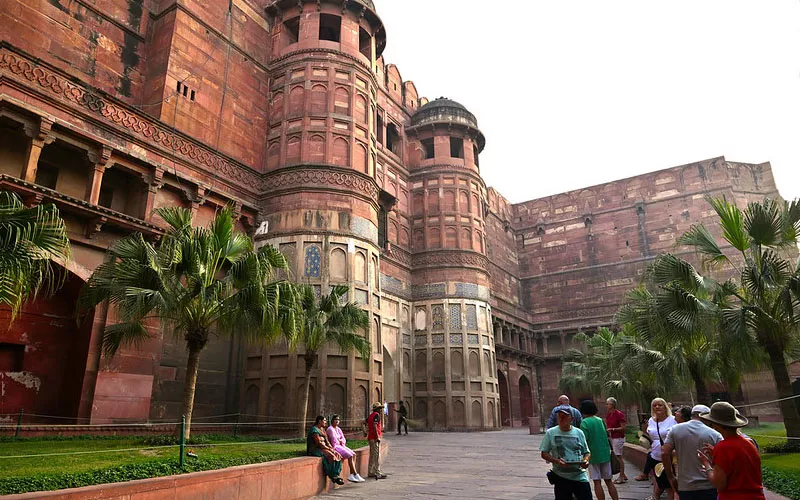
If the Taj Mahal represents the refined, commemorative side of Mughal architecture, Agra Fort shows imperial power much more directly. Its walls, gates, courtyards, audience halls and palace areas belonged to a functioning royal complex.
Several Mughal emperors left their mark on the fort, so the architecture is not limited to one period or material. Red sandstone dominates much of the complex, while later sections introduce marble and increasingly delicate decoration.
What Should You See Inside Agra Fort?
- Diwan-i-Aam
- Diwan-i-Khas areas
- Palace courtyards
- Marble pavilions
- River-facing sections
- Views towards the Taj Mahal from selected points
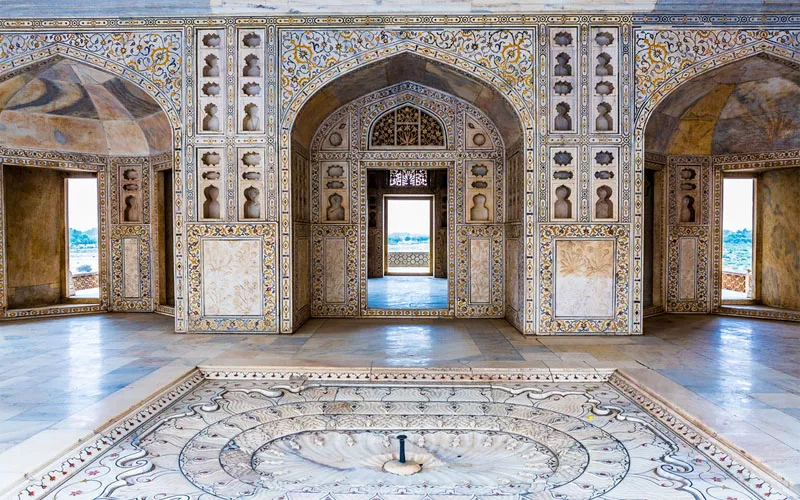
Agra Fort is also closely connected with Shah Jahan’s later life. After being deposed by his son Aurangzeb, the emperor spent his final years confined within the fort complex.
Best Way to Combine Agra Fort
Visit the Taj Mahal early, return for breakfast if needed, and continue to Agra Fort later in the morning. Alternatively, visit the fort in the afternoon when you are staying overnight in Agra and saving the Taj for the following sunrise.
Smaller Mughal Gem
Itmad-ud-Daulah – The “Baby Taj”
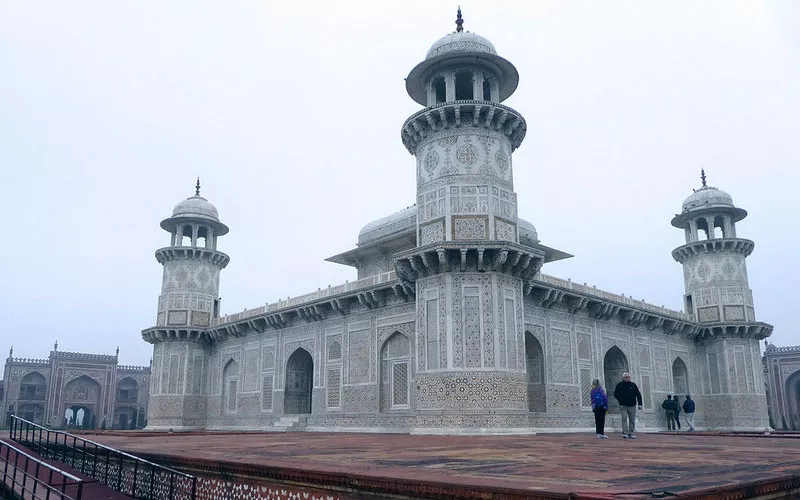
Itmad-ud-Daulah is often introduced simply as the “Baby Taj,” but that nickname can make the monument sound less important than it is. Built for Mirza Ghiyas Beg, the father of Empress Nur Jahan, the tomb represents an important stage in the development of Mughal funerary architecture.
The experience here is intimate. Instead of a vast monumental approach, you can get close to the surfaces and notice the decorative detail without constantly stepping around large tour groups.
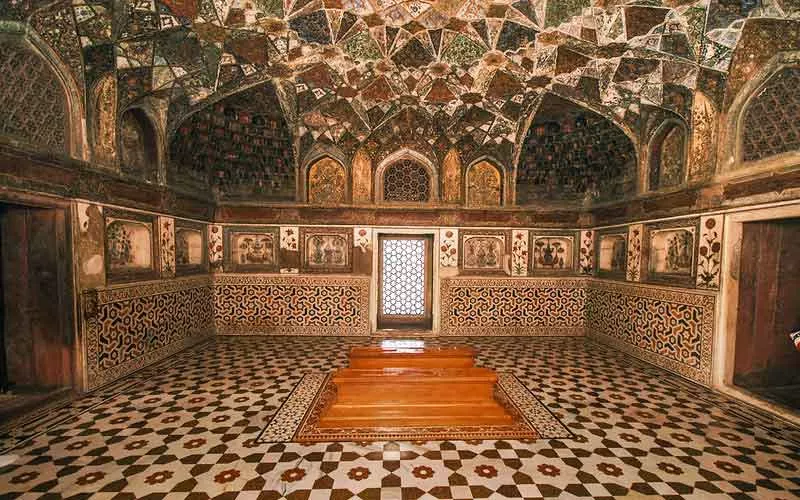
Why Add Itmad-ud-Daulah?
It is calmer, smaller and easier to absorb than the Taj Mahal. If your itinerary allows three major Agra monuments rather than two, this is one of the strongest additions.
It also fits naturally with Mehtab Bagh because both sit on the opposite side of the Yamuna from the Taj Mahal complex.
Sikandra
Akbar’s Tomb – A Different Side of Mughal Architecture
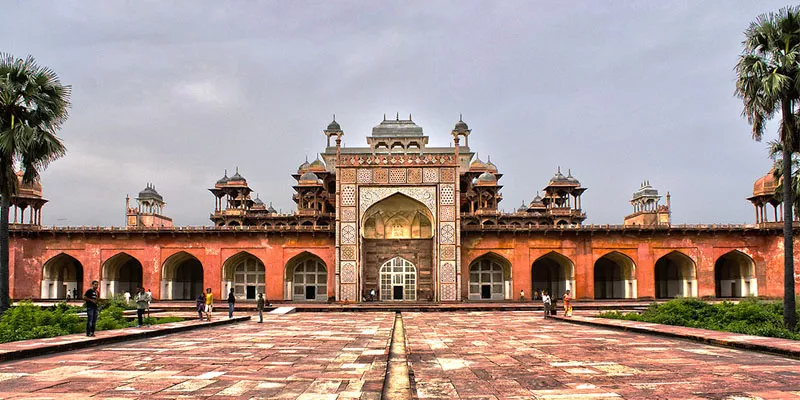
Akbar’s Tomb stands at Sikandra, away from the main Taj Mahal tourism area. The complex feels different from Shah Jahan’s marble-heavy architecture and reflects the broader cultural influences associated with Akbar’s reign.
The monumental gateway immediately attracts attention, but the spacious garden setting is part of the appeal. Visitors who have spent the morning moving through the crowded Taj Mahal area often appreciate the slower rhythm here.
Who Should Visit?
Add Sikandra if Mughal history is a major reason for your trip, if you have a second day in Agra, or if you prefer quieter monuments where there is more room to explore at your own pace.
On a tightly planned one-day trip, prioritise the Taj Mahal and Agra Fort first.
Across the Yamuna
Mehtab Bagh – A Different View of the Taj Mahal
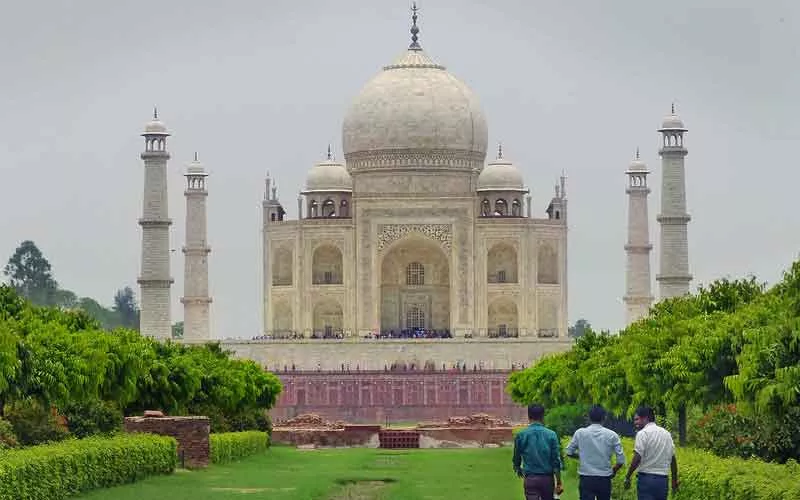
Mehtab Bagh sits across the Yamuna from the Taj Mahal and works best when you treat it as a landscape experience rather than another major monument.
You come here for the alignment, the garden setting and the view towards the Taj. After spending several hours inside crowded monuments, the open space can feel like a welcome change.
When Should You Go?
Late afternoon is popular because the light begins softening and the Taj Mahal forms the obvious focal point across the river. Exact conditions depend on season, weather and river visibility.
Good Combination
Itmad-ud-Daulah followed by Mehtab Bagh works well because both sit on the eastern side of the Yamuna and can reduce unnecessary backtracking through central Agra.
Best Agra Extension
Fatehpur Sikri – The Imperial City on the Road to Jaipur
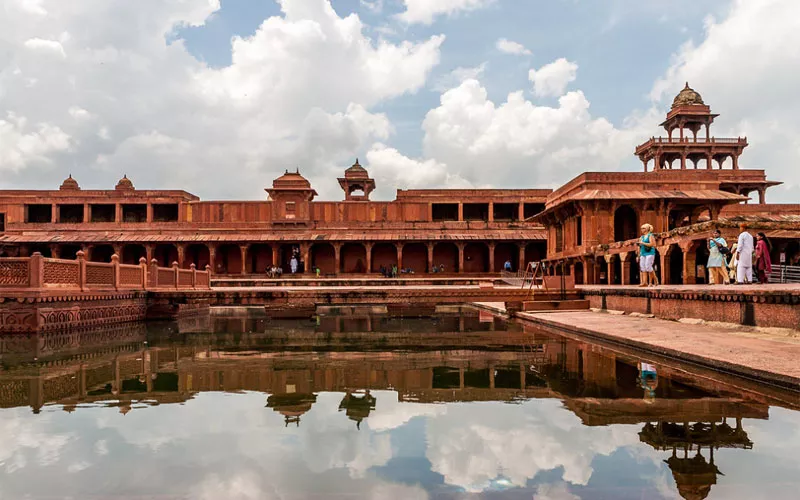
Fatehpur Sikri lies around 40 kilometres from Agra and is one of the most important heritage stops in the region. Emperor Akbar established the imperial city during the sixteenth century, and its surviving palace and religious complexes remain among the strongest examples of Mughal-era planning and architecture.
The city feels very different from Agra. Instead of one dominant monument, Fatehpur Sikri is experienced as a collection of courtyards, halls, gateways and religious spaces spread across a large complex.
Important Places Within Fatehpur Sikri
- Diwan-i-Khas
- Diwan-i-Aam
- Panch Mahal
- Palace areas
- Jama Masjid
- Tomb of Salim Chishti
- Buland Darwaza area
Should You Make a Separate Trip from Agra?
You can, but Golden Triangle travellers usually have a more efficient option. If you are driving from Agra to Jaipur, visit Fatehpur Sikri after leaving Agra and then continue towards Jaipur.
The site’s updated private-driver guide currently places the Agra–Jaipur road journey at roughly four to five hours in normal conditions before allowing for sightseeing stops. Always treat road times as estimates rather than guarantees.
Plan Your Time
Best One-Day and Two-Day Agra Itinerary
One-Day Agra Itinerary
This plan works when your time is limited and you want the essential Agra experience without trying to cover every monument.
Priorities
- Early Taj Mahal visit
- Breakfast or early lunch
- Agra Fort
- Itmad-ud-Daulah or Mehtab Bagh
- Return or onward journey
Two-Day Agra Itinerary
Staying overnight makes the visit much easier and creates space for smaller monuments, markets and a more relaxed pace.
Priorities
- Agra Fort on arrival day
- Itmad-ud-Daulah
- Mehtab Bagh near sunset
- Taj Mahal the following morning
- Fatehpur Sikri en route to Jaipur
Day 1
Arrive in Agra, Explore the Fort and Riverside Monuments
Reach Agra from Delhi and check into your hotel before sightseeing if you have luggage. Start with Agra Fort rather than immediately racing towards the Taj Mahal.
After the fort, cross towards Itmad-ud-Daulah. If your timing works, continue towards Mehtab Bagh for the evening Taj Mahal view.
Have dinner, rest and prepare for an early start the following morning.
Day 2
Taj Mahal Early and Continue Towards Jaipur
Visit the Taj Mahal early, allowing enough time for the gardens, main platform and mausoleum rather than treating the experience as a one-hour photo stop.
Return to the hotel for breakfast and check-out. If you are travelling towards Jaipur by private car, stop at Fatehpur Sikri on the way rather than making a separate return journey.
Getting to Agra
How to Reach Agra from Delhi and Jaipur in 2026
Delhi to Agra by Private Car
Road travel from Delhi to Agra is straightforward via the Yamuna Expressway. Current route guidance on the site places the drive at roughly three to four hours in normal conditions, depending on your exact Delhi pickup point, traffic, rest stops and the part of Agra you are travelling to.
The main advantage is door-to-door travel. You do not need a separate taxi to the station, and the vehicle can stay with you for local sightseeing.
Delhi to Agra by Train
Premium trains can make Delhi–Agra a very efficient rail journey. The main thing first-time visitors sometimes forget is that a station-to-station journey is not the same as a hotel-to-hotel journey.
Add travel time from your Delhi hotel to the correct railway station and from Agra Cantt to your first monument or hotel.
Jaipur to Agra by Road
Agra and Jaipur are approximately 240 kilometres apart depending on your exact route. Road travel is particularly useful because Fatehpur Sikri can be incorporated into the same journey.
The site also offers a same-day Agra and Taj Mahal tour from Jaipur for travellers who do not want to stay overnight.
Same-Day Agra from Delhi
Agra can also be visited from Delhi in one long day when you start early and keep the itinerary focused on the Taj Mahal, Agra Fort and perhaps one additional stop.
For travellers specifically interested in early light, see the Taj Mahal Sunrise Tour from Delhi.
Golden Triangle Planning
Where Does Agra Fit in the Delhi–Agra–Jaipur Route?
The most natural Golden Triangle direction for many visitors remains Delhi → Agra → Jaipur. International travellers commonly begin in Delhi, move south towards Agra and then continue west into Rajasthan.
| Route | Typical Choice | Why It Works |
|---|---|---|
| Delhi → Agra | Train or private car | Strong rail connection and direct expressway |
| Agra sightseeing | One night recommended | Allows Taj Mahal early without a pre-dawn Delhi departure |
| Agra → Jaipur | Private road transfer | Fatehpur Sikri fits naturally en route |
| Jaipur → Delhi | Train, car or flight | Choose according to your onward plans |
For a full 2026 comparison, read How to Travel Between Delhi, Agra & Jaipur: Train vs Car vs Flight.
If you prefer one vehicle throughout the circuit, see the Golden Triangle private car and driver guide.
You can also compare current planning costs in the Delhi Agra Jaipur Private Driver Cost Guide.
Weather & Seasons
Best Time to Visit Agra
October to March is generally the most comfortable period for walking around Agra’s large monument complexes. That is also a popular tourism season, so comfortable weather can come with larger crowds.
October and November
The intense summer heat has generally eased, making longer outdoor sightseeing easier. Festivals and holiday periods can increase visitor numbers.
December and January
Winter mornings can be cool, and fog sometimes affects visibility and transport around North India. If clear sunrise photography is your only reason for choosing an early Taj Mahal visit, remember that winter weather is not always predictable.
February and March
These months can offer a good balance between comfortable daytime sightseeing and clearer conditions before stronger summer temperatures arrive.
April to June
Heat becomes a serious planning factor. Start early, drink enough water and avoid scheduling large exposed sites through the hottest part of the afternoon.
July to September
Monsoon humidity and occasional rain can affect plans, but the city remains visitable. Keep some flexibility around outdoor sightseeing.
Accommodation
Where Should You Stay in Agra?
The most convenient area depends on your itinerary, but visitors planning an early Taj Mahal start usually benefit from staying in an established tourist zone with straightforward access to the monument.
Taj East Gate Area
Useful when your priority is reaching the Taj Mahal early without a long cross-city transfer.
Fatehabad Road
A popular tourism area with a wide range of hotels, restaurants and visitor services across different budgets.
What Matters More Than the Hotel Name?
- Exact location
- Recent reviews
- Transport arrangements
- Breakfast timing if visiting the Taj early
- Cleanliness
- Air-conditioning in warmer months
- Flexible check-in when required
Early Taj Mahal Tip
If the Taj Mahal is the most important part of your Agra stay, choosing the right location can be more useful than upgrading to a more luxurious hotel farther away.
Agra Flavours
What Should You Eat in Agra?
Agra’s food identity reflects both everyday North Indian cooking and the city’s long Mughal associations. You do not need an expensive dining experience to taste something memorable.
Bedai and Jalebi
A popular local breakfast pairing combines a savoury, fried bread with accompanying curry and finishes with hot jalebi for sweetness.
Petha
Petha is one of Agra’s best-known sweets. It is traditionally made from ash gourd and appears in several flavours and textures across the city.
Dalmoth
This savoury snack combines lentils, spices and crunchy ingredients and is commonly sold as a take-home food item.
Mughlai Food
Travellers interested in richer North Indian flavours will find numerous restaurants serving dishes influenced by Mughlai cooking traditions.
Simple Food Safety Habits
- Choose busy places with good customer turnover
- Eat freshly cooked dishes while hot
- Drink safe bottled or properly filtered water
- Take spicy food gradually if you are not accustomed to it
- Wash or sanitise your hands before eating
Crafts & Markets
Shopping in Agra – What Is Actually Worth Looking For?
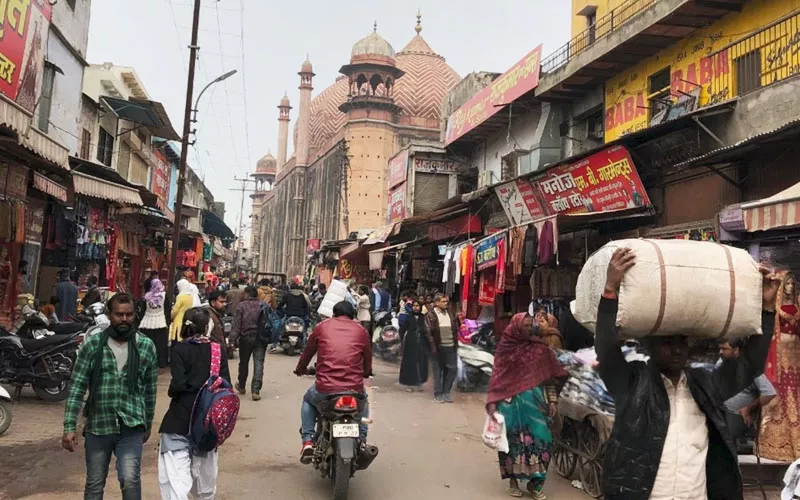
Agra’s best-known craft association is marble inlay, inspired by techniques seen in Mughal architecture. You will also encounter leather goods, textiles, rugs, jewellery and conventional souvenirs.
Popular Shopping Areas
- Sadar Bazaar: tourist-friendly shopping and food
- Kinari Bazaar: traditional market atmosphere, textiles and accessories
- Subhash Bazaar: fabrics and clothing
Marble Inlay Workshops
Watching artisans demonstrate stone inlay can make the decorative work at the Taj Mahal easier to appreciate. A demonstration should, however, remain optional. You should never feel obligated to purchase because you accepted a workshop visit.
Expensive Purchases
Do not assume a shop is official merely because someone describes it as a “government shop.” Understand what you are purchasing, ask about materials and final prices, and walk away if the sales pressure feels uncomfortable.
For broader shopping advice across Delhi, Agra and Jaipur, read the Golden Triangle Shopping Guide.
Beyond Sightseeing
Things to Do in Agra Beyond the Main Monuments
Heritage Walk
A guided walk can introduce you to market streets, neighbourhoods and smaller heritage details that are difficult to understand from a car.
Best For
- Photography
- Street life
- First-time visitors
- Travellers with a second day
Marble Inlay Demonstration
Watch artisans explain how coloured stone is cut, shaped and fitted into marble to create detailed decorative patterns.
Best For
- Art and design lovers
- Families
- Craft enthusiasts
- Travellers interested in the Taj’s details
Mohabbat the Taj Cultural Show
The evening stage production retells the Shah Jahan and Mumtaz Mahal story through music, costumes and theatrical presentation. It can work well for travellers staying overnight who want an organised evening activity.
Food Walk
A guided food experience is a practical option if you want to try several local dishes without deciding where to eat at every stop.
Slow Down by the Yamuna
You do not need to fill every hour. After the intensity of the Taj Mahal and Agra Fort, a quieter river-facing experience can sometimes be a better final memory than adding another monument simply because it appears on a list.
Avoid These Problems
Common Agra Travel Mistakes
- Booking the Taj Mahal for a Friday: The monument is closed to general visitors on Fridays.
- Giving Agra only two hours: The Taj Mahal alone deserves more time than that on a first visit.
- Skipping Agra Fort: You lose much of the Mughal historical context.
- Taking too much to the Taj: Security restrictions make travelling light easier.
- Doing Fatehpur Sikri as unnecessary backtracking: Golden Triangle travellers can usually place it on the Agra–Jaipur road day.
- Believing every “official shop” claim: Verify expensive purchases independently.
- Accepting unsolicited guides: Use licensed or properly arranged guide services.
- Assuming sunrise means no crowds: Early morning is itself a popular Taj Mahal visiting period.
- Booking a tight Delhi flight after Agra: Road and rail delays are always possible.
- Spending the entire visit inside a vehicle: Markets, food and smaller details are part of Agra too.
2026 Planning Advice
Practical Tips for Visiting Agra
- Check the weekday first. Build the itinerary around the Taj Mahal’s Friday closure before booking anything else.
- Use an early start intelligently. Early sightseeing can help with both heat and the rest of your day.
- Keep luggage at your hotel or in a trusted vehicle. Monument sightseeing is easier when travelling light.
- Group sights geographically. Combine Itmad-ud-Daulah and Mehtab Bagh rather than crossing Agra repeatedly.
- Put Fatehpur Sikri on the Jaipur road day. It is usually the cleanest Golden Triangle arrangement.
- Verify current ticket information. ASI entry fees and visitor rules can change.
- Use guides where they add value. The Taj Mahal, Agra Fort and Fatehpur Sikri benefit most from historical explanation.
- Keep shopping optional. Your sightseeing schedule should not depend on showroom visits.
- Carry safe drinking water. Agra can become extremely hot outside winter.
- Do not overfill the itinerary. Two well-experienced monuments are better than six hurried stops.
Plan Your Agra Visit
Make Agra More Than a Quick Taj Mahal Stop
Whether you have one day or an overnight stay, the route can be arranged around your arrival time, Taj Mahal visit and onward journey to Jaipur or Delhi instead of forcing every traveller into the same schedule.
- Private Delhi–Agra transfers
- Taj Mahal sunrise sightseeing
- Local Agra guides
- Agra Fort and Baby Taj
- Fatehpur Sikri en route to Jaipur
- Flexible Golden Triangle planning
Common Questions
Frequently Asked Questions About Visiting Agra
Practical answers for travellers planning the Taj Mahal and other Agra attractions in 2026.
Is Agra worth visiting beyond the Taj Mahal?
Yes. Agra Fort, Itmad-ud-Daulah, Akbar’s Tomb, Mehtab Bagh and nearby Fatehpur Sikri make Agra much more than a single-monument destination.
How many days should I spend in Agra?
One full day covers the Taj Mahal and Agra Fort, while one night or two days gives you time for Itmad-ud-Daulah, Mehtab Bagh, local food and a more relaxed sightseeing pace.
Is the Taj Mahal closed on Friday?
Yes. The Taj Mahal is closed to general visitors on Fridays. Check your travel date before booking your Agra hotel, train or Golden Triangle itinerary.
What are the must-see attractions in Agra?
The Taj Mahal and Agra Fort are the two essentials. If you have additional time, add Itmad-ud-Daulah, Mehtab Bagh, Akbar’s Tomb and Fatehpur Sikri.
Is sunrise the best time to visit the Taj Mahal?
Early morning is popular because temperatures can be cooler and the light attractive. However, sunrise is also a popular visiting time, so it does not guarantee an empty monument.
Can I visit Agra from Delhi in one day?
Yes. An early train or private car can make a same-day Delhi–Agra trip practical. Keep the itinerary focused on the Taj Mahal, Agra Fort and at most one or two additional stops.
Can I visit Agra from Jaipur in one day?
Yes, although it creates a long day. Agra and Jaipur are roughly 240 kilometres apart, and a private car is one of the most flexible options for a same-day visit.
Should I stay overnight in Agra?
An overnight stay is worthwhile if you want an early Taj Mahal visit without leaving Delhi in the middle of the night. It also gives you time for Agra Fort and an evening view from Mehtab Bagh.
Is Fatehpur Sikri in Agra?
Fatehpur Sikri is around 40 kilometres from Agra. It works particularly well as a sightseeing stop while driving from Agra towards Jaipur.
Is Itmad-ud-Daulah worth visiting?
Yes, especially if you enjoy architecture and decorative art. The monument is smaller and generally easier to explore slowly than the Taj Mahal.
Where can I see the Taj Mahal from across the river?
Mehtab Bagh sits across the Yamuna from the Taj Mahal and is a popular place for cross-river views, particularly towards the end of the day.
What food is Agra famous for?
Agra is known for petha, bedai with jalebi, dalmoth and a range of Mughlai and North Indian dishes.
What should I buy in Agra?
Popular purchases include marble-inlay products, leather goods, textiles and handicrafts. Take your time with expensive purchases and never feel pressured to shop.
What is the best Golden Triangle route through Agra?
A practical route is Delhi → Agra → Jaipur. Travel from Delhi by train or road, stay overnight in Agra if possible, then continue by road towards Jaipur with a Fatehpur Sikri stop.
What is the biggest mistake travellers make in Agra?
The biggest mistake is allowing too little time. Rushing directly from Delhi to the Taj Mahal and immediately leaving means missing Agra Fort, smaller Mughal monuments and the broader history that makes the Taj Mahal more meaningful.
Final Agra Advice
Come for the Taj Mahal, but Give Agra Time to Surprise You
The Taj Mahal will probably remain the image you remember first, and there is nothing wrong with that. It is one of the world’s great monuments. But the strongest Agra trips rarely end with a single photograph in front of it.
Agra Fort adds political history. Itmad-ud-Daulah reveals delicate marble craftsmanship. Mehtab Bagh lets you see the Taj from a completely different perspective. Fatehpur Sikri expands the story beyond modern Agra altogether.
Then there are the experiences that do not fit neatly onto a monument checklist: hot jalebi at breakfast, the sound of chisels in a marble workshop, a market street waking up, or the moment the Taj Mahal appears again unexpectedly across the Yamuna.
If your itinerary allows it, stay overnight. Start early the next morning. See the Taj properly. Then continue towards Jaipur with Fatehpur Sikri along the way. It is a simple change to the route, but it turns Agra from a rushed stop into one of the strongest parts of the Golden Triangle.