
What Is Inside the Taj Mahal? Everything Visitors Need to Know
Inside the Taj Mahal, visitors enter a tall central chamber containing the decorated cenotaphs of Mumtaz Mahal and Shah Jahan. The actual graves are in a lower burial chamber beneath them and are normally closed to regular visitors.
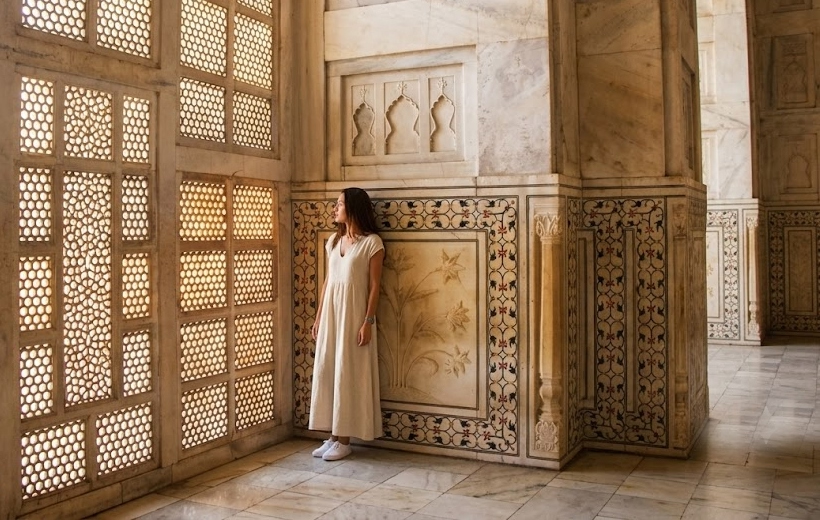
The interior is not a palace filled with furniture or royal treasure. It is a mausoleum. Its beauty comes from carved marble screens, floral stone inlay, Quranic calligraphy, raised relief work, carefully controlled light and the remarkable symmetry of the chamber.
This guide explains what you can actually see inside, why there are two sets of tombs, what lies beneath the visitor floor, which rooms remain closed and how to plan your visit without falling for internet myths.
Quick Answer
What Is Actually Inside the Taj Mahal?
The main visitor chamber contains two symbolic marble cenotaphs, a carved marble screen, stone inlay, calligraphy and surrounding architectural spaces. The real graves of Mumtaz Mahal and Shah Jahan are directly below in a lower crypt.
What regular visitors see
The Upper Memorial Chamber
Main Features
- Octagonal central chamber
- Carved marble jali screen
- Floral stone inlay
- Quranic inscriptions
What regular visitors do not enter
The Lower Burial Chamber
Important to Know
- Not part of normal visitor circulation
- More private than the upper chamber
- Protected as a sensitive burial space
- Not a hidden treasure room
Start With the Basics
The Taj Mahal Is a Mausoleum, Not a Royal Palace
The word “Mahal” can make visitors imagine royal bedrooms, a throne room or furnished apartments. The central white marble building was not designed as Shah Jahan’s home.
It was commissioned as a funerary monument for Mumtaz Mahal. Shah Jahan was later buried there as well.
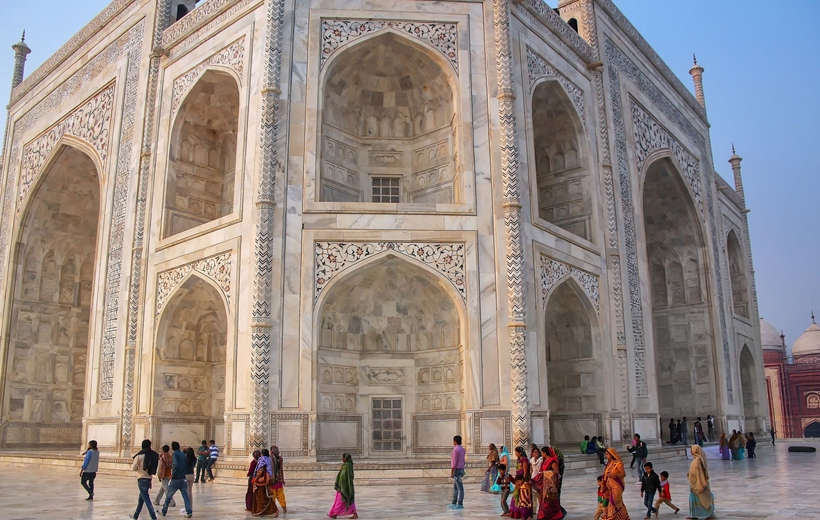
UNESCO describes the Taj Mahal as an immense white-marble mausoleum built in Agra by Shah Jahan in memory of his wife. The wider complex includes a formal garden, monumental gateway, mosque, matching eastern building and supporting structures.
That purpose explains the interior. There are no collections of furniture or rooms arranged like a palace tour. Architecture itself carries the meaning through marble, geometry, calligraphy, light and floral decoration.
What You Should Expect
A solemn memorial chamber with detailed craftsmanship, not a furnished royal residence.
Stepping Inside
What Happens When You Enter the Main Mausoleum?
The mood changes quickly as you move from the bright marble platform into the darker interior.
Outside, the building feels open and enormous. Inside, the route becomes more controlled. Visitors normally pass through an entrance area and move toward the central memorial chamber.
Your eyes may need a moment to adjust. The chamber receives less direct light than the exterior, so fine details appear gradually rather than all at once.
- A high central interior space
- The cenotaphs of Mumtaz Mahal and Shah Jahan
- A carved marble screen surrounding them
- Floral stone inlay set into white marble
- Calligraphic inscriptions
- Arches, niches and smaller surrounding spaces
- A strong natural echo
During busy periods, staff may keep visitors moving. Knowing the main details before you enter helps you notice more without blocking the route.
The Heart of the Monument
The Main Central Chamber
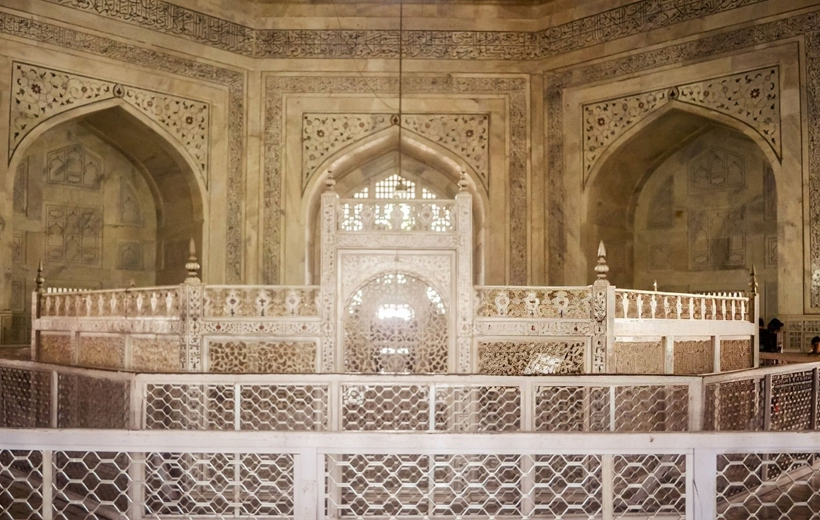
The central chamber is broadly octagonal. Arches and adjoining spaces surround the memorial enclosure, while the room’s geometry keeps drawing your attention back toward the centre.
Mumtaz Mahal’s cenotaph occupies the central position. Shah Jahan’s cenotaph was added beside it after his death.
This creates the most famous break in the monument’s otherwise rigorous symmetry. The Taj Mahal may look mathematically perfect from the garden, but the final burial arrangement introduced one deeply human irregularity.
Mumtaz Mahal
Her cenotaph forms the original centre of the chamber because the mausoleum was created for her.
Shah Jahan
His cenotaph stands beside hers and shifts the balanced arrangement away from a single central axis.
Memorial Tombs
Why Are There Two Tomb-Like Structures Upstairs?
The two decorated marble structures are cenotaphs. A cenotaph is a symbolic memorial placed separately from the actual grave.
They are positioned in the most visible ceremonial space and decorated with inscriptions and stone inlay. Visitors naturally assume they contain the bodies because they look like elaborate tombs.
They do not.
| Feature | Location | Purpose | Normal Access |
|---|---|---|---|
| Cenotaphs | Upper central chamber | Symbolic memorials | Visible to mausoleum visitors |
| Actual graves | Lower burial chamber | Real resting place | Normally closed |
The Actual Burial Place
Where Are the Real Graves of Mumtaz Mahal and Shah Jahan?
The actual graves are in a lower crypt beneath the cenotaph chamber. Their positions broadly correspond with the memorials above.
Regular visitors normally do not enter this burial chamber. Plan your visit expecting access to the upper memorial chamber only.
This two-level arrangement separates public commemoration from the actual burial space. Upstairs is the visually elaborate chamber created for remembrance. Below is the more private crypt.
Do Not Book “Secret Crypt Access”
A person promising normal tourists special entry to the lower burial chamber or closed rooms should be treated with caution.
Stone That Looks Like Lace
The Carved Marble Screen Around the Cenotaphs
The marble jali around the cenotaphs is one of the interior’s finest details. From several steps away, it can look as delicate as lace even though it was carved from solid stone.
The screen creates a boundary around the memorials without hiding them completely. Light passes through the openings, changing the view as you move around the enclosure.
Look at the repeated shapes and the precision of the carving. It is easy to miss the workmanship when crowds keep moving, so give the screen more attention than a quick glance.
Colour Set Into Marble
Pietra Dura and Parchin Kari Stone Inlay
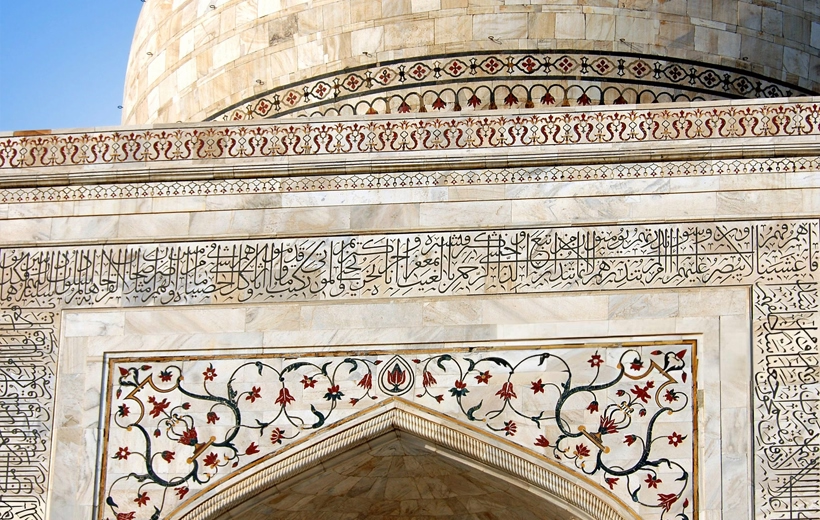
The floral colours inside the Taj Mahal are not simply painted onto the marble. Craftspeople cut small pieces of coloured stone and fitted them into prepared cavities in the white surface.
The technique is widely called pietra dura and is also associated locally with parchin kari. It creates smooth decorative patterns that become part of the marble itself.
How the Inlay Was Created
- A pattern was drawn or planned on the marble.
- Small cavities were cut into the surface.
- Coloured stones were shaped to fit the design.
- Each piece was set into the marble.
- The finished surface was polished smooth.
Flowers, stems and leaves appear repeatedly. These designs connect the monument’s funerary purpose with ideas of gardens, beauty and paradise.
Words as Architecture
Quranic Calligraphy Inside the Taj Mahal
Dark calligraphic inscriptions stand against the pale marble around important openings and memorial elements.
The writing is not an extra decorative layer placed wherever space was available. Its scale and position were planned as part of the architecture.
On parts of the monument, letters placed higher above the viewer were made larger. This reduces the visual effect of distance and helps the inscription look balanced from below.
Look at the Calligraphy Before Entering
The exterior entrance arches often provide easier viewing than the busy central chamber.
The Atmosphere Inside
Why Is the Taj Mahal Dark and Echoing Inside?
The chamber is dimmer than the exterior because natural light enters in a controlled way through doorways, openings and carved screens.
The contrast is striking. You move from powerful sunlight reflected by white marble into a quieter burial space where details emerge slowly.
Marble and other hard surfaces reflect sound rather than absorbing it. The height and geometry of the chamber allow footsteps and voices to reverberate.
Visitors sometimes shout or clap to test the echo. It is better not to. This remains a protected burial monument, and the natural sounds of the space are easy to hear without adding noise.
Beyond the Centre
What Is in the Rooms Around the Central Chamber?
The main chamber connects visually and structurally with smaller surrounding spaces, arches and passages.
These spaces contribute to circulation, structural balance and the complex internal plan. They are not arranged as galleries filled with furniture or exhibition cases.
Public movement is limited. Visitors cannot freely open doors or explore every passage because many parts are restricted for conservation, safety and crowd control.
The building itself is the exhibit. Its plan, proportions and surfaces matter more than objects placed inside it.
What Is Above the Chamber?
The Taj Mahal uses a double-dome system. The inner dome shapes the proportions visitors experience from inside, while a larger outer dome creates the famous silhouette seen across the garden and river.
This lets the mausoleum feel balanced inside without sacrificing the dramatic height of the exterior dome.
Under the Visitor Floor
What Is Beneath the Taj Mahal?
The lower burial crypt is beneath the central chamber, but that is not the only space below the level seen by tourists.
The mausoleum stands on a vast raised platform beside the Yamuna River. Structural rooms, platform spaces and foundation systems form part of the engineering of the site.
Building such a heavy marble monument beside a river required careful planning. The true engineering story is already extraordinary without adding unsupported claims about underground cities or treasure vaults.
Myth vs Architecture
What Are the Sealed Rooms of the Taj Mahal?
Historic monuments often contain doors, passages and structural chambers that are not open to tourists. The Taj Mahal is no exception.
Restricted areas may remain closed because:
- Surfaces are fragile
- Passages are too narrow for crowds
- Spaces serve a structural purpose
- Conservation work requires controlled access
- Security arrangements limit movement
- The rooms were never intended as public galleries
The popular phrase “22 secret rooms” is often used for lower structural chambers. Calling them secret makes the story sound more dramatic than the evidence supports.
A Locked Door Is Not Proof of a Conspiracy
Closed areas are normal at protected monuments. Reliable interpretation should begin with architecture and conservation, not viral speculation.
Secret Tunnel Stories
Is There a Tunnel From the Taj Mahal to Agra Fort?
Stories about a hidden tunnel connecting the two monuments are popular, but regular visitor information does not establish a public underground route between them.
The Taj Mahal contains passages and lower-level spaces, which is normal for a building of this scale. That does not confirm every dramatic tunnel story shared online.
A responsible guide should clearly separate documented architecture from legend.
The Wider Complex
What Is Inside the Mosque and Jawab Buildings?
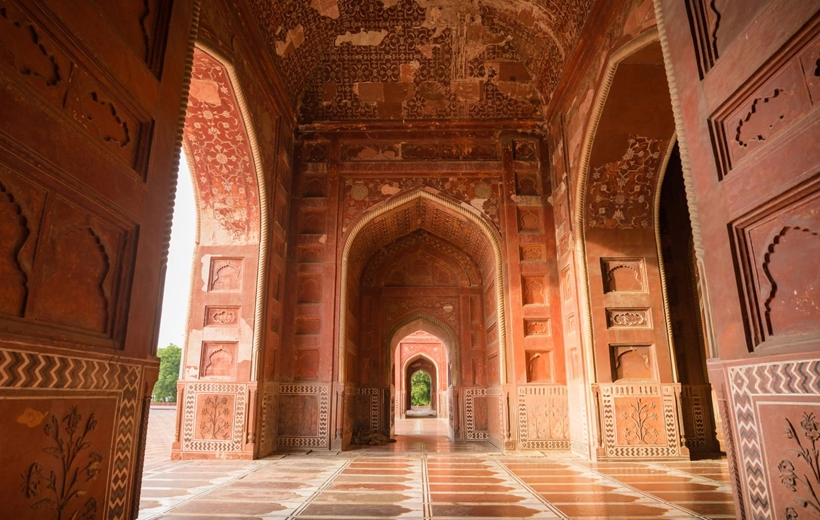
A red sandstone mosque stands west of the mausoleum. It faces the direction of prayer and gives the funerary complex a religious function beyond the central tomb.
A matching eastern building, usually called the jawab, preserves the visual symmetry of the platform. It does not serve the same congregational role because its orientation is different.
| Building | Location | Primary Role |
|---|---|---|
| Mosque | West side | Prayer and religious function |
| Jawab | East side | Architectural balance |
| Mausoleum | Centre | Memorial and burial monument |
Extra Historical Context
What Can You See in the Taj Museum?
The museum is separate from the central mausoleum. It can provide background that the main chamber cannot offer through signs or display cases.
Displays may help visitors understand the planning, Mughal period, calligraphy, architecture and history of the complex.
Opening and access arrangements may change. Check the current situation during your visit rather than assuming the museum will always be available.
Plan the Visit Properly
Tickets, Mausoleum Access and Visitor Rules
The official ticketing system offers a Taj Mahal entry option and a Taj plus mausoleum option. Check the category carefully before payment if entering the main tomb is important to you.
Rules can change with security, conservation and crowd-management requirements. Follow the signs and staff instructions on the day.
- Carry only permitted items
- Avoid large bags and unnecessary belongings
- Use shoe covers or follow current footwear instructions
- Do not touch carved marble or decorative surfaces
- Keep food outside protected areas
- Stay within the marked visitor route
- Keep your voice low inside
- Follow current photography instructions
- Do not attempt to enter closed passages
Can You Take Photos Inside?
Photography rules inside the main chamber may be stricter than in the garden and exterior areas. Read the signs and follow security directions.
Flash, tripods, professional equipment and filming setups may be restricted. Take your main photographs outside and treat the interior as a place to observe rather than stage a photo session.
Crowds and Timing
Best Time to See the Taj Mahal Interior
Early morning usually offers the best overall experience. Temperatures are more comfortable and crowd pressure may be lower than later in the day.
That does not mean the interior will be empty. Sunrise is popular, especially during the cooler season.
| Period | Typical Conditions | Planning Advice |
|---|---|---|
| October to March | Cooler weather and high demand | Book early and arrive near opening |
| April to June | Strong daytime heat | Choose early morning |
| July to September | Humidity and possible rain | Check weather before travel |
| Weekends and holidays | Heavier crowds | Allow extra queue time |
The Taj Mahal is normally closed to general tourists on Fridays. Verify current official timings before arranging transport.
How Long Should You Spend?
Most visitors spend roughly 15 to 30 minutes inside the main chamber, depending on crowds and staff movement.
Allow around two to three hours for the whole complex, including security, gardens, gateway, mausoleum, mosque, jawab, river-facing platform and museum when open.
Clear Answers
Taj Mahal Interior Myths vs Facts
Myth: The Taj Mahal Is Empty
It has no palace furniture, but the chamber contains cenotaphs, screens, inlay, inscriptions and carved architectural details.
Fact: It Is a Mausoleum
Its restrained interior reflects its role as a burial and memorial monument.
Myth: The Visible Tombs Hold the Bodies
The decorated structures upstairs are symbolic cenotaphs.
Fact: The Graves Are Below
The actual burials lie in the lower crypt beneath the visitor chamber.
Myth: Every Closed Room Hides Treasure
Protected monuments routinely close fragile, structural and unsafe spaces.
Fact: Most Closed Spaces Are Not Galleries
Many rooms exist for structure, circulation, conservation or maintenance.
Look More Closely
10 Interior Details Most Visitors Miss
- Shah Jahan breaks the symmetry: his cenotaph stands beside Mumtaz Mahal’s central memorial.
- The flowers are set into marble: much of the colour is stone inlay, not paint.
- The screen controls the view: it protects the memorial area without fully hiding it.
- Sound changes dramatically: the chamber’s echo is part of its spatial character.
- Darkness is intentional: the transition creates a more solemn atmosphere.
- The visible tombs are not the graves: they are memorial cenotaphs.
- The inner and outer domes differ: the double dome balances interior and exterior scale.
- The wider complex matters: the mosque, jawab, garden and gateway complete the design.
- The calligraphy uses optical adjustment: higher letters can be larger so they appear balanced from below.
- The interior explains the exterior: understanding the burial chamber changes how the whole monument feels.
Is It Worth Going Inside?
Should You Pay for Main Mausoleum Access?
For most first-time visitors, yes. The exterior is more immediately photogenic, but the interior explains why the monument exists.
Manage your expectations. The chamber can be dim, crowded and tightly managed. You are not entering a vast palace hall.
Go inside to understand the cenotaphs, marble screen, stone inlay and original funerary purpose. Do not go expecting hidden rooms or a treasure display.
Related Taj Mahal Guides
Plan Your Agra Visit
Want More Than a Quick Photo Stop?
Plan a Private Taj Mahal and Golden Triangle Tour
Tell us your dates, starting city and group size. We can plan a private Agra visit with suitable timing, comfortable transport and a knowledgeable local guide.
- Sunrise and daytime options
- Private Delhi or Jaipur transfers
- Licensed local guide options
- Clear route and inclusions
Common Questions
Frequently Asked Questions About What Is Inside the Taj Mahal
Open any question below for a direct answer.
What is inside the Taj Mahal?
The main chamber contains the cenotaphs of Mumtaz Mahal and Shah Jahan, a carved marble screen, coloured stone inlay, calligraphy, relief work and surrounding architectural spaces.
Can tourists go inside the Taj Mahal?
Yes. Visitors can enter the upper memorial chamber with the required mausoleum access. The lower burial crypt is normally closed.
Are Mumtaz Mahal and Shah Jahan buried inside?
Yes. Their actual graves are in the lower crypt beneath the decorated cenotaphs seen by regular visitors.
Why are there two tombs inside?
The two visible cenotaphs commemorate Mumtaz Mahal and Shah Jahan. Mumtaz Mahal occupies the original central position, while Shah Jahan was placed beside her later.
Is the Taj Mahal empty inside?
No. It is not furnished like a palace, but the chamber contains memorials, marble carving, stone inlay, inscriptions and important architectural details.
Where are the real graves?
The actual graves are in a lower burial chamber directly beneath the upper cenotaph chamber.
Can visitors see the lower crypt?
Not during a normal public visit. Visitors usually see only the decorated cenotaph chamber above.
Are there secret rooms?
The monument contains closed structural rooms and passages, but dramatic stories about hidden treasure are not supported by reliable evidence.
What are the 22 locked rooms?
The phrase generally refers to lower structural chambers that are closed for conservation, security and practical management rather than operated as public galleries.
Is there a tunnel to Agra Fort?
Popular stories claim there is a tunnel, but normal visitor information does not confirm a public underground route connecting the two monuments.
Can you take photos inside?
Interior photography rules may be restricted. Follow current signs and instructions from security staff.
Why is it dark inside?
Natural light enters through controlled openings and marble screens, creating a dimmer and more solemn atmosphere than the bright exterior.
Why does the interior echo?
Hard marble surfaces and the chamber’s height and geometry reflect sound, causing voices and footsteps to reverberate.
How long does the interior visit take?
Most visitors spend around 15 to 30 minutes inside the main chamber and two to three hours across the complete complex.
Is the Taj Mahal a palace or a tomb?
It is a mausoleum created as a memorial and burial place, not a furnished royal palace.
Final Thoughts
The Interior Gives the Taj Mahal Its Meaning
Inside the Taj Mahal is not a royal palace and not an empty marble shell. It is a carefully planned memorial chamber centred on two symbolic cenotaphs.
Beneath those memorials lie the actual graves of Mumtaz Mahal and Shah Jahan. Around them, marble carving, coloured stone inlay, calligraphy, symmetry and filtered light turn a burial space into one of the world’s most recognised architectural interiors.
Do not rush through only because the crowd is moving. Notice the off-centre position of Shah Jahan, the lace-like marble screen and the flowers created from stone rather than paint.
When you step outside, the famous dome will feel different because you now understand what it protects.