The Golden Triangle with Kerala Backwaters Tour is one journey that lets you experience two very different sides of India in one smooth, well-paced itinerary. You start in North India with the classic Golden Triangle circuit of Delhi, Agra, and Jaipur, then fly down to Kerala to slow right down among palm-fringed canals, lakes, and quiet backwaters.
In the north, you walk through Mughal forts, royal palaces, bustling bazaars, and iconic monuments like the Taj Mahal, Agra Fort, Amber Fort, Hawa Mahal, and Qutub Minar. In the south, you drift along Kerala’s legendary backwaters on a private houseboat, stay in a lakeside resort in Kumarakom, and soak in God’s Own Country with Ayurveda, birdlife, and soft sunsets over Vembanad Lake.
This Golden Triangle and Kerala tour is ideal if you want culture and nature in one trip: big cities and small villages, rooftop dinners and home-style Kerala food, busy streets and silent waterways. With private transport, curated stays, and local guides, it works perfectly for first-time visitors, couples, honeymooners, and families who want a comfortable, authentic introduction to India.
Tour Highlights
- Classic Golden Triangle: Delhi, Agra, Jaipur
- Visit the Taj Mahal, Agra Fort, and Fatehpur Sikri
- Jaipur highlights: Amber Fort, City Palace, Hawa Mahal, Jantar Mantar
- Old & New Delhi with Chandni Chowk, Jama Masjid, India Gate, Humayun’s Tomb, Qutub Minar
- Fly to Kerala and explore Fort Kochi
- Short drive to Alleppey (Alappuzha) – often called the “Venice of the East”
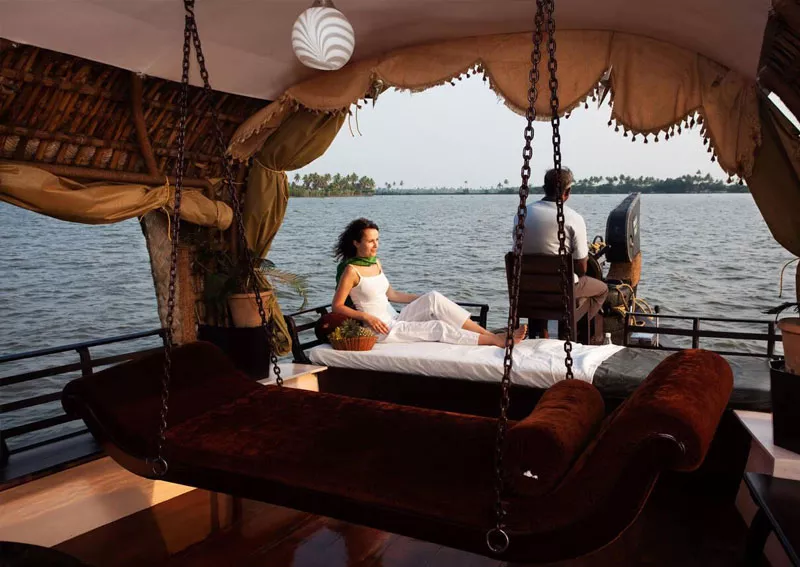
- Full‑day private houseboat cruise in Alleppey backwaters with onboard chef and crew
- Evening transfer to Kumarakom on Vembanad Lake for a quiet resort stay
- Ayurveda, canoe rides, birdwatching, and lakeside sunsets in Kumarakom
- Comfortable private car and local guides throughout
| Destination | Delhi → Agra → Jaipur → Kochi → Alleppey → Kumarakom → Delhi |
| Duration | 12 Days |
| Tour Type | Golden Triangle Tours |
Tour Plan
01Day 1 – Arrival in Delhi
Your journey starts in Delhi, India’s busy, ever‑moving capital. After you land, our representative meets you at the arrival hall, helps with your luggage and escorts you to your private, air‑conditioned car. The drive to your hotel is your first look at India: auto‑rickshaws, buses, office crowds and food stalls all sharing the same space. Once you reach the hotel and complete check‑in, the remaining day is kept free so you can rest, freshen up and recover from your flight. If you have the energy, you can take a short walk around the neighbourhood or simply enjoy the hotel facilities and a quiet dinner before your first full day of sightseeing.
Overnight in Delhi.
02Day 2 – Old & New Delhi in One Day
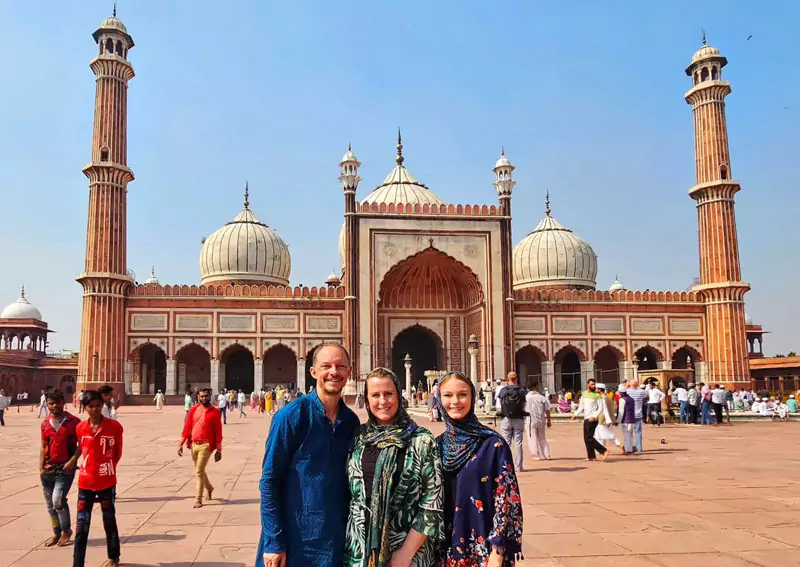
This morning, after breakfast, you step out to see both sides of Delhi – the old, crowded lanes built by the Mughals and the wide, planned avenues created by the British. You begin in Old Delhi with a visit to Jama Masjid, one of the largest mosques in India, where the view from the steps shows you the city at full speed. From here, you sit in a cycle‑rickshaw and glide into the narrow streets of Chandni Chowk. Shops are stacked close together, selling spices, dry fruits, jewellery, textiles and sweets, and the mix of horns, voices and aromas feels intense but unforgettable. A short stop at Raj Ghat gives you a moment of calm at Mahatma Gandhi’s simple memorial by the river.
In the afternoon, you move into New Delhi, where the city opens up into long boulevards and green roundabouts. You drive past India Gate, the war memorial arch, and Rashtrapati Bhawan, the official residence of the President of India. Later, you explore Humayun’s Tomb, a beautiful Mughal garden tomb and a clear architectural ancestor of the Taj Mahal. Your final stop is at the Qutub Minar complex, where a 12th‑century stone tower rises above a set of historic mosques and carved arches. By evening you return to your hotel, with a first complete picture of India’s capital in your mind.
Overnight in Delhi.
03Day 3 – Delhi to Agra – First View of the Taj
After a relaxed breakfast, you leave Delhi by road and drive to Agra along a modern expressway. The journey usually takes three to four hours, with the landscape slowly changing from city edges to open fields and smaller towns. When you reach Agra, you check in at your hotel and have some time to rest.
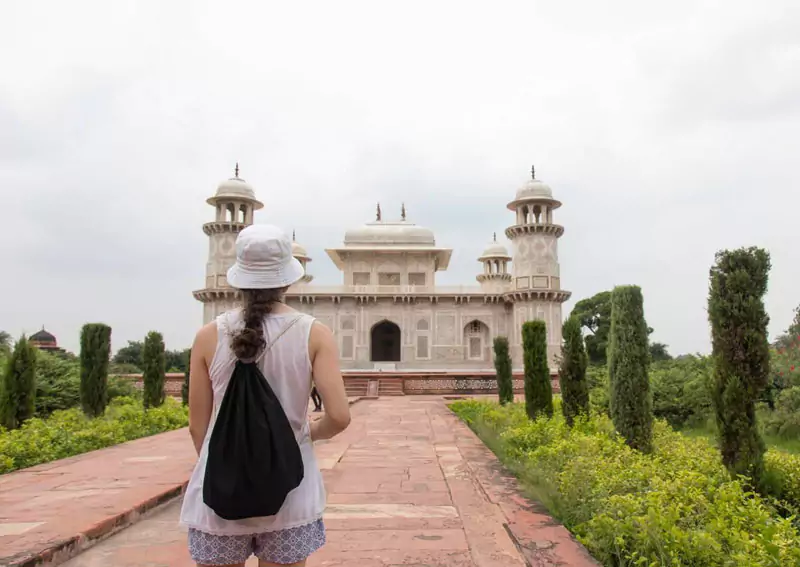
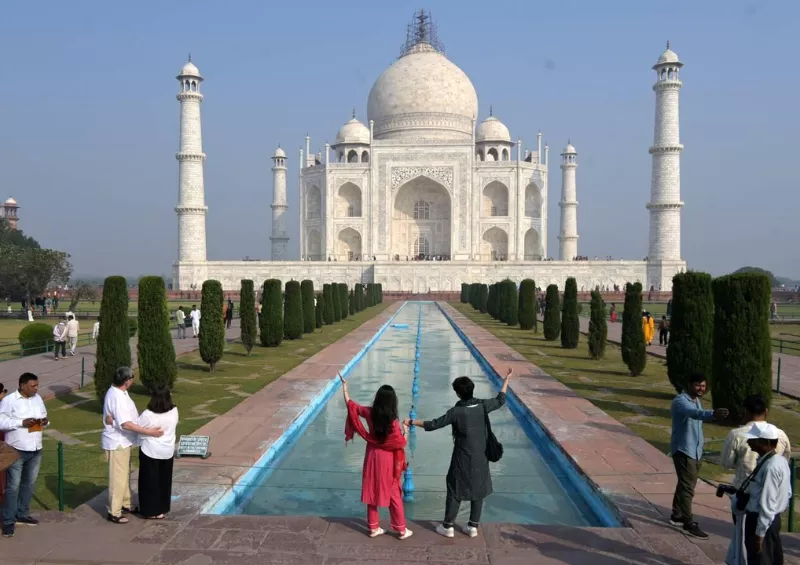
In the afternoon, you visit Agra Fort, a huge complex of red sandstone and marble that once served as the main residence of the Mughal emperors. Inside, you walk through open courtyards, audience halls and royal apartments, and hear stories of Akbar, Jahangir and Shah Jahan. From some points, you can see the Taj Mahal in the distance, across the river. Later, when the light softens, you head to the Taj Mahal itself. Seeing it for the first time is always a quiet moment: the white marble, the symmetry, the garden and the reflection in the water all come together in a single frame. You stay until the colours deepen and the monument slowly turns golden and then pale grey with the evening.
Overnight in Agra.
04Day 4 – Agra to Jaipur via Fatehpur Sikri
This morning is kept easy. You have breakfast at the hotel, spend a little time packing and check out without rush. Then you leave Agra and drive towards Jaipur, but on the way you stop at Fatehpur Sikri, an old Mughal capital that now stands completely empty. The palaces, courtyards, gateways and mosque are all built in warm red sandstone and look almost as if a film crew left a perfect set behind. Wandering through the complex, you learn why the emperor Akbar moved his capital here and why this impressive city was later abandoned.
From Fatehpur Sikri you continue to Jaipur, watching the scenery shift again as you enter Rajasthan. On arrival, you check into your hotel – often a heritage palace with gardens, courtyards and traditional decor. The evening is free for you to settle in, enjoy the property and perhaps step out for a short walk or a simple dinner. The pace of Jaipur is different from Agra; it feels colourful, royal and slightly more relaxed.
Overnight in Jaipur.
05Day 5 – Jaipur – Forts, Palaces and Pink Streets
After breakfast, your day starts with a drive up into the hills to see Amber Fort, just outside Jaipur. A jeep takes you up the final climb to the main gate, from where you enter a series of courtyards, halls and palaces decorated with mirror work, paintings and carved pillars. From the fort walls you can look down at the old town, the step‑well and the hills surrounding the area, which give a clear sense of the strategic power this place once had.
Back in the city, you visit City Palace, part museum and part private residence of the royal family, with courtyards, armouries and beautifully painted doorways. A short walk away is Jantar Mantar, an 18th‑century observatory where huge stone instruments were designed to track the movements of the sun, moon and stars with surprising accuracy. You also stop at Hawa Mahal, the famous “Palace of Winds” with its honeycomb windows, for photos and a quick explanation of how royal women once watched the street life from behind its screens. Later, there is time to explore Jaipur’s markets for block‑printed fabrics, jewellery, blue pottery and handicrafts, or to simply sit at a cafe and watch the city pass by.
Overnight in Jaipur.
06Day 6 – Jaipur to Delhi and Flight to Kochi
Today you move from North India to South India. After breakfast, you check out and drive back to Delhi, or take a short domestic flight, depending on your final routing. On arrival in Delhi, you connect to your onward flight to Kochi in Kerala, where the landscape and atmosphere change completely.
At Kochi airport, our local representative greets you and arranges your private transfer to your hotel in Fort Kochi or by the harbour. The air feels more humid, the trees are greener, and the pace instantly feels slower than the north. If time allows, you can walk along the waterfront and see the Chinese fishing nets at sunset, or simply relax at the hotel and prepare for the next day’s heritage walk.
Overnight in Kochi.
07Day 7 – Fort Kochi – Coastal History and Spice Air
This morning, after breakfast, you explore Fort Kochi on foot with your local guide. The area still carries layers of Portuguese, Dutch and British history, but in a very relaxed, seaside way. You start at St. Francis Church, believed to be the oldest European‑built church in India, and then visit Santa Cruz Basilica with its colourful interior and painted ceiling. A short drive or walk takes you to Mattancherry Palace, often called the Dutch Palace, known for its detailed Kerala murals that show scenes from mythology.
You also see the small but atmospheric Jewish Synagogue in Jew Town, and then wander through lanes lined with antique shops and spice warehouses. The smell of pepper, cardamom and clove hangs in the air, and you get a sense of Kochi’s old role as a spice trading port. The afternoon can be as busy or as light as you prefer: you might want to continue exploring cafes and boutiques, or return to the hotel for a swim and a rest. In the evening, you can watch a traditional Kathakali dance performance, where slow, controlled movements and strong facial expressions tell ancient stories.
Overnight in Kochi.
08Day 8 – Kochi to Alleppey – First Taste of the Backwaters
After breakfast, you leave the city and drive towards Alleppey, a gentle 1.5 to 2‑hour journey through small towns, rice fields and coconut groves. As you get closer, the roads narrow and glimpses of water begin to appear between the trees. Alleppey, often called the “Venice of the East”, sits at the heart of the Kerala backwaters and has a very different rhythm from the cities you have just visited.
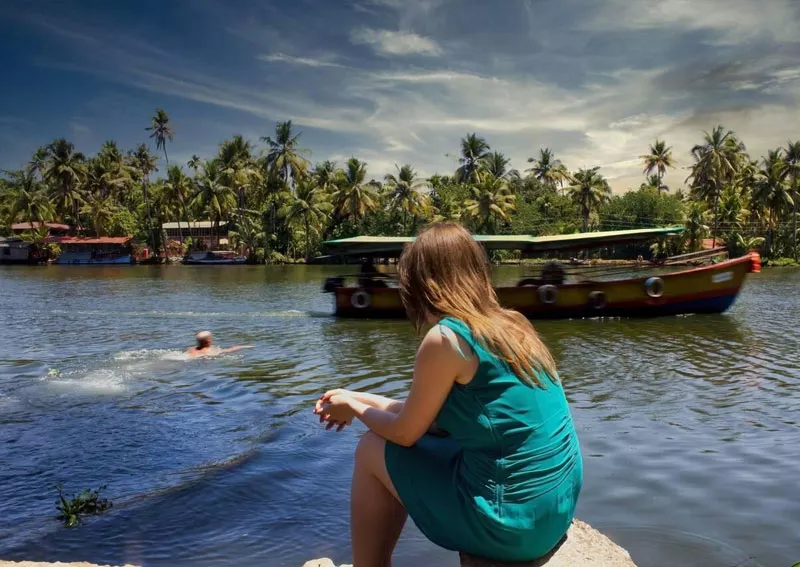
On arrival, you check into a backwater resort or homestay near the canals. The rest of the day is unhurried. You can stroll along the water’s edge, watch small boats ferrying children and vegetables from one bank to another, and listen to the quiet sounds of village life. Meals here usually feature local Kerala flavours – rice, coconut, fresh fish and tangy curries – and you begin to understand why travellers come here to slow down. As evening falls, the light on the water softens, and the sense of calm is very different from anything you experienced up north.
Overnight in Alleppey.
09Day 9 – Alleppey Houseboat Cruise and Transfer to Kumarakom
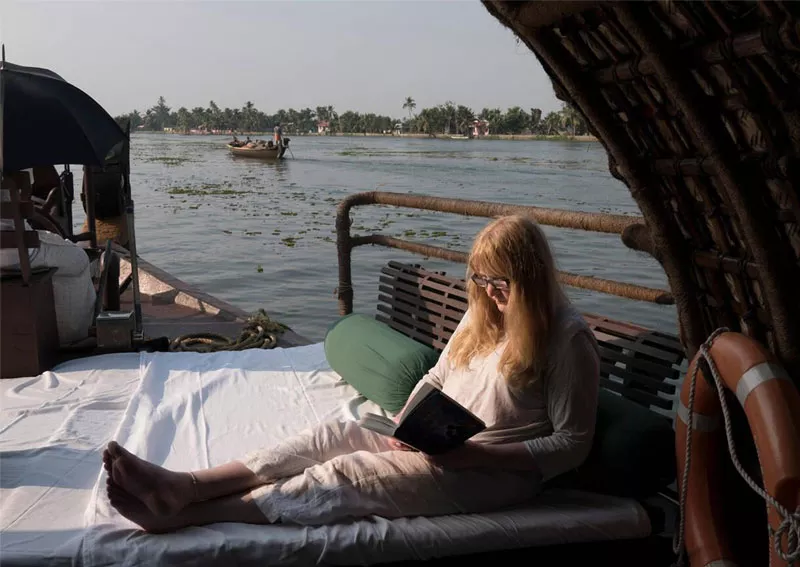
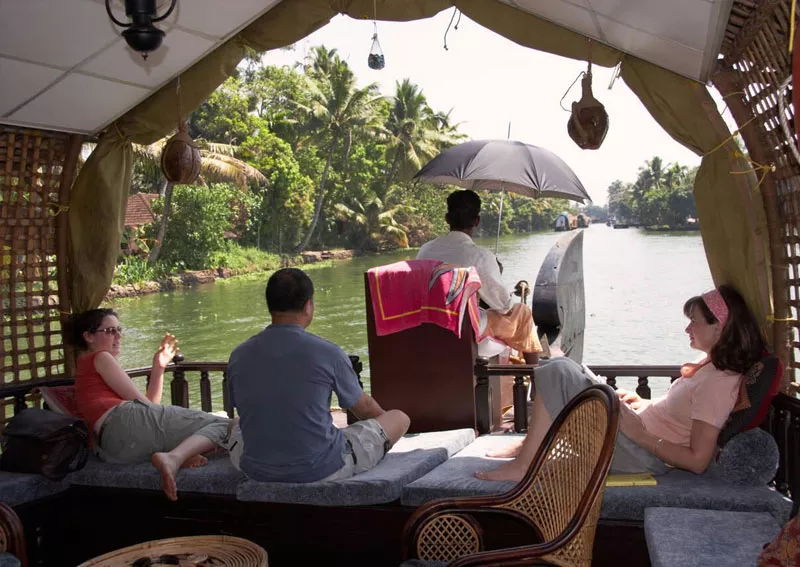
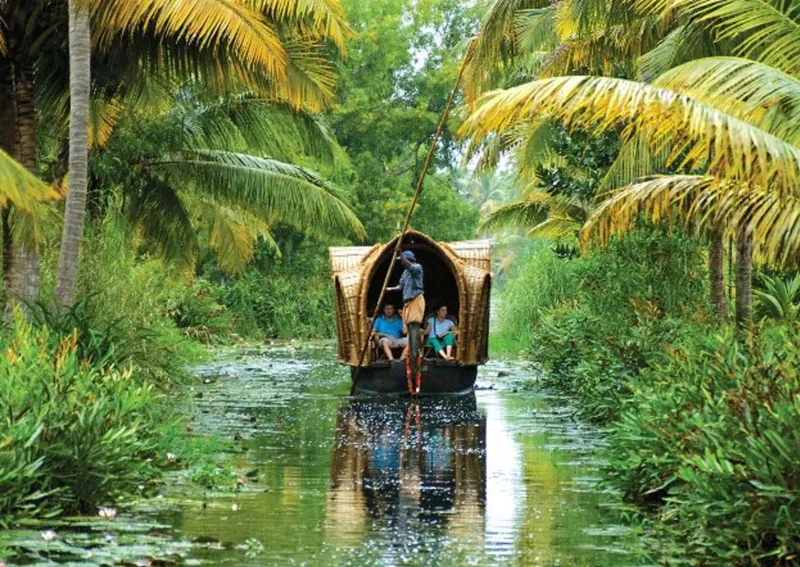
Today is dedicated to the water. After breakfast, you board your private traditional kettuvallam houseboat, which becomes your floating home for the day. The boat usually has a small crew, a simple but comfortable cabin, a clean bathroom and a sitting area on the deck from where you can watch life along the banks. Your personal cook prepares fresh meals on board, using local ingredients sourced from nearby markets.
As the houseboat moves slowly through the backwaters, you pass narrow village canals where houses, schools and small temples sit right beside the water. People travel by boat as casually as others use buses or bikes. Further out, you cross open stretches of Vembanad Lake, where the water widens and the horizon feels huge and still. You see paddy fields that seem to sink below water level, long lines of coconut palms and small country boats carrying fishermen or families. After a relaxed lunch and a few more hours of quiet cruising, you disembark near Kumarakom in the late afternoon and drive a short distance to your lakefront resort. Here you check in, freshen up and enjoy a peaceful evening, listening to the gentle splash of the lake and the soft sounds of nature.
Overnight in Kumarakom.
10Day 10 – Kumarakom – Lake, Birds and Ayurveda
Kumarakom sits on the edge of Vembanad Lake and is designed for slow days. After breakfast, you can start your morning with a visit to the nearby bird sanctuary, where, depending on the season, you may see herons, egrets, kingfishers and other wetland birds among the trees and waterways. Walking along the simple paths, with the sound of birds and rustling leaves, is a refreshing change from the busy streets of the Golden Triangle.
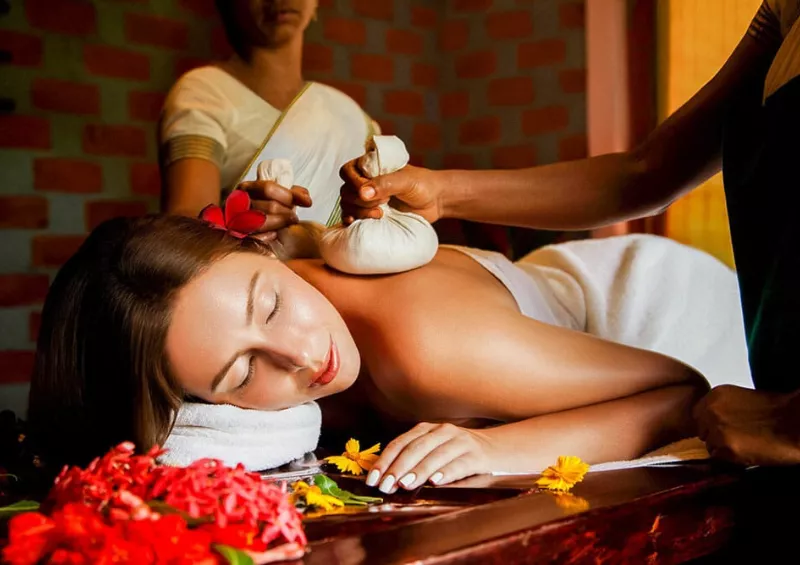
Later in the day, you might choose to take a small canoe through narrow channels where larger boats cannot go, seeing village life from close range. Many resorts also offer short cooking demonstrations where chefs show you how to prepare classic Kerala dishes like fish curry and coconut‑based gravies. You can also book an Ayurvedic massage or a longer treatment, which uses warm oils and traditional techniques to relax your muscles and calm your mind. Or you can keep things simple: swim in the pool, sit by the lake with a book, watch the changing colour of the sky and let time stretch a little.
Overnight in Kumarakom.
11Day 11 – Kumarakom to Kochi and Flight to Delhi
After breakfast, it is time to say goodbye to the backwaters. You check out from your resort and drive back to Kochi airport, a journey of around one and a half to two hours through small villages and roadside plantations. The car ride is a good moment to look back on how the trip has moved – from Delhi’s traffic to Agra’s marble, from Jaipur’s pink streets to Kerala’s canals and lakes.
At Kochi airport, you board your flight back to Delhi. On arrival, you are met again and taken to your hotel near the airport or in the city, depending on your flight schedule for the next day. Your last evening in India is free: you might choose a nice farewell dinner, a short metro ride into the city for a final walk, or an early night before your international flight.
Overnight in Delhi.
12Day 12 – Departure from Delhi
On your final day, you have breakfast at the hotel and then check out at a comfortable time. Your driver picks you up and drives you to Delhi International Airport, helping with luggage and drop‑off. As you leave, you carry with you two very different sets of memories: the monuments, markets and forts of the Golden Triangle, and the quiet waters, coconut trees and houseboats of Kerala. Together, they create a complete picture of an India that is busy and calm, historic and natural, all in one 12‑day journey.