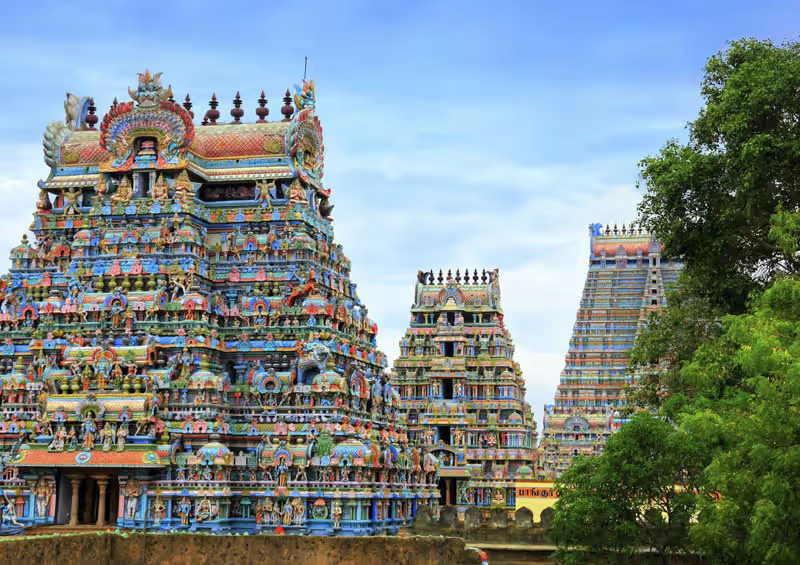
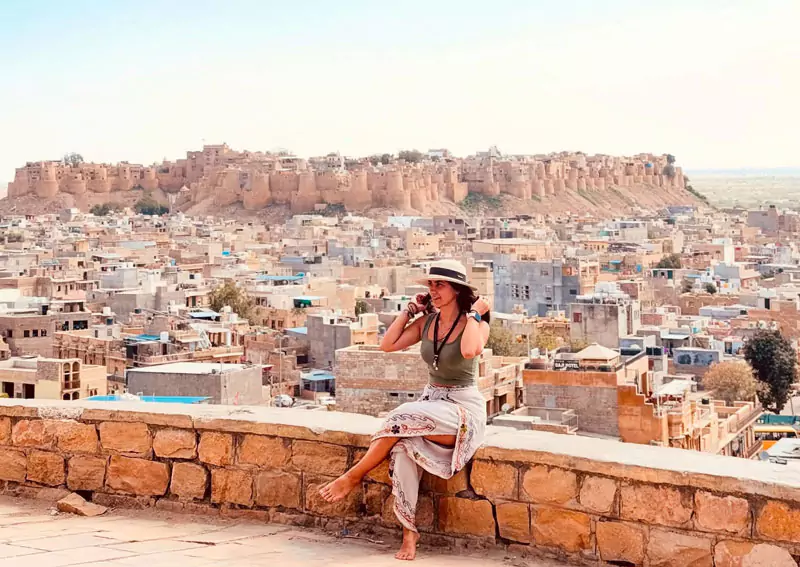
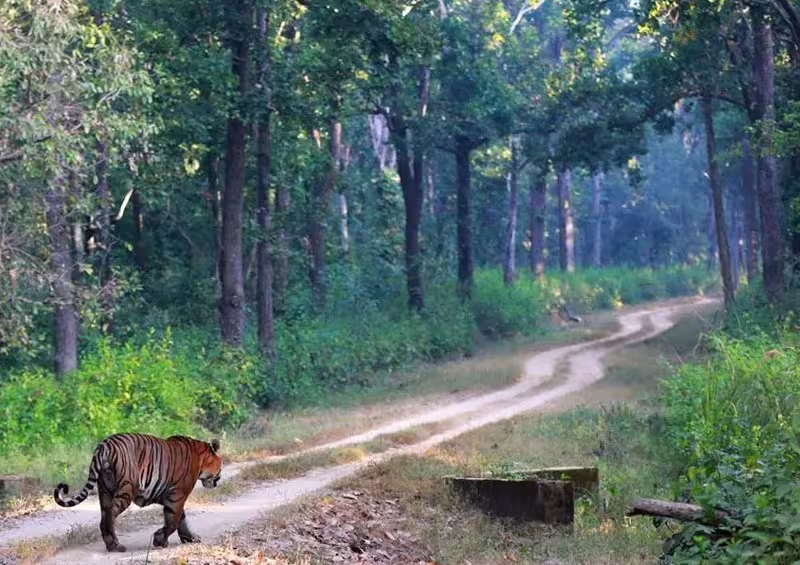
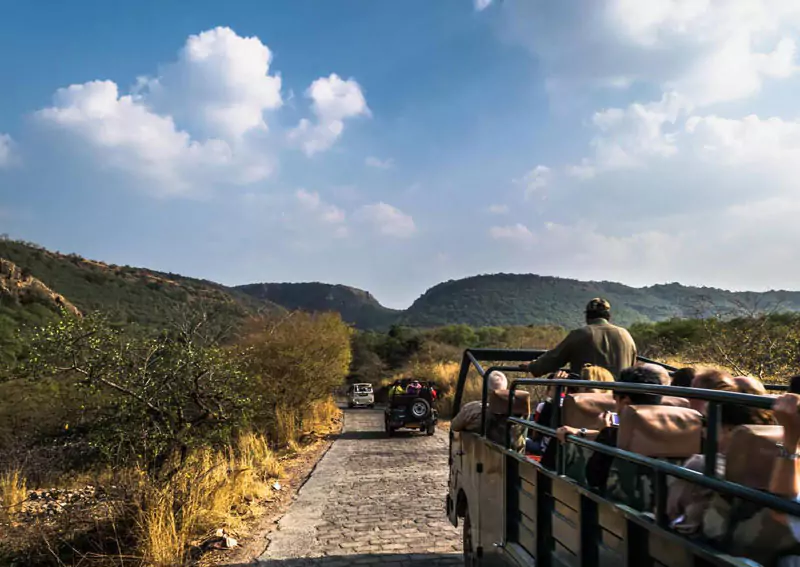
India is a country with so many layers of history that no single city can tell the whole story. The Golden Triangle gives you three of the most iconic cities in the country. But add Lucknow to that circuit and something interesting happens. The tour stops being just about Mughal and Rajput heritage and starts being about the full range of what North India looked and felt like across different centuries and different cultures.
This 8-day Golden Triangle Tour with Lucknow covers Delhi, Jaipur, Agra and Lucknow by private vehicle with an experienced guide. Delhi gives you the grand monuments of both Mughal and colonial India. Jaipur brings you face to face with Rajput royal architecture and the vibrant culture of Rajasthan. Agra is home to the Taj Mahal, one of the greatest monuments ever built by human hands. And Lucknow, the City of Nawabs, closes the journey with a completely different kind of beauty — refined architecture, legendary hospitality, extraordinary food and a cultural sophistication that sets it apart from every other city on this route.
Together, these four cities form a journey through four distinct civilizations in one comfortable, well-paced trip. Whether you are visiting India for the first time or returning to explore parts of the country you have not yet seen, this tour covers everything that matters most in North India and does it without any wasted days.
Tour Highlights
- Arrive in Delhi and explore its most iconic Mughal and colonial monuments
- Visit India Gate, Qutub Minar, Lotus Temple and Humayun's Tomb
- Full day Old and New Delhi sightseeing including Red Fort, Jama Masjid and Raj Ghat
- Rickshaw ride through the lanes of Chandni Chowk in Old Delhi
- Drive to Jaipur and explore the magnificent Amber Fort with optional elephant ride
- Visit Hawa Mahal, City Palace, Jantar Mantar and the Sheesh Mahal
- Stop at Fatehpur Sikri, the abandoned Mughal capital on the road to Agra
- Sunrise visit to the Taj Mahal in Agra for the most peaceful and beautiful experience
- Explore Agra Fort and the Tomb of Itimad-ud-Daulah (Baby Taj) on the Yamuna banks
- Drive to Lucknow and explore the grand Bara Imambara and Chota Imambara
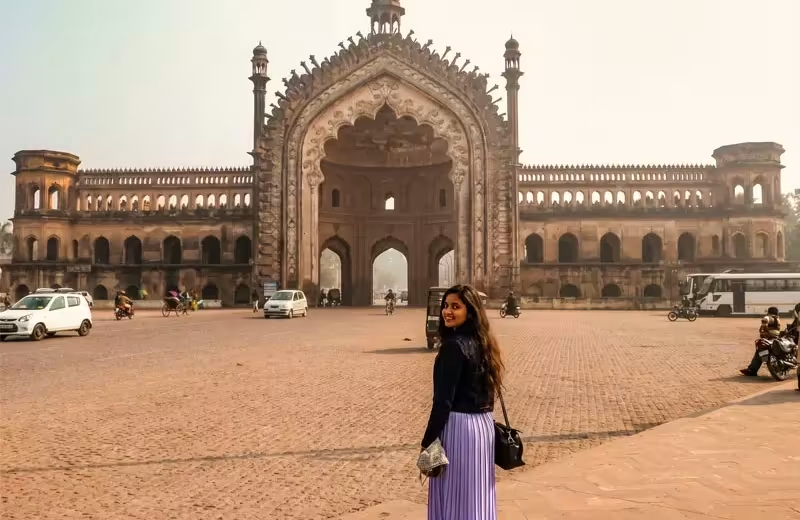
- See the iconic Rumi Darwaza, one of the finest examples of Nawabi architecture
- Visit the Residency, a historic site from the 1857 uprising
- Experience Lucknow's legendary Nawabi cuisine including biryani, kebabs and korma
- Shopping in Hazratganj Market and the famous chikan embroidery bazaars of Lucknow
- Private air-conditioned vehicle and experienced English-speaking guide throughout the tour
Choose the Best Vehicle for Your Comfort
| Car Type |
Seats (Max) |
Example Use |
| Sedan (Dzire/Etios) |
2 – 3 |
Couples / Small Family |
| SUV (Ertiga) |
4 – 6 |
Family / Friends |
| Innova Crysta |
4 – 6 |
Premium Family |
| Tempo Traveller |
8 – 16 |
Group / Corporate |
| Destination | Delhi → Jaipur → Agra → Lucknow → Delhi |
| Duration | 8 Days |
| Tour Type | Golden Triangle Tours |
Tour Plan
01Day 1: Arrival in Delhi
Your tour begins the moment you land at Delhi airport. Our representative will be waiting with a placard displaying your name and will transfer you comfortably to your hotel. The rest of the day is free at leisure. Settle in, freshen up and relax after your journey. If you arrive with time to spare, an evening walk around Connaught Place, the colonial-era commercial hub of New Delhi, is a pleasant way to ease into the trip.
Overnight stay in Delhi.
02Day 2: Delhi Sightseeing
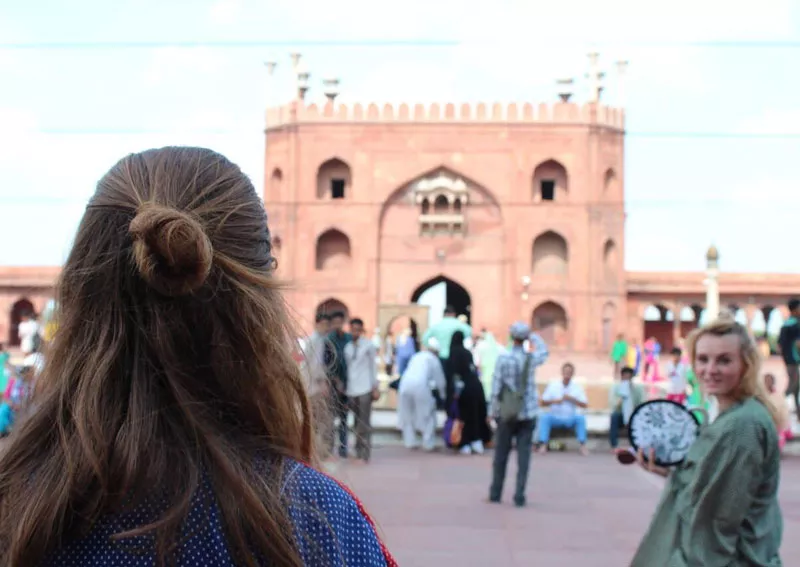
After breakfast, a full day of Delhi sightseeing begins. Delhi is a city where 1,000 years of history exist on the same street and today you will visit the best of it. Start in Old Delhi with Jama Masjid, the largest mosque in India, built by Shah Jahan in the 17th century. From there, take a rickshaw ride through the narrow lanes of Chandni Chowk, one of the oldest and most vibrant markets in Asia. The spice shops, sweet sellers, textile stores and street food stalls here are a sensory experience unlike anything else.
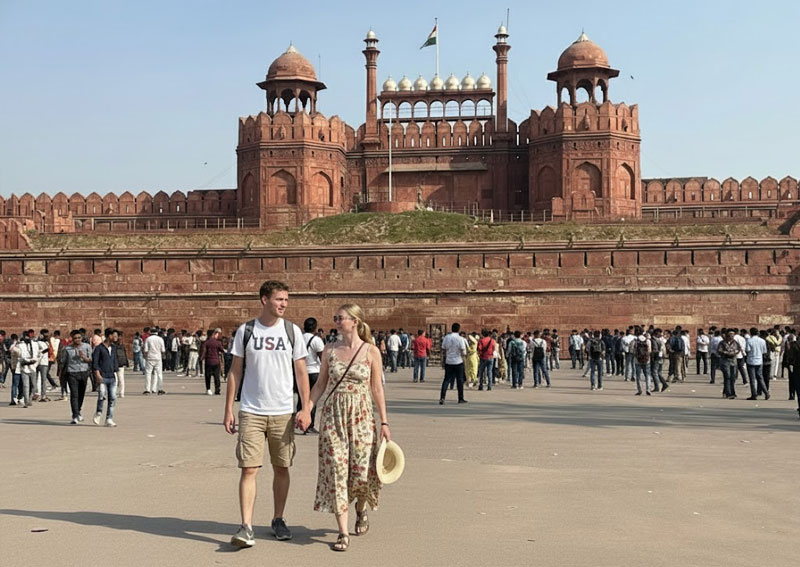
Visit Red Fort, the great red sandstone citadel that served as the seat of Mughal power for over 200 years. Continue to Raj Ghat, the serene memorial dedicated to Mahatma Gandhi, and then to Humayun’s Tomb, Delhi’s finest Mughal garden tomb and the direct architectural predecessor of the Taj Mahal.
In the afternoon, head to New Delhi. Visit India Gate, the grand war memorial that honors the Indian soldiers of World War I. See the Parliament House and President’s House from the ceremonial boulevard of Rajpath. Explore Qutub Minar, the 12th-century tower that is the tallest brick minaret in the world. End the day at the Lotus Temple, a stunning Bahai House of Worship built in the shape of a blooming flower.
Overnight stay in Delhi.
03Day 3: Delhi to Jaipur
After breakfast, your driver takes you to Jaipur, the Pink City and capital of Rajasthan. The drive covers about 280 kilometers and takes around 5 to 6 hours via the Delhi-Jaipur Highway.
Jaipur was founded in 1727 by Maharaja Sawai Jai Singh II and is one of the first planned cities in South Asia. Its old walled city is painted in a distinctive terracotta pink, giving it a warmth and character that immediately sets it apart from any other city you have visited. On arrival, check into the hotel and spend the evening exploring the local bazaars, which sell everything from block-printed textiles and blue pottery to gemstones and hand-carved jewelry.
Overnight stay in Jaipur.
04Day 4: Jaipur Sightseeing
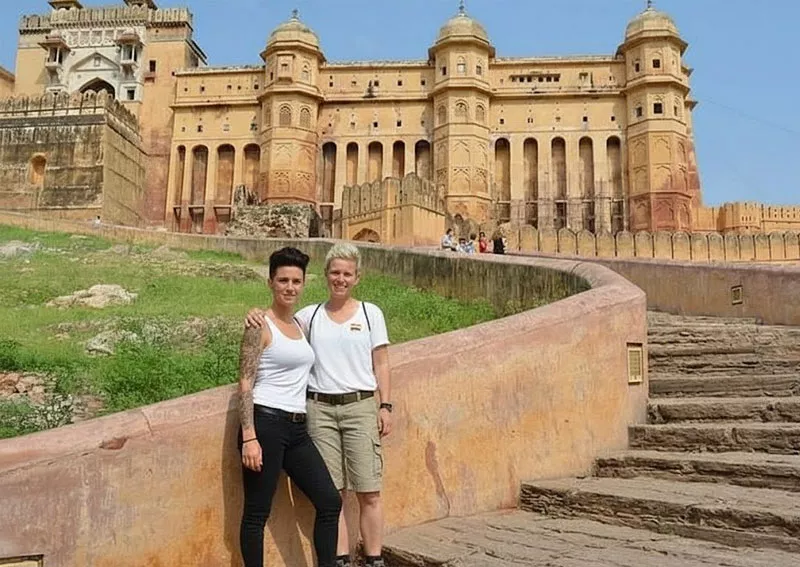
A full day Jaipur Sightseeing to explore one of the most visually spectacular cities in India. Start the morning with Amber Fort, the grand hilltop fortress of the Kachwaha Rajput dynasty, sitting above Maota Lake. The view of the fort from the approach road reflected in the water below is breathtaking. Inside, explore the Sheesh Mahal, the Mirror Palace covered from floor to ceiling in thousands of tiny glass pieces that reflect candlelight like a sky full of stars. Walk through Ganesh Pol, Diwan-i-Khas and the private palace quarters. An optional elephant ride up the slope to the fort entrance is available for those who want the full royal experience.
Next, visit Hawa Mahal, the Palace of Winds, the iconic five-story facade with 953 small windows that was designed so royal women could observe street life without being seen.
Continue to City Palace, the royal complex at the heart of the old city that includes Chandra Mahal, Mubarak Mahal and a museum housing royal costumes, weapons and historical artifacts. Nearby is Jantar Mantar, the open-air astronomical observatory built by Maharaja Jai Singh himself, where massive stone instruments still measure solar time with extraordinary accuracy.
The evening is free for shopping in Jaipur’s famous markets.
Overnight stay in Jaipur.
05Day 5: Jaipur to Agra via Fatehpur Sikri
After breakfast, check out and begin the drive toward Agra with an important stop on the way.
Fatehpur Sikri, located about 40 kilometers from Agra, was built by Emperor Akbar in the 1570s as the new Mughal capital. He constructed an entire city here in red sandstone, complete with palaces, mosques, audience halls and a grand gateway, only to abandon it roughly 14 years later. The city has remained remarkably intact ever since. You will visit Buland Darwaza, one of the tallest gateways in the world, built to celebrate Akbar’s victory over Gujarat. You will also see Jodha Bai Palace, Diwan-i-Aam, Diwan-i-Khas and the Tomb of Sheikh Salim Chisti, a beautiful white marble shrine still visited by thousands of pilgrims each year.
After Fatehpur Sikri, continue to Agra. On arrival, check into the hotel and visit Agra Fort in the late afternoon. This massive UNESCO World Heritage Site on the banks of the Yamuna was built by Emperor Akbar and later modified by Shah Jahan. Inside you will explore Jahangir’s Palace, the Khaas Mahal and the Musamman Burj tower where Shah Jahan spent his last years in captivity, looking at the Taj Mahal through a small mirror.
Overnight stay in Agra.
06Day 6: Agra Sightseeing and Drive to Lucknow
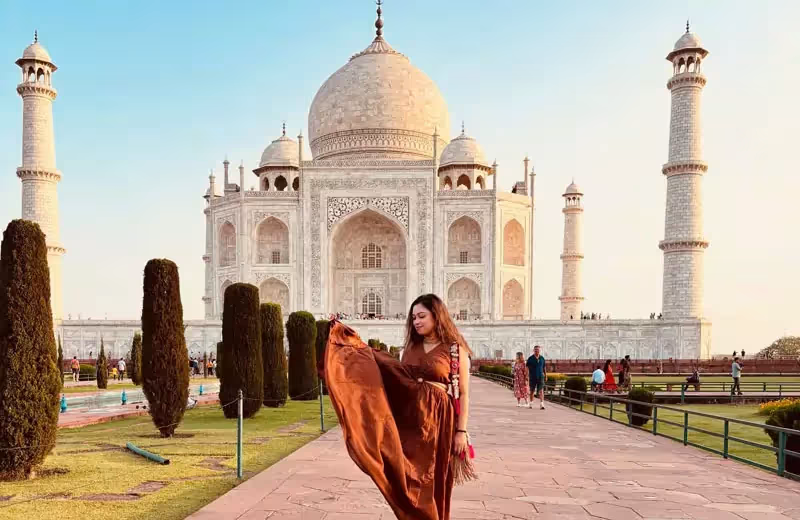
Rise early today for the most important moment of the entire trip. Head to the Taj Mahal at sunrise. The white marble at dawn carries a color and a quality of light that no photograph can fully capture. The soft golden glow, the stillness of the garden, the reflection in the central pool and the sheer scale of the monument up close are simply overwhelming. Your guide will walk you through the full complex including the main mausoleum interior where the cenotaphs of Shah Jahan and Mumtaz Mahal rest behind magnificent marble screens.
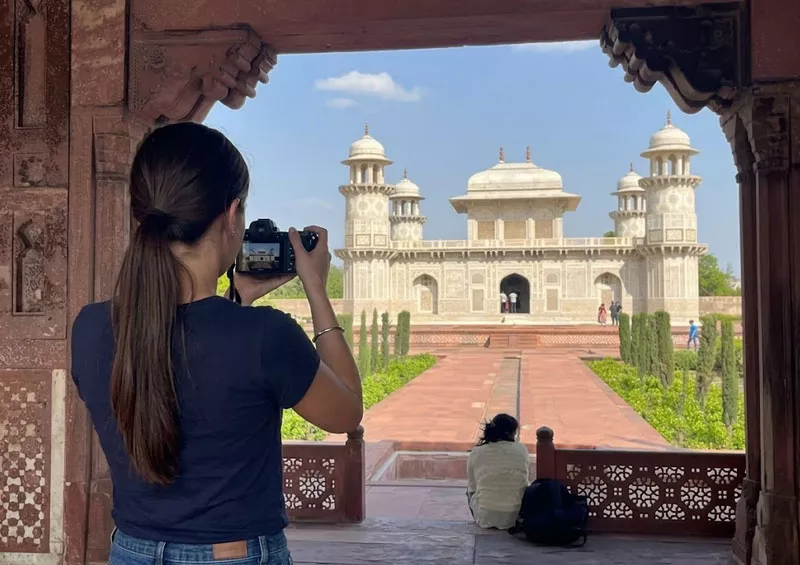
After the Taj Mahal visit, have breakfast at the hotel and check out. Before leaving Agra, visit the Tomb of Itimad-ud-Daulah, also known as the Baby Taj. This entirely white marble tomb, covered in exquisite pietra dura inlay work, was built by Empress Nur Jahan for her father and is considered the direct design predecessor of the Taj Mahal itself.
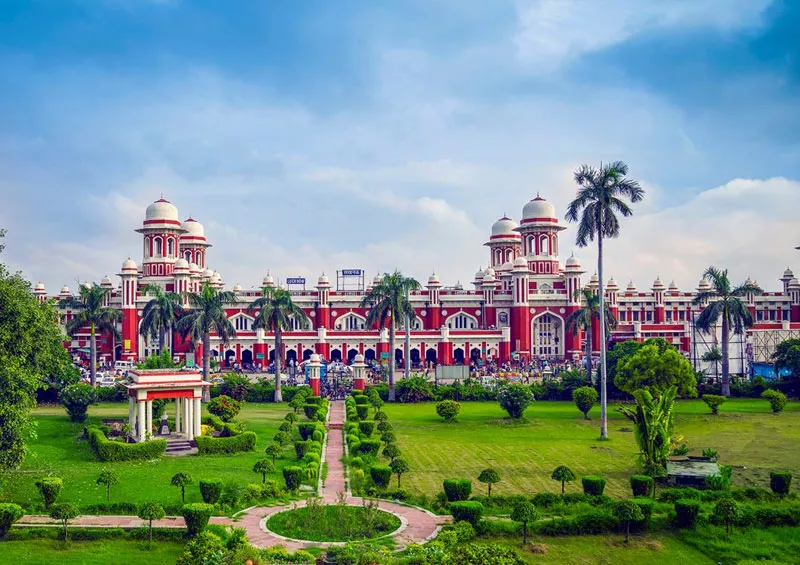
By midday, begin the drive to Lucknow. The journey takes approximately 6 to 7 hours. Arrive in Lucknow by evening and check into the hotel. Spend the first evening exploring the streets around your hotel and trying the legendary Lucknowi street food — the tunde kebabs and Lucknowi biryani available in the old city are genuinely extraordinary.
Overnight stay in Lucknow.
07Day 7: Lucknow Sightseeing
Lucknow is one of India’s most underrated cities. The capital of Uttar Pradesh and the historic home of the Nawabs, Lucknow has a culture of refinement, courtesy and artistry that you can still feel in the food, the architecture and the way people carry themselves. A day here feels genuinely different from the rest of the tour.
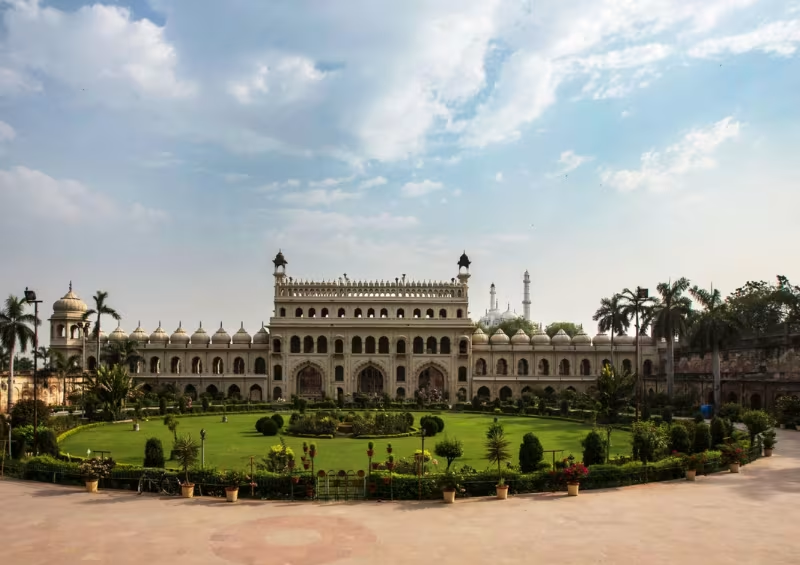
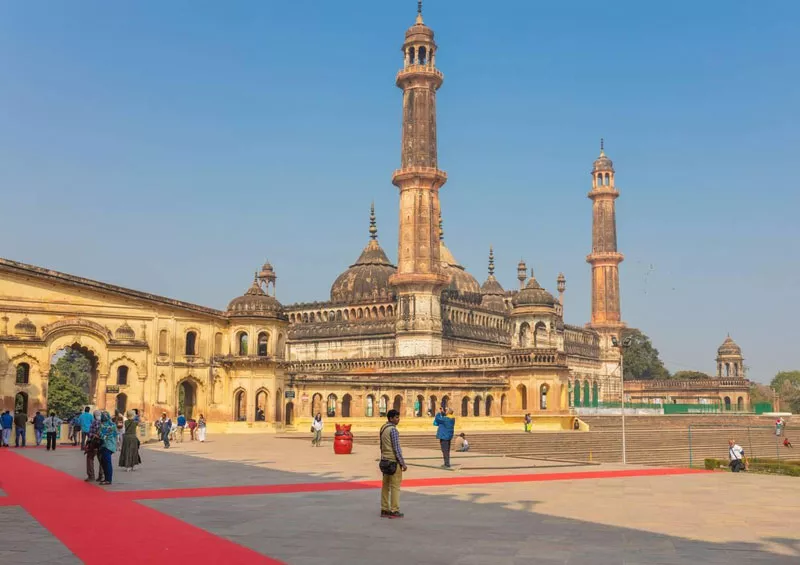
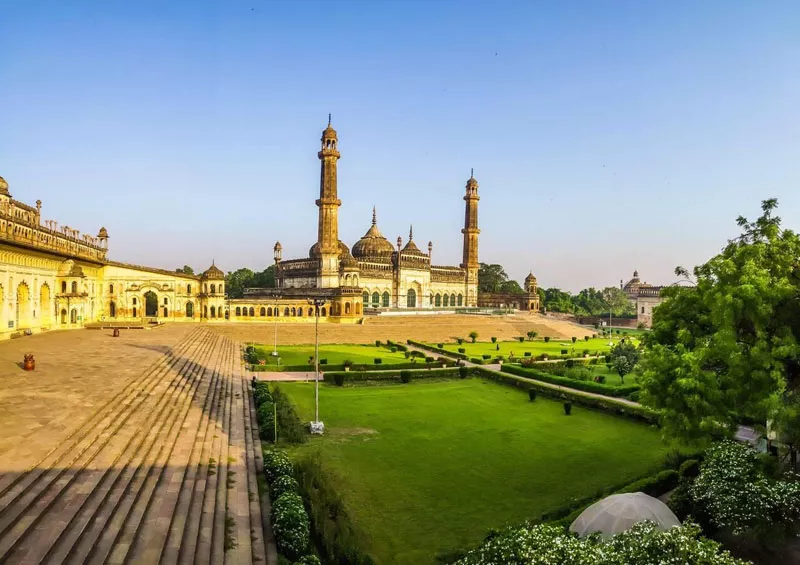
Start the morning at Bara Imambara, also known as Asafi Imambara, built in 1784 by Nawab Asaf-ud-Daula as a famine relief project. The main hall of this imambara is one of the largest arched chambers in the world, built without the use of any supporting beams. Inside the complex is the famous Bhool Bhulaiya, a labyrinth of corridors and passages in the upper section of the building that has confused visitors for centuries. The rooftop offers a wide view across the old city.
Next, visit Chota Imambara, also known as the Imambara of Hussainabad, built in 1838 by Nawab Muhammad Ali Shah. The interior is decorated with chandeliers, gilt and intricate calligraphy and the overall effect is more ornate and intimate than the Bara Imambara.
Walk through Rumi Darwaza, the magnificent gateway built in 1784 and inspired by a famous gateway in Istanbul. Standing 60 feet tall and covered in delicate plasterwork, it is one of the finest examples of Nawabi architecture in India.
In the afternoon, visit the Residency, a collection of ruins from the 1857 uprising when the British garrison and civilians held out in this complex for 87 days during the Indian Rebellion. The ruins are left as they were and the site is now a protected monument with a museum inside.
End the day with shopping in Hazratganj Market for Lucknow’s famous chikan embroidery, a delicate hand-stitching tradition unique to this city that has been practiced for centuries.
Overnight stay in Lucknow.
08Day 8: Lucknow to Delhi and Departure
After breakfast and hotel checkout, your driver will transfer you to Lucknow airport or railway station for your onward journey. If your flight is from Delhi, the drive from Lucknow to Delhi takes approximately 7 to 8 hours and can be done comfortably during the day.
This 8-day journey through Delhi, Jaipur, Agra and Lucknow covers four of the most historically rich and culturally distinct cities in all of North India. You leave with not just photographs of monuments but a real feel for what India looks like across different centuries, different rulers and different ways of life.