India’s Golden Triangle connects three of the most historically significant cities in India: Delhi, Agra and Jaipur. Together they form a circuit that covers Mughal grandeur, Rajput royalty and the modern energy of a capital city. Travelers have been making this circuit for decades and it remains the most popular route in all of India for good reason.
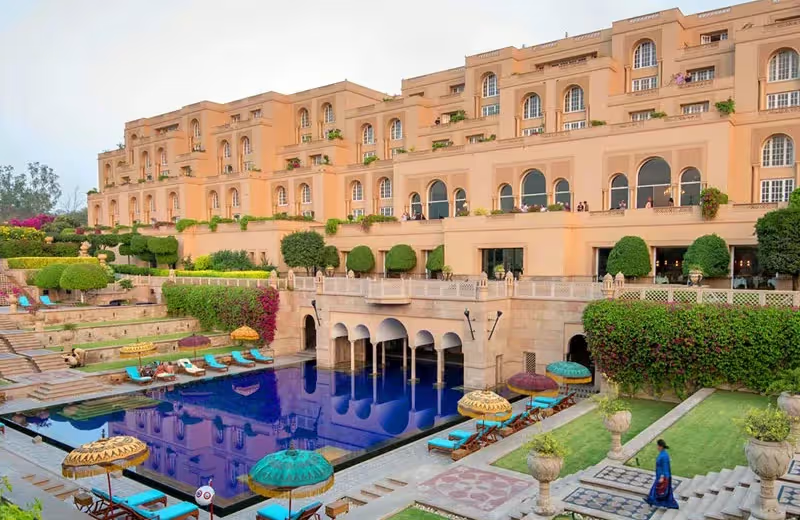
What makes this particular tour different is the accommodation. The Oberoi Group of Hotels is among the most prestigious and celebrated luxury hotel brands in the world. Staying at The Oberoi New Delhi, Oberoi Amarvilas Agra and Oberoi Rajvilas Jaipur does not simply mean a comfortable room to sleep in. It means waking up to iconic views, being attended to by staff who understand what genuine hospitality looks like, and experiencing India’s finest cuisine without ever leaving your hotel.
Oberoi Amarvilas in Agra, for instance, is one of the very few hotels in the world where you have a direct, unobstructed view of the Taj Mahal from your room, your balcony and even your bathtub. That is not a small thing. That is the kind of experience that defines a trip.
This 7 Day Golden Triangle itinerary takes you through grand temples, royal forts, UNESCO World Heritage Sites and ancient stepwells. It is curated, comfortable and deeply immersive. Whether you are celebrating a milestone, honeymooning or simply traveling in the style you prefer, this tour is designed to deliver the very best of India.
Tour Highlights
- Stay at three world-class Oberoi luxury properties across Delhi, Agra and Jaipur.
- Explore Old Delhi with a private pedal rickshaw safari through Chandni Chowk and the historic spice market.
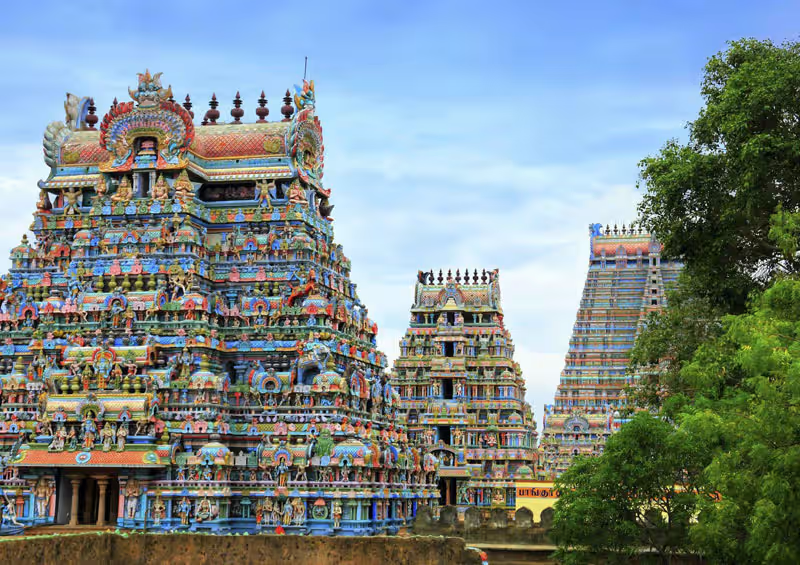
- Visit the Grand Akshardham Temple, one of the largest and most intricately carved Hindu temples in the world.
- Watch the Taj Mahal at sunrise with an unobstructed direct view from Oberoi Amarvilas Agra.
- Explore Agra Fort and visit the Tomb of Itimad-ud-Daulah, also known as the Baby Taj.
- Discover the abandoned Mughal capital of Fatehpur Sikri and the ancient Chand Baori stepwell on the road to Jaipur.
- Visit Amber Fort in the Aravali Hills with an optional elephant ride to the fort gates.
- See Hawa Mahal, City Palace, Jal Mahal and Jantar Mantar on a full-day Jaipur city tour.
- Shop for gold, diamond jewelry, blue pottery and Rajasthani handicrafts in Jaipur's famous local markets
- Visit Birla Temple and the sacred Monkey Temple at Galta Ji on the final morning before departure.
Choose the Best Vehicle for Your Comfort
| Car Type |
Seats (Max) |
Example Use |
| Sedan (Dzire/Etios) |
2 – 3 |
Couples / Small Family |
| SUV (Ertiga) |
4 – 6 |
Family / Friends |
| Innova Crysta |
4 – 6 |
Premium Family |
| Tempo Traveller |
8 – 16 |
Group / Corporate |
| Destination | Delhi → Agra → Jaipur → Delhi |
| Duration | 7 Days |
| Tour Type | Golden Triangle Tours |
Tour Plan
01Day 1: Arrival in Delhi
Your Golden Triangle journey begins the moment you land at Delhi airport. Our representative will be waiting at the arrivals hall with a placard displaying your name. You will be warmly greeted and transferred directly to The Oberoi New Delhi, one of the most iconic luxury hotels in the Indian capital.
Check in, settle into your room and let the day be entirely your own. After a long flight, there is no better way to begin a trip than with complete rest and the quiet comfort that only an Oberoi property can offer.
The rest of the day is free at leisure. Overnight stay at The Oberoi New Delhi.
02Day 2: Delhi City Tour
After a relaxed breakfast at the hotel, your full-day Delhi sightseeing tour begins. Delhi is a city where several centuries exist side by side. Ancient mosques sit next to colonial monuments. Old bazaars spill out onto wide modern boulevards. Every lane has a story and today you will discover many of them.
Start the morning in Old Delhi with a visit to Jama Masjid, the largest mosque in India. Built by Shah Jahan and completed in 1656, this red sandstone and marble structure can accommodate tens of thousands of worshippers at one time. Its towering minarets offer a sweeping view over the old city.
From Jama Masjid, step into the chaos and color of Chandni Chowk, one of the oldest and busiest markets in Asia. Navigate its lanes on a private pedal rickshaw safari, passing spice shops, sweet sellers, fabric stores and temples that have been in the same spot for generations. This is Old Delhi at its most authentic.
Next, visit the Red Fort, Shah Jahan’s great red sandstone citadel that served as the seat of Mughal power for nearly 200 years. Inside, the audience halls, royal chambers and mosques tell the story of an empire at its height.
Head to Rajghat, the serene memorial built in honor of Mahatma Gandhi. This simple but deeply moving space invites quiet reflection.
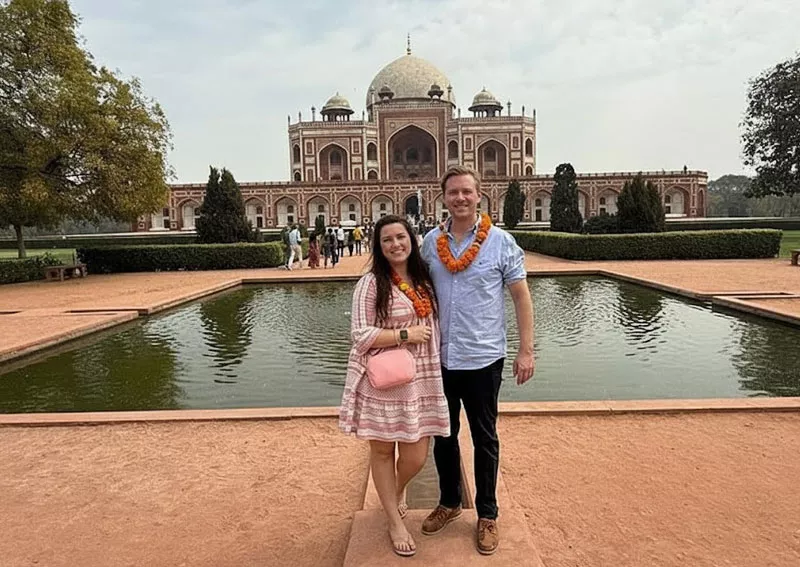
Continue to Humayun’s Tomb, Delhi’s finest example of Mughal architecture and the monument that directly inspired the design of the Taj Mahal. Its symmetry and grandeur are remarkable and it is far less crowded than many other major sites in the city.
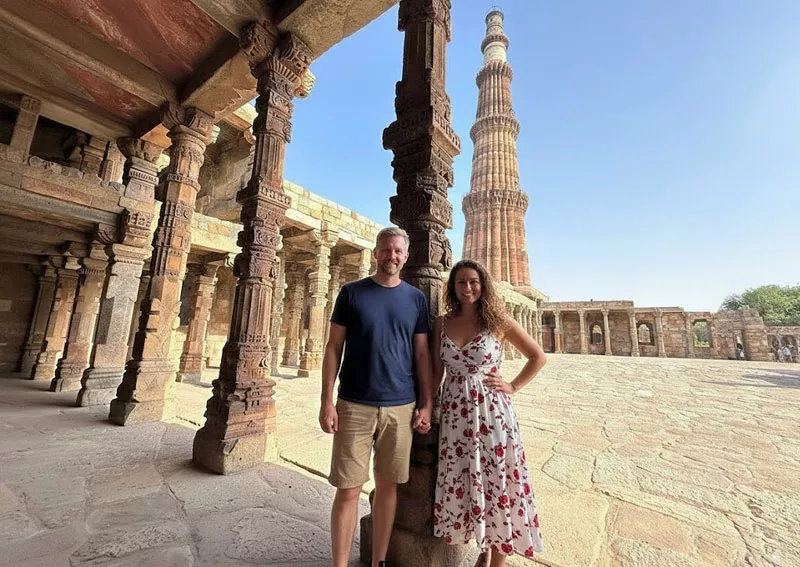
After lunch, visit the Lotus Temple, the striking Bahai House of Worship shaped like a blooming lotus flower and set amid neat gardens. Then move on to Qutub Minar, the 12th-century tower standing 72 meters tall with extraordinary medieval stone carvings throughout its structure.
Drive past The Parliament House, The President’s House and India Gate as you return through New Delhi’s ceremonial boulevard. The scale and design of these colonial-era buildings are impressive even from the road.
Return to the hotel and enjoy dinner at leisure. Overnight stay at The Oberoi New Delhi.
03Day 3: Akshardham Temple Visit and Transfer to Agra
This morning after breakfast, you will visit one of the most extraordinary temple complexes in the entire world: the Grand Akshardham Temple.
The Akshardham mandir stands 141.3 feet into the sky, spans 316 feet in width and is 356 feet in length. It consists of 234 intricately carved pillars, 9 ornate domes, 20 quadrangle spires and more than 20,000 statues representing spiritual personalities from Hindu history. The entire structure is built from carved pink sandstone and white marble, without the use of steel, and reflects traditional Indian Hindu architectural principles in every detail.
Over 300 million volunteer hours went into creating this complex, with more than 8,000 volunteers from across the world participating in the construction. That number alone gives you a sense of the devotion behind what you are looking at.
Inside, three exhibition halls offer different experiences: Sahajanand Darshan, the Hall of Values, which tells the story of Swaminarayan’s life through animatronic scenes; Neelkanth Darshan, an immersive large format film about Nilkanth Varni’s spiritual journey; and Sanskruti Darshan, a cultural boat ride that takes you through 10,000 years of Indian history and civilization. The open gardens, water bodies and step-well styled courtyard surrounding the main temple are equally beautiful and worth exploring at a relaxed pace.
By afternoon, your driver will take you toward Agra, approximately 200 kilometers from Delhi. Agra is home to three UNESCO World Heritage Sites: the Taj Mahal, Agra Fort and Fatehpur Sikri, making it one of the most important heritage destinations in the world.
On arrival, check into the Oberoi Amarvilas Agra. This is one of the most celebrated hotels in all of Asia. Every room and suite faces the Taj Mahal, which is just 600 meters away. Your stay here is itself part of the experience.
The rest of the day is free for rest or optional shopping. Overnight stay at Oberoi Amarvilas Agra.
04Day 4: Taj Mahal at Sunrise and Agra Fort
Set your alarm early. Today holds the most iconic moment of the entire trip.
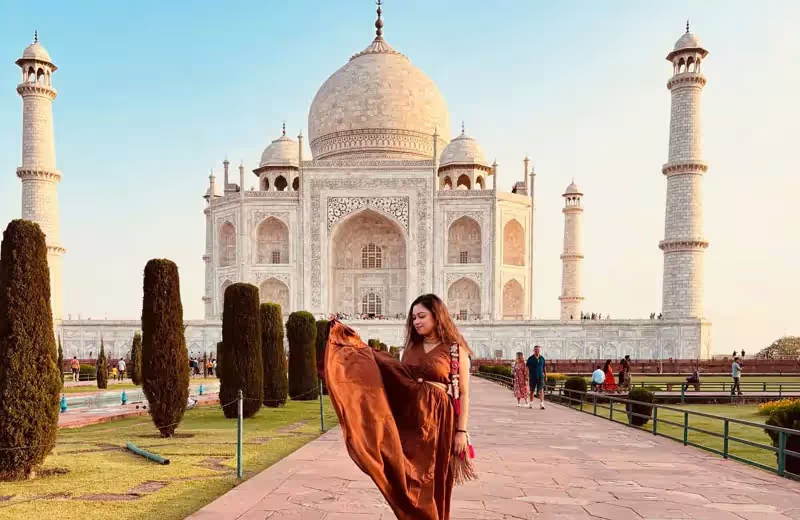
Before dawn, you will make your way to the Taj Mahal for a sunrise visit. The Taj at first light is something that words genuinely struggle to capture. The white marble catches the soft colors of the sky and the monument seems to glow from within. There is very little crowd at this hour and the atmosphere is hushed and almost dreamlike. No photograph fully prepares you for the experience of standing in front of the real thing.
Note: The Taj Mahal remains closed every Friday. Please plan accordingly.
After your visit, return to the hotel to freshen up and enjoy a proper breakfast, now with the Taj Mahal visible from your window.
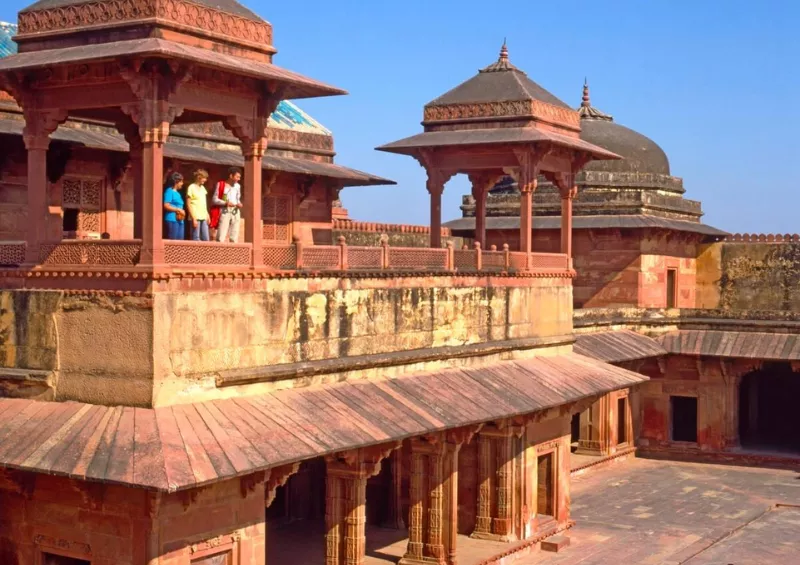
After breakfast, head to Agra Fort, built by Emperor Akbar in the 16th century. This massive red sandstone and marble complex contains Jahangir’s Palace, Khaas Mahal, the Diwan-i-Khas and Diwan-i-Aam. It is also where Shah Jahan spent his final years under house arrest, able to see only a distant reflection of the Taj Mahal in a small mirror fixed near his window.
Next, visit the Tomb of Itimad-ud-Daulah, often referred to as the Jewel Box or the Baby Taj. Built entirely in white marble and encrusted with semi-precious stones, this tomb predates the Taj Mahal and is considered a draft or rehearsal for what came after. Its delicate detail work is extraordinary.
In the evening, visit Mehtab Bagh, a moonlit garden complex across the Yamuna river from the Taj Mahal. At sunset, the view of the Taj from here is exceptionally beautiful and far less crowded than the main monument. This is one of those quiet moments that stays with you long after the trip ends.
Rest of the day is at leisure. Overnight stay at Oberoi Amarvilas Agra.
05Day 5: Agra to Jaipur via Fatehpur Sikri and Chand Baori
After breakfast, check out and begin your scenic drive toward Jaipur, the Pink City of Rajasthan.
On the way, you will make two very worthwhile stops.
The first is Fatehpur Sikri, the deserted red sandstone city built by Mughal Emperor Akbar in the 16th century. Akbar constructed this entire city as his new capital, only to abandon it just a few decades later. The reasons remain debated by historians, though a shortage of water is the most widely accepted explanation. Walking through Fatehpur Sikri is a striking experience because the city is so well preserved. The Buland Darwaza, one of the tallest gateways in the world, the Diwan-e-Khas, the Panch Mahal and the serene Tomb of Sheikh Salim Chisti all deserve time and attention.
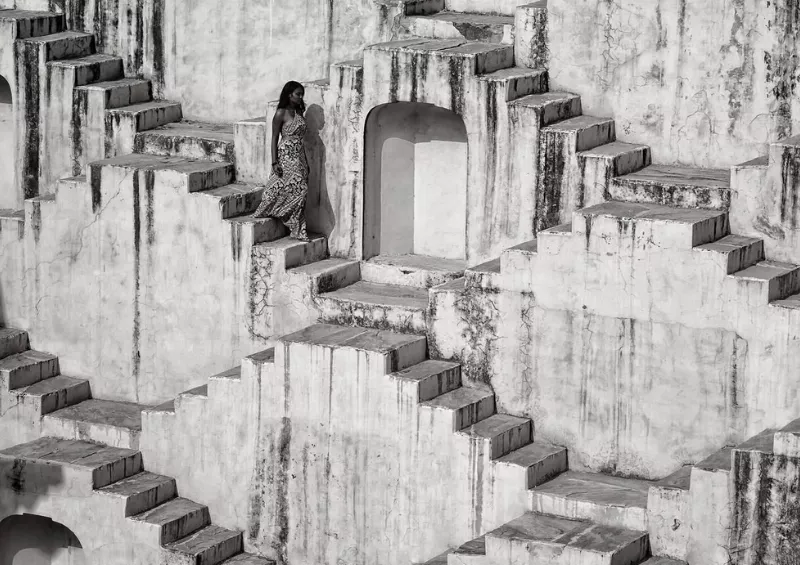
The second stop is Chand Baori, a remarkable stepwell located in the village of Abhaneri, roughly on the way toward Jaipur. Chand Baori consists of 3,500 narrow steps across 13 stories and extends approximately 30 meters into the ground, making it one of the deepest and largest stepwells in all of India. From the top, the geometry of the steps creates a visual pattern that is almost hypnotic. This is one of those off-the-beaten-path stops that most standard tours skip, which makes it all the more special.
On arrival in Jaipur, check into Oberoi Rajvilas, an award-winning luxury resort set on 32 acres of landscaped gardens on the outskirts of the city. The property draws inspiration from traditional Rajasthani architecture and its warm, palace-like atmosphere sets the tone for your time in Jaipur perfectly.
Overnight stay at Oberoi Rajvilas Jaipur.
06Day 6: Jaipur City Tour
Jaipur is the capital of Rajasthan and one of the most visually and architecturally rich cities in India. Founded in 1727 by Maharaja Sawai Jai Singh II, it was one of the first planned cities in South Asia and its characteristic pink-painted old city walls and buildings give it a warmth and character that no other Indian city quite replicates.
After breakfast, your full-day Jaipur sightseeing begins.
Start with Amber Fort, nestled among the Aravali Hills and built in the 16th century by Raja Man Singh. The fort overlooks Maota Lake and the view from the approach road is one of the most photographed sights in Rajasthan. Inside, explore the Sheesh Mahal, the Ganesh Pol gateway, and the various royal chambers and courtyards. An optional elephant ride is available at Amber Fort, subject to additional charges, for those who want to make the approach to the fort gates in traditional royal style.
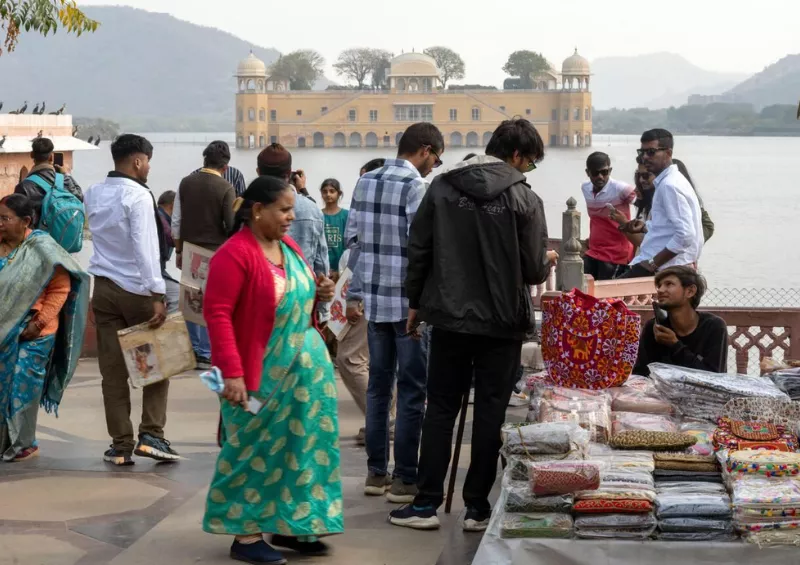
On the drive back from Amber, pass by Jal Mahal, the Water Palace. This five-story palace appears to float in the middle of Man Sagar Lake and the reflection in the water creates a beautiful picture, particularly in the early morning or late afternoon light.
Next, visit Hawa Mahal, Jaipur’s most famous landmark. This extraordinary five-story facade with 953 small windows and alcoves was designed so that royal women could observe street processions and daily life while remaining completely unseen from below. The latticework and honey-comb design are unlike anything else in Rajasthan.
In the afternoon, visit City Palace, conceived and designed by Maharaja Jai Singh himself. It is a fine blend of Rajasthani and Mughal architecture and houses a museum with royal costumes, weapons, artworks and historical artifacts that bring the history of the Jaipur royal family to life.
Adjacent to City Palace is Jantar Mantar, one of the largest astronomical observatories in India. Its stone instruments were built with extraordinary precision and are still used to track solar time and celestial movements today.
The rest of the afternoon is free for shopping. Jaipur is one of the finest shopping destinations in all of India, particularly for handmade jewelry in gold, silver, diamonds and gemstones, and for traditional handicrafts, block-printed textiles and blue pottery.
Return to Oberoi Rajvilas for dinner. Overnight stay at Oberoi Rajvilas Jaipur.
07Day 7: Jaipur to Delhi and Onward Departure
After a leisurely breakfast on the final morning, take some time for one last experience before your departure. Visit the Birla Mandir, a beautiful white marble temple dedicated to Lord Vishnu and Goddess Lakshmi, perched on a small hill at the edge of the old city. The temple was built by the Birla family and is notable for its clean, elegant architecture.
Then visit Galta Ji, known as the Monkey Temple, a series of sacred Hindu temples built into a natural gorge in the Aravali Hills just outside Jaipur. The temples surround natural freshwater springs and kunds and are home to large troops of monkeys who move freely through the complex. It is a living, active pilgrimage site and a fascinating place to visit before leaving the city.
After your morning visits, your driver will take you back to Delhi for your flight home. The journey from Jaipur to Delhi takes approximately 5 to 6 hours by road. Please share your flight details with the team in advance so the transfer timing can be planned appropriately.
Thank you for choosing Golden Triangle Tours India. We hope to welcome you back for your next India journey.