
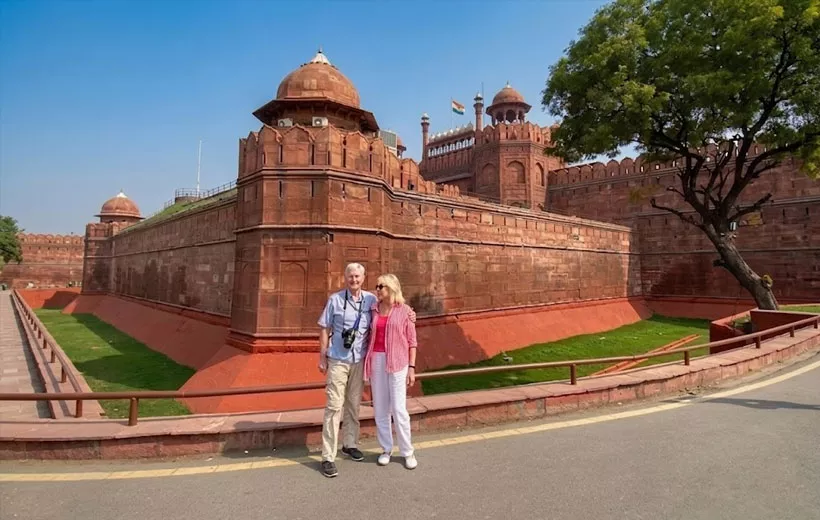
Top 10 Things to See on a Golden Triangle Tour in India
India’s Golden Triangle is popular for a simple reason: it places three completely different cities inside one practical route. Delhi gives you layered history and everyday city life, Agra delivers the Taj Mahal and Mughal architecture, and Jaipur adds hill forts, palaces and colourful bazaars.
Most first-time visitors already know the names Taj Mahal and Hawa Mahal. What they usually need is help deciding what deserves real time, what can be combined on the same day and which experiences make the route feel like more than a checklist of monuments.
This guide covers the ten places and experiences that give the Golden Triangle its character. It follows the natural Delhi to Agra to Jaipur route and includes the small planning details that make each stop easier to enjoy.
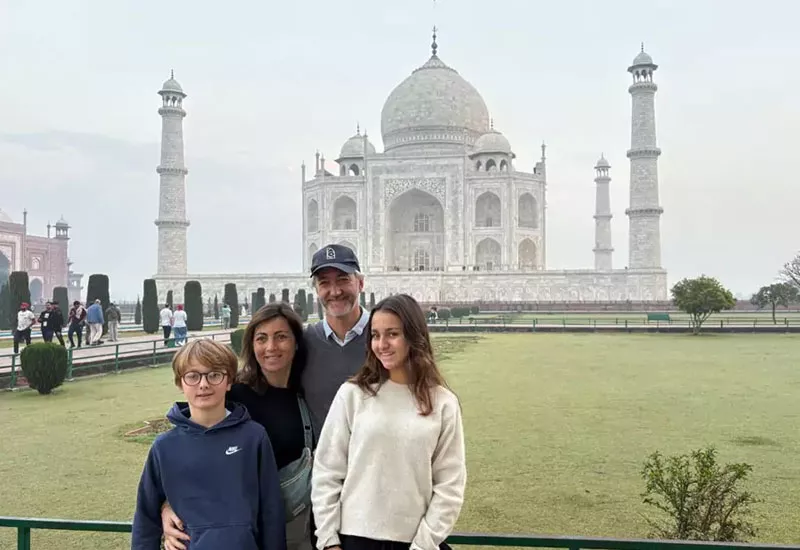
Quick Answer
What Are the Must-See Places on India’s Golden Triangle?
The essential sights are the Taj Mahal, Agra Fort, Fatehpur Sikri, Old Delhi and Chandni Chowk, Jama Masjid and Red Fort, Humayun’s Tomb and Qutub Minar, Amber Fort, Jaipur City Palace and Jantar Mantar, Hawa Mahal and the old bazaars, and Jal Mahal with Jaipur’s hilltop viewpoints.
Best headline monuments
Taj Mahal, Amber Fort and Old Delhi
Do Not Miss
- Taj Mahal at a calm hour
- Old Delhi by foot and rickshaw
- Amber Fort before midday heat
- Jaipur old-city walk
Best deeper experiences
Fatehpur Sikri, Agra Fort and Jaipur Bazaars
Worth Adding
- A licensed local guide
- One food or market walk
- A sunrise or sunset viewpoint
- One craft experience
The Classic North India Route
What Exactly Is India’s Golden Triangle?
The Golden Triangle connects Delhi, Agra and Jaipur in a roughly triangular route across North India.
Delhi is the usual international entry point and offers monuments from the Delhi Sultanate, Mughal and colonial periods alongside a modern capital. Agra sits on the Yamuna and is known for the Taj Mahal, Agra Fort and Fatehpur Sikri. Jaipur brings Rajasthan into the route through Rajput forts, royal residences, markets and planned old-city streets.
The route is popular because the cities are different enough to keep the trip interesting and close enough to combine within one holiday.
Delhi
Best for layered history, street life, food, religious sites and the contrast between old and modern India.
Agra
Best for Mughal architecture, the Taj Mahal and a more focused heritage visit.
Jaipur
Best for forts, palaces, planned bazaars, crafts and Rajasthan’s royal history.
Browse the verified Golden Triangle tour packages when you want to compare different trip lengths and route extensions.
More Than a Monument Checklist
How This Top 10 List Was Chosen
This list balances famous monuments with experiences that explain how the cities actually feel.
A Golden Triangle trip made only of forts and tombs can become repetitive. Old Delhi’s lanes, Jaipur’s bazaars and a quiet viewpoint across the Yamuna create contrast and help the route feel personal.
Each Recommendation Considers
- Historical and cultural importance
- Value for a first-time visitor
- How naturally it fits the main route
- Time needed at the site
- Whether the experience feels different from the previous stop
Number 1
Taj Mahal, Agra
The Taj Mahal deserves its place at the top, but not simply because it is famous.
The experience changes as you move through the complex. The mausoleum first appears framed by the great gateway. It then grows larger along the garden axis. At close range, the white marble reveals coloured stone inlay, carved flowers and calligraphy that disappear in distant photographs.
Shah Jahan commissioned the mausoleum in memory of Mumtaz Mahal. The building is part of a wider riverfront complex that includes formal gardens, a mosque and a matching eastern building.
What to Notice
- The visual framing through the main gateway
- The changing scale as you approach the marble platform
- Floral stone inlay and relief carving
- The mosque and matching jawab building
- The quieter rear view toward the Yamuna
Best Time to Visit
Early morning usually gives you cooler temperatures and softer light. The monument’s visitor hours follow sunrise and sunset, and it is normally closed to general sightseeing visitors on Fridays. Check current official arrangements before travelling.
How Long to Stay
Allow two to three hours for security, gardens, the platform, the main chamber and the side buildings.
Read What Is Inside the Taj Mahal? before your visit if you want to understand the cenotaphs, real graves and interior decoration.
Number 2
Agra Fort and the Yamuna Riverside
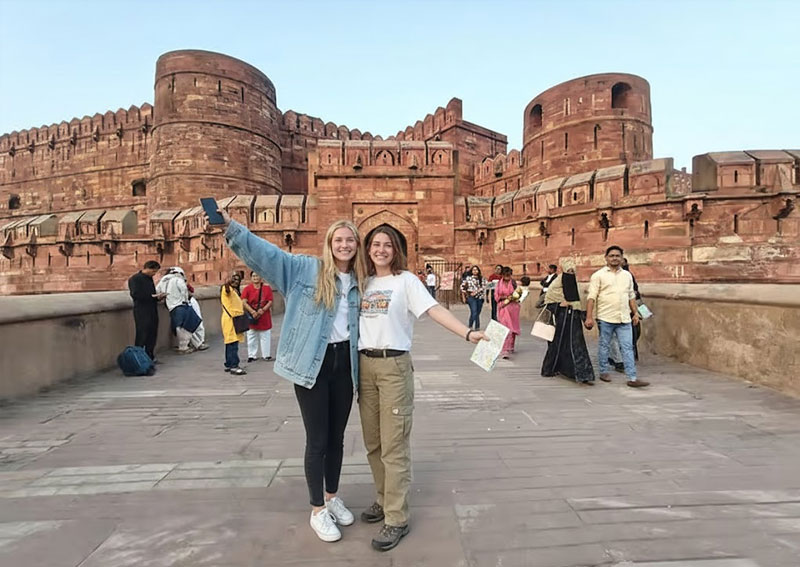
Agra Fort is not simply a second stop after the Taj Mahal. It explains the imperial world that produced it.
The fort developed under several Mughal rulers, so its architecture shifts from strong red sandstone spaces to lighter marble pavilions and river-facing rooms.
Some sections frame distant views of the Taj Mahal. These viewpoints become more meaningful when you understand Shah Jahan’s final years and the fort’s role as both palace and political centre.
What to See
- Amar Singh Gate and the defensive entrance
- Diwan-i-Am
- Marble palaces and river-facing pavilions
- Courtyards showing different phases of Mughal design
- Views toward the Taj Mahal
Best Way to Combine It
Visit the Taj Mahal early, have breakfast or a short break and see Agra Fort before lunch. Late afternoon also works well when your Taj Mahal visit is scheduled earlier in the day.
Number 3
Fatehpur Sikri Between Agra and Jaipur
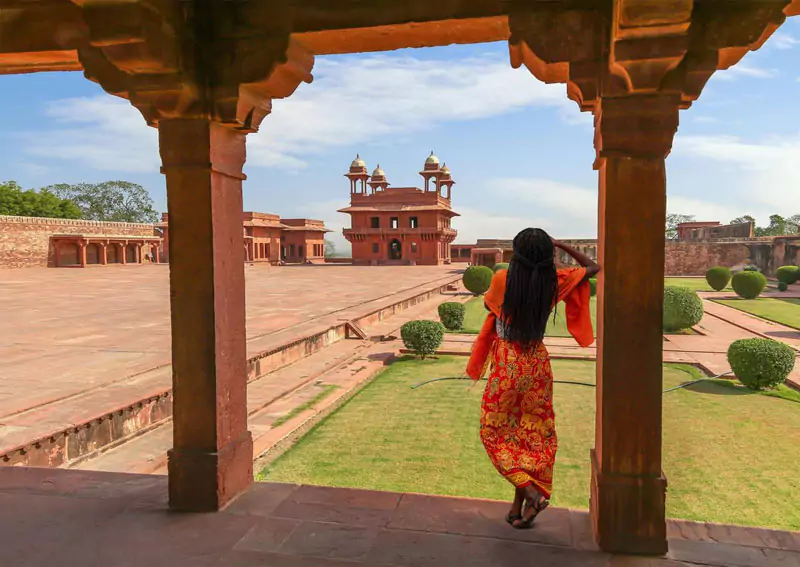
Fatehpur Sikri was built by Emperor Akbar as a Mughal capital and later abandoned as the main imperial seat. Today, its palaces, courtyards and religious buildings remain remarkably coherent.
The site helps visitors understand the Mughal court as a working city rather than a collection of isolated monuments.
Two Different Areas
- The palace complex with audience halls, pavilions and royal spaces
- The Jama Masjid area with Buland Darwaza and the tomb of Salim Chishti
Why It Fits the Route
Fatehpur Sikri lies west of Agra and naturally fits the road journey toward Jaipur. It breaks up the transfer and adds one of the most important Mughal sites without requiring another hotel change.
Protect Enough Time
Allow around two hours plus local transfer and parking time. A rushed 30-minute stop does not do justice to the scale of the complex.
Number 4
Old Delhi, Chandni Chowk and the Market Lanes
Old Delhi is where the Golden Triangle stops feeling like a monument tour and starts feeling like a living city.
Chandni Chowk’s main road, side lanes, wholesale markets, religious buildings and food shops create a dense urban experience that cannot be understood from inside a car.
Best Experiences
- A cycle-rickshaw ride through narrow lanes
- Khari Baoli spice market
- Traditional sweets and freshly cooked snacks
- Small shrines, havelis and specialist market streets
- Rooftop or elevated views where responsibly accessible
How to Visit Comfortably
Use a guide for your first visit. The area is navigable, but a local guide helps you move between the worthwhile lanes instead of spending the whole time in the busiest traffic.
Carry only the cash and valuables you need, wear comfortable shoes and keep the day’s food choices selective.
Number 5
Jama Masjid and Red Fort, Delhi
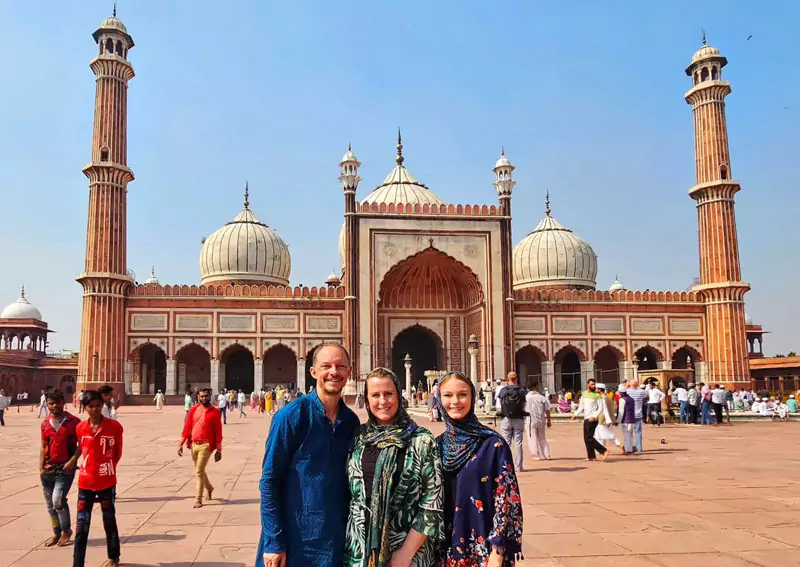
These two landmarks sit close enough to combine with Chandni Chowk, but each deserves attention in its own right.
Jama Masjid rises above the old city with a broad courtyard, red sandstone and white marble details. The Red Fort was the Mughal imperial residence and remains one of Delhi’s most important national symbols.
Practical Visiting Advice
- Dress modestly for the mosque
- Remove shoes where instructed
- Check current visitor and prayer timings
- Allow time for security at the Red Fort
- Do not reduce the fort to an exterior photograph
When time is limited, combine Jama Masjid, a short Old Delhi walk and selected parts of the Red Fort rather than forcing several distant Delhi monuments into the same half-day.
Number 6
Humayun’s Tomb and Qutub Minar
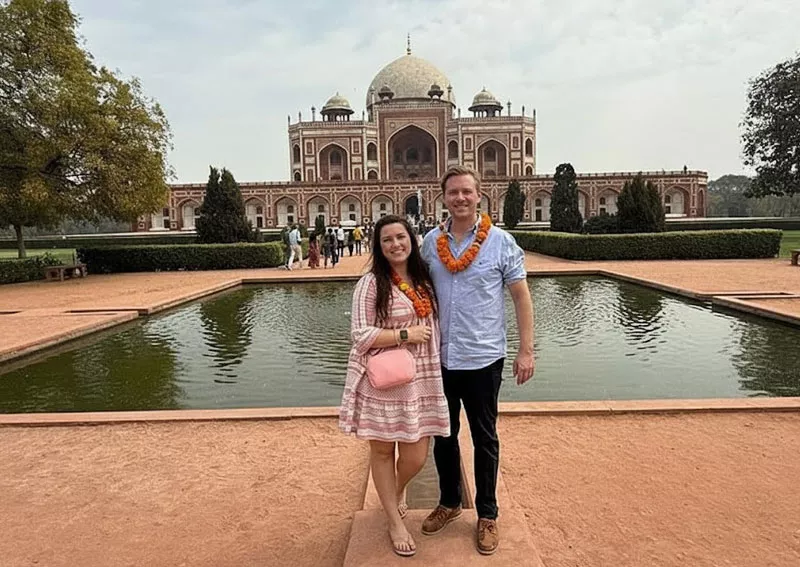
Humayun’s Tomb and Qutub Minar show two very different stages of Delhi’s architectural history.
Humayun’s Tomb stands within a formal garden and is often discussed as an important predecessor to later Mughal mausoleum design. Qutub Minar belongs to an earlier Sultanate context and rises above a complex of mosques, carved stone and the Iron Pillar.
Why Visit Both?
- They prevent Delhi from feeling like only Old Delhi and colonial avenues
- They show how architecture developed across several centuries
- Both reward close looking rather than a quick photo
- The surrounding complexes offer room to walk at a slower pace
Best Route
Combine them on a South Delhi sightseeing day with one or two nearby stops. Traffic makes it unwise to keep crossing the city repeatedly.
Number 7
Amber Fort, Jaipur

Amber Fort stands outside central Jaipur on a ridge above Maota Lake. Its courtyards, gates, halls and defensive walls reveal both royal life and military planning.
The visual experience changes as you move upward. Broad public spaces lead toward decorated gateways and more private palace areas.
Do Not Miss
- Ganesh Pol
- Diwan-i-Am
- Sheesh Mahal
- Upper terraces and lake views
- The relationship between palace and surrounding walls
Best Time
Visit early in the morning before the courtyards heat up and the largest groups arrive.
Skip Animal Rides
Use a vehicle or walk according to your comfort and mobility. This keeps the visit more predictable and avoids animal-welfare concerns.
Number 8
Jaipur City Palace and Jantar Mantar
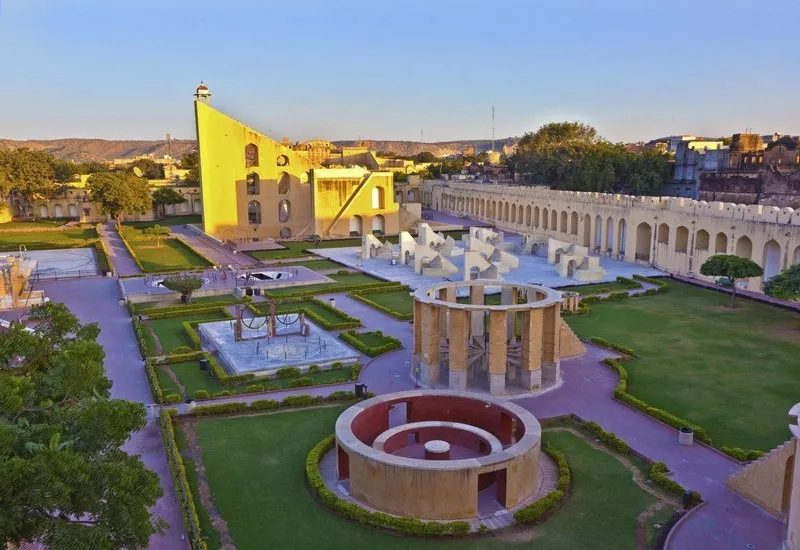
City Palace and Jantar Mantar sit beside each other in Jaipur’s old city, making them one of the most efficient sightseeing combinations on the route.
City Palace mixes courtyards, gateways, museums and royal spaces. Jantar Mantar contains large-scale astronomical instruments built for direct observation of the sky.
What Makes the Pair Special
- Royal objects and palace architecture
- Distinctive courtyard gateways
- Astronomical instruments that still make sense with explanation
- Easy walking access to Hawa Mahal and nearby bazaars
A guide adds real value at Jantar Mantar because the instruments can look abstract until someone explains what each one measures.
Number 9
Hawa Mahal and Jaipur’s Bazaars
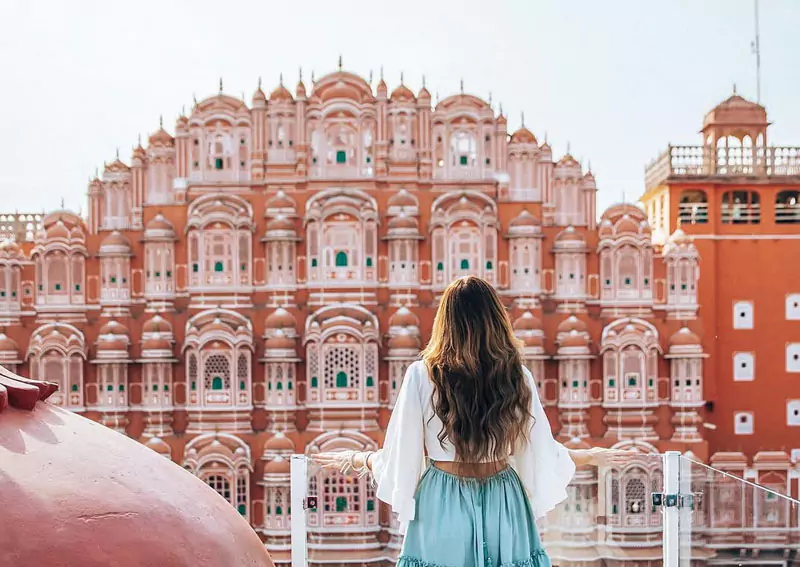
Hawa Mahal’s famous facade faces a busy old-city street. Its small windows and projecting balconies were designed to allow royal women to observe public life while remaining screened.
Many visitors photograph the front and leave. A better experience is to combine the facade, the interior and a walk through nearby market streets.
Where to Walk and Shop
- Johari Bazaar for jewellery
- Bapu Bazaar for textiles and everyday souvenirs
- Traditional lac-bangle shops
- Food stops for kachori, sweets and lassi
- Side lanes with doors, signs and workshops
Shopping Advice
Compare quality, ask the full price before agreeing and do not feel obliged to visit a shop because a driver or guide receives commission.
Number 10
Jal Mahal and Jaipur’s Hilltop Views

Jal Mahal appears to float in Man Sagar Lake on the road between central Jaipur and Amber Fort. Visitors normally view it from the lakeside rather than entering the palace.
The stop itself is brief. Its value comes from fitting naturally into the Amber route and adding water, birdlife and open space to a day of stone forts and busy streets.
Best Hilltop Options
- Nahargarh for broad city views
- Jaigarh for fortifications and the wider Amber landscape
- Amber terraces for views across Maota Lake
Best Time
Use a hilltop viewpoint near sunset only when your driver, road timing and return plan are confirmed. The roads can become busy when many visitors leave together.
When You Have More Time
Five More Places Worth Adding
Mehtab Bagh
A quieter rear view of the Taj Mahal across the Yamuna.
Itimad-ud-Daulah
A smaller marble mausoleum that rewards visitors interested in decorative detail.
Abhaneri Stepwell
A useful stop on selected Agra to Jaipur routes when timing allows.
Gurudwara Bangla Sahib
A welcoming Delhi religious site with a strong community kitchen tradition.
Albert Hall Museum
A useful Jaipur addition for travellers who want museum time and evening architecture.
Local Food Walk
One carefully guided food experience can add more variety than another rushed monument.
Fit the Sights Into a Real Trip
How to See the Top 10 Without Rushing
4-Day Express Plan
Day 1
Delhi Highlights
Choose Old Delhi plus one major New Delhi monument, then continue to Agra.
Day 2
Taj Mahal and Agra Fort
Visit the Taj Mahal early, then Agra Fort. Stay in Agra or continue according to your route.
Day 3
Fatehpur Sikri and Jaipur
Stop at Fatehpur Sikri en route and reach Jaipur by evening.
Day 4
Amber Fort and Central Jaipur
Cover Amber Fort, City Palace, Jantar Mantar, Hawa Mahal and Jal Mahal as a viewpoint stop.
See the verified 4-Day Golden Triangle Tour when your time is tight.
5-Day Balanced Plan
Day 1
Old Delhi
Explore Jama Masjid, Chandni Chowk and selected central sights.
Day 2
New Delhi and Agra Transfer
Visit Humayun’s Tomb or Qutub Minar before driving to Agra.
Day 3
Taj Mahal, Agra Fort and Jaipur
Visit the Taj Mahal early and stop at Fatehpur Sikri during the transfer.
Day 4
Full Jaipur Sightseeing
Explore Amber Fort, City Palace, Jantar Mantar, Hawa Mahal and the bazaars.
Day 5
Jal Mahal, Local Experience and Departure
Use the morning for a final viewpoint, market or craft experience.
The verified 5-Day Golden Triangle Tour is a strong option for first-time visitors with limited leave.
6 to 7 Days
Use the extra time for a second Delhi sightseeing day, one calm Agra evening, a fuller Jaipur market experience and a lighter final morning.
Read How Many Days Do You Need for the Golden Triangle Tour? before choosing the final trip length.
Season Changes the Experience
Best Time to See the Golden Triangle Highlights
October to March
This is the most comfortable period for walking, forts and markets. It is also the busiest, so early starts and pre-booked hotels matter.
April to June
North India can become extremely hot. Move outdoor forts, gardens and market walks to the morning and use midday for lunch, museums or hotel rest.
July to September
Monsoon rain can create dramatic skies and greener surroundings. Keep the itinerary flexible around road and walking conditions.
December and January
Morning fog can affect Delhi and Agra road or rail travel. Do not place a critical flight immediately after a long intercity transfer.
Link the Three Cities Smoothly
Private Driver, Train or Group Tour?
| Travel Style | Best For | Main Advantage | Main Limitation |
|---|---|---|---|
| Private car and driver | Couples, families and first-time visitors | Door-to-door travel and flexible stops | More total road time |
| Train plus local cars | Independent travellers | Fast selected routes, especially Delhi to Agra | Station transfers and fixed schedules |
| Group tour | Budget-conscious social travellers | Clear structure and shared cost | Less control over time at each attraction |
A private driver is often the easiest way to include Fatehpur Sikri, roadside meal breaks and flexible Jaipur stops without managing several separate bookings.
Compare current considerations in the verified Delhi Agra Jaipur Private Driver Cost guide.
Protect the Experience
Common Golden Triangle Sightseeing Mistakes
- Seeing the Taj Mahal as a 30-minute photo stop: allow enough time for the full complex.
- Giving Delhi only one rushed afternoon: the city’s best sights are spread across different areas.
- Adding Fatehpur Sikri without travel time: it is a real sightseeing stop, not a roadside photograph.
- Visiting Amber Fort at the hottest hour: start early whenever possible.
- Driving past Hawa Mahal without entering the old city: the surrounding streets are part of the experience.
- Accepting every commission shop: shopping stops can quietly consume several hours.
- Booking the final Jaipur-to-Delhi drive before a tight flight: traffic needs a real buffer.
- Using unverified ticket links: begin from official government or monument sources.
- Trying to visit every listed place in three days: choose depth over the largest checklist.
- Ignoring the season: midday sightseeing that works in January can be exhausting in May.
Related Golden Triangle Guides
Plan Your Complete Route
Want These Highlights in One Smooth Route?
Plan a Private Golden Triangle Tour Around Your Time
Share your arrival time, departure time, group size and preferred pace. We can build the route around the places that matter to you instead of forcing every traveller into the same sightseeing list.
- Private Delhi, Agra and Jaipur transport
- Licensed local guide arrangements
- Flexible monument and market timing
- Clear inclusions before booking
Common Questions
Frequently Asked Questions About Golden Triangle Attractions
Open a question below for a direct answer.
What are the three cities in India’s Golden Triangle?
The Golden Triangle connects Delhi, Agra and Jaipur in North India.
What is the number one attraction on the Golden Triangle?
The Taj Mahal is the best-known attraction, but a complete route should also include meaningful time in Delhi and Jaipur.
How many days do I need to see the top attractions?
Five days covers the essentials. Six to seven days gives you a more comfortable pace and time for markets, food and local experiences.
Is Fatehpur Sikri worth visiting?
Yes. It is one of the best-preserved Mughal city complexes and fits naturally between Agra and Jaipur.
Can I see the Taj Mahal and Agra Fort in one day?
Yes. Visit the Taj Mahal early and allow one to one and a half hours for Agra Fort later in the day.
Which Jaipur fort should I visit first?
Amber Fort is the essential first-time choice because of its architecture, courtyards and lake setting.
Is Hawa Mahal worth entering?
Yes, especially when combined with City Palace, Jantar Mantar and a walk through the old-city bazaars.
Should I visit Old Delhi with a guide?
A guide is useful for a first visit because the market lanes are dense and many of the best details are easy to miss.
What is the best time of year for the Golden Triangle?
October to March usually offers the most comfortable weather for monuments, forts and walking tours.
Can I do the Golden Triangle by train?
Yes, but you still need local transport and station transfers in each city. A private car offers more flexibility for en-route stops.
Are all the top attractions UNESCO sites?
Several are UNESCO World Heritage Sites, including the Taj Mahal, Agra Fort, Fatehpur Sikri, Red Fort, Humayun’s Tomb, Qutub Minar and Jantar Mantar.
What should I skip on a short trip?
Skip distant optional stops and repeated shopping visits before cutting essential time at the Taj Mahal, Old Delhi or Amber Fort.
Is Jal Mahal open to tourists?
Visitors normally view Jal Mahal from the lakeside rather than entering the palace.
Which city needs the most sightseeing time?
Delhi usually needs the most time because its important sights are numerous and spread across a large city.
What is the best route order?
Delhi to Agra to Jaipur is the most common order and makes Fatehpur Sikri easy to include during the Agra-to-Jaipur transfer.
Final Recommendation
See the Famous Places, but Leave Room for the Cities Around Them
The Golden Triangle works because its best experiences do not all feel alike.
The Taj Mahal is quiet, controlled and symmetrical. Old Delhi is busy and unpredictable. Amber Fort opens onto hills and water. Jaipur’s bazaars bring the route back to everyday life.
Do not measure the trip only by how many monuments you collect. Give the strongest places enough time, keep one or two local experiences in the plan and let each city show a different side of North India.
That is what makes the Golden Triangle more than a famous route on a map.