
UNESCO World Heritage Sites in India’s Golden Triangle: Complete 2026 Guide
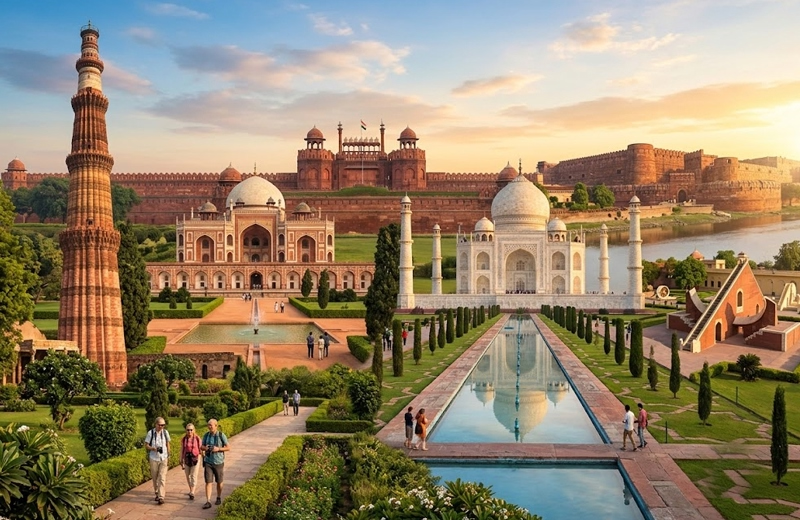
India’s Golden Triangle is usually introduced as a route linking Delhi, Agra and Jaipur. That description is accurate, but it barely explains why the circuit feels so rich. Within one compact journey, you can move through early Sultanate architecture, Mughal garden tombs, imperial forts, a marble mausoleum, a short-lived royal capital, a Rajput hill fortress, an astronomical observatory and one of India’s best-known planned historic cities.
For heritage-focused travellers, the route is unusually efficient. You do not need three domestic flights or weeks of complicated transfers. A private car, a few well-timed hotel stays and five to seven days can connect the strongest UNESCO World Heritage experiences in North India.
There is one detail many online lists get wrong: Amber Fort is a UNESCO site. It forms part of the serial property called the Hill Forts of Rajasthan. Hawa Mahal and City Palace are important Jaipur landmarks, but they are not separately listed UNESCO properties. This guide keeps those distinctions clear so you can plan the route without repeating inaccurate information.
Quick Heritage Guide
How Many UNESCO Sites Are in India’s Golden Triangle?
The classic Delhi–Agra–Jaipur route gives travellers access to nine relevant UNESCO-listed properties or components, plus one easy natural extension at Bharatpur.
Core heritage route
Delhi + Agra + Jaipur
UNESCO coverage
- 3 World Heritage Sites in Delhi
- 3 World Heritage Sites in and around Agra
- 3 relevant UNESCO properties or components in Jaipur
- Optional Keoladeo National Park extension
Important clarification
What Counts—and What Does Not
Avoid common mistakes
- Hawa Mahal is not a separate UNESCO property
- City Palace is not separately inscribed
- Jaipur listing covers the historic walled city
- Keoladeo is outside the three core cities
Get the Facts Right
The Correct UNESCO Count for the Golden Triangle
Most short guides count eight UNESCO sites: three in Delhi, three in Agra and two in Jaipur. That total misses Amber Fort. The fort is not listed alone; it is one component of the wider Hill Forts of Rajasthan serial property. Because travellers actually visit Amber as part of a normal Jaipur day, it deserves a place in any practical Golden Triangle UNESCO guide.
| City / Area | UNESCO property | Year inscribed | Practical visit time |
|---|---|---|---|
| Delhi | Qutb Minar and its Monuments | 1993 | 1.5–2 hours |
| Delhi | Humayun’s Tomb | 1993 | 1.5–2 hours |
| Delhi | Red Fort Complex | 2007 | 2–3 hours |
| Agra | Taj Mahal | 1983 | 2–3 hours |
| Agra | Agra Fort | 1983 | 1.5–2 hours |
| Near Agra | Fatehpur Sikri | 1986 | 2–3 hours |
| Jaipur | The Jantar Mantar, Jaipur | 2010 | 1–1.5 hours |
| Jaipur | Jaipur City, Rajasthan | 2019 | Half to full day |
| Jaipur | Amber Fort, component of Hill Forts of Rajasthan | 2013 | 2–3 hours |
| Bharatpur | Keoladeo National Park | 1985 | 3–5 hours |
The list above separates individual UNESCO properties from a component of a serial property. That sounds technical, but it prevents a common SEO shortcut from turning into bad travel advice. For a visitor, Amber Fort is a genuine UNESCO experience even though the World Heritage inscription also includes five other Rajasthan forts located far beyond the Golden Triangle.
Another useful distinction: Jaipur City’s listing concerns the historic walled city and its urban planning, streets, bazaars, gates and built fabric. Hawa Mahal contributes strongly to the visitor experience, yet it should not be marketed as an individually inscribed UNESCO site.
One Route, Many Eras
Why the Golden Triangle Is Such a Strong UNESCO Journey
The route works because the sites do not repeat the same story. Delhi shows the arrival and adaptation of new political powers. Agra demonstrates the confidence and resources of the Mughal court at its peak. Jaipur shifts the focus towards Rajput statecraft, science, trade and planned urban life.
You can see architectural ideas developing across centuries. Humayun’s Tomb introduces the monumental garden-tomb tradition that later reaches extraordinary refinement at the Taj Mahal. Agra Fort and the Red Fort reveal how royal residences combined security, ceremony and private life. Fatehpur Sikri shows a ruler experimenting with an entirely new capital. Jaipur then responds with a rational street grid, specialised bazaars and giant instruments designed to read the sky.
A Heritage Route That Still Feels Alive
These are not isolated ruins in remote landscapes. They sit inside functioning cities filled with worship, trade, traffic, schools, homes and public life. That makes the experience more demanding, but also more honest. You are not only looking at the past; you are watching historic spaces negotiate with the present.
Old Delhi’s lanes still carry food sellers, residents, rickshaws and religious processions. Jaipur’s bazaars remain commercial streets rather than museum displays. Around the Taj Mahal, conservation rules shape traffic and vehicle access. The heritage is visible, but so are the pressures that come with millions of visitors and expanding cities.
Why Five to Seven Days Works So Well
A five-day plan can cover the highlights, though it leaves little room for slow mornings. Six days gives the route breathing space. Seven days is better for first-time international visitors because jet lag, security checks, traffic and heat all consume time that neat itineraries rarely acknowledge.
Travellers who care about architecture should prioritise guides and longer visits. Travellers who mainly want landmark photographs can move faster. Neither style is wrong, but the itinerary should reflect the purpose of the trip.
Delhi UNESCO Heritage
Delhi’s Three UNESCO World Heritage Sites
Delhi is often treated as a landing point before the “real” tour begins. That is a mistake. Its three UNESCO sites explain the political and architectural foundations of everything you later see in Agra.
1. Qutb Minar and Its Monuments
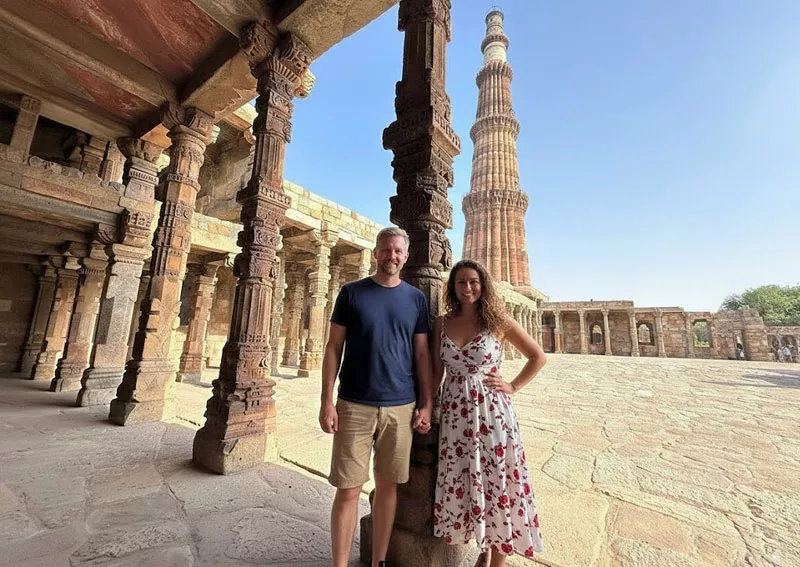
The Qutb complex is one of the best places to begin a North India heritage trip because several centuries sit within one enclosed area. The 72.5-metre minaret dominates the skyline, but the experience becomes more interesting when you look beyond its height.
The Quwwat-ul-Islam Mosque, the Iron Pillar, the tomb of Iltutmish, the unfinished Alai Minar and the Alai Darwaza reveal changing ambitions, techniques and political messages. Carved stone, reused architectural elements, calligraphic bands and geometric ornament make the complex visually dense. A quick twenty-minute photo stop wastes most of what you paid to enter.
What to Notice
- The change in carving and proportion between different stages of the minaret.
- The Iron Pillar’s very different date and cultural context.
- The Alai Darwaza’s refined arches and decorative surfaces.
- The scale of the unfinished Alai Minar, which hints at an even larger ambition.
Practical Visiting Advice
Arrive near opening time when the lawns are quieter and the stone is easier to photograph. South Delhi traffic builds quickly, so combine the site with nearby Mehrauli or move directly towards Humayun’s Tomb rather than zigzagging across the city.
Allow at least ninety minutes. Two hours is better with a guide. Shade is limited in parts of the complex, and the stone becomes hot during summer afternoons.
2. Humayun’s Tomb
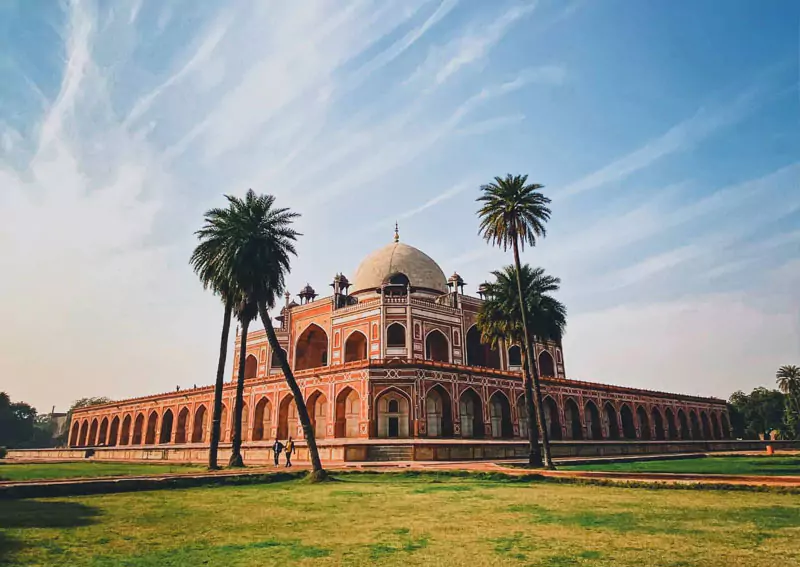
Humayun’s Tomb is often described as a precursor to the Taj Mahal. That comparison is useful, but the site deserves more than being treated as an early draft. Completed in 1570, it introduced a monumental garden-tomb composition on the Indian subcontinent and helped establish a visual language that later Mughal buildings expanded.
The approach matters. You pass through gateways, cross a formal garden and gradually encounter the tomb’s red sandstone mass, white marble dome and symmetrical elevations. The charbagh layout turns movement into part of the design. Water channels, paths, terraces and sightlines guide the visitor long before the central chamber comes into view.
The wider complex contains more than one story. Isa Khan’s Tomb predates the main mausoleum and offers a different architectural character. Several lesser-known graves and structures reward travellers who do not rush straight back to the car.
Best Experience
Late afternoon brings warmer light and softer shadows, while early morning is cooler and calmer. A guide can explain why the garden geometry, elevated platform, double dome and octagonal interior became so influential.
Pair the visit with the Nizamuddin heritage area or Sunder Nursery when your schedule allows. The combination gives a stronger sense of historic landscape rather than a single isolated monument.
3. Red Fort Complex
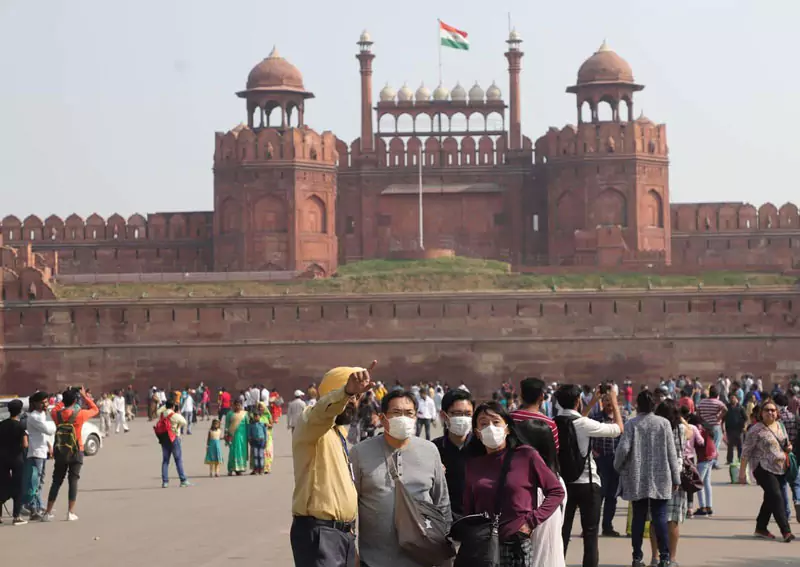
The Red Fort was built as the palace fort of Shahjahanabad, the Mughal capital created by Shah Jahan. Its red sandstone walls are famous, but the most revealing spaces lie inside: audience halls, royal pavilions, gardens and water channels designed around ceremony and controlled access.
Walk through the Lahori Gate and Chatta Chowk, then notice how the public and private worlds separate. The Diwan-i-Am staged imperial authority before larger audiences. The more intimate palace areas used marble, carved screens and the Nahr-i-Behisht—the “Stream of Paradise”—to create a cooler, ordered royal environment.
The complex also carries modern national meaning. India’s Prime Minister addresses the country from the fort on Independence Day. That continuing symbolism makes the Red Fort different from a monument frozen in one historical period.
How to Plan the Visit
Combine it with Jama Masjid and a carefully planned Old Delhi walk. Do not try to drive between every tiny stop. Traffic, parking and pedestrian congestion can steal more time than the monuments themselves.
Check the current weekly closure and museum access before visiting. Security queues vary. Carry minimal baggage and keep drinking water with you, particularly from March to October.
Best Delhi UNESCO Day
Morning: Qutb Minar. Late morning: Humayun’s Tomb. Afternoon: lunch and New Delhi drive. Next morning: Red Fort and Old Delhi. Trying to force all three into one day is possible, but the experience becomes rushed and traffic-sensitive.
Agra UNESCO Heritage
Agra’s UNESCO Trio: Taj Mahal, Agra Fort and Fatehpur Sikri
Agra’s three World Heritage Sites tell a connected imperial story. The fort explains power and royal life. The Taj Mahal represents memory, craft and controlled perfection. Fatehpur Sikri reveals Akbar’s experiment with a planned capital.
4. Taj Mahal
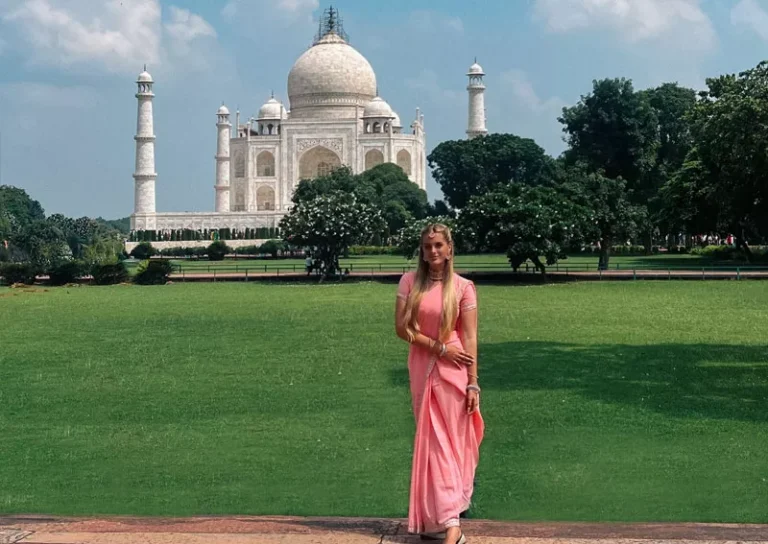
The Taj Mahal is familiar before you arrive. That familiarity can create a strange problem: visitors think they already understand it. In person, the complex is less about one marble building and more about sequence, symmetry and carefully managed surprise.
You enter through a monumental gateway, where the dark arch frames the white mausoleum. The gardens create distance. The reflecting pool strengthens the central axis. The mosque and jawab balance the composition. The river completes the rear boundary. Every major element contributes to the whole.
Up close, the visual language changes. Large forms give way to carved marble, calligraphy, floral relief and pietra dura inlay. The scale of the dome and minarets becomes easier to understand. The building’s apparent colour shifts with weather and light, which is why sunrise, midday and overcast visits can feel completely different.
Sunrise or Sunset?
Sunrise usually offers cooler temperatures and a calmer approach, although queues can still be substantial. Sunset produces warmer light but may be busier, especially in peak season. The best choice depends on your travel date, photography priorities and hotel location.
Mehtab Bagh across the Yamuna provides a useful external viewpoint, but it is not a substitute for entering the Taj Mahal complex. Treat it as an additional perspective.
Important Rules and Timing
- The Taj Mahal is normally closed to general visitors on Fridays.
- Security restrictions are strict, so carry only essentials.
- The main mausoleum area may require an additional ticket category.
- Allow extra time during weekends, holidays and peak winter months.
- Use authorised ticket channels and verify current rules before travel.
5. Agra Fort
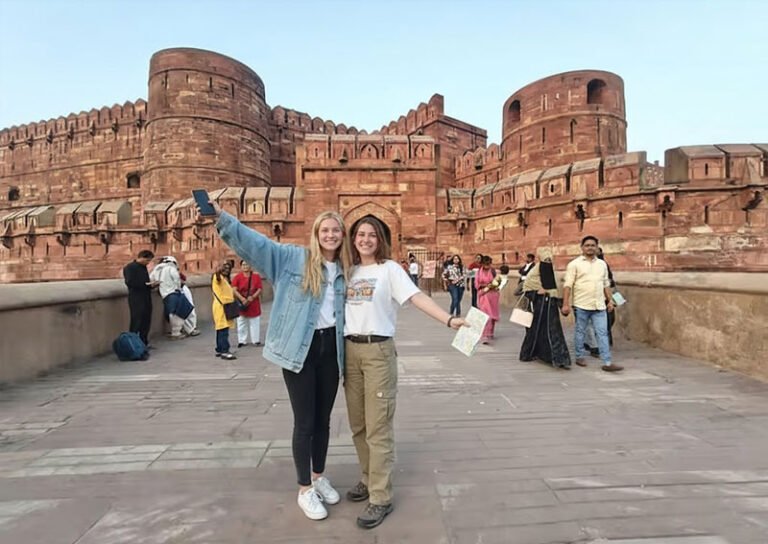
Agra Fort gives context that the Taj Mahal cannot provide on its own. This was a military stronghold, a royal residence and a centre of administration used by several Mughal emperors. Its massive red sandstone walls contain a surprisingly varied world of courtyards, palaces, audience halls and river-facing pavilions.
Akbar’s architecture feels heavier and more defensive. Later additions associated with Shah Jahan introduce more marble and refined residential spaces. The contrast allows visitors to read political and aesthetic change within one complex.
Views towards the Taj Mahal create the fort’s most memorable emotional connection. Guides often link these viewpoints to Shah Jahan’s final years, but good interpretation separates documented history from romantic storytelling.
What Not to Rush
- Jahangiri Mahal and its robust sandstone detailing.
- Diwan-i-Am and the logic of public audience.
- Marble pavilions facing the Yamuna.
- Views that connect the fort with the Taj Mahal landscape.
Visit after the Taj Mahal when you want a chronological story of the city, or visit the fort first when you prefer to understand Mughal court life before seeing the mausoleum. Both sequences work.
6. Fatehpur Sikri
Fatehpur Sikri lies roughly west of Agra and fits naturally on the road to Jaipur. Akbar developed it as a royal capital in the sixteenth century, but the court’s stay was relatively brief. The result is one of India’s most complete surviving Mughal urban ensembles.
The palace complex includes courtyards, audience halls, residential spaces and buildings associated with different functions of court life. The religious area contains the Jama Masjid, the white marble tomb of Salim Chishti and the huge Buland Darwaza.
Calling Fatehpur Sikri a “ghost city” is catchy, but slightly misleading. The archaeological complex is preserved, yet the surrounding area remains active and inhabited. Visitors should also distinguish between the palace area and the mosque courtyard, where footwear and respectful dress matter.
Why a Guide Helps Here
Many buildings are visually striking but poorly understood without context. A licensed guide can explain the Diwan-i-Khas, Panch Mahal, Anup Talao, private residential areas and the relationship between political and sacred spaces.
Allow two to three hours, including transport from the parking zone. Avoid accepting unsolicited guiding or shopping arrangements without agreeing on the service and price first.
Best Agra Sequence
Day 1 evening: Mehtab Bagh or local orientation. Day 2 sunrise: Taj Mahal. Late morning: Agra Fort. After lunch: Fatehpur Sikri en route to Jaipur. This order protects the Taj visit and reduces backtracking.
Jaipur UNESCO Heritage
Jaipur’s Three UNESCO Experiences
Jaipur contributes a different kind of heritage. Instead of focusing only on one dynasty’s mausoleums and forts, the city combines defensive architecture, astronomical science, commerce and urban planning.
7. Amber Fort: Part of the Hill Forts of Rajasthan
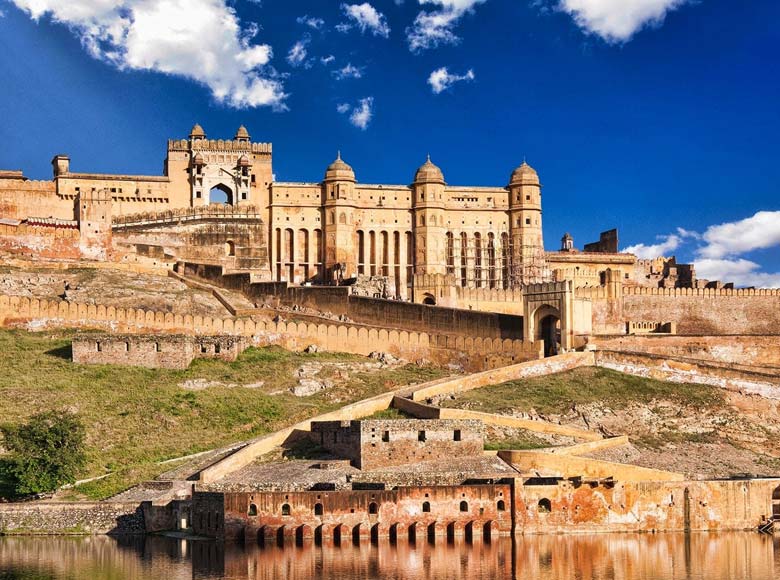
Amber Fort, often written as Amer Fort, sits in the hills outside central Jaipur. It forms one of six components of the UNESCO-listed Hill Forts of Rajasthan, alongside Chittorgarh, Kumbhalgarh, Ranthambore, Gagron and Jaisalmer forts.
The setting is part of its power. Defensive walls trace the ridges, the palace rises above Maota Lake and the route climbs through a sequence of gates and courtyards. Inside, military strength gives way to royal apartments, gardens, mirror work and controlled views.
The Ganesh Pol, Diwan-i-Am, Sheesh Mahal and palace courtyards reveal how Rajput architecture balanced defence, ceremony, climate and luxury. A rushed visit often reduces Amber to one mirrored room. The wider complex deserves at least two hours.
Responsible Access
Use jeeps, electric vehicles where available or walk according to your fitness and weather conditions. Many travellers choose not to use elephant rides because of animal-welfare concerns. Whatever mode you select, start early before the approach road and courtyards become crowded.
8. The Jantar Mantar, Jaipur
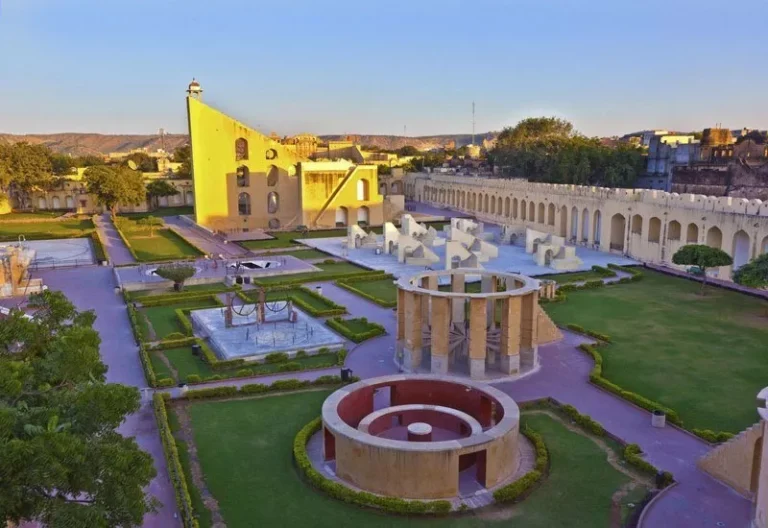
Jantar Mantar looks like an abstract sculpture park until someone explains what the structures do. Built under Maharaja Sawai Jai Singh II, the observatory uses large masonry instruments to measure time, celestial positions and astronomical relationships.
The Samrat Yantra is the most famous instrument, but the site becomes far more rewarding when you examine the full collection. Different forms respond to different observational problems. Scale improves visibility and precision, turning geometry into architecture.
This is one site where a knowledgeable guide provides immediate value. Without interpretation, visitors often walk through in twenty minutes, take photographs and leave puzzled. With a good explanation, the same space becomes one of the most memorable stops in Jaipur.
Best Time to Visit
Clear sunlight helps demonstrate shadows and readings, making late morning or mid-afternoon useful. Extreme midday heat can be uncomfortable from April to June, so balance scientific visibility with seasonal conditions.
Combine Jantar Mantar with City Palace, Hawa Mahal and a walking route through the old bazaars. The monuments are close enough to reduce unnecessary driving.
9. Jaipur City, Rajasthan
UNESCO’s Jaipur City inscription recognises the historic walled city as a planned urban ensemble. Founded in 1727, it reflects a deliberate street grid, broad avenues, specialised market streets, public squares, gates and a relationship between commerce, administration and residential life.
The heritage value is not limited to famous façades. It lives in the urban pattern itself. Johari Bazaar, Tripolia Bazaar, Bapu Bazaar, city gates, temples, havelis and traditional trades all contribute to the experience.
Hawa Mahal is the city’s most recognisable landmark and an excellent starting point for understanding Jaipur’s street façade. City Palace adds royal collections and architecture. Neither should be called a separate UNESCO property, but both sit within the story of the historic city.
How to Explore the Walled City
- Begin early near Hawa Mahal before traffic becomes heavy.
- Walk one compact market route instead of trying to cover every bazaar.
- Use a cycle-rickshaw for short connections when needed.
- Ask before photographing people, workshops or private courtyards.
- Keep shopping separate from guided sightseeing when possible.
A heritage walk reveals more than a quick drive. Look up at balconies, painted signs, temple entrances and upper-storey façades. Jaipur’s strongest details are often above eye level.
Best Jaipur UNESCO Day
Early morning: Amber Fort. Late morning: photo stop at Jal Mahal. Afternoon: City Palace and Jantar Mantar. Late afternoon: Hawa Mahal exterior and a short walled-city walk. Use a second Jaipur day for slower markets, museums and neighbourhoods.
Natural Heritage Add-On
Keoladeo National Park in Bharatpur
Keoladeo National Park offers a complete change of pace between the stone-heavy monument days of Agra and Jaipur. The former royal duck-hunting reserve became a protected wetland and is internationally recognised for birdlife and ecological value.
The park lies near the Agra–Jaipur road, making it one of the easiest UNESCO natural extensions to a cultural itinerary. A cycle-rickshaw, bicycle or walking route allows close observation without the feel of a conventional vehicle safari.
Who Should Add It?
Add Keoladeo when you enjoy birds, photography, quiet landscapes or simply need a break from palaces. Skip it when your tour is only four or five days and architecture remains the priority.
November to February is especially popular for migratory birds and cooler weather. Bird numbers and water conditions vary, so nature never follows a fixed brochure schedule. Binoculars make a much bigger difference than an expensive camera alone.
How It Fits the Route
Leave Agra after breakfast, spend three to four hours inside the park, then continue to Jaipur. Another option is to stay one night in Bharatpur, visit early in the morning and continue via Fatehpur Sikri. The second plan suits dedicated birdwatchers but adds a hotel change.
Route Planning
Best 5, 6 and 7-Day UNESCO Golden Triangle Itineraries
5-Day Fast Heritage Plan
Day 1
Delhi South
Visit Qutb Minar, Humayun’s Tomb and complete a short New Delhi orientation.
Day 2
Old Delhi to Agra
Explore the Red Fort and Old Delhi in the morning, followed by the drive to Agra.
Day 3
Agra to Jaipur
See the Taj Mahal at sunrise, explore Agra Fort and stop at Fatehpur Sikri before reaching Jaipur.
Day 4
Amber and Jaipur
Visit Amber Fort, Jantar Mantar, City Palace and the historic walled city.
Day 5
Jaipur Departure
Enjoy a short market walk or museum visit before departure or the return journey to Delhi.
This plan works, but it is not lazy. Hotel locations and early starts matter. Do not add Bharatpur unless you are willing to reduce Delhi or Jaipur sightseeing.
6-Day Balanced Plan
- Day 1: Delhi arrival, Qutb Minar and a relaxed evening.
- Day 2: Humayun’s Tomb, Red Fort and Old Delhi.
- Day 3: Drive to Agra, Agra Fort and Mehtab Bagh.
- Day 4: Taj Mahal at sunrise, Fatehpur Sikri and Jaipur transfer.
- Day 5: Amber Fort, Jantar Mantar and City Palace.
- Day 6: Walled-city walk, shopping and departure.
Six days is the best compromise for most first-time visitors. It allows all core UNESCO sites without turning every meal into a race.
7-Day Heritage and Nature Plan
- Days 1–2: Delhi’s three UNESCO properties with Old and New Delhi context.
- Day 3: Delhi to Agra, Agra Fort and sunset viewpoint.
- Day 4: Taj Mahal, Fatehpur Sikri and Bharatpur overnight.
- Day 5: Keoladeo morning visit, then continue to Jaipur.
- Day 6: Amber Fort and Jaipur’s royal core.
- Day 7: Jantar Mantar, walled-city walk and departure.
This version balances cultural and natural heritage. It also creates useful recovery time between major monument days.
Travellers comparing shorter routes can also read the 3-day Golden Triangle planning guide. For a broader duration comparison, use the website’s guide to how many days are needed for the Golden Triangle.
Practical Details
Tickets, Guides, Transport and Hotel Planning
Use Official Ticket Channels
Monument prices, ticket categories and access rules can change. Use official government or authorised booking channels rather than clicking the first advertisement in search results. Keep identification details consistent with your booking and save tickets offline in case mobile data is weak.
Foreign and Indian visitor prices differ at many sites. Some locations charge separately for specific areas, museums, camera equipment or transport from parking zones. Build a small buffer into the sightseeing budget instead of relying on one old list of fees.
Where Guides Add the Most Value
A guide is not necessary at every stop. Spend on interpretation where the site is complex. Fatehpur Sikri, Jantar Mantar, Agra Fort, Red Fort and Amber Fort benefit greatly from a specialist who can explain function, chronology and symbolism.
At the Taj Mahal, a guide helps with entry logistics, photo locations and context. At Qutb Minar and Humayun’s Tomb, a guide or strong audio guide can both work. Confirm language, duration, inclusions and price before the tour begins.
Private Car, Train or Mixed Transport?
| Transport style | Best for | Main advantage | Main limitation |
|---|---|---|---|
| Private car and driver | Families, couples, first visits | Door-to-door flexibility | Higher cost than public transport |
| Train plus local cars | Independent travellers | Fast Delhi–Agra sector | More transfers and luggage handling |
| Fully guided package | Time-poor heritage travellers | Coordinated timing and guides | Quality varies by operator |
| Self-drive | Experienced India drivers | Personal control | Traffic, parking and local rules |
For this specific UNESCO route, a private car is usually the cleanest solution. It allows luggage to stay with you, supports the Fatehpur Sikri and Bharatpur stops, and reduces repeated station transfers.
Choose Hotels by Route, Not Just Star Rating
A beautiful hotel on the wrong side of a city can cost two hours of sightseeing. In Delhi, decide whether your first day focuses on South Delhi, the airport corridor or Old Delhi. In Agra, a hotel with easy Taj access helps for sunrise. In Jaipur, choose between the walled-city atmosphere and the quieter hotels outside the historic core.
Read the website’s Delhi–Agra–Jaipur private driver cost guide and the budget versus luxury Golden Triangle cost guide before comparing packages.
Weather and Crowds
Best Time to Visit the UNESCO Golden Triangle
October to March
This is the most comfortable period for long outdoor visits. Days are generally cooler, but December and January can bring fog, cold mornings and reduced visibility. Sunrise Taj Mahal photographs are never guaranteed, even during peak season.
April to June
Heat becomes the main planning factor. Start at opening time, protect the midday period and choose hotels with reliable air conditioning. Stone courtyards and exposed pathways can feel much hotter than the forecast suggests.
July to September
Monsoon months bring humidity, occasional heavy rain and greener surroundings. Crowds may be lighter outside holiday periods, but drainage, traffic and outdoor photography become less predictable. Carry quick-drying clothing and protect electronics.
Daily Timing Matters More Than Most People Expect
Opening hours alone do not tell you the best visit time. Qutb Minar and Amber Fort reward early arrivals. Jantar Mantar needs useful sunlight for demonstrations. The Taj Mahal depends on its Friday closure and seasonal sunrise time. Old Delhi changes character through the day as markets open and traffic increases.
Protect What You Visit
Responsible Travel at World Heritage Sites
UNESCO status does not make a place indestructible. Footfall, pollution, careless photography, litter, touching surfaces and unmanaged development all create pressure. Visitors play a small but real role in conservation.
- Do not scratch names, touch delicate inlay or lean against restricted surfaces.
- Use refillable water bottles where permitted and dispose of waste properly.
- Follow footwear rules in religious areas.
- Avoid blocking narrow passages for long photo sessions.
- Do not fly drones without explicit legal permission.
- Choose ethical animal-free transport at heritage sites.
- Support local crafts without allowing forced shopping to dominate the itinerary.
Respect also applies to people. Old Delhi and Jaipur are living neighbourhoods, not film sets. Ask before photographing residents, shop workers, worshippers and children.
Avoid These Errors
Common UNESCO Golden Triangle Planning Mistakes
Calling Every Famous Landmark a UNESCO Site
Hawa Mahal, City Palace, Jama Masjid and Mehtab Bagh are important, but they are not separately inscribed World Heritage properties. Accurate wording builds trust with readers and search engines.
Forgetting Amber Fort’s UNESCO Status
Amber is frequently omitted because it belongs to a serial property. Include it correctly as a component of the Hill Forts of Rajasthan.
Trying to See Everything in Three Days
A three-day Golden Triangle trip can cover headline attractions, not a complete UNESCO study tour. Heritage travellers should choose at least five days.
Booking the Taj Mahal on Friday
This is the classic itinerary-breaking error. The Taj Mahal is normally closed to general visitors on Fridays, so verify the weekday before confirming non-refundable hotels.
Using One Guide for All Three Cities
A tour escort can coordinate the route, but local licensed guides usually provide stronger monument-level knowledge. Ask how guiding is arranged in each city.
Ignoring Walking Distance
Fort complexes, gardens and historic streets require real walking. Build rest stops for children, seniors and anyone with limited mobility.
Letting Shopping Stops Control the Day
Craft demonstrations can be interesting, but they should be optional and clearly separated from sightseeing. A “ten-minute stop” has a mysterious ability to become ninety minutes.
Read the Architecture
How the Architecture Changes from Delhi to Agra to Jaipur
A strong Golden Triangle trip becomes more rewarding when you stop viewing every red sandstone wall as “Mughal” and every palace as “royal.” The route covers different political periods, materials, construction methods and ideas about space.
Delhi: Experiment, Adaptation and Imperial Confidence
At Qutb Minar, you see an early Indo-Islamic complex shaped by new patrons working with local materials, craftsmen and existing architectural traditions. The result is not a simple imported style. It is a visible negotiation between different building cultures.
Humayun’s Tomb shifts the experience towards formal Mughal symmetry, gardens and monumental funerary design. By the time you reach the Red Fort, architecture has become a complete language of imperial government. Gates, audience halls, gardens and private pavilions organise who could approach the emperor and how power was performed.
Agra: Monumental Scale and Refined Craft
Agra Fort contains multiple phases. Akbar’s strong sandstone buildings feel different from Shah Jahan’s marble additions. Looking for that contrast turns the fort from a collection of pretty rooms into a physical record of changing taste.
The Taj Mahal pushes symmetry, material control and surface craft to another level. Its beauty does not come from marble alone. Proportion, landscape, calligraphy, inlay, relief carving and the placement of surrounding buildings all work together.
Fatehpur Sikri feels more experimental. Its courts and pavilions create a city of movement, discussion, residence, ceremony and worship. The stone carving often feels close to timber construction, reminding visitors that architectural ideas can move between materials.
Jaipur: Fortified Landscape, Science and Commerce
Amber Fort uses the hill itself as part of its defence and visual drama. The palace is not merely placed on a scenic ridge; it is connected to walls, water systems, routes and surrounding terrain.
Jantar Mantar turns mathematical purpose into built form. Its instruments look modern because they avoid decorative excess, yet they belong to an eighteenth-century scientific project.
Inside the walled city, heritage operates at an urban scale. Repeated shopfronts, street widths, market specialisation, gates and intersections matter as much as individual monuments. Jaipur teaches visitors to read an entire city, not just one palace.
| Place | Main material impression | Big idea to notice | Best question to ask your guide |
|---|---|---|---|
| Qutb complex | Red and buff sandstone | Early adaptation and dynastic statement | How did construction change across rulers? |
| Humayun’s Tomb | Red sandstone and marble | Garden-tomb planning | How did this influence later Mughal tombs? |
| Red Fort | Sandstone walls, marble interiors | Architecture of imperial ceremony | How were public and private spaces separated? |
| Taj Mahal | White marble and stone inlay | Symmetry, memory and controlled landscape | Which details correct the illusion of perfect simplicity? |
| Fatehpur Sikri | Red sandstone | Planned capital and court experiment | What was each courtyard designed to do? |
| Amber Fort | Sandstone, marble and painted surfaces | Defence joined with palace life | How did water and climate shape the palace? |
| Jantar Mantar | Masonry and calibrated surfaces | Science expressed as architecture | How does this instrument produce a reading? |
Photography Planning
Best Photography Strategy at Each UNESCO Site
Good heritage photography depends less on expensive equipment than on timing, patience and knowing where people naturally stop. A phone with a clean lens can produce excellent results. A large camera cannot fix harsh light, a crowded doorway or a rushed schedule.
Delhi Photography Tips
At Qutb Minar, use the surrounding arches and ruined walls to frame the tower rather than photographing it only from the central lawn. A slightly lower angle emphasises height, while a wider view gives context.
Humayun’s Tomb works well from the central water channel, but that position attracts everyone. Move to the side paths for quieter compositions and details of chhatris, arches and garden geometry.
At the Red Fort, photograph sequences: gate, bazaar, audience hall, pavilion and detail. One picture of the outer wall cannot explain the complex.
Agra Photography Tips
At the Taj Mahal, take the expected symmetrical photograph and then put the phone away for a few minutes. Walk closer. Look for marble screens, calligraphy scale, floral relief and reflections. The most personal image is often not the one every visitor captures from the same bench.
At Agra Fort, use arches and balconies to frame distant views of the Taj. Haze can soften the view, so do not expect a perfectly crisp telephoto image every day.
Fatehpur Sikri rewards shadows, repeating pillars and human scale. The geometry is easier to understand when one person appears in the frame.
Jaipur Photography Tips
Amber Fort is strongest early, when the approach road is quieter and side light reveals the walls. Inside, mirror work and dark rooms challenge phone cameras. Avoid flash where prohibited and steady the device against a safe surface.
Jantar Mantar benefits from clean skies and strong shadows. Wide-angle distortion can make instruments look dramatic but inaccurate, so capture both wide context and straight-on explanatory views.
For Hawa Mahal, the classic full façade view is usually taken from the opposite side of the street. Arrive early and use established rooftop viewpoints responsibly rather than standing in moving traffic.
Photography Etiquette
- Never cross barriers for a “clean” frame.
- Do not block entrances, stairs or prayer routes.
- Ask before using tripods or professional equipment.
- Check whether photography is restricted inside museums or mausoleum chambers.
- Do not photograph people at close range without permission.
- Avoid loud direction and repeated retakes in sacred spaces.
Comfort for Every Traveller
Families, Senior Travellers and Accessibility
The Golden Triangle is suitable for mixed-age groups, but the standard itinerary often underestimates walking. Forts include ramps, steps, uneven stone and large courtyards. Historic city walks involve traffic, noise and limited pavements.
Travelling with Children
Children usually respond better to stories than dates. Ask guides to explain secret passages, royal routines, astronomy, water systems and building puzzles. A two-hour lecture on dynastic succession will test the patience of even the politest ten-year-old.
Plan one major monument in the morning and one lighter experience later. Carry familiar snacks, sun hats and a small activity for long road sectors. Keep market visits short unless the children genuinely enjoy them.
Travelling with Seniors
Use a larger vehicle with easy entry, book hotels with lifts and request rooms close to elevators. Keep the first sightseeing day light after an international flight.
At Amber Fort and Fatehpur Sikri, ask about the closest practical drop-off points and available local transport. At large complexes, decide in advance which sections matter most rather than trying to complete every path.
Mobility Considerations
Accessibility varies and historic structures cannot always provide step-free access to every level. Ground-level gardens and courtyards may be manageable while upper pavilions remain difficult.
Contact the operator before travel with specific needs. “Senior-friendly” is too vague. Explain whether the traveller can manage ten steps, walk five hundred metres, use a folding wheelchair or transfer independently into a vehicle.
Managing Heat, Air Quality and Fatigue
Begin early, carry prescribed medicines in hand luggage and schedule lunch indoors during the hottest period. Winter air quality in Delhi and Agra can affect sensitive travellers. Check current conditions and follow medical advice rather than relying on a generic travel checklist.
Realistic Budget
What a UNESCO-Focused Golden Triangle Trip May Cost
Costs vary by season, nationality, hotel category, vehicle, guide language and whether the trip is private or shared. Exact monument fees change, so the figures below are planning ranges rather than fixed quotations.
| Travel style | Approximate per-person range for 6 days | Typical inclusions | Common exclusions |
|---|---|---|---|
| Budget independent | ₹25,000–₹45,000 | Simple hotels, trains/buses, local transport | Most guides, premium rooms, many meals |
| Comfortable private | ₹45,000–₹85,000 | Private car, good hotels, selected guides | Flights, some entries and meals |
| Premium private | ₹90,000–₹1,80,000+ | Upscale hotels, larger vehicle, guides, support | International flights and personal spending |
Where the Money Goes
- Hotels: the biggest variable, especially during winter and festivals.
- Vehicle and driver: affected by vehicle size, route, tolls, parking and night allowances.
- Monument tickets: foreign visitor pricing can make a noticeable difference.
- Guides: charged by city, site, half day or full day.
- Meals: easy to control, but heritage hotels and rooftop restaurants raise the average quickly.
- Shopping: entirely personal and often the least predictable category.
How to Save Without Damaging the Experience
Choose a clean mid-range hotel rather than cutting guide quality at every monument. Share a larger vehicle with your own group. Book the route in one direction. Keep one free evening instead of paying for an activity you are too tired to enjoy.
Do not choose the cheapest quote until you compare inclusions line by line. Ask whether tolls, parking, interstate taxes, driver allowance, airport pickup, guides and monument tickets are included.
Build Your Heritage Route
Plan a Private UNESCO Golden Triangle Tour
Share your travel dates, group size, hotel preference and the sites that matter most. A realistic itinerary can balance UNESCO monuments, local guides, comfortable drives and enough free time to enjoy each city.
- Private air-conditioned car and professional driver
- Local guides in Delhi, Agra and Jaipur
- Sunrise Taj Mahal planning
- Fatehpur Sikri and Bharatpur route options
- Budget, mid-range and luxury hotels
- Flexible airport and railway station transfers
Common Questions
Frequently Asked Questions About UNESCO Sites in the Golden Triangle
These answers reflect the practical route through Delhi, Agra and Jaipur. Ticket prices, opening hours and access rules should always be checked again before travel.
How many UNESCO World Heritage Sites are on the Golden Triangle route?
Delhi, Agra and Jaipur give travellers access to nine relevant UNESCO-listed properties or components: three in Delhi, three in and around Agra, and three in Jaipur when Amber Fort is counted as part of the serial Hill Forts of Rajasthan property. Keoladeo National Park near Bharatpur is an optional natural UNESCO extension.
Which UNESCO sites are in Delhi?
Delhi’s three UNESCO World Heritage Sites are Qutb Minar and its Monuments, Humayun’s Tomb, and the Red Fort Complex.
Which UNESCO sites are in Agra?
Agra’s UNESCO trio consists of the Taj Mahal, Agra Fort and Fatehpur Sikri. Fatehpur Sikri lies outside central Agra and fits naturally on the road towards Jaipur.
Is Amber Fort a UNESCO World Heritage Site?
Yes. Amber Fort, also called Amer Fort, is one of the six components of the UNESCO-listed Hill Forts of Rajasthan.
Are Hawa Mahal and City Palace separate UNESCO sites?
No. Hawa Mahal and City Palace are major landmarks within Jaipur’s historic urban area, but neither is individually inscribed as a separate World Heritage property.
Is Jaipur’s entire city a UNESCO World Heritage Site?
The inscription covers the historic walled city of Jaipur rather than every part of the modern metropolitan area.
Can I visit all UNESCO sites in five days?
Five days can cover the main sites with early starts and a private car, but the pace is busy. Six or seven days gives more time for guides, museums, markets and slower monument visits.
What is the best route for a UNESCO Golden Triangle tour?
The most efficient route is Delhi to Agra to Jaipur. It follows the classic circuit, allows Fatehpur Sikri and Bharatpur to fit between Agra and Jaipur, and avoids unnecessary backtracking.
Is Keoladeo National Park part of the Golden Triangle?
It is not one of the three main Golden Triangle cities, but Bharatpur lies conveniently between Agra and Jaipur, making Keoladeo an easy natural UNESCO add-on.
Do I need a guide at every UNESCO site?
No, but a licensed guide adds the most value at complex sites such as the Red Fort, Fatehpur Sikri, Agra Fort, Jantar Mantar and Amber Fort. At simpler sites, a good audio guide may be enough.
When is the best season for this heritage route?
October to March usually offers the most comfortable sightseeing weather. April to June can be very hot, while July to September brings humidity, rain and greener landscapes.
Is the Taj Mahal open on Friday?
The Taj Mahal is normally closed to general visitors on Fridays. Always verify the latest official schedule before fixing hotels and transport.
How much time should I allow at the Taj Mahal?
Allow roughly two to three hours for entry, security, photography, gardens and the main mausoleum area. Sunrise visits may require an earlier hotel departure.
Can senior travellers manage this itinerary?
Yes, with a slower schedule, private transport, hotels near the monuments and fewer sites per day. Long walks, steps and uneven stone surfaces should be considered.
What should I wear at UNESCO monuments in India?
Choose modest, breathable clothing and comfortable closed or well-secured footwear. Carry sun protection and a light scarf, especially when visiting religious areas.
Final Planning Note
Is the UNESCO Golden Triangle Worth It?
Yes—especially when you want a first India journey built around architecture, history and living cities. Few routes connect so many distinct World Heritage experiences with such manageable transport.
The strongest version is not the one with the longest checklist. It is the one that gives you time to understand why Qutb Minar differs from Humayun’s Tomb, how Agra Fort changes the Taj Mahal story, why Fatehpur Sikri matters, and how Jaipur turns fortification, astronomy and urban planning into one coherent final chapter.
Plan five days when time is tight, six days for balance and seven days when you want Bharatpur or a slower pace. Start early, use reliable guides where they add value, and treat every site as more than a background for a photograph.