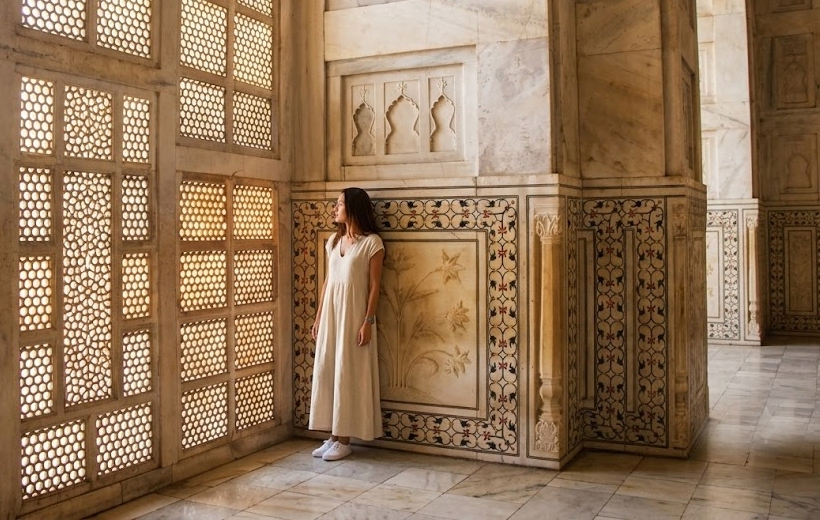
What Is Inside the Taj Mahal? Everything Visitors Need to Know Before You Visit

What Is Inside the Taj Mahal? Everything Visitors Need to Know Before You Visit
Published

What Is Inside the Taj Mahal? Everything Visitors Need to Know

You’ve seen the Taj Mahal glowing in sunrise photographs, reflected in its long pool and framed by perfectly balanced minarets. But what happens after you walk through the garden, climb onto the marble platform and finally step through its main doorway? Here’s an honest look at what is actually inside the Taj Mahal, what visitors can see, where the real graves are located and which famous stories are more myth than fact.

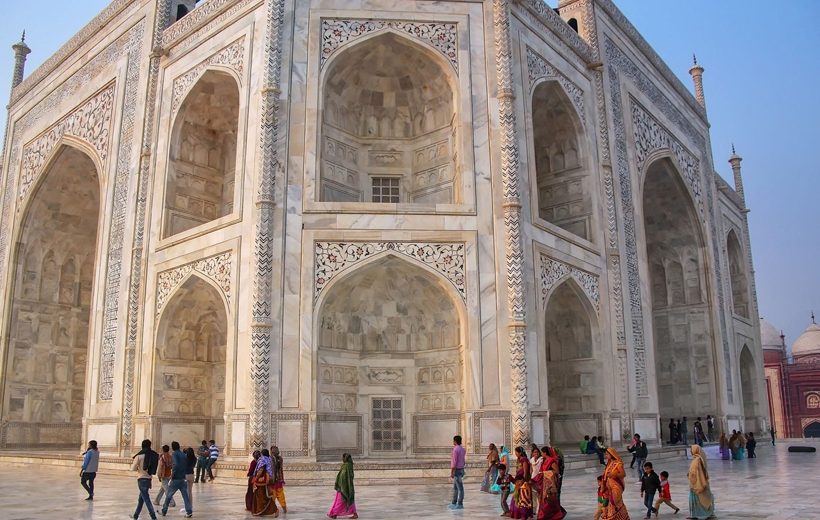
Visitors approaching the main white marble mausoleum of the Taj Mahal in Agra

The Quick Answer: What Is Actually Inside the Taj Mahal?

Inside the Taj Mahal’s main mausoleum, visitors enter a tall, octagonal memorial chamber containing the beautifully decorated cenotaphs of Mumtaz Mahal and Shah Jahan. These marble monuments look like tombs, but they don’t contain the bodies. The actual graves are in a quieter lower chamber beneath the floor and are normally closed to the public.

Around the cenotaphs, you’ll see an intricately carved marble screen, floral stone inlay, Quranic calligraphy, raised marble reliefs, arched openings and smaller surrounding chambers. Natural light filters into the room rather than flooding it, giving the interior a dim, almost hushed appearance.

What you won’t find is equally important. There are no royal bedrooms, furnished halls, golden thrones or galleries filled with Mughal treasure. The Taj Mahal wasn’t designed as a home. It was designed as a mausoleum—a place of burial, prayer, memory and extraordinary craftsmanship.

Think of it this way: the Taj Mahal’s exterior is like the cover of an incredibly beautiful book. The interior is the quieter final chapter, where the meaning of the entire story becomes clear.

About This Guide

This guide separates what ordinary visitors can actually see from internet rumors about hidden treasure, underground tunnels and sealed chambers. Access rules can change because of conservation work, security arrangements or crowd management, so visitors should always check official information before travelling.

First, Understand This: The Taj Mahal Isn’t a Palace

The word “Mahal” often causes confusion because it can suggest a palace. That leads some first-time visitors to imagine an interior filled with royal apartments, ceremonial halls, furniture and personal belongings from the Mughal court.

That isn’t what the Taj Mahal is.

The central white-marble building is a mausoleum commissioned by Mughal Emperor Shah Jahan after the death of his wife, Mumtaz Mahal. It was created as part of a much larger funerary complex containing gardens, gateways, water channels, a mosque, a matching eastern pavilion, auxiliary buildings and river-facing terraces.

For a wider understanding of the route that connects Delhi, Agra and Jaipur, read this
complete Golden Triangle travel guide.

Its emotional purpose helps explain the interior. Instead of filling the space with objects, the designers used architecture itself to create meaning. Marble, light, geometry, calligraphy and floral patterns do the storytelling.

That’s why some visitors are surprised when they first enter. The room may feel smaller and darker than expected after seeing the enormous exterior. But give your eyes a moment to adjust. The interior’s power lies in details rather than scale alone.

What Do You See When You Enter the Taj Mahal?

After reaching the main marble platform, visitors approach the central mausoleum through one of its grand arched entrances. Depending on crowd-control arrangements, your exact entry and exit route may be directed by barriers and security staff.

The transition is immediate.

Outside, everything feels open, bright and expansive. The Yamuna River lies behind the monument, the gardens stretch toward the main gateway, and sunlight reflects strongly from the white marble. Inside, the mood becomes enclosed and subdued.

You’ll normally move through an entrance passage before reaching the principal octagonal chamber. At its centre stands the marble enclosure surrounding the cenotaphs. Visitors circulate around this screen rather than walking directly up to the memorials.

The main things you’ll notice are:

  • The symbolic cenotaphs of Mumtaz Mahal and Shah Jahan
  • A delicately carved marble screen surrounding them
  • Floral designs made from coloured stones set into white marble
  • Quranic inscriptions and decorative calligraphy
  • Carved niches, arches and surrounding chambers
  • A tall interior space beneath the monument’s dome system
  • A strong echo created by the chamber’s hard surfaces and geometry
  • Filtered natural light entering through openings and marble latticework

The space can become busy, especially during weekends, holidays and peak winter months. You may not have unlimited time to stand in one place, so it helps to know what to look for before entering.

Travellers coming from Delhi can also consider a
Taj Mahal sunrise tour from Delhi
for softer morning light and a more comfortable early visit.

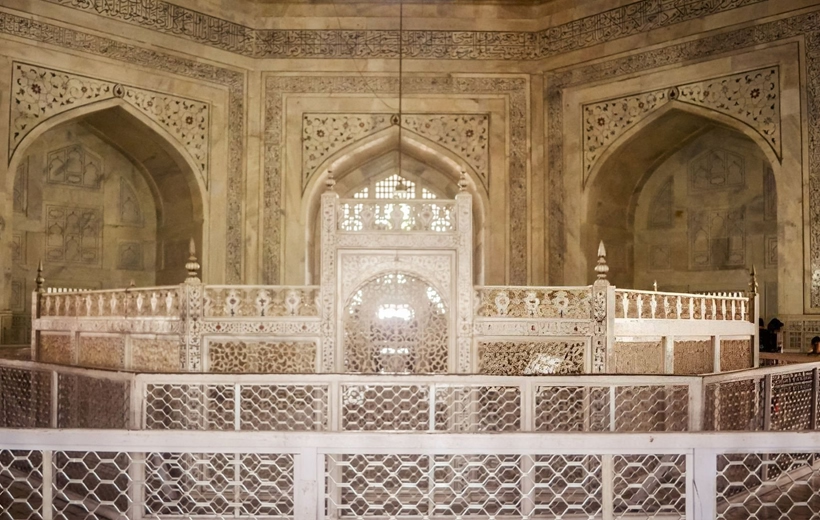
Artistic view of the octagonal central chamber and carved marble screen inside the Taj Mahal

The Central Chamber: The Heart of the Taj Mahal

The main chamber is the emotional and architectural centre of the mausoleum. Its plan is broadly octagonal, with arched openings and adjoining spaces arranged around the central memorial enclosure.

Stand there for a moment and the whole building begins to make sense.

Every major design element pulls your attention inward. The symmetry of the walls, the rhythm of the arches, the patterns in the marble and the filtered light all guide your eyes toward the cenotaphs.

Yet the interior isn’t completely symmetrical.

Mumtaz Mahal’s cenotaph occupies the central position because the mausoleum was originally built for her. Shah Jahan’s cenotaph was added beside hers after his death. Its placement creates the most famous break in the otherwise careful symmetry of the Taj Mahal.

That small irregularity tells a very human story. The monument may appear mathematically perfect from outside, but history added its own final detail.

The chamber’s surfaces are hard—marble, stone and carved architectural elements—so sound behaves dramatically. Even a quiet conversation can travel farther than expected. This is one reason visitors are encouraged to remain calm and avoid shouting.

The Cenotaphs of Mumtaz Mahal and Shah Jahan

The two marble monuments visible in the upper chamber are called cenotaphs. A cenotaph is a commemorative tomb or memorial placed separately from the actual burial.

Mumtaz Mahal’s cenotaph stands near the centre of the chamber. Shah Jahan’s cenotaph lies beside it and is larger in appearance. Both are decorated with fine inscriptions and stone inlay.

Visitors sometimes call these structures the “real tombs,” which is understandable because they look like ornate graves. Historically and architecturally, however, they function as symbolic markers.

The actual burials are below.

Why Are There Decorative Tombs Upstairs?

This arrangement reflects a broader funerary tradition in which an elaborate memorial chamber sits above a more private burial crypt. The upper chamber creates a ceremonial focus for remembrance, architecture and prayer, while the lower level holds the actual graves.

The difference is easy to remember:

FeatureLocationPurposeVisitor Access
CenotaphsMain upper chamberDecorative and symbolic memorialsVisible to regular mausoleum visitors
Actual gravesLower burial chamberReal resting place of Mumtaz Mahal and Shah JahanNormally closed to the general public

Where Are the Real Graves Inside the Taj Mahal?

The actual graves of Mumtaz Mahal and Shah Jahan are located in a lower chamber beneath the cenotaphs. Their positions correspond broadly with the memorials above.

Ordinary daytime visitors normally can’t descend into this crypt. The lower chamber is kept closed as a protected burial space and sensitive part of the monument.

This surprises many travellers because online photos almost always show the decorated upper cenotaphs. Those photographs can make it seem as though the visible memorials hold the bodies directly.

They don’t.

The separation between the symbolic upper chamber and actual lower burial chamber gives the Taj Mahal two different interior identities. The level visitors see is artistic, ceremonial and highly decorated. The level below is more private and closely connected to burial.

Can Anyone Visit the Lower Crypt?

General public access is not normally available. Historical reports sometimes mention limited access during particular religious observances or exceptional arrangements, but visitors shouldn’t assume that the lower chamber will be open during a standard Taj Mahal tour.

Plan your visit expecting to see the upper cenotaph chamber only. Anything beyond that would be exceptional rather than part of the usual ticketed experience.

If you have limited time, this guide explains
how to visit the Taj Mahal in one day from Delhi or Jaipur.

The Carved Marble Screen Around the Cenotaphs

One of the most remarkable features inside the Taj Mahal is the carved marble screen surrounding the cenotaphs. Often described as a marble jali, it works like a delicate stone lattice.

From a distance, it can look almost like lace.

Then you remember it’s carved from marble.

The screen creates a visual boundary without completely hiding the memorials. Light passes through its openings, producing changing patterns and softening the view of the cenotaphs from different angles.

Look closely at the precision of the repeated shapes. Each opening contributes to a larger geometric design. The screen feels light and fragile, even though it’s made from solid stone.

This is one of those moments when slowing down makes a huge difference. Visitors who rush around the enclosure may see only a white barrier. Visitors who pause notice the carving, stone inlay, symmetry and interaction with light.

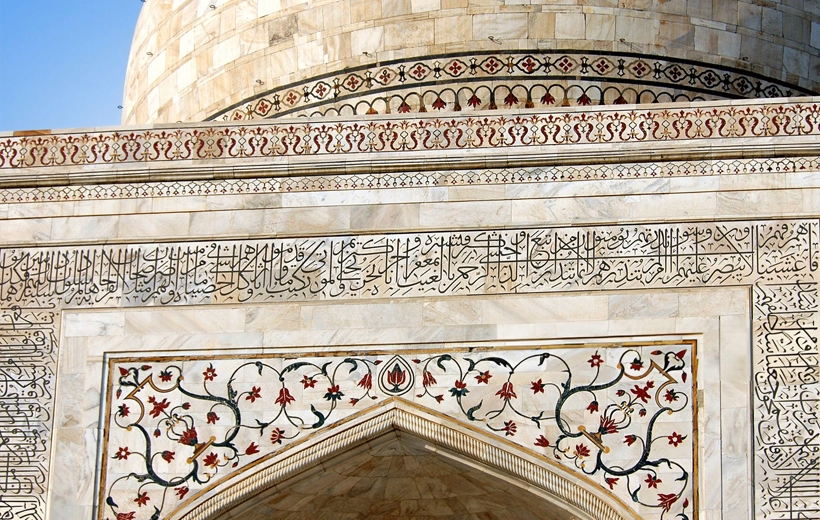
Close view of floral pietra dura stone inlay work in white marble at the Taj Mahal

Pietra Dura: The Colourful Stone Inlay Inside the Taj Mahal

The Taj Mahal may look almost entirely white from a distance, but step closer and colour begins to appear everywhere.

Much of that colour comes from a decorative technique commonly called pietra dura or parchin kari. Craftspeople shaped pieces of coloured and semi-precious stone, fitted them into carefully cut marble and polished the surface until the design felt smooth.

The result isn’t painted decoration. The colours are physically set into the marble.

Floral forms appear repeatedly because gardens and flowers carried strong visual and symbolic meaning in Mughal art. You may notice stems, leaves, blossoms and curling plant forms built from many tiny stone pieces.

Depending on the exact design, the stones may create shades of red, orange, green, blue, black and yellow against the white marble. Under changing natural light, some pieces appear brighter while others become deeper and more subdued.

How Was the Inlay Made?

  1. A decorative pattern was planned on the marble surface.
  2. Small cavities were cut to match individual pieces of stone.
  3. Coloured stones were shaped with great precision.
  4. The pieces were fitted into the prepared marble.
  5. The surface was polished to create a smooth finish.

It’s a little like completing an extremely complex puzzle, except every puzzle piece is stone and a small mistake can ruin the surrounding marble.

The craftsmanship becomes even more impressive when you consider the scale. The Taj Mahal contains decorative work across doorways, walls, cenotaphs, screens and exterior surfaces. It wasn’t one isolated panel. It was a coordinated artistic programme.

Architecture and photography enthusiasts may enjoy exploring the monument as part of an
8-day Golden Triangle photography tour.

Quranic Calligraphy Inside the Taj Mahal

Calligraphy is another major part of the Taj Mahal’s visual language. Inscriptions appear around important entrances, arches and memorial elements, connecting the building’s decoration to themes of faith, judgment, mercy and paradise.

Even visitors who can’t read the script can appreciate the rhythm of the lettering. The dark inscriptions stand sharply against the pale marble, creating strong frames around architectural openings.

The lettering wasn’t added as an afterthought. Its scale, spacing and placement were carefully integrated into the architecture.

Why Does Some Calligraphy Look the Same Size From Below?

On parts of the monument, letters positioned higher above the viewer were made larger to reduce the visual effect of distance. From ground level, this creates a more consistent appearance.

It’s a clever optical adjustment. Without it, the upper letters would look noticeably smaller even if they were physically equal in size.

This shows how the Taj Mahal’s designers thought about human perception, not just mathematical dimensions. They designed the building to look balanced from where people would actually stand.

Why Does It Echo Inside the Taj Mahal?

The central chamber is famous for its echo. Hard marble surfaces reflect sound instead of absorbing it, while the tall enclosed geometry allows noise to travel and overlap.

In a quiet chamber, even a small sound can feel surprisingly large.

Unfortunately, that sometimes encourages visitors to shout, clap or make loud noises to “test” the acoustics. It may seem harmless, but repeated noise from large crowds can quickly destroy the solemn atmosphere.

The best way to experience the acoustics is simply to listen. Footsteps, distant voices and the natural movement of visitors reveal enough without turning a protected mausoleum into an echo experiment.

Remember that this is still a burial monument. Quiet behaviour isn’t only a rule; it fits the purpose of the space.

What Is Inside the Rooms Around the Central Chamber?

The main octagonal chamber is connected visually and structurally to smaller surrounding spaces. These chambers help create the layered internal plan of the mausoleum.

Visitors may glimpse arches, passages, screened openings and side areas depending on the managed route. However, public access is usually limited, and you won’t be free to wander through every doorway.

Some spaces support the building’s architectural balance. Others relate to circulation, structural planning, interior symmetry or the monument’s funerary design.

Don’t expect each room to contain an exhibition. The Taj Mahal isn’t organised like a modern museum with labelled objects in every chamber. The building itself is the exhibit.

The walls, proportions, floor plan, openings and decorative surfaces are what you’ve come to see.

What Is Above the Main Chamber?

From outside, the Taj Mahal’s huge central dome dominates the skyline. Inside, however, the ceiling you see isn’t simply the underside of that exact outer dome.

The monument uses a double-dome arrangement. In simple terms, an inner dome shapes the proportions of the chamber, while a larger outer dome creates the grand external silhouette.

This solves an architectural problem.

If the interior followed the full height of the outer dome, the chamber could feel disproportionately tall and cavernous. If the exterior followed only the lower interior profile, the monument would lose much of its dramatic skyline.

The double-dome system allows the building to have both:

  • A visually balanced interior chamber
  • A monumental onion-shaped dome visible from far across Agra

Spaces associated with this structural system aren’t part of the normal visitor route. Tourists see the finished architectural effect rather than exploring the construction voids above.

What Is Beneath the Taj Mahal?

Beneath the visitor-accessible memorial chamber is the crypt containing the actual graves. But the idea of “what lies below” extends beyond the burial room.

The mausoleum stands on an enormous raised marble platform beside the Yamuna River. That platform and the structures beneath it form part of a carefully engineered riverfront complex.

The Taj Mahal’s location is beautiful, but building such a heavy monument close to a river required serious planning. The foundation had to support the mausoleum, dome, minarets and platform while responding to local ground conditions.

Popular articles often turn this engineering story into something sensational, suggesting enormous secret cities or treasure vaults beneath the monument. Reliable evidence supports a more practical explanation: burial spaces, structural chambers, foundation systems and maintenance-sensitive areas form part of the protected monument.

Reality may sound less dramatic than the legends, but it’s arguably more impressive. Keeping such a massive marble structure stable for centuries is an extraordinary achievement on its own.

What Are the Sealed Rooms of the Taj Mahal?

Search online for “inside the Taj Mahal” and you’ll quickly find videos claiming that locked rooms hide secret evidence, treasure, forbidden religious objects or an entirely different history.

The phrase “sealed rooms” makes the story sound more mysterious than it needs to be.

Historic monuments often contain areas closed to visitors. There are several practical reasons:

  • Fragile surfaces need protection from constant foot traffic
  • Narrow passages may not be safe for large crowds
  • Structural areas aren’t designed as visitor galleries
  • Conservation teams may need controlled access
  • Security arrangements require restricted zones
  • Some spaces have no meaningful sightseeing value
  • Opening every room could affect ventilation and environmental conditions

A closed door doesn’t automatically prove a hidden conspiracy. In most major monuments, large portions remain staff-only for completely ordinary conservation and safety reasons.

Are There 22 Secret Rooms?

Claims about “22 secret rooms” usually refer to a series of structural chambers associated with the river-facing lower level or platform. Calling them secret suggests they were unknown, but architectural spaces can be documented while still remaining closed to tourists.

Visitors should be cautious with dramatic social-media claims that show a locked doorway and then invent a story about what must be behind it. A responsible interpretation begins with architecture and conservation, not speculation.

Are There Secret Tunnels Inside the Taj Mahal?

Stories about underground tunnels connecting the Taj Mahal to Agra Fort or distant locations have circulated for years. They’re popular because they turn an already fascinating monument into a historical mystery.

But visitors shouldn’t confuse legends with verified access routes.

The Taj Mahal does contain passages, chambers and lower-level architectural spaces. That is normal for a complex building of its scale. However, ordinary tourists won’t enter a dramatic underground tunnel leading across Agra.

Some Mughal sites did use concealed or controlled routes for practical, military or royal purposes. That broader historical context may have encouraged tunnel stories about the Taj Mahal. Still, a good guide should distinguish what is documented from what is repeated simply because it sounds exciting.

The most important hidden space for visitors to understand is not a legendary escape tunnel. It’s the real burial chamber directly beneath the cenotaphs.

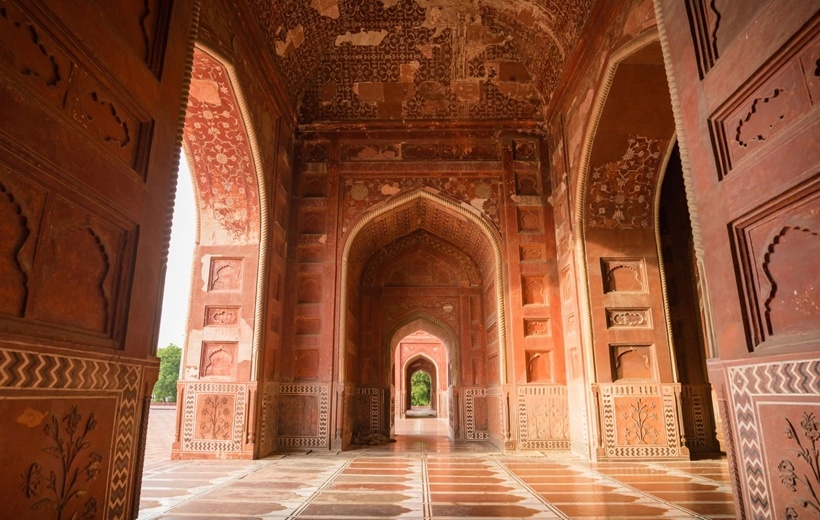
Red sandstone mosque standing beside the white marble Taj Mahal mausoleum

What Is Inside the Mosque Beside the Taj Mahal?

The Taj Mahal complex includes much more than the white marble mausoleum. On the western side stands a red sandstone mosque facing the direction of prayer.

Its interior differs sharply from the main tomb. Red sandstone, pale marble details, arches and a prayer-oriented layout create a more grounded visual character.

The mosque establishes the religious function of the complex and contributes to the balance of the riverfront terrace.

On the eastern side stands a matching building commonly known as the jawab, meaning “answer” or “response.” It mirrors the mosque externally and preserves symmetry, though it doesn’t serve the same congregational function because its orientation isn’t suitable for Islamic prayer.

BuildingLocationMain Role
MosqueWest of the mausoleumReligious and prayer function
JawabEast of the mausoleumArchitectural balance and visual symmetry
Main mausoleumCentre of the riverfront platformMemorial and burial monument

What Is Inside the Taj Museum?

The Taj Museum is separate from the central burial chamber and is easy to miss when visitors focus only on the famous marble building.

The museum traditionally displays material connected with the monument’s history, planning, construction and Mughal period. Exhibits may include architectural drawings, calligraphy-related material, historical objects, images, coins or replicas associated with the Taj Mahal’s story.

Visiting it can add useful context because the mausoleum itself has very little explanatory signage inside. Without background knowledge, you may admire a floral design without understanding how it was made or see a cenotaph without knowing that the actual burial lies below.

Museum access and opening arrangements can change, so check locally during your visit. If it’s open and your ticket or schedule allows, it’s worth adding to your route.

Even a short museum visit can make the main monument feel less like a beautiful photograph and more like a carefully planned historical complex.

What Does It Feel Like to Go Inside the Taj Mahal?

The exterior gives you distance. You can step back, frame photographs, compare the minarets and watch the marble change with the light.

The interior gives you closeness.

You move from a bright platform into a darker chamber. The temperature may feel different. Voices echo. The crowds slow down around the central screen. Your eyes begin picking out coloured stone, carved flowers and black calligraphy against pale marble.

Some visitors find the interior less visually spectacular than the exterior because they expect a huge decorated palace hall. Others find it more emotional because this is where the monument’s original purpose becomes real.

Both reactions are fair.

The key is to enter with the right expectation. You’re not going inside to see furniture or treasure. You’re going inside to understand why the building exists.

A Useful Expectation

The Taj Mahal’s exterior is designed to overwhelm you from a distance. Its interior rewards you for paying attention at close range.

Rules for Entering the Main Mausoleum

Security and conservation rules protect the monument from damage caused by thousands of daily visitors. Exact instructions may change, so follow the signs and staff directions you receive on the day.

Common expectations include:

  • Carry only permitted items through the security checkpoint
  • Avoid bringing large bags or unnecessary belongings
  • Use shoe covers or follow footwear instructions on marble areas
  • Don’t touch, scratch or lean against decorated marble surfaces
  • Don’t carry food into protected monument areas
  • Follow the marked entry, circulation and exit route
  • Keep your voice low inside the burial chamber
  • Respect photography restrictions and security instructions
  • Don’t use tripods, drones or professional equipment without permission
  • Never attempt to enter barriers, closed doors or restricted passages

Security screening can take time during busy periods. Carrying fewer items usually makes the process easier.

Why Are Shoe Covers Used?

Shoe covers help reduce dirt and surface wear on sensitive marble flooring. Depending on current management arrangements, visitors may receive covers with a ticket category, purchase them or be directed to follow another footwear procedure.

Wear comfortable shoes that are easy to manage. Complicated straps and heavy boots aren’t ideal when you’re moving through security and crowded monument areas.

Can You Take Photos Inside the Taj Mahal?

Photography is a major part of almost every Taj Mahal visit, but rules inside the main mausoleum can be stricter than rules in the gardens and exterior areas.

Visitors should check the current signs at the entrance and obey staff instructions. Even where phones or cameras are carried inside, photography may be discouraged or restricted in the central burial chamber.

Flash, tripods, lighting equipment and professional filming setups can create additional conservation, security and crowd-management problems. Don’t assume that because you can photograph the exterior, you can use the same equipment everywhere.

Here’s the practical approach:

  • Take your main photographs in the garden and on the exterior platform
  • Read all signs before entering the mausoleum
  • Keep your phone stored when staff request it
  • Never use flash against sensitive interior decoration
  • Don’t stop suddenly in a moving crowd for a photograph
  • Avoid blocking doorways and circulation paths

Not photographing every second may actually improve the experience. The interior is dim, crowded and detailed; phone images rarely capture it as well as your eyes do.

Accessibility, Stairs and Crowd Conditions

Reaching the interior involves passing through security, crossing a large complex and approaching the raised mausoleum platform. The exact route can be tiring for visitors with limited mobility, especially in hot weather.

Accessibility support may be available in parts of the complex, but historic architecture creates limitations. Travellers who use wheelchairs, walking aids or require frequent rest should plan ahead rather than assuming every section will be step-free.

Families with small children should also prepare for dense crowds. The inside chamber can feel enclosed, and movement may be slow.

Helpful Planning Tips

  • Arrive early to reduce heat and crowd pressure
  • Use the least crowded official entry gate available
  • Carry only essential permitted items
  • Keep children close inside the central chamber
  • Arrange mobility assistance before arrival when possible
  • Take breaks in the garden before approaching the mausoleum
  • Avoid peak holiday periods when flexibility matters

A private guide can’t remove architectural barriers, but a knowledgeable guide can help organise the route, explain where to pause and reduce unnecessary walking.

Best Time to Visit the Inside of the Taj Mahal

Early morning is usually the most rewarding time for a complete Taj Mahal visit. Temperatures are often more comfortable, the light is softer and crowds may be lighter than later in the day.

That doesn’t guarantee an empty interior. The Taj Mahal is one of the world’s most famous monuments, and even sunrise visits can attract large numbers of travellers.

Still, arriving early gives you a better chance to enjoy the gardens and main chamber before tour groups reach their peak.

Seasonal Considerations

PeriodTypical ExperiencePlanning Advice
October to MarchCooler weather but strong tourist demandBook ahead and arrive early
April to JuneVery hot daytime conditionsChoose early morning and stay hydrated
July to SeptemberHumidity, clouds and possible rainCheck weather and protect permitted electronics
Weekends and holidaysHigher crowd levelsAllow extra security and queue time

The monument is traditionally closed to general visitors on Fridays, when the mosque remains important for prayers. Always verify the current schedule before finalising your Agra itinerary.

How Long Does It Take to See Inside the Taj Mahal?

Most visitors spend around 15 to 30 minutes inside the main mausoleum itself. Your time may be shorter during heavy crowd management or longer when visitor numbers are light.

Don’t confuse mausoleum time with total visit time.

A proper Taj Mahal visit generally includes:

  • Security screening and entry
  • The main gateway
  • The formal garden and reflection pool
  • Exterior views from several angles
  • The raised marble platform
  • The interior cenotaph chamber
  • The mosque and eastern jawab
  • River-facing views
  • The museum, when accessible
  • Photography and rest time

Allow roughly two to three hours for a relaxed visit. Serious photographers, architecture enthusiasts and travellers using a detailed guide may want longer.

For travellers combining Agra with Delhi and Jaipur, compare the available
Golden Triangle tour packages
before choosing your itinerary.

Rushing the Taj Mahal in 45 minutes is a little like watching only the final scene of a film. You’ll technically see the star attraction, but you’ll miss the structure that gives it meaning.

Taj Mahal Interior Myths vs Facts

Myth: The Taj Mahal Is Empty

The interior isn’t furnished like a palace, but it contains cenotaphs, carved screens, stone inlay, calligraphy, relief work, surrounding chambers and the lower burial crypt.

Fact: It Is a Mausoleum

Its relatively restrained interior reflects its function as a memorial and burial monument rather than a royal residence.

Myth: The Visible Tombs Hold the Bodies

The decorated structures seen upstairs are cenotaphs. The actual graves are in the lower crypt.

Fact: Shah Jahan Lies Beside Mumtaz Mahal

Shah Jahan was buried beside Mumtaz Mahal, creating the best-known break in the upper chamber’s central symmetry.

Myth: Every Closed Room Hides Treasure

Historic monuments routinely close structural, fragile and unsafe spaces for conservation and security.

Fact: Many Areas Aren’t Public Galleries

Some rooms and passages form part of the building’s construction rather than spaces intended for sightseeing.

Myth: The Building Was a Furnished Palace

Visitors sometimes expect bedrooms and royal halls because of the name, but the central structure was created as a mausoleum.

Fact: The Whole Complex Has Several Functions

The wider site includes a garden, monumental gateway, mosque, jawab, museum areas and supporting architecture around the tomb.

Small Interior Details Most Visitors Miss

You don’t need to memorise an architecture textbook before visiting. Just knowing a few details will help you see more.

1. Shah Jahan’s Cenotaph Breaks the Symmetry

Nearly everything in the Taj Mahal encourages you to look for balance. That makes Shah Jahan’s off-centre cenotaph especially noticeable once someone points it out.

2. The Flowers Aren’t Simply Painted

Many colourful floral forms are created through shaped stone inlay. Look at the edges where coloured pieces meet the marble.

3. The Marble Screen Controls the View

The screen protects the memorial area while allowing visitors to see through it. Its openings also break and soften the incoming light.

4. Sound Is Part of the Experience

The chamber’s echo changes how the space feels. Even when it’s busy, listen for the difference between the open platform and enclosed interior.

5. The Interior Isn’t Meant to Match the Exterior’s Brightness

The darker atmosphere isn’t a design failure. The contrast creates a transition from public spectacle to private remembrance.

6. The Building Uses Repetition Without Feeling Identical

Arches, floral forms and geometric patterns repeat, but their scale and placement shift according to the surface and viewing position.

7. The Cenotaphs and Graves Serve Different Purposes

The upper memorials communicate visually with visitors. The lower graves preserve the actual burial arrangement.

8. The Dome You See Outside Isn’t the Exact Ceiling You See Inside

The double-dome system allows separate interior and exterior proportions.

9. The Mosque Helps Explain the Complex

Seeing only the main mausoleum can make the Taj Mahal feel like an isolated object. The mosque, jawab, garden and gateway reveal it as a complete planned landscape.

10. The Interior Is More Emotional When You Understand Its Purpose

Without context, it may look like a dark marble room with two monuments. With context, it becomes the central memorial chamber of a carefully constructed royal mausoleum.

Is Going Inside the Taj Mahal Worth It?

Yes, especially on your first visit.

The outside may be more instantly photogenic, but the inside explains the monument. Seeing the cenotaphs, marble screen and inlay work gives the building emotional and historical depth that exterior photographs can’t provide.

That said, manage your expectations. The interior can be crowded, dim and tightly controlled. You may have limited time near the central chamber, and some visitors find the exterior visually more impressive.

Go inside for meaning, not for the biggest photograph.

If you’re travelling with someone who has serious mobility concerns, struggles in enclosed crowds or has very limited time, discuss the route in advance. The exterior gardens and platform still provide an extraordinary experience, but most able visitors should include the mausoleum interior at least once.

Practical Checklist Before Entering the Taj Mahal

  • Check the official opening schedule before travelling to Agra
  • Remember that the monument is generally closed to tourists on Fridays
  • Confirm whether your ticket includes main mausoleum access
  • Carry a valid ticket and identification where required
  • Bring only essential permitted belongings
  • Avoid large bags, food and prohibited objects
  • Wear comfortable footwear that is easy to manage
  • Follow shoe-cover or footwear instructions
  • Arrive early during busy seasons
  • Keep children close inside crowded chambers
  • Don’t touch marble screens, cenotaphs or wall decoration
  • Keep your voice low and respect the burial space
  • Follow current photography instructions
  • Allow two to three hours for the complete complex
  • Check museum access during your visit
  • Use an official or authorised guide when you want detailed explanations

Why a Good Guide Makes the Interior More Interesting

The Taj Mahal’s interior has limited room for signs and lengthy explanations. During a busy visit, you may pass the most important details without realising what they mean.

A knowledgeable guide can explain the difference between the cenotaphs and real graves before you enter, point out the symmetry break, identify decorative techniques and prepare you for the managed visitor route.

You can also explore private and customised India itineraries through
India Golden Triangle Tour.

The key word is knowledgeable.

Choose an authorised guide or book through a reliable operator. Avoid accepting the first unsolicited offer from someone outside the gate who promises secret access or a “special entrance.”

No genuine guide should promise to open protected rooms, bypass security or take you into the lower burial chamber during a normal public visit.

How to Experience the Taj Mahal Beyond the Main Tomb

The main chamber is important, but it shouldn’t become the only thing you see. The Taj Mahal was designed as a connected complex, and each part changes how you understand the others.

Follow a route like this:

  1. Pause at the monumental gateway before entering the garden.
  2. Take the classic central view, but don’t stay only at the reflection pool.
  3. Walk along one side of the garden to notice changing proportions.
  4. Study the calligraphy and stone inlay near the mausoleum entrance.
  5. Enter the central chamber and identify both cenotaphs.
  6. Walk around the marble screen without rushing.
  7. Exit toward the river-facing platform when the route permits.
  8. Visit the mosque and compare its red sandstone interior.
  9. Look at the matching eastern jawab.
  10. Visit the museum when it is open.
  11. Return to the garden and look back at the building with new context.

The final step matters. Once you know what lies inside, the exterior no longer feels like a beautiful shell. You understand the chamber, the graves beneath it and the reason the entire complex was built.

Before arranging transport, review the practical
Delhi–Agra–Jaipur private driver cost
to estimate your travel budget more accurately.

Frequently Asked Questions About What Is Inside the Taj Mahal

What is inside the Taj Mahal?

The main mausoleum contains an octagonal central chamber with the decorated cenotaphs of Mumtaz Mahal and Shah Jahan. Visitors can also see a carved marble screen, floral stone inlay, Quranic calligraphy, marble relief work and surrounding architectural chambers. The actual graves are located below the visitor level.

Can tourists go inside the Taj Mahal?

Yes. Visitors can enter the upper memorial chamber when they hold the required ticket or access component. The lower crypt and many structural spaces remain closed to ordinary visitors.

Are Mumtaz Mahal and Shah Jahan really buried there?

Yes. Their actual graves are in the lower burial chamber beneath the cenotaphs visible upstairs.

Why are the visible tombs called cenotaphs?

They are ceremonial memorials placed above the real graves. They mark and honour the burials without containing the bodies themselves.

Why is Shah Jahan’s cenotaph off-centre?

The mausoleum was originally planned around Mumtaz Mahal’s burial. Shah Jahan was added beside her later, creating a visible break in the central chamber’s symmetry.

Is the Taj Mahal empty inside?

No. It contains important memorial and architectural features, but it isn’t furnished like a palace. The beauty comes from marble carving, stone inlay, calligraphy, geometry and the cenotaph arrangement.

Are there secret rooms inside the Taj Mahal?

There are closed rooms, structural chambers and restricted passages, as you would expect in a protected historic monument. Claims that every closed area hides treasure or shocking evidence aren’t supported by reliable historical research.

What is in the 22 locked rooms of the Taj Mahal?

The phrase usually refers to a series of lower structural chambers that aren’t open to tourists. Their closure is generally connected with conservation, security and the fact that they aren’t designed as public galleries.

Is there an underground tunnel from the Taj Mahal to Agra Fort?

Stories about a long secret tunnel remain popular, but ordinary visitor information and reliable historical descriptions don’t establish a public underground route connecting the two monuments.

Can you see the real graves?

Not during a normal public visit. Visitors usually see the cenotaphs in the upper chamber, while the actual graves remain in the closed lower crypt.

Can visitors touch the cenotaphs?

No. Visitors remain outside the carved marble enclosure and should never touch protected memorial or decorative surfaces.

Can you take photographs inside?

Interior photography rules may be restricted and can change. Follow the signs and security instructions provided at the mausoleum. Photography is much easier in the gardens and exterior areas.

Why does the Taj Mahal interior look dark?

Natural light enters in a controlled way through openings and marble screens. The enclosed memorial chamber is naturally dimmer than the bright outdoor platform, creating a solemn atmosphere.

Why is there an echo inside?

Marble and other hard surfaces reflect sound, while the chamber’s height and geometry allow voices and footsteps to reverberate.

Is the Taj Mahal made entirely of marble?

The main mausoleum is famous for its white marble surfaces, but the wider complex also uses red sandstone, masonry, coloured stone inlay and other structural materials.

Is there gold inside the Taj Mahal?

The interior isn’t a treasure chamber filled with gold. Its richness comes mainly from carved marble, calligraphy, decorative stone inlay and exceptional craftsmanship.

How long can you stay inside the mausoleum?

The exact time depends on crowd management. Most visitors spend approximately 15 to 30 minutes inside before continuing through the exit route.

How long should I spend at the full Taj Mahal complex?

Allow two to three hours for security, gardens, exterior views, the main mausoleum, mosque, jawab, riverfront platform and museum when available.

Is it worth paying to enter the main mausoleum?

For most first-time visitors, yes. The interior is the best place to understand the cenotaph arrangement, marble screen, inlay work and original funerary purpose of the monument.

Is the Taj Mahal a mosque?

The central white building is a mausoleum. A functioning mosque stands separately on the western side of the complex.

Final Thoughts

So, what is inside the Taj Mahal?

Not a palace packed with royal furniture. Not an empty marble shell. And not a maze of secret treasure rooms waiting to be discovered.

Inside is a carefully designed memorial chamber containing the symbolic cenotaphs of Mumtaz Mahal and Shah Jahan, surrounded by carved marble, coloured stone inlay, calligraphy and filtered light. Beneath that chamber lie their actual graves, protected from the daily flow of visitors.

The exterior may be the image you recognise, but the interior gives that image meaning.

When you enter, don’t rush only because the crowd is moving. Look at the marble screen. Find the two cenotaphs. Notice how Shah Jahan’s placement breaks the symmetry. Watch the coloured stones catch the light. Listen to the chamber without adding to the noise.

Then step outside and look at the monument again.

It won’t feel quite the same—because now you know what the famous white dome is protecting.