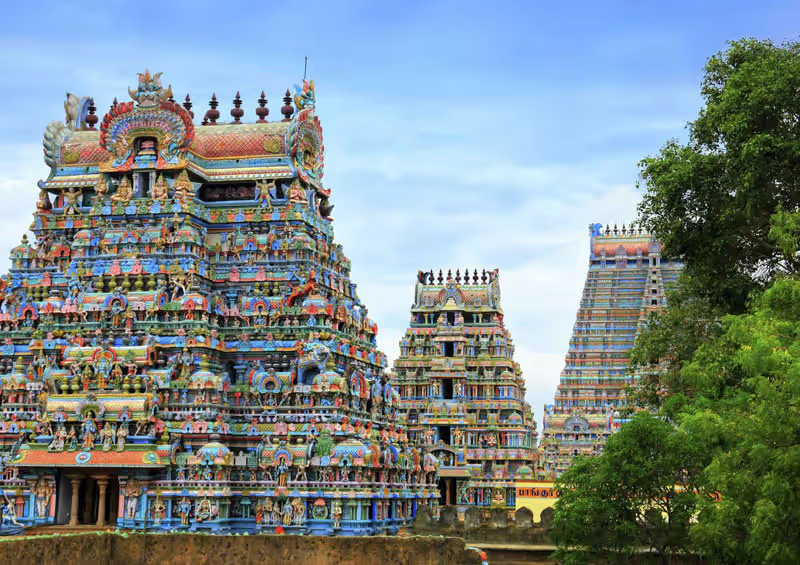
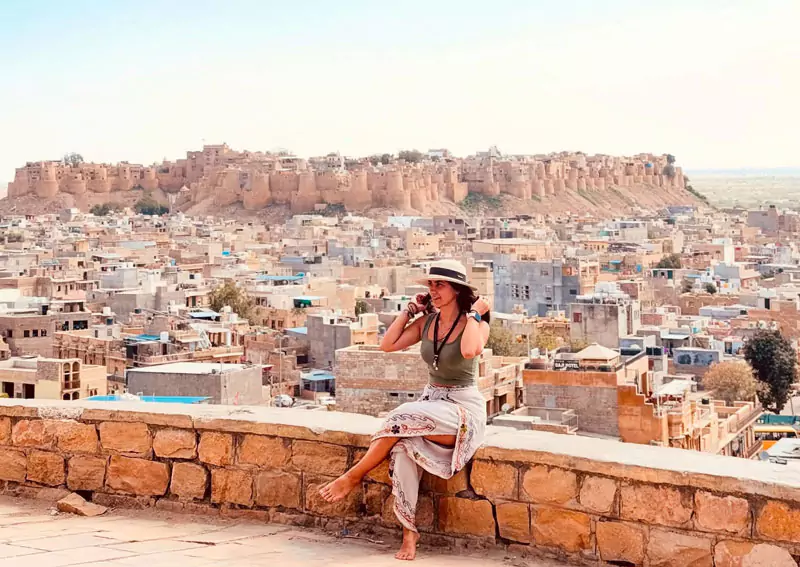
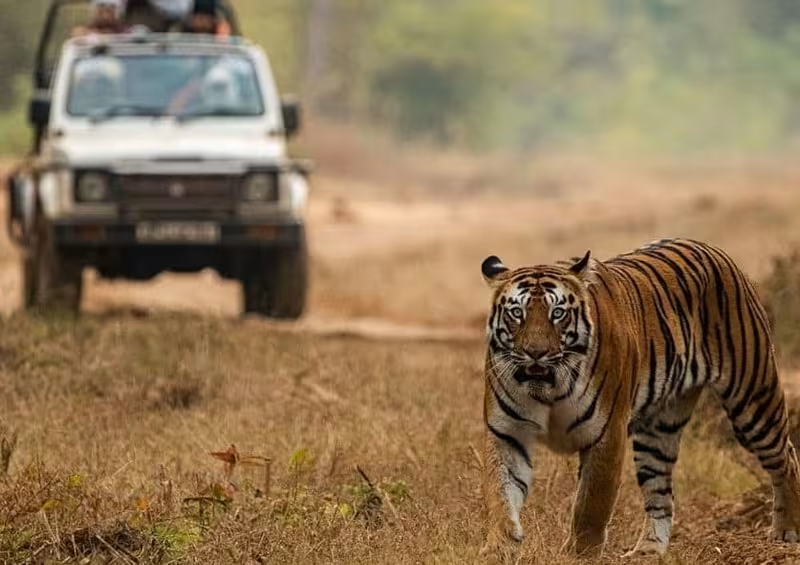
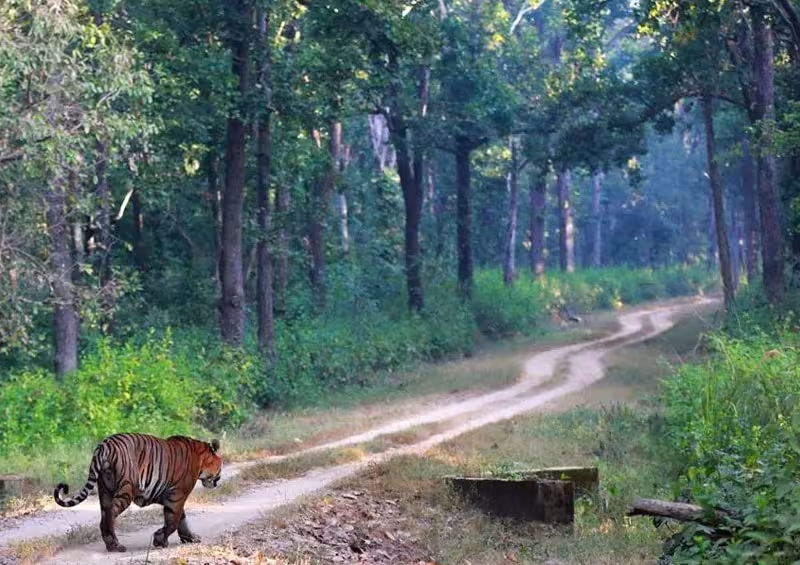
The Golden Triangle with Central India Wildlife Trail combines India’s most famous heritage circuit with one of its finest wildlife experiences. You start in Delhi, move through Agra and Jaipur, covering the landmarks every traveler comes to India to see. Then the trip takes a completely different turn as you fly south to Nagpur and drive deep into the forests of Kanha and Pench National Parks.
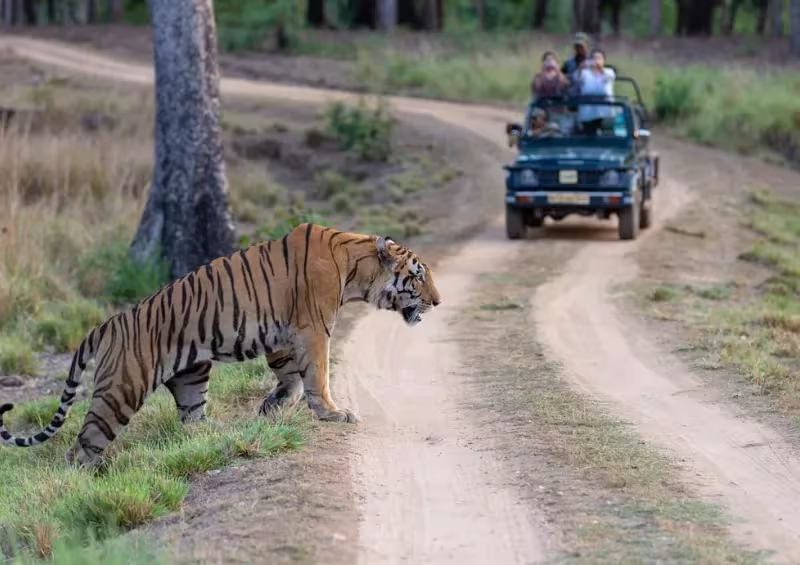
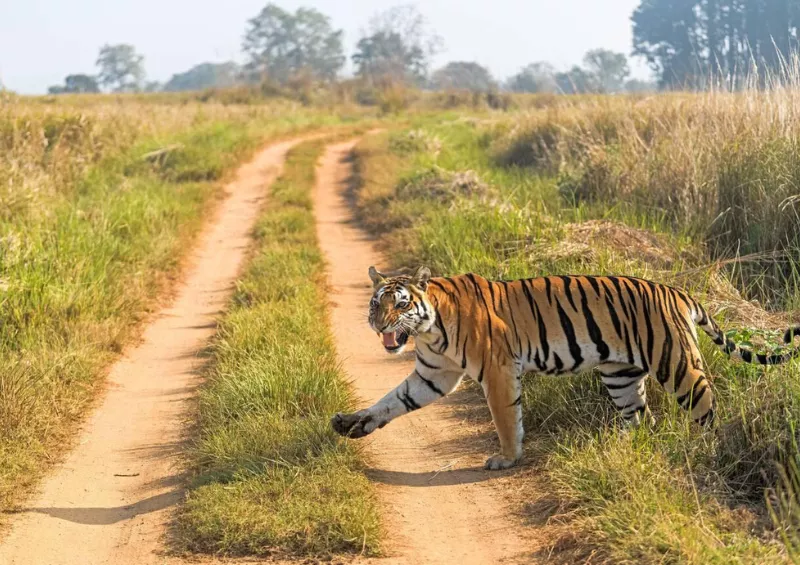
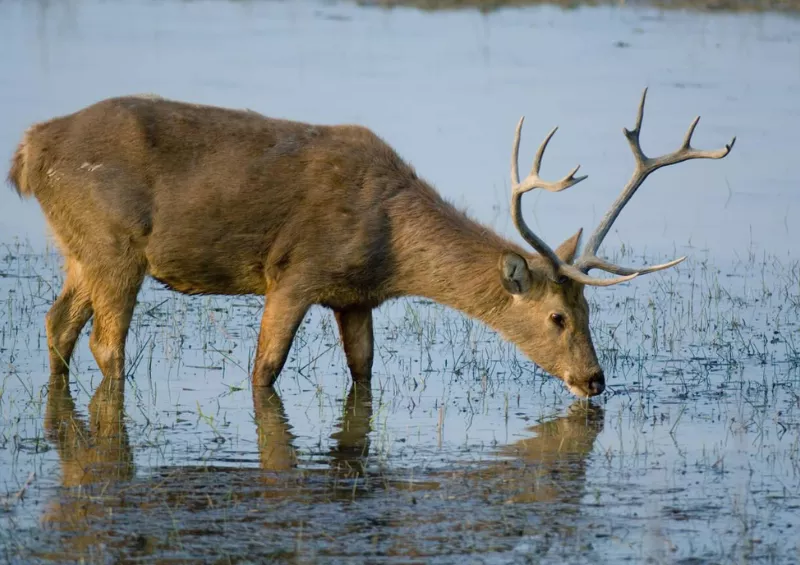
Kanha National Park is one of India’s largest and most protected tiger reserves — home to Bengal tigers, leopards, Indian gaur and the rare barasingha deer. Pench is the forest that inspired Rudyard Kipling’s The Jungle Book. Together, four expert-guided jeep safaris across both parks give you a wildlife experience that is genuine, unhurried and hard to forget.
Tour Highlights
- Private airport transfer in Delhi on arrival
- Explore Red Fort, Jama Masjid, Humayun's Tomb and Qutub Minar in Delhi
- Rickshaw ride through the narrow lanes of Chandni Chowk in Old Delhi
- Visit Agra Fort and the delicate Baby Taj on the banks of the Yamuna
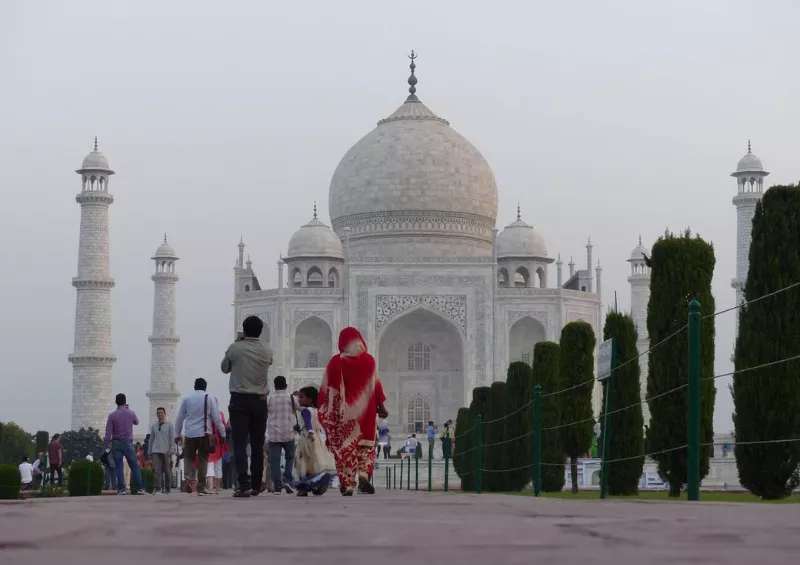
- Watch the Taj Mahal at sunrise — the single most beautiful moment of North India
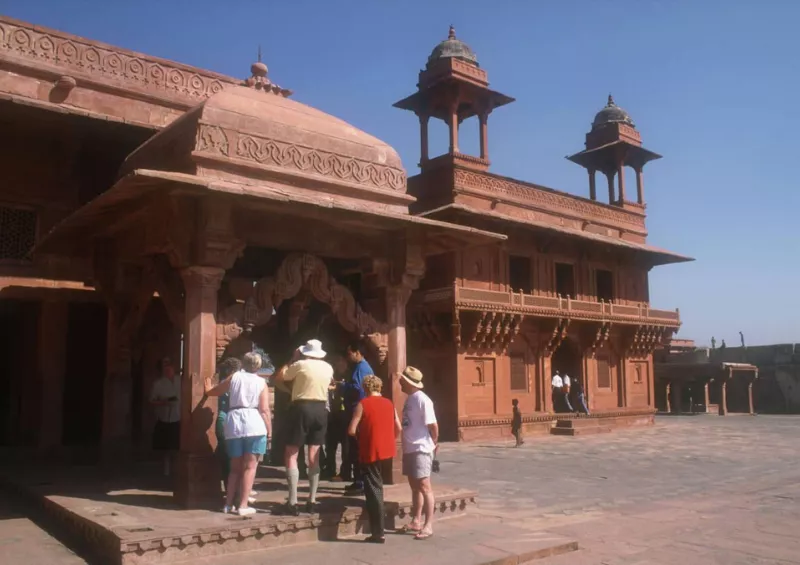
- Stop at Fatehpur Sikri, Akbar's abandoned red sandstone capital
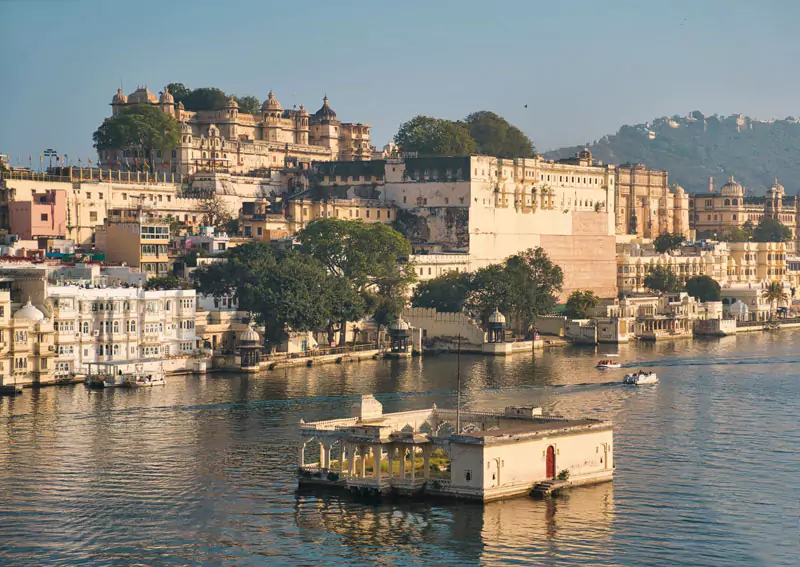
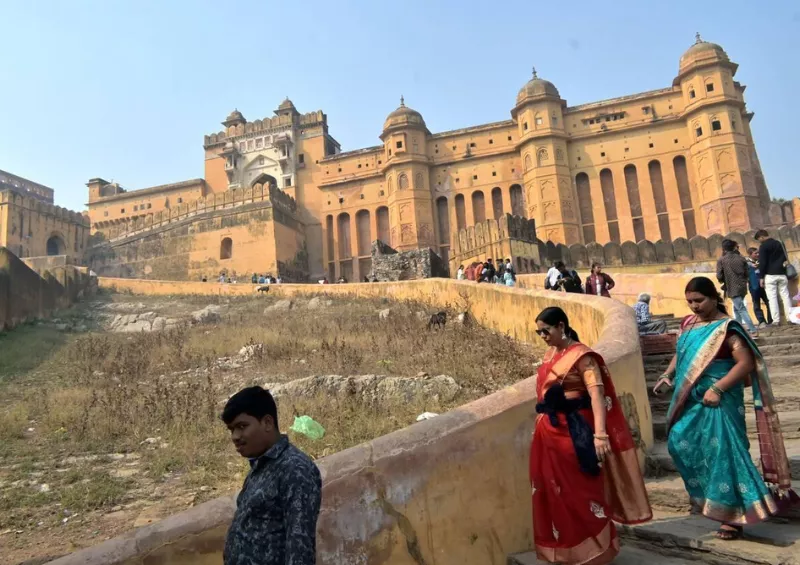
- Discover Amber Fort, Hawa Mahal, City Palace and Jantar Mantar in Jaipur
- Fly from Jaipur to Nagpur — gateway to Central India's tiger reserves
- Enter the legendary Kanha National Park, India's largest and most pristine tiger reserve
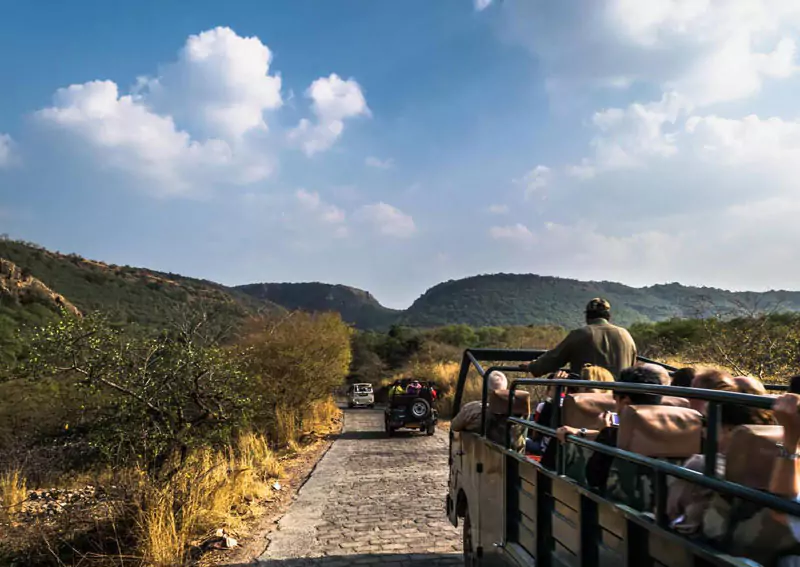
- Early morning and late afternoon jeep safaris deep inside the forest
- Track Bengal tigers, wild leopards, Indian bison (gaur), barasingha deer and more
- Explore Pench National Park, the jungle that inspired Rudyard Kipling's The Jungle Book
- Expert naturalist guides on every single safari
| Destination | Delhi → Agra → Jaipur → Nagpur → Kanha / Pench → Delhi |
| Duration | 10 Days |
| Tour Type | Golden Triangle Tours |
Tour Plan
01Day 1 - Arrival in Delhi
Your trip begins the moment the plane lands. Our driver will be at the arrivals gate with a sign. You will be taken directly to your hotel in a clean, air-conditioned vehicle. No app bookings. No shared cabs. No confusion.
Settle in, rest and eat. If you arrive early enough, we recommend an evening walk around Connaught Place or a visit to Akshardham Temple — one of the most stunning architectural achievements in modern India.
Overnight in Delhi.
02Day 2 - Delhi Sightseeing
Today you see two Delhis — the old city built by the Mughals, and the wide boulevards of British-era New Delhi.
Old Delhi — Morning:
Start with a private pedal rickshaw ride through Chandni Chowk. It is chaotic, loud, colourful and completely alive. There is nowhere else quite like it.
Then visit:
- Red Fort— Shah Jahan’s great walled fortress in red sandstone
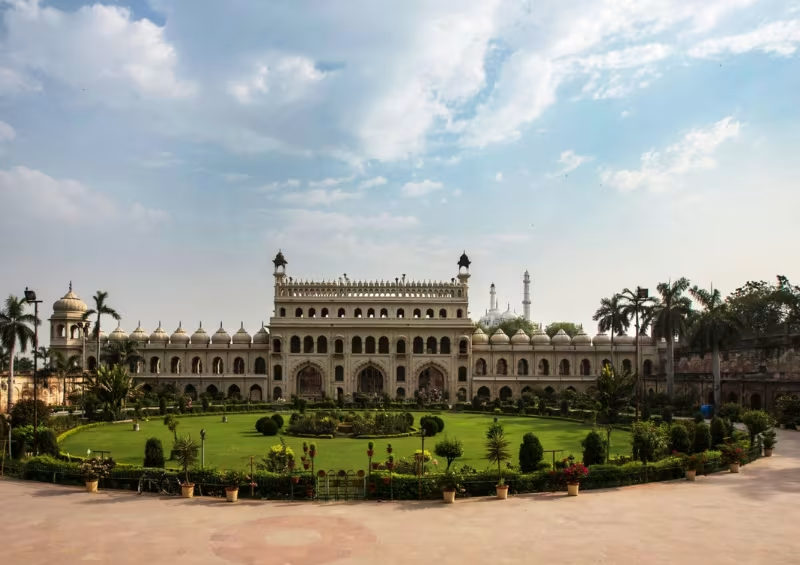
- Jama Masjid— built to hold 25,000 worshippers, still one of India’s most active mosques
- Raj Ghat— the simple memorial where Mahatma Gandhi was cremated
New Delhi — Afternoon:
After lunch, move to the southern part of the city:
- Humayun’s Tomb— the Mughal garden tomb that inspired the Taj Mahal
- Qutub Minar— a 73-metre iron-pillar minaret built in 1193, still standing perfectly
- Lotus Temple— a Bahá’í house of worship shaped like a blooming white lotus
Overnight in Delhi.
03Day 3 - Delhi to Agra
Drive south from Delhi to Agra in the morning. The journey takes 3 to 4 hours on the Yamuna Expressway.
Afternoon in Agra:
Start with Agra Fort — the massive red sandstone stronghold from which the Mughal Empire was governed for over a century. Walk through the Diwan-i-Am, the Diwan-i-Khas and the private chambers where emperors once lived.
Then visit the Tomb of Itimad-ud-Daulah — known as the Baby Taj. It sits on the opposite bank of the Yamuna, smaller than the Taj Mahal but more intricate. Every surface is covered in fine pietra dura inlay work. It is extraordinary. The rest of the evening is yours. Try the local Mughlai food. Sleep early.
Overnight in Agra.
04Day 4 - Taj Mahal at Sunrise → Drive to Jaipur
Early Morning: This is the moment the entire trip has been building toward.
You arrive at the Taj Mahal before sunrise, when the crowds are thin and the light is soft and golden. Your guide will walk you through the full story of Shah Jahan, Mumtaz Mahal and the 22 years it took to build this monument. But at some point, words stop being useful. You just stand there and look.
Give yourself 90 minutes at minimum.
Late Morning — Fatehpur Sikri: On the way to Jaipur, stop at Fatehpur Sikri — Emperor Akbar’s grand capital city built entirely in red sandstone and abandoned after just 14 years, likely due to water shortages. It is one of the strangest and most beautiful places in North India. Perfectly preserved. Completely empty.
Evening — Arrive Jaipur: Check in to your Jaipur hotel. Rest and eat. Tomorrow is a full day.
Overnight in Jaipur.
05Day 5 - Full Day Jaipur
Jaipur earns its reputation. One day is enough to see the highlights but not enough to forget them.
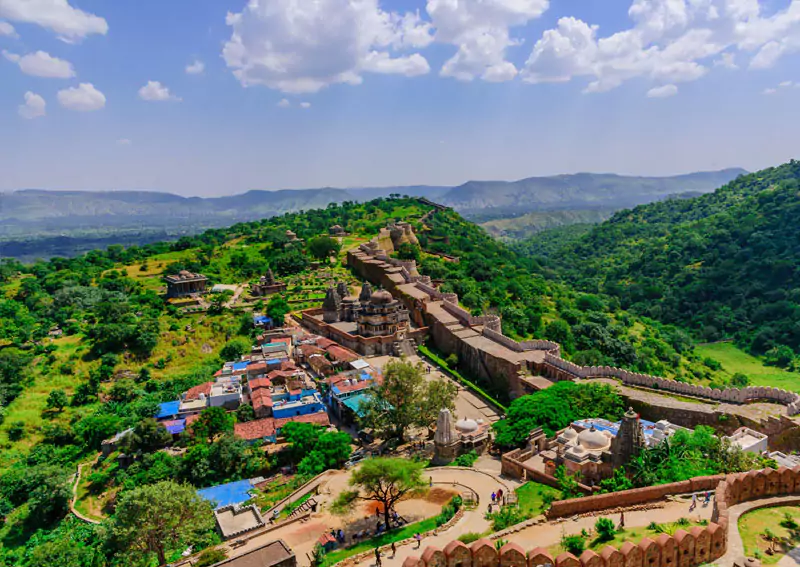
Morning: Begin at Amber Fort, 11 kilometres from the city on a ridge above the plains. Take a jeep up to the entrance. Inside, the architecture is a rare combination of Rajput boldness and Mughal elegance. The Sheesh Mahal — a room whose walls and ceiling are covered entirely in mirror glass — is genuinely jaw-dropping.
Then visit:
- Hawa Mahal— the 5-storey Palace of Winds with its 953 lattice windows, built so royal women could watch street life without being seen
- City Palace— still partly occupied by the royal family of Jaipur, part museum and part living heritage site
- Jantar Mantar— a UNESCO-listed astronomical observatory built in the 1700s, with instruments large enough to read the sky with naked precision
Afternoon: Walk through Johari Bazaar and the surrounding markets. Jaipur is one of the best cities in India for shopping. You will find:
- Kundan and meenakari jewellery
- Hand-block printed fabrics in every color
- Blue pottery that is only made in Jaipur
- Traditional leather mojris
Overnight in Jaipur.
06Day 6 - Jaipur to Nagpur (Flight) → Drive to Kanha
This is where the tour completely changes. You take a morning flight from Jaipur to Nagpur — the gateway city to Central India’s wildlife belt. From Nagpur airport, your vehicle takes you further east to the forests of Kanha or Pench, depending on your package preference.
The drive through the forest road is itself a slow transition. Trees get taller. Traffic disappears. Birdsong replaces engine noise.
Check in to your jungle lodge or wildlife resort near the park boundary. These properties are built with nature in mind — open-air dining, minimal lighting at night, and the sound of the forest all around you.
After dinner, your naturalist guide will brief you on what to expect inside the park — animal behaviour, tracking signs, safe distances and what to look for. Early night. Tomorrow starts before dawn. Overnight near Kanha or Pench.
07Day 7 - Full Day Safari in Kanha National Park
Kanha is the tiger reserve that most serious wildlife travelers put at the top of their India list.
It is the largest national park in Madhya Pradesh. It has one of the highest densities of Bengal tigers in India. It is also the park that helped save the rare barasingha — the swamp deer — from extinction. And it was one of the inspirations for Rudyard Kipling when he wrote The Jungle Book.
You do two safaris today:
Morning Safari — 5:30 AM to 9:30 AM
The forest is at its most active at first light. This is when predators are ending their night hunts and prey animals are beginning to move. Your open jeep enters the park at gate opening time, guided by an expert naturalist who reads every track, sound and movement.
What you might see in wildlife safari:
- Bengal tiger
- Indian leopard
- Gaur (Indian bison) — the largest wild cattle in the world
- Barasingha (swamp deer)
- Sambar deer
- Wild boar
- Sloth bear
- Hundreds of bird species including storks, kingfishers and Indian rollers
Afternoon Safari — 3:00 PM to 6:30 PM
The second safari catches the late afternoon light — golden, warm and perfect for photography. Tigers are often active again as temperatures drop before dusk. Overnight near Kanha.
08Day 8 - Safari in Pench National Park
Pench sits straddling the Madhya Pradesh and Maharashtra border. It is smaller than Kanha but known for its exceptional leopard sightings and rich birdlife. The landscape is different too — more open terrain with teak forest and meandering rivers.
This is also the park most closely associated with Kipling’s Mowgli. The village of Seeonee near Pench is said to be the setting for The Jungle Book.
Morning Safari: Early entry into the core zone. Your naturalist takes you through zones with known tiger territories and excellent spots for leopard sightings in the rocky outcrops.
Afternoon: Rest at the lodge. Lunch is typically served in open-air dining areas where langur monkeys and deer sometimes wander through. In the late afternoon, nature walk near the buffer zone with your guide, learning to identify animal tracks, insects and local plant life.
Evening Safari: Last light in the forest is one of the most beautiful times of day. The sky turns orange. Peacocks call from the treetops. Spotted deer gather near waterholes. If a tiger is going to appear, this is often the time.
Overnight near Pench.
09Day 9 - Return to Nagpur → Flight to Delhi
- Morning is free at the lodge. Take a slow walk, watch birds near the waterhole, eat a relaxed breakfast.
- Mid-morning, your vehicle transfers you back to Nagpur airport for a flight to Delhi. The drive takes around 3 hours.
- Arrive in Delhi in the afternoon. Check into your airport hotel for a final night.
- Evening is free to revisit any part of the city you missed or simply rest.
- Overnight in Delhi.
10Day 10 - Departure
Your tour ends today. Transfer to the airport for your onward journey. You leave with photographs of forts and tigers. With the memory of the Taj at sunrise and a Bengal tiger stepping out of bamboo. With the smell of Chandni Chowk and the complete silence of a forest at 5am.
India gave you everything it had. You paid attention. That is what makes a good trip.