
Is India’s Golden Triangle Worth Visiting? Honest Pros, Cons & Best Trip Plan
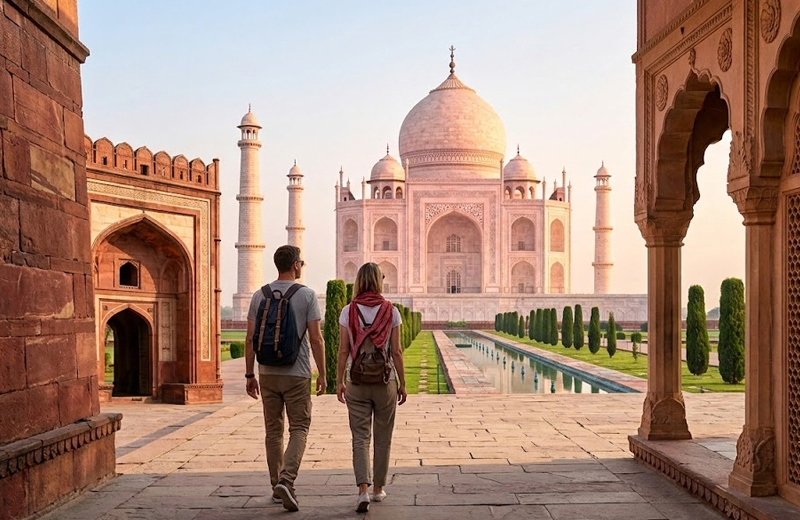
Yes, India’s Golden Triangle is worth visiting for most first-time travellers. The Delhi → Agra → Jaipur route combines three very different North Indian experiences in one practical journey: Delhi’s layered history and modern city life, Agra’s Taj Mahal and Mughal heritage, and Jaipur’s forts, palaces, bazaars and Rajasthan culture.
The route is popular because it delivers a lot of variety without requiring multiple internal flights, but it is not perfect for everyone. Crowds, traffic, long sightseeing days and rushed three-day packages can make the experience feel exhausting. For most travellers, the Golden Triangle becomes significantly better when you allow five to seven days, choose well-located hotels, start major attractions early and avoid trying to see every monument.
This guide gives you a practical answer to whether the Golden Triangle belongs in your India itinerary. It covers the real advantages and drawbacks, Delhi vs Agra vs Jaipur, ideal trip length, best season, transport, costs, crowds, safety, food, sample itineraries and who should consider a different India route.
Quick Answer
Is India’s Golden Triangle Really Worth Visiting?
Yes—for most first-time visitors, the Golden Triangle is one of the best short introductions to India. In one route you can experience Old Delhi, major Mughal monuments, the Taj Mahal, Rajasthan forts, royal palaces, markets, food and everyday city life. The route works best with at least five days; six or seven days gives a noticeably better pace.
Best Match
You Will Probably Love It If…
- This is your first trip to India
- You want to see the Taj Mahal
- You enjoy history and architecture
- You like food, markets and photography
- You have 5–7 days available
- You want an easy-to-plan North India route
Think Twice
It May Not Suit You If…
- You mainly want beaches or mountains
- You prefer quiet rural travel
- You strongly dislike crowds and traffic
- You only have 2–3 days but want a slow trip
- You have already explored all three cities
- You want a wildlife-focused holiday
The Big Picture
Why Is India’s Golden Triangle So Famous?
The Golden Triangle is famous because Delhi, Agra and Jaipur combine three major North Indian travel experiences in one relatively compact route. On a map, the cities form a rough triangle: Delhi usually acts as the arrival point, Agra lies southeast with the Taj Mahal and Jaipur sits west in Rajasthan.
The appeal is not only geographical convenience. Delhi represents layers of Sultanate, Mughal, colonial and modern India. Agra concentrates Mughal history around some of India’s most famous architecture. Jaipur changes the visual language through Rajput forts, palaces, planned streets, bazaars and Rajasthan craft traditions.
This variety is what makes the route useful for first-time visitors. Instead of seeing three similar destinations, you move between three cities with very different personalities, architecture and travel rhythms.
The circuit is also relatively easy to organise. Hotels exist across most budgets, private cars and trains connect the cities, local guides are widely available and the route can be adjusted for couples, families, solo travellers and senior visitors.
What Makes It Worthwhile
What Do You Actually Experience on a Golden Triangle Trip?
The real value of the Golden Triangle is contrast. One morning you may be travelling by cycle rickshaw through Old Delhi. The next day you could be walking through Mughal courtyards in Agra, and shortly afterward exploring Amber Palace above Jaipur.
You also experience very different forms of Indian city life. Delhi feels enormous and layered. Agra combines world-famous heritage with a working modern city. Jaipur introduces Rajasthan’s design identity through architecture, textiles, jewellery, markets and crafts.
A well-planned route can include forts, tombs, palaces, mosques, markets, gardens, rooftop restaurants, food walks, heritage hotels and workshops without needing to travel across the whole country.
The Golden Triangle also gives the Taj Mahal more context. Humayun’s Tomb in Delhi, Agra Fort and other Mughal sites help you understand the Taj Mahal as part of a larger historical story rather than an isolated landmark.
City by City
Delhi vs Agra vs Jaipur: What Does Each City Add?
Delhi: History, Markets and Modern India

Delhi provides the widest range of experiences on the route. Old Delhi offers dense market lanes, historic mosques, food and rickshaw rides, while New Delhi contains broader avenues, government districts, garden tombs and modern neighbourhoods.
Important attractions can include Humayun’s Tomb, Qutub Minar, Gurudwara Bangla Sahib, India Gate and Old Delhi. One full sightseeing day is a minimum for most travellers, while two days provides a much better introduction.
Delhi is also valuable because it feels less like a single tourist district. Heritage monuments exist alongside normal daily life, businesses, neighbourhoods and modern restaurants, making the city an important part of the Golden Triangle rather than only the airport gateway.
Agra: The Taj Mahal and Mughal Heritage

The Taj Mahal is the main reason most Golden Triangle travellers visit Agra, but the city is worth more than a quick photograph. Seeing the monument in person reveals its scale, marble craftsmanship, symmetry, calligraphy and garden setting in a way photographs cannot fully reproduce.
Agra Fort adds important Mughal history and helps connect the story of Shah Jahan, the imperial court and the Taj Mahal. Travellers with additional time can also consider Mehtab Bagh and Itmad-ud-Daulah.
An overnight stay is usually better than treating Agra as a rushed Delhi day trip because it gives you more flexibility for an early Taj Mahal visit.
Jaipur: Rajasthan Forts, Palaces and Markets
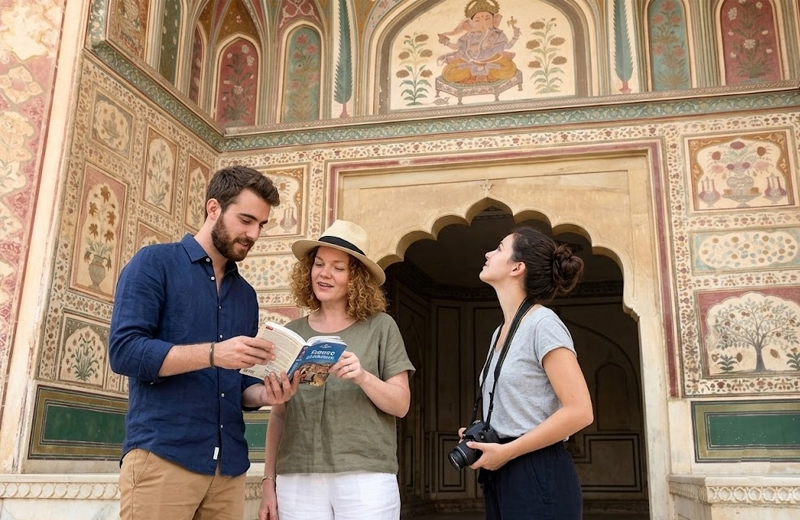
Jaipur gives the Golden Triangle its Rajasthan character. Amber Palace introduces hilltop fort architecture, while City Palace, Jantar Mantar and Hawa Mahal bring royal Jaipur into the historic city centre.
The bazaars add another layer through textiles, jewellery, block printing, handicrafts and local food. Jaipur is also one of the easiest places to add a workshop, cooking experience or food tour if you want something beyond monuments.
Give Jaipur at least one full sightseeing day. If you have six or seven days for the overall trip, additional Jaipur time can make the route much more relaxed.
Balanced View
What Are the Pros and Cons of the Golden Triangle?
Why the Golden Triangle Is Worth Visiting
- Three contrasting cities: Delhi, Agra and Jaipur each feel different.
- World-famous heritage: Taj Mahal, forts, palaces and historic districts.
- Good first India route: easy to understand and organise.
- No complex internal flights required: road and rail connections work well.
- Flexible budget: possible from budget to luxury.
- Excellent photography: monuments, markets and street scenes.
- Easy to extend: Rajasthan, Ranthambore and Varanasi can be added.
What Can Make the Golden Triangle Disappointing?
- Crowds: major attractions can become busy.
- Traffic: road journeys may take longer than expected.
- Tourist pressure: shopping suggestions and unofficial services can become tiring.
- Heat: summer sightseeing can be demanding.
- Winter fog: visibility can occasionally affect Delhi and Agra.
- Rushed packages: three days is too fast for many travellers.
- Limited regional picture: it represents one part of India, not the whole country.
The biggest factor is usually pacing rather than budget. A carefully planned five- or six-day trip can feel much better than a luxury three-day package that combines long drives with excessive sightseeing.
Trip Length
How Many Days Are Enough for India’s Golden Triangle?
Five days is a practical minimum for most travellers, while six or seven days provides the best overall experience. Three days is physically possible but generally feels rushed because a large part of the itinerary is spent changing cities.
| Trip Length | Travel Pace | Best For |
|---|---|---|
| 3 Days | Very Fast | Strict time limits and highlights only |
| 4 Days | Fast | Short stopovers |
| 5 Days | Balanced but active | First-time visitors with limited time |
| 6 Days | Comfortable | Couples, families and first-time visitors |
| 7 Days | Excellent balance | Most leisure travellers |
| 8+ Days | Slow and flexible | Food, photography and extensions |
Five days lets you see the defining attractions. Six or seven days allows more time in Delhi and Jaipur, less pressure around road transfers and more opportunities for meals, markets and local experiences.
For a detailed comparison, read How Many Days Do You Need for the Golden Triangle Tour in India?
When to Go
What Is the Best Time to Visit India’s Golden Triangle?
October to March is generally the best broad season for visiting Delhi, Agra and Jaipur. Temperatures are usually more comfortable for long sightseeing days than during late spring and early summer.
October and November
These are excellent months for first-time travellers because summer heat has eased and outdoor sightseeing becomes easier.
December and January
Days are often comfortable but mornings may be cold. Fog can sometimes affect Delhi and Agra, so keep expectations realistic for early Taj Mahal photography.
February and March
February is one of the strongest all-round months. March is also excellent, although temperatures increase later in the month.
April to June
Heat becomes the main challenge. Begin major outdoor attractions early, rest during midday and use air-conditioned transport.
July to September
Monsoon brings humidity and rainfall but can also create greener surroundings and a different atmosphere, especially around Jaipur.
Choose the Right Daily Rhythm
A well-planned Golden Triangle trip can work outside peak season. Adjust sightseeing times to heat, rain and seasonal conditions instead of using the same schedule year-round.
Good Fit
Who Should Visit India’s Golden Triangle?
First-Time Visitors to India
This is the route’s strongest audience. It offers famous landmarks, clear logistics and three distinct city experiences without requiring a complicated multi-region itinerary.
Couples
The route works well for couples because sightseeing can be mixed with heritage hotels, private transport, rooftop dinners and relaxed Jaipur evenings.
Families
Families can enjoy the Golden Triangle when sightseeing days remain sensible. Private transport helps with luggage, food stops, children and flexible hotel breaks.
Senior Travellers
The route can work well with comfortable transport, centrally located hotels and realistic walking expectations.
History and Architecture Lovers
Delhi, Agra and Jaipur provide Mughal tombs, forts, mosques, Rajput palaces, astronomical architecture and historic urban areas within one route.
Photographers
Beyond the Taj Mahal, photographers can focus on Old Delhi markets, sandstone forts, palace details, artisans, bazaars and everyday street scenes.
Food-Focused Travellers
Delhi, Agra and Jaipur each offer different regional food experiences, making meals an important reason not to rush the itinerary.
Not for Everyone
When Is India’s Golden Triangle Not Worth Visiting?
The Golden Triangle may not be the best route if your main goal is beaches, mountains, wildlife, quiet countryside or slow rural travel. Delhi and Jaipur are large cities, Agra’s most important attractions are popular and the route includes road or rail transfers.
If you have already visited Delhi, Agra and Jaipur, a second India trip may be better spent exploring Rajasthan beyond Jaipur, the Himalayas, Kerala, Tamil Nadu, Madhya Pradesh or another region.
Travellers with only two or three days should also think carefully. If the Taj Mahal is your main dream, Delhi plus Agra may be more satisfying than forcing Jaipur into an extremely short schedule.
Getting Around
Private Car vs Train: What Is Best for the Golden Triangle?
A private car is usually the easiest option for first-time visitors, couples and families, while trains can work very well on selected routes.
Private Car With Driver
A private car provides hotel-to-hotel transport, keeps luggage with you and allows flexible meal and sightseeing stops. It is particularly useful between Agra and Jaipur because Fatehpur Sikri can be visited along the way.
Train
Train travel can reduce road time on selected routes, especially Delhi to Agra. However, station transfers, luggage and local sightseeing transport still need to be organised.
Mixed Transport
A good hybrid option is Delhi to Agra by train, Agra to Jaipur by private car via Fatehpur Sikri and Jaipur to Delhi by whichever method best fits your onward plans.
Domestic Flights
Flights are usually unnecessary inside the core Golden Triangle. They become more useful when extending the trip to destinations such as Varanasi, Mumbai or South India.
For more detail, see Delhi–Agra–Jaipur: Train vs Car vs Flight.
Value for Money
Is the Golden Triangle Expensive?
The Golden Triangle can be planned at budget, mid-range and luxury levels. The biggest cost differences usually come from hotels, transport style, guides, meals and premium experiences.
Budget travellers can use simpler hotels and trains. Mid-range travellers often combine comfortable three- or four-star hotels with a private car. Luxury travellers can choose heritage properties, premium vehicles and private guides.
Good value is not always the lowest price. A central hotel can save significant travel time, while a knowledgeable guide at a complex historical site may improve your experience more than upgrading every hotel room.
Compare exact hotel names, room categories, vehicle type, taxes, tolls, parking, guide services and monument-ticket inclusions before comparing package prices.
See our detailed Golden Triangle Tour Cost Guide.
The Reality on the Ground
Is the Golden Triangle Too Crowded or Touristy?
The Golden Triangle is touristy, but that does not make it overrated. The Taj Mahal, Amber Palace and major Delhi attractions are famous because they are genuinely important and visually impressive.
The best strategy is to manage timing rather than avoid every famous place. Start major attractions earlier, use official tickets and reputable guides, and clearly tell drivers or guides if you do not want shopping stops.
Mixing major monuments with local meals, neighbourhood walks, cafés, workshops and markets also prevents sightseeing fatigue.
Beyond the Monuments
Is Food a Good Reason to Visit the Golden Triangle?
Yes. Food is one of the easiest ways to make the Golden Triangle feel more personal and less like a monument checklist.
Delhi
Delhi offers Old Delhi food traditions, Mughlai dishes, vegetarian North Indian food, modern restaurants and neighbourhood cafés.
Agra
Agra provides Mughal-influenced cuisine and regional sweets, while a relaxed dinner is a useful contrast to the early-start sightseeing schedule.
Jaipur
Jaipur introduces Rajasthani dishes and works well for heritage dining, local restaurants and food walks.
A Simple Food Rule
Choose busy reputable places, drink safe water and introduce unfamiliar rich foods gradually, particularly during your first days in India.
Comfort and Confidence
Is the Golden Triangle Safe for First-Time Visitors?
Most travellers complete the route without serious problems, but normal big-city travel awareness is important. Keep valuables secure, use trusted transportation and choose well-reviewed central accommodation.
Solo travellers may prefer pre-arranged airport transfers and reliable transportation after dark. Women travelling alone may also feel more comfortable with clear transport and hotel arrangements.
Road safety matters as well. Choose a professional driver and avoid itineraries that rely on overnight driving after long sightseeing days.
Hydration, food choices, sun protection and rest also affect the overall experience, particularly during warmer months.
For more planning advice, see our Women-Friendly Golden Triangle Travel Guide.
Practical Plans
What Is a Good Golden Triangle Itinerary?
5-Day Golden Triangle: Best for Limited Time
Day 1
Delhi
Arrive and use the available time for selected Delhi sightseeing without overloading the first day.
Day 2
Delhi Sightseeing and Agra
Explore Old Delhi or major New Delhi attractions before travelling to Agra.
Day 3
Taj Mahal, Agra Fort and Jaipur
Visit the Taj Mahal early, see Agra Fort and continue toward Jaipur, with Fatehpur Sikri if timing allows.
Day 4
Jaipur
Visit Amber Palace, Hawa Mahal, City Palace and Jantar Mantar, with optional market time.
Day 5
Jaipur and Departure
Keep the morning relaxed before returning to Delhi or continuing onward.
7-Day Golden Triangle: Best Overall Experience
Day 1
Arrive in Delhi
Keep arrival day light and recover from your journey.
Day 2
Old Delhi
Explore Chandni Chowk, Jama Masjid area and selected nearby attractions.
Day 3
New Delhi and Agra
Visit Humayun’s Tomb or Qutub Minar before travelling to Agra.
Day 4
Agra
Visit the Taj Mahal and Agra Fort with additional time for rest or smaller attractions.
Day 5
Agra to Jaipur
Travel via Fatehpur Sikri and arrive in Jaipur at a comfortable pace.
Day 6
Jaipur Heritage Day
Explore Amber Palace, Hawa Mahal, City Palace and Jantar Mantar.
Day 7
Jaipur at Your Pace
Choose markets, food, crafts, a workshop or a relaxed final morning.
The seven-day version is better for most travellers who value experience over speed. It gives you time to understand the cities instead of only photographing their most famous landmarks.
If You Want More
What Are the Best Golden Triangle Extensions?
Ranthambore for Wildlife
Add Ranthambore if tiger safaris and wildlife are important. Allow enough additional nights rather than compressing it into the core Golden Triangle.
Pushkar for a Smaller-Town Experience
Pushkar creates a change of pace after Delhi and Jaipur through its lake, ghats and smaller-town atmosphere.
Udaipur for a Romantic Rajasthan Extension
Udaipur adds lakes and palaces and works especially well for couples. Allow at least two nights.
Varanasi for a Different Cultural Experience
Varanasi gives first-time visitors another very different side of North India but should be treated as a proper extension rather than a quick stop.
Kerala or Goa for Contrast
For longer India trips, combining the Golden Triangle with beaches or backwaters creates a dramatic change from the cities and monuments of North India.
Avoid These
What Makes the Golden Triangle Feel Overrated?
- Trying to visit Delhi, Agra and Jaipur in three days.
- Choosing hotels without checking their location.
- Scheduling the Taj Mahal on Friday.
- Starting every sightseeing day too late.
- Accepting unwanted shopping stops.
- Visiting too many similar monuments back to back.
- Skipping meals and rest.
- Expecting road travel to run exactly on schedule.
- Assuming the Golden Triangle represents all of India.
- Leaving no flight buffer after Jaipur.
Final Verdict
Is India’s Golden Triangle Worth Visiting?
Yes. For most first-time visitors, India’s Golden Triangle is worth visiting and remains one of the strongest short introductions to North India. Delhi offers historic layers and modern city life, Agra provides the Taj Mahal and Mughal heritage, while Jaipur introduces Rajasthan through forts, palaces, bazaars and craft traditions.
The route is best when you allow enough time. Five days works, six days is more comfortable and seven days provides the strongest overall balance. Avoid treating the circuit as a race between monuments.
The Golden Triangle will not show you all of India, and it is not the right choice for travellers seeking a quiet nature holiday. But if your priorities include architecture, history, food, culture, markets and three distinct city experiences, it deserves its reputation.
Deeper Planning
How Do You Make a Golden Triangle Trip Feel Better?
A good trip is built around energy as much as geography. Start important sightseeing earlier, use lunch as a proper break and avoid filling every available hour with another attraction.
Why Does One Extra Night Matter?
An additional night can eliminate an early hotel checkout, reduce transfer pressure and create time for a relaxed meal or experience. One extra mid-range night may improve the trip more than upgrading every hotel to a more expensive category.
What Should a Private Tour Include?
A genuinely private tour should provide flexibility. You should be able to change departure times, remove unwanted shopping stops and adjust sightseeing according to weather, energy and personal interests.
How Do You Avoid a Checklist Trip?
Choose one anchor experience each day. Old Delhi may be the Delhi anchor, the Taj Mahal the Agra anchor and Amber Palace the Jaipur anchor. Everything else should support the main experience rather than compete with it.
Travel Better
How Can You Travel More Responsibly on the Golden Triangle?
Respect local rules at active religious sites, ask before photographing people closely and avoid littering at monuments, markets and roadside stops.
When shopping in Jaipur or elsewhere, learn enough about local crafts to distinguish genuine handmade work from mass-produced souvenirs.
Think carefully about animal-based tourist activities and research welfare standards independently before participating.
Responsible travel also includes respecting your own limits. Rest helps you remain patient, curious and engaged with the places you visit.
Before You Book
What Should You Ask Before Booking a Golden Triangle Tour?
- Which exact hotels are included?
- What room categories are included?
- Are hotel taxes and breakfast included?
- What vehicle category will be used?
- Are fuel, tolls, parking and driver allowance included?
- Are airport transfers included?
- Which cities include local guides?
- Are monument tickets included?
- Can shopping stops be removed?
- Can sightseeing order change if needed?
- How much free time is included?
- Is the Taj Mahal scheduled on a non-Friday?
- What are the cancellation terms?
- Who is the local contact during the tour?
Clear answers before payment are more important than a long list of attractions in a glossy itinerary.
Plan Your Tour
Want a Golden Triangle Trip Built Around Your Travel Style?
Share your dates, number of travellers, preferred hotel category and travel pace. Your Delhi, Agra and Jaipur itinerary can be planned around your actual priorities instead of forcing every traveller into the same schedule.
- Private air-conditioned transport
- Flexible 5-day, 6-day and 7-day itineraries
- Budget, comfortable, heritage and luxury hotels
- Local guides in Delhi, Agra and Jaipur
- Clear inclusions and practical travel planning
Common Questions
Frequently Asked Questions About India’s Golden Triangle
Direct answers to common questions travellers ask before deciding whether Delhi, Agra and Jaipur are worth including in an India trip.
Is the Golden Triangle worth visiting for a first trip to India?
Yes. For most first-time visitors, the Golden Triangle is one of the best short introductions to North India because it combines Delhi, the Taj Mahal in Agra and Jaipur’s Rajasthan heritage in one practical route.
How many days do I need for Delhi, Agra and Jaipur?
Five days is a practical minimum for most travellers. Six or seven days is better because it gives you more time in Delhi and Jaipur and reduces the pressure of road transfers.
Is three days enough for the Golden Triangle?
Three days is physically possible but very rushed. If you prefer a more enjoyable first trip, allow at least five days.
What is the best time to visit the Golden Triangle?
October to March is generally the most comfortable broad period for Delhi, Agra and Jaipur. February, November and the surrounding shoulder periods are particularly attractive for many visitors.
Is the Taj Mahal closed on Friday?
Yes. The Taj Mahal is closed to general sightseeing visitors on Fridays, so plan your Agra stay around the closure.
Is a private car or train better for the Golden Triangle?
A private car offers the most flexibility for many first-time visitors and families. Trains can work very well on selected legs, especially Delhi to Agra, while a mixed car-and-train itinerary can combine convenience and speed.
Is Jaipur worth adding if I mainly want to see the Taj Mahal?
Yes, if you have enough time. Jaipur adds Rajasthan forts, royal palaces, markets and crafts, making the trip much more varied than visiting Delhi and Agra alone.
Is the Golden Triangle good for families?
Yes. Families usually benefit from comfortable private transport, sensible sightseeing days and regular food and rest breaks.
Is the Golden Triangle suitable for senior travellers?
Yes, with appropriate planning. Choose comfortable transport, well-located hotels and realistic walking schedules, and check accessibility at heritage properties before booking.
Is the Golden Triangle safe for solo travellers?
Many solo travellers visit successfully. Use trusted transportation, centrally located accommodation and normal big-city precautions, especially around stations, markets and unfamiliar areas after dark.
Is the Golden Triangle too touristy?
The major attractions are popular and can be busy, but that does not make the route unworthy of visiting. Start early and combine famous monuments with markets, food and smaller local experiences.
What is the biggest Golden Triangle planning mistake?
The biggest mistake is trying to see too much too quickly. Five to seven days, realistic travel buffers and sensible daily sightseeing usually create a much better experience.
One Last Thought
Should You Put the Golden Triangle on Your India Itinerary?
Yes, if this is your first North India trip and you want history, architecture, food, markets and iconic landmarks in one manageable route. The Taj Mahal may be the attraction that first catches your attention, but Delhi’s neighbourhoods and Jaipur’s forts, markets and heritage often become equally memorable.
Give the route enough time and use famous attractions as anchors rather than treating them as a checklist. Five days works, six days feels better and seven days gives you space for the unexpected moments that often become the best part of travelling in India.