
Is India Safe to Visit in 2026?
Short answer: yes, with the right preparation. Here is an honest, detailed look at what actually affects tourist safety in India today, city by city, and how experienced travelers manage it without letting fear dictate their trip.
Quick Navigation
- The Quick Answer
- Why Trust This Guide
- India Safety in 2026: A Realistic Picture
- What Government Travel Advisories Say
- Cultural Etiquette as Safety Advice
- Weather and Natural Considerations
- Digital and Connectivity Safety
- City-by-City Safety Breakdown
- Health, Food, and Water Safety
- Transport Safety: Trains, Taxis, and Private Cars
- Common Scams and How to Avoid Them
- Safety for Solo Female Travelers
- Safety for LGBTQ+ Travelers
- Safety for Families and Senior Citizens
- Regional Differences: North vs South India
- Money, Valuables, and Documents
- Emergency Numbers and Apps
- Best Time to Visit for a Safer Trip
- Myths vs Reality
- Practical Safety Checklist
- Travel Safely With a Trusted Local Operator
- Frequently Asked Questions
The Quick Answer: Yes, India Is Safe to Visit in 2026
India welcomes millions of foreign tourists every year, and the vast majority leave with no safety incident at all beyond the occasional overcharged rickshaw ride. The main tourist circuits, Delhi, Agra, Jaipur, Varanasi, Goa, and Kerala, are well developed for international visitors, with hotels, guides, and transport systems built specifically around tourist needs.
That said, India is not a place where you can switch off the way you might on a fully packaged resort holiday. Traffic, crowd density, occasional scams, and a genuine gap between rural and urban infrastructure mean that awareness and a bit of planning matter more here than in, say, Western Europe. The travelers who have the smoothest trips are not the ones who avoid India out of caution, they are the ones who prepare specifically, choose verified transport and accommodation, and stay alert without being paranoid.
Why Trust This Guide
This guide is written by the same team that has organized private tours and transport for foreign travelers across Delhi, Agra, and Jaipur for over two decades. The advice here reflects patterns we see every week from real travelers, not generic internet safety tips, and we revisit this page regularly as conditions, prices, and infrastructure change.
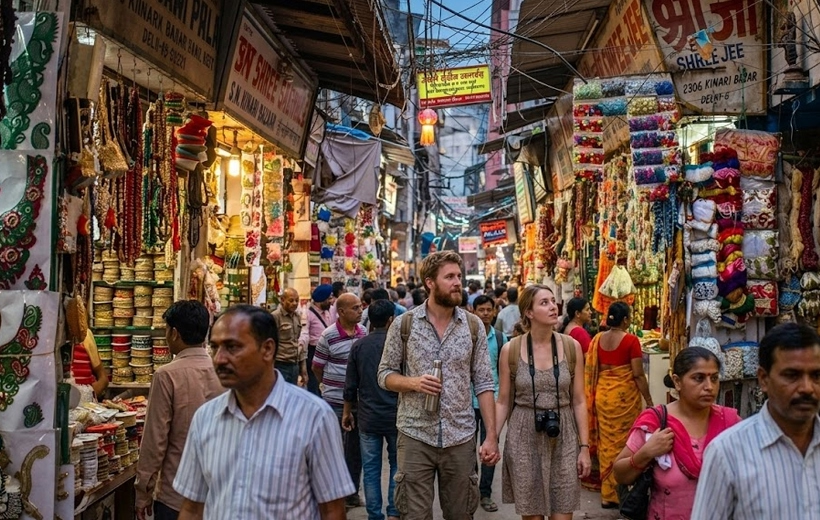
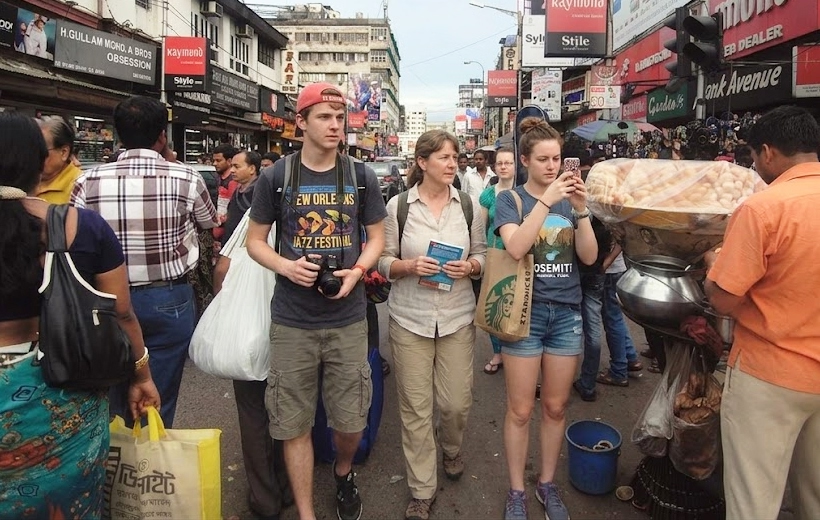
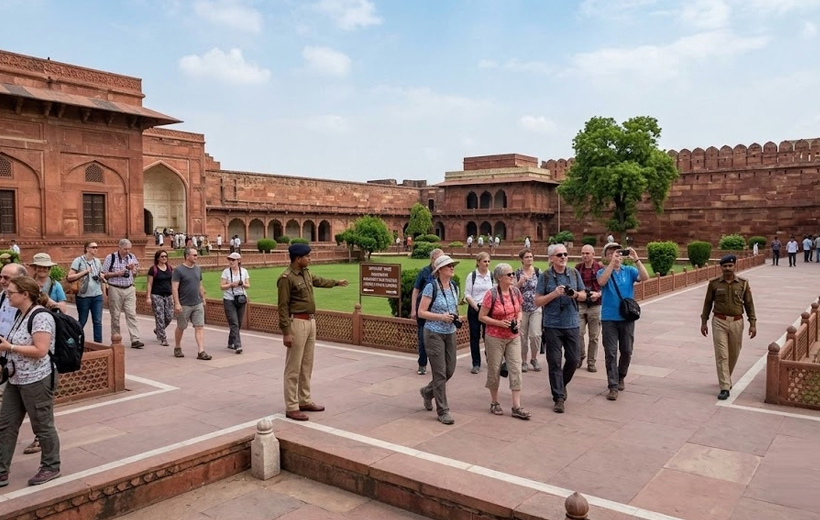
Media coverage of India often focuses on extreme cases, which understandably shapes perception before anyone actually visits. The reality on the ground, especially on established tourist routes, is far more mundane and manageable. Violent crime against foreign tourists is rare on the main circuits, largely because these areas have heavy police presence, well-lit commercial zones, and an economy that depends heavily on tourism running smoothly. The safety issues that actually affect most travelers are far less dramatic: an auto-rickshaw driver who quotes triple the fair price, a tout outside a monument claiming the ticket counter is closed, mild stomach upset from unfamiliar food, or the general sensory overload of navigating a country of 1.4 billion people. None of these are trivial, but none of them require canceling a trip either. They require preparation, which is exactly what the rest of this guide covers. It also helps to separate India’s major cities and tourist circuits from its more remote, less-visited regions. Just as safety advice for New York City differs from advice for a rural backroad, safety considerations in Delhi’s tourist districts differ meaningfully from those in a remote village with no tourism infrastructure. This guide focuses primarily on the routes foreign tourists actually travel. Most Western governments, including the US State Department, the UK Foreign Office, and Australia’s Smartraveller, rate India at a moderate caution level overall, similar to many other large developing countries, with specific higher-caution notes for border regions, parts of Jammu and Kashmir, and areas affected by localized unrest. These advisories are rarely specific to Delhi, Agra, Jaipur, or other core tourist circuits, and are worth reading directly on your government’s official travel site before departure rather than relying on secondhand summaries, since advisories are updated periodically and can shift with local events. It is worth understanding what these advisories are actually measuring. They are written to cover the entire landmass of a country, including regions no tourist would ever visit, so a “exercise increased caution” rating for the whole country does not mean every city or region carries equal risk. Reading the specific regional notes within an advisory, rather than just the headline rating, gives a far more accurate picture for the areas you actually plan to visit. A surprising amount of tourist safety in India comes down to cultural awareness rather than anything more technical. Blending in, showing basic cultural respect, and understanding local norms tend to reduce unwanted attention and friction significantly. Beyond crime and scams, weather is a genuine practical safety factor in India that is easy to overlook while planning. The monsoon season, roughly July through September, brings heavy rainfall that can cause localized flooding, particularly in parts of Mumbai, and occasional transport delays across the country. Checking regional forecasts a few days ahead during monsoon travel is worth the extra few minutes. Summer heat, from April through June, can reach dangerous levels in North India, with heatstroke a real risk for travelers unused to the climate, particularly if spending long hours outdoors at midday. Staying hydrated, wearing breathable clothing, and scheduling outdoor sightseeing for early morning or late afternoon is the simplest way to manage this. Staying connected is one of the most practical safety tools a modern traveler has, and it is worth setting up before you land rather than scrambling on arrival. An Indian eSIM or a local prepaid SIM, available at the airport or authorized stores with your passport, keeps Google Maps, ride-hailing apps, and messaging services running throughout your trip. Avoid connecting to unsecured public Wi-Fi for anything involving banking or sensitive information, and consider a reputable VPN if you plan to access accounts that require extra security. Keeping a portable power bank charged is also worth it, since a dead phone removes access to maps, ride tracking, and emergency contacts all at once. Delhi is India’s busiest entry point and can feel overwhelming on arrival, particularly around railway stations and older market areas like Chandni Chowk. Stick to well-known neighborhoods such as Connaught Place, South Delhi, and Aerocity for accommodation, use the Delhi Metro or app-based cabs for movement, and avoid walking alone through unfamiliar lanes after dark. During the day, Delhi’s major sights are heavily visited and generally comfortable to explore. Agra is almost entirely built around the Taj Mahal and its visitors, which means the tourist zone is well policed and well signposted. The main risks here are touts near the monument gates pushing overpriced guides or shops, rather than anything more serious. Booking tickets online in advance and sticking to official guides avoids nearly all of this. Jaipur’s old walled city and its forts, Amber Fort, Nahargarh, and City Palace, are busy, tourist-friendly, and generally safe during the day. As with Delhi, it is worth being more cautious in quieter side streets after dark, and using a private car or app-based cab for evening travel rather than an unmetered street taxi. Varanasi’s ghats along the Ganges are atmospheric and safe to explore during daylight, though the narrow lanes of the old city can be disorienting for first-time visitors. Boat trips should only be booked through registered operators, and swimming in the river is not recommended for health reasons rather than safety ones. Both are well-established, relaxed tourist destinations with a long history of foreign visitors. The main precautions here relate to beach safety, particularly rip currents in Goa, and standard precautions around nightlife areas late at night.India Safety in 2026: A Realistic Picture
What Do Government Travel Advisories Actually Say?
Cultural Etiquette That Doubles as Safety Advice
Weather, Monsoons, and Natural Considerations
Digital and Connectivity Safety
City-by-City Safety Breakdown
Delhi
Agra
Jaipur
Varanasi
Goa and Kerala
Health, Food, and Water Safety
For most travelers, mild stomach upset is a far more likely disruption than any safety incident, so it deserves real attention.
- Drink only bottled or purified water, and check that the seal is intact before drinking. Avoid ice unless you know it comes from purified water.
- Choose freshly cooked, hot food over anything that has been sitting out, and pick street stalls with high customer turnover, since that usually indicates fresh ingredients and fast cooking.
- Avoid raw salads and cut fruit from street vendors, since these are often washed in tap water.
- Carry basic medication for an upset stomach, rehydration salts, and any personal prescriptions, since not all brands are available locally.
- Check vaccination recommendations with a travel clinic before your trip, particularly for hepatitis A, typhoid, and routine boosters, and discuss malaria precautions if you are visiting rural or forested areas.
- Air quality in Delhi and parts of North India can be poor, particularly in winter months, so travelers with respiratory conditions should check current air quality index readings and consider a mask on the worst days.
Transport Safety: Trains, Taxis, and Private Cars
How you move between and within cities has a bigger impact on your overall safety than almost any other single decision.
Trains
Indian Railways is extensive and generally safe, particularly in AC classes, which have reserved, ticketed seating and railway police presence at major stations. Keep your luggage close and avoid accepting food or drink from strangers on long journeys, a rare but known scam involving sedated snacks.
Taxis and Auto-Rickshaws
App-based cabs such as Uber and Ola are generally the safest and most transparent option for city travel, since fares are fixed in advance and rides are trackable. Unmetered street taxis and shared auto-rickshaws can lead to fare disputes, particularly late at night, so agreeing on a price upfront or insisting on the meter is essential if you use them.
Private Cars With a Driver
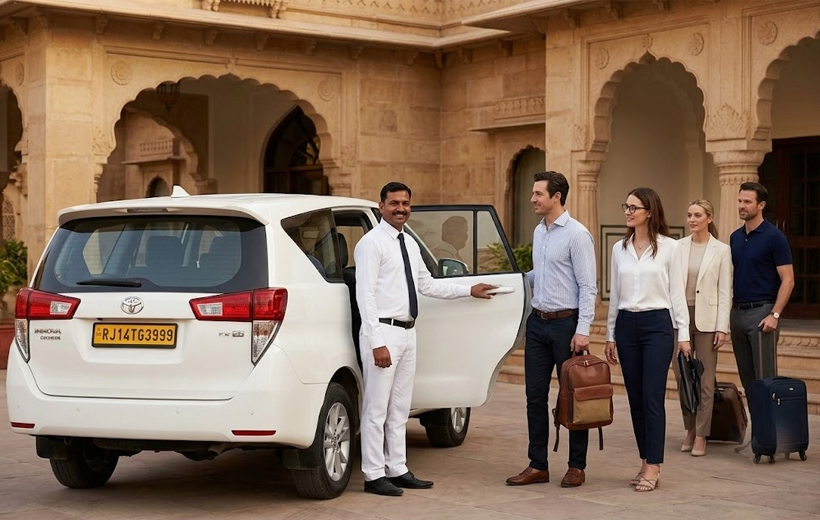
For multi-city travel, particularly on circuits like Delhi-Agra-Jaipur, a private car with a vetted, background-checked driver is consistently the option that removes the most uncertainty. It eliminates the need to negotiate transport in each new city, keeps your luggage secure throughout the trip, and gives you a single point of contact who knows the roads and the routine. Our own private car and driver service is built specifically around this kind of door-to-door reliability, and our detailed comparison of train vs car vs flight between Delhi, Agra, and Jaipur breaks down which option suits which kind of traveler.
Common Scams and How to Avoid Them
Most tourist scams in India are financial rather than dangerous, but they are worth knowing in advance so you are not caught off guard.
- “The monument is closed” scam: A stranger tells you a famous site is closed and offers to take you somewhere else instead, usually a shop that pays them commission. Verify closures directly at the gate, not from someone approaching you on the street.
- Inflated rickshaw and taxi fares: Especially common around stations and airports. Use app-based cabs or agree on a fare clearly before starting the ride.
- Fake or unofficial guides: Only hire guides through your hotel, tour operator, or the official counter at a monument, since unofficial guides sometimes exaggerate credentials or push unnecessary add-ons.
- Gem and carpet shop detours: Some drivers or guides steer tourists toward specific shops for a commission, often under the guise of a “government emporium.” You are never obligated to enter or buy anything.
- Overcharging at unmarked shops: Prices are not always fixed outside malls and chain stores, so a bit of polite negotiation is normal and expected in markets and bazaars.
- The “free” temple offering scam: At some religious sites, individuals hand you flowers or a small offering and then demand a large payment. Politely decline unsolicited items rather than accepting them automatically.
- Fake charity collectors: Occasionally someone posing as a student or charity worker asks for donations with an elaborate story. There is no obligation to give on the spot, and genuine causes are better supported through verified organizations.
None of these scams are physically dangerous, and being aware of the pattern is usually enough to avoid them entirely. In our own experience coordinating tours for travelers over the years, the guests who avoid these situations most easily are simply the ones who know the pattern exists in advance, since recognizing a scam in progress makes it easy to smile, decline, and walk on without any friction.
Safety for Solo Female Travelers
Solo female travel in India is common and can be a genuinely rewarding experience, but it does call for more deliberate planning than many other destinations. Choosing accommodation with strong reviews from other solo women, avoiding isolated streets after 9 or 10 PM, dressing modestly in more conservative areas, and using app-based cabs or a private driver rather than unmarked transport all meaningfully reduce risk.
Many solo female travelers also find that joining a small guided tour, or arranging a private vetted driver for multi-city travel, removes a large share of the daily decision fatigue and uncertainty that solo travel otherwise involves. We cover this in detail in our dedicated Women-Friendly Golden Triangle Travel Guide and our solo travel guide for the Golden Triangle, both written specifically around the Delhi-Agra-Jaipur route.
A few additional habits make a noticeable difference for solo women specifically. Booking a hotel room on a higher floor with keycard access, requesting a female staff member when needed, and traveling with a scarf that can double as a head covering at religious sites all add small layers of comfort. It also helps to arrive in a new city during daylight hours whenever your schedule allows, rather than checking into an unfamiliar hotel late at night, and to have your accommodation confirmed and paid before arrival rather than searching on the spot.
Safety for LGBTQ+ Travelers
India decriminalized homosexuality in a landmark 2018 Supreme Court ruling, and attitudes in major cities have continued to shift since then. Cities like Delhi, Mumbai, Bengaluru, and Goa have visible LGBTQ+ friendly cafes, events, and community spaces. That said, public displays of affection are generally kept modest by all couples in India, regardless of orientation, simply due to broader social norms, and this is worth keeping in mind more than any specific legal risk. For a detailed, city-specific breakdown, our guide to the best safe and LGBTQ-friendly cities in India covers exactly where to go and what to expect.
Safety for Families and Senior Citizens
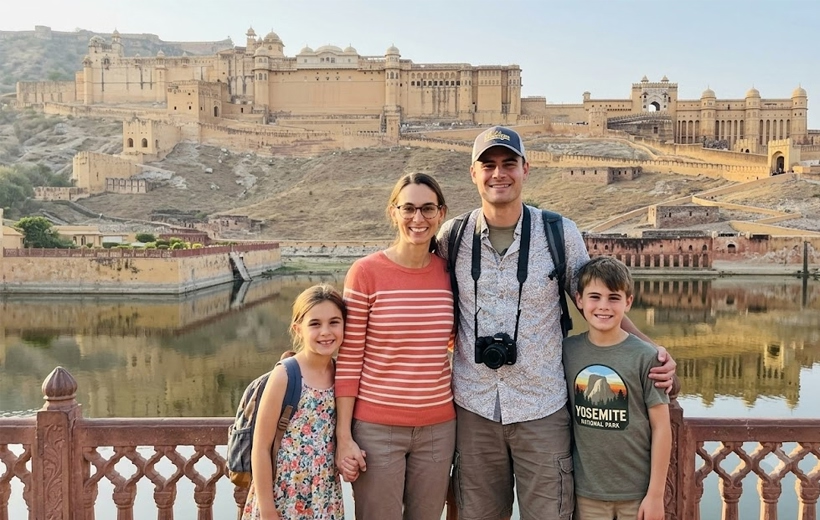
Families traveling with children and senior citizens generally have a smoother experience in India when they prioritize comfort and predictability over speed. A private car with a driver removes the need to navigate crowded train platforms or negotiate with multiple taxis across a trip, and it allows for flexible rest stops that public transport does not. Hotels in the mid-range to upper categories on the main tourist circuits are well equipped for families, with English-speaking staff and reliable medical referral networks nearby. For senior travelers, requesting wheelchair or golf-cart assistance at larger monuments like the Taj Mahal and Amber Fort is usually possible with advance notice.
Regional Differences: North vs South India
Safety considerations shift somewhat depending on which part of India you are visiting, and it helps to know this before assuming one blanket rule applies everywhere.
North India (Delhi, Agra, Jaipur, Varanasi)
This is India’s most tourist-heavy circuit, with the infrastructure, guides, and hotel networks to match. Crowds are denser, traffic is heavier, and touting around major monuments is more common, but the flip side is a well-worn tourist trail with English widely spoken and strong competition among operators keeping standards relatively high.
South India (Kerala, Karnataka, Tamil Nadu)
Southern India tends to have a calmer overall pace, lower touting, and a reputation among many repeat visitors as somewhat easier to navigate for first-timers, particularly Kerala’s backwaters and coastal towns. Infrastructure quality varies more by specific location, so research on your exact stops still matters.
Goa
A long-established beach destination with a large expatriate and tourist community, Goa is generally relaxed, though standard nightlife precautions, such as watching your drink and avoiding isolated beaches late at night, apply here as they would anywhere with a strong bar and club scene.
None of these regional differences should discourage a first visit anywhere in India, they simply mean that pre-trip research specific to your actual itinerary is more useful than generic country-wide safety summaries.
Money, Valuables, and Documents
- Keep digital copies of your passport, visa, and travel insurance in your email or a cloud drive, in addition to physical copies stored separately from the originals.
- Use hotel safes for passports and extra cash rather than carrying everything with you daily.
- Carry small denominations for tips, street food, and minor purchases, since large notes are not always easy to break in smaller shops.
- Use ATMs attached to banks rather than standalone street kiosks, and cover the keypad when entering your PIN.
- Notify your bank of your travel dates in advance to avoid your card being blocked for suspicious activity.
- Get comprehensive travel insurance that covers medical evacuation, since private healthcare in India is good but can be costly without coverage.
Emergency Numbers and Useful Apps
| Service | Number / Tool |
|---|---|
| All-in-one emergency helpline (police, fire, ambulance) | 112 |
| Women’s helpline | 181 |
| Tourist helpline | 1363 |
| Ride tracking | Uber or Ola, with live location shared with a trusted contact |
| Navigation | Google Maps, downloaded offline maps for areas with weak signal |
| Embassy contact | Save your country’s Delhi embassy or consulate number before you travel |
Save these numbers directly on your phone’s lock screen or in a note accessible without unlocking your device, so they are available even in a stressful moment.
Best Time to Visit for a Safer, More Comfortable Trip
Timing affects safety indirectly through weather and crowd conditions. October through March offers cooler, more comfortable weather across North India, making it easier to stay alert and avoid heat-related health issues. Summer months, April through June, bring intense heat that can lead to dehydration and heat exhaustion if precautions aren’t taken, so travel during this period calls for extra hydration and avoiding outdoor activity during peak afternoon hours. Major festival periods, such as Diwali or Holi, bring larger crowds and increased traffic, which calls for a bit more patience and planning around transport timing.
Myths vs Reality
Myth
- India is too dangerous for first-time travelers
- Solo women should not visit India at all
- All street food is unsafe
- Public transport should always be avoided
Reality
- Millions of first-time travelers visit safely every year with basic preparation
- Many solo women travel through India confidently with the right precautions
- Freshly cooked, high-turnover street food is generally safe
- AC trains and app-based cabs are reliable, well-used options
Practical Safety Checklist Before You Go
- Book accommodation with strong, recent reviews in established tourist areas
- Arrange a private driver or pre-booked transport for multi-city travel
- Save emergency numbers and your embassy’s contact details on your phone
- Buy travel insurance that includes medical evacuation coverage
- Check vaccination recommendations with a travel clinic well before departure
- Download offline maps and a local SIM or eSIM for connectivity
- Keep digital copies of your passport, visa, and insurance documents
- Dress modestly in religious sites and more conservative areas
- Share your daily itinerary with a trusted contact back home
Travel Safely With a Trusted Local Operator
Many of the safety considerations in this guide come down to one decision: how you move between cities and who you trust to get you there. A verified, background-checked private driver removes the guesswork around fares, routes, and late-night transport, and gives you a single reliable point of contact for the length of your trip. If you are planning a Delhi-Agra-Jaipur circuit, browse our Golden Triangle tour packages or our day trip options for shorter itineraries. For independent travelers who simply need reliable transport, our car rental with professional chauffeur service covers everything from a single day to a full multi-city tour, and our contact page is the fastest way to plan an itinerary around your exact dates and concerns.
Frequently Asked Questions
Is India safe to visit in 2026 for foreign tourists?
Yes. India’s major tourist circuits, including Delhi, Agra, and Jaipur, are visited by millions of foreign travelers every year and are generally safe when you take the same common-sense precautions you would in any large, crowded country, such as avoiding isolated areas at night and using verified transport.
Is it safe for solo female travelers to visit India in 2026?
Solo female travel in India is manageable and common, but it requires more planning than in many other destinations. Sticking to well-reviewed hotels, using app-based cabs or a private vetted driver, dressing modestly, and avoiding unlit streets after dark significantly reduce risk.
What are the biggest safety concerns for tourists in India?
The most common issues tourists face are petty scams, overcharging by unregistered taxis or touts, food and water related stomach illness, and road traffic safety, rather than violent crime, which is comparatively rare against foreign tourists on the main travel circuits.
Is street food in India safe to eat?
Street food can be safe if you choose stalls with high customer turnover, freshly cooked hot food, and visibly clean preparation areas. It is best to avoid raw salads, cut fruit left in the open, and tap water or ice from unknown sources.
Is it safe to travel by train in India?
Train travel in India, especially in AC classes, is one of the safer and more comfortable ways to move between cities, with reserved seating, ticket verification, and railway police present at major stations.
Are LGBTQ+ travelers safe in India?
Homosexuality was decriminalized in India in 2018, and cities like Delhi, Mumbai, Bengaluru, and Goa have visible LGBTQ+ friendly spaces. Public displays of affection are best kept modest for any couple, but LGBTQ+ travelers generally report positive experiences on major tourist circuits.
What should I do in a real emergency while traveling in India?
Dial 112, India’s single emergency helpline connecting police, fire, and ambulance services, save your hotel’s address and your embassy’s number on your phone, and inform your tour operator or a trusted contact of your location immediately.
Is it safer to travel with a private driver than using public transport in India?
For most first-time visitors, yes. A verified private driver removes the uncertainty of negotiating fares, navigating unfamiliar routes, and finding safe transport late at night, which are among the most common sources of tourist stress in India.
Do I need travel insurance to visit India?
While not legally required for most nationalities, comprehensive travel insurance covering medical treatment and evacuation is strongly recommended, since private healthcare costs can add up quickly without coverage.
Is North India or South India safer for first-time visitors?
Both are generally safe, but South India, particularly Kerala, is often considered slightly calmer and easier to navigate for a first trip, while North India’s Delhi-Agra-Jaipur circuit offers more established tourist infrastructure and English-speaking guides.
What is the biggest cultural mistake tourists make in India that affects their safety?
Dressing too casually at religious sites and being unaware of modest dress expectations tends to draw unwanted attention, more than any other single cultural misstep, so packing a scarf or shawl for temple visits is a simple, effective fix.
Final Thoughts
India in 2026 remains what it has been for decades: an extraordinary, complex, and deeply rewarding place to visit, and one that is entirely manageable from a safety standpoint when you prepare specifically rather than generically. The travelers who have the best experiences are not the most fearless ones, they are the ones who book verified transport, stay aware in unfamiliar areas, and treat basic precautions as part of the adventure rather than an obstacle to it.
If you would rather remove the guesswork entirely, our team can build a private, fully escorted itinerary around your dates, comfort level, and specific concerns. Explore our tour packages or reach out through our contact page to start planning.