
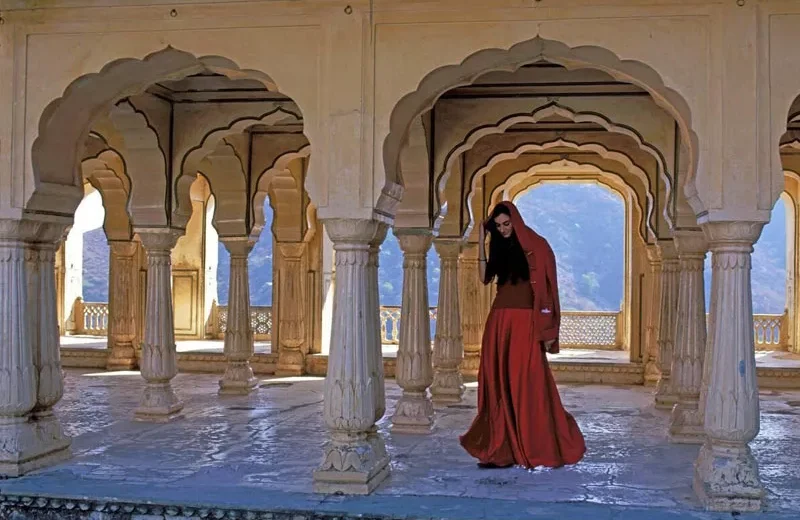
The Best 5-Day Golden Triangle Itinerary for First-Time Visitors
Five days is just enough time to see Delhi, Agra and Jaipur without turning the trip into a race from one monument gate to the next. You will still have early mornings and a few long drives, but a sensible route gives each city a clear role: Delhi introduces the layers of Indian history, Agra delivers the Taj Mahal and Mughal architecture, and Jaipur ends the journey with forts, palaces and lively bazaars.
This itinerary is designed for travellers visiting India for the first time. It assumes you want the famous sights, but also need realistic breaks, clean meals, sensible hotel locations and enough sleep to enjoy what you came to see.
The route works best with a private car and driver, especially for two or more travellers. A train-and-car combination is possible, and a fully independent version can cost less, but the day-by-day structure below prioritises comfort and reliable timing.
One important truth before you begin: five days is a compact trip. You cannot see every worthwhile monument in all three cities. The goal is not to collect the highest number of entrance tickets. The goal is to leave with a clear memory of each place rather than a blur of sandstone walls, traffic and hotel check-ins.
Quick Answer
What Is the Best 5-Day Golden Triangle Route?
The most balanced first-time route uses two Delhi nights, one Agra night and one Jaipur night, followed by the return to Delhi. Travellers with a late flight should add a fifth hotel night in Delhi rather than driving straight from Jaipur to the airport.
Day 1
Arrive and Ease Into Delhi
Best Approach
- Airport pickup
- Hotel check-in
- One major monument
- Early dinner
Day 2
Old and New Delhi
Best Approach
- Early Old Delhi walk
- Rickshaw ride
- Central Delhi lunch
- South Delhi monument
Day 3
Delhi to Agra
Best Approach
- Early Delhi departure
- Expressway rest stop
- Agra Fort visit
- Early night
Day 4
Taj Mahal to Jaipur
Best Approach
- Pre-sunrise departure
- Hotel breakfast after Taj
- Fatehpur Sikri stop
- Relaxed Jaipur evening
Day 5
Jaipur and Return
Best Approach
- Amber Fort at opening
- City Palace area
- Early lunch
- Road transfer with buffer
The Honest Answer
Is Five Days Enough for the Golden Triangle?
Yes, five days is enough for a first introduction to Delhi, Agra and Jaipur, but only when the itinerary is disciplined.
You will see the defining sights: Old Delhi, at least one major Delhi tomb or minaret, the Taj Mahal, Agra Fort, Fatehpur Sikri, Amber Fort and Jaipur’s old city. You will also spend a noticeable part of the trip on the road.
Five days is not enough for every museum, market, fort and food experience. It is not the right duration if you want slow mornings, long shopping sessions, a full day at a resort or detailed photography at sunrise and sunset in every city.
Five Days Works Well For
- First-time visitors with limited annual leave
- Couples sharing a private car
- Families who can handle early starts
- Travellers adding Varanasi, Kerala, Goa or Rajasthan afterward
- People who prefer major highlights over deep exploration
Choose Seven Days Instead When
- You arrive after a long overnight flight and want a recovery day
- You travel with young children or older parents
- You want two proper Jaipur days
- You enjoy museums, crafts and food walks
- You want both sunrise and sunset photography in Agra
- You dislike packing and changing hotels quickly
The detailed guide How Many Days Do You Need for the Golden Triangle Tour? compares short and longer versions.
Five Calendar Days Are Not Always Five Travel Days
A flight arriving at 9:00 PM does not create a useful sightseeing day. Count usable daylight hours rather than simply counting dates on the calendar.
Know the Road Before You Go
Route Distance, Driving Time and Recommended Nights
| Route | Approximate Distance | Realistic Planning Time | Recommended Night |
|---|---|---|---|
| Delhi airport to central hotel | 15–25 km | 45–90 minutes | Delhi |
| Delhi local sightseeing | 50–90 km per day | 7–9 hours with stops | Delhi |
| Delhi to Agra | 210–230 km | 3.5–4.5 hours | Agra |
| Agra to Fatehpur Sikri | About 40 km | 1–1.5 hours | Continue to Jaipur |
| Fatehpur Sikri to Jaipur | About 205 km | 4–5 hours including city approach | Jaipur |
| Jaipur local sightseeing | 45–80 km | 6–8 hours | Delhi or Jaipur |
| Jaipur to Delhi | 270–290 km | 5–7 hours | Delhi recommended before a flight |
The total road distance normally exceeds the simple city-to-city triangle because hotel locations, airport terminals, monument parking and local sightseeing add kilometres.
A five-day private-car itinerary commonly covers around 850 to 1,050 kilometres. The exact total depends on whether you include South Delhi, Mehtab Bagh, Nahargarh Fort, Abhaneri Stepwell or a distant Jaipur resort.
Recommended Night Distribution
- Night 1: Delhi
- Night 2: Delhi
- Night 3: Agra
- Night 4: Jaipur
- Optional Night 5: Delhi before an international departure
Prepare the Important Parts
What to Book Before Starting the Trip
You do not need to reserve every restaurant and minor activity. You should reserve the parts that can break the itinerary when left until the last minute.
1. Hotels in Practical Locations
Book Delhi according to arrival and sightseeing, Agra near the Taj Mahal side, and Jaipur centrally when you only have one night. A distant Jaipur palace resort can be beautiful, but it adds road time to an already short visit.
2. Private Car or Intercity Transport
Confirm the exact vehicle class, luggage capacity, tolls, fuel, parking, driver allowance and final drop. Avoid accepting a quote that says only “SUV” without naming the category or capacity.
3. Taj Mahal Date
The Taj Mahal is closed to general sightseeing on Fridays. It normally opens 30 minutes before sunrise and closes 30 minutes before sunset. Design the whole route around this fact before booking hotels.
4. Major Monument Tickets
Online tickets can reduce time at counters, although security queues still apply. Use official government channels and avoid unknown ticket sites appearing in advertisements.
5. Local Guides
A guide is particularly useful in Old Delhi, at the Taj Mahal, Fatehpur Sikri and Jantar Mantar. You do not need the same guide for the whole route. Local specialists often provide better detail in their own city.
6. Airport Buffer
Book the final night before confirming a tight flight. Jaipur-to-Delhi road time can change with construction, weather, city traffic and airport terminal access.
Day 1
Arrive in Delhi and Start Gently

Delhi can feel exciting, tiring and confusing within the same hour. The airport is modern and organised, but the road into the city introduces dense traffic, changing neighbourhoods and a scale that is difficult to understand from a map.
Do not force a full sightseeing day after an overnight flight. A lighter first day makes the following four days much better.
Arrival at Delhi Airport
After immigration and baggage collection, meet your pre-arranged driver at the agreed point. Airport terminals are large, so save the driver’s phone number and the operator’s support contact before landing.
Buy an Indian SIM or activate an eSIM when reliable mobile data matters to you. Airport options may cost more than city stores, but immediate connectivity helps with hotel communication, maps and payments.
The drive to central Delhi may take under an hour in light traffic or considerably longer during busy periods. Use this first transfer to confirm the next day’s pickup time rather than discussing the entire five-day itinerary while tired.
Where to Stay on the First Two Nights
Central Delhi works well for a balanced sightseeing route. South-Central Delhi is calmer and useful for Humayun’s Tomb, Lodhi Garden and Qutub Minar. Aerocity is excellent for a late arrival but less efficient for two full city days.
Old Delhi offers atmosphere, but narrow lanes, noise and vehicle access make it a challenging first-night choice for some travellers.
Morning or Early Arrival Plan
When your flight lands before 8:00 AM and the hotel stores luggage, begin with a calm breakfast and one outdoor stop rather than immediately entering Old Delhi.
Kartavya Path, India Gate and the central government district provide space to walk and adjust. India Gate is a war memorial and the surrounding lawns are a popular local gathering place. Security and road access around government buildings can change, so accept that some drives will be photo passes rather than long stops.
Afternoon: Qutub Minar
Qutub Minar is a strong first monument because the complex is visually impressive without requiring the emotional and sensory intensity of Old Delhi. The tall minaret, early mosque structures, carved stonework and later additions show how Delhi’s architecture changed under successive rulers.
Allow around 90 minutes. A guide helps explain the different construction phases, but the site can also be visited independently with advance reading.
The ground is uneven in places and offers limited shade during hot months. Carry water and use sun protection.
Alternative: Humayun’s Tomb
Humayun’s Tomb is the better choice when your hotel is near Lodhi Road or when you want a direct architectural connection to the Taj Mahal. Its garden-tomb layout helps explain how Mughal design developed before Shah Jahan’s era.
Do not try to visit Qutub Minar, Humayun’s Tomb, India Gate, Lotus Temple and Old Delhi on arrival day. That schedule looks efficient on paper and feels exhausting in reality.
Evening
Eat an early dinner near the hotel. Choose freshly cooked food in a busy, reputable restaurant. Avoid turning the first meal into a test of the spiciest street food you can find.
Drink water, prepare a small day bag and sleep early. Day two involves more walking, noise and historical information.
Best Day-One Rule
One important monument enjoyed properly is better than four rushed photo stops remembered only through your phone.
Day 2
Explore Old Delhi and the Mughal Side of the Capital
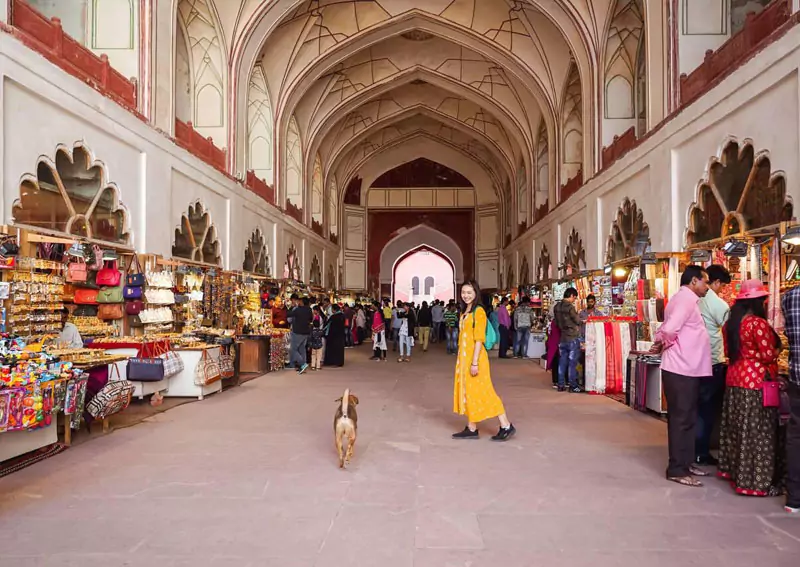
Day two provides the strongest contrast of the itinerary. The morning is dense, loud and full of human activity. The afternoon moves into gardens, broad roads and quieter architecture.
Start Early in Old Delhi
Leave the hotel before the main traffic builds. Your driver can take you to an agreed meeting point near Jama Masjid or another accessible edge of the old city.
The car will not follow you through every narrow lane. Carry only what you need: phone, water, small amount of cash, tissues and a secure bag.
Jama Masjid
Jama Masjid was built under Shah Jahan and remains an active place of worship. Dress modestly, follow local instructions and remove shoes when required.
Visit respectfully rather than treating the mosque as a photo set. Prayer times and access arrangements can affect your visit.
The surrounding area becomes busy quickly. A local guide can help organise the route and explain what you are seeing without stopping in the middle of moving crowds.
Chandni Chowk and the Old City Lanes
Chandni Chowk is not one single market experience. Different lanes specialise in jewellery, fabrics, spices, wedding goods, food and religious items.
A short cycle-rickshaw ride gives a sense of scale, but walking selected lanes reveals more detail. Keep valuables secure and avoid blocking shop entrances while photographing.
Street food is a major attraction. First-time visitors should choose busy vendors where food is cooked fresh and served hot. A guided food walk can reduce guesswork, although no guide can guarantee that every stomach will react the same way.
Red Fort: Visit or Exterior View?
Red Fort is one of Delhi’s most important historical sites, but entering it takes time. Security, walking distances and museum stops can easily use two hours.
Visit the interior when Mughal political history is a priority. Choose an exterior view when the itinerary already includes Agra Fort and Fatehpur Sikri and you want more time for neighbourhood life.
The fort is generally closed on Mondays, so check the current schedule before building day two around it.
Lunch and Reset
After Old Delhi, move to a calmer restaurant. This break matters. Wash your hands, drink water and sit somewhere quiet before the afternoon.
A heavy buffet can make the rest of the day difficult. Choose a moderate meal, especially in warm weather.
Afternoon Option One: Humayun’s Tomb
Humayun’s Tomb is the strongest architectural choice. Its garden plan, red sandstone, white marble and symmetrical design form a clear bridge between earlier Delhi monuments and the Taj Mahal.
Allow 90 minutes to two hours, including the surrounding structures. Late-afternoon light works well for photography.
Afternoon Option Two: Qutub Minar
Use this option when you visited Humayun’s Tomb on day one. Qutub Minar provides a different historical period and one of Delhi’s most recognisable skylines.
Optional Quiet Stop
Lodhi Garden is useful when the group needs open space rather than another ticketed monument. It combines landscaped paths with tombs and attracts walkers, families and local residents.
Evening Choices
- Relaxed dinner near the hotel
- Connaught Place walk
- Short food experience with a reputable guide
- Hotel rooftop or bar rather than another long drive
Avoid a late departure to Agra. Sleeping in Delhi keeps the driver rested and makes the next morning safer.
Day 3
Drive From Delhi to Agra and Explore Mughal Agra

Recommended Departure: 7:00 AM
Leave after an early breakfast. The exact departure depends on the hotel location and day of the week, but reaching the expressway before Delhi traffic becomes heavy improves the journey.
The Yamuna Expressway is the main road link. Use designated service areas for toilets, coffee and food. Do not ask the driver to stop on unsafe road shoulders for photographs.
Arriving in Agra
Agra is smaller than Delhi, but traffic around Taj Ganj and monument zones can still be slow. Leave luggage at the hotel and eat a light lunch before sightseeing.
Choose a hotel near the East Gate or Taj Ganj when sunrise access is important. A farther resort may offer better gardens but creates an earlier morning transfer.
Agra Fort
Agra Fort is not merely an optional extra beside the Taj Mahal. It explains the Mughal court, family rivalries and changing architectural tastes that shaped the region.
Akbar developed the major red-sandstone fort, while later rulers added marble palaces and audience halls. From selected sections, you can see the Taj Mahal across the Yamuna.
Allow 90 minutes to two hours. The fort involves walking on stone surfaces and some gentle slopes. Shade can be limited.
Why Visit the Fort Before the Taj Mahal?
Seeing Agra Fort first creates context. The Taj Mahal becomes part of a broader imperial story rather than an isolated white building.
It also keeps the sunrise visit on day four focused and allows you to return to the hotel for breakfast afterward.
Mehtab Bagh
Mehtab Bagh sits across the river from the Taj Mahal. The garden provides a rear perspective of the monument and works well near sunset.
Weather, river conditions and haze affect the view. Do not expect a perfect mirror reflection every day.
Arrive with enough time to enter before the ticket office closes. Sunset crowds can build during the best travel months.
Alternative: Itimad-ud-Daulah
Often called the Baby Taj, Itimad-ud-Daulah is smaller and more intimate. Its delicate marble inlay helps explain artistic developments that reached their peak at the Taj Mahal.
Choose it instead of Mehtab Bagh when architecture matters more than sunset photography.
Shopping in Agra
Agra is known for marble inlay, leather and handicrafts. Genuine craftsmanship exists, but commission-based shopping is common.
Tell the guide or driver when you do not want shopping stops. When you do want to buy, ask about material, workmanship, shipping, return terms and the final price before making a deposit.
Evening Preparation
- Confirm tomorrow’s sunrise and hotel departure time
- Buy or download the official Taj Mahal ticket
- Pack only permitted essentials
- Charge the phone and camera
- Arrange an early breakfast or eat after returning
- Sleep early
Day 4
Visit the Taj Mahal, Stop at Fatehpur Sikri and Continue to Jaipur
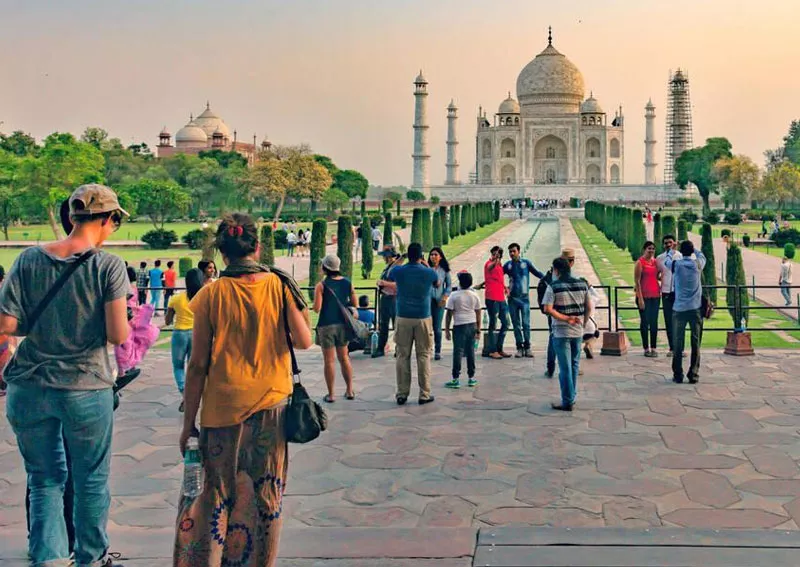
This is the longest and most important day of the itinerary. It combines an early monument visit with a major historical stop and a four-to-five-hour onward drive.
Keep lunch simple, avoid unnecessary shopping and accept that Jaipur sightseeing belongs to day five.
Taj Mahal Opening and Friday Closure
The official Taj Mahal information states that the monument opens 30 minutes before sunrise and closes 30 minutes before sunset on normal visiting days. It is closed on Fridays for general viewing.
Sunrise changes throughout the year, so a fixed statement such as “the Taj opens at 6:00 AM” is not reliable. Check the sunrise time for your date and confirm the hotel departure the previous evening.
Which Gate Should You Use?
The East and West gates are the normal entry choices. The best gate depends on hotel location, season and crowd pattern.
The South Gate is currently used as an exit rather than a normal entrance according to official visitor information.
What to Carry
Security is strict. Carry a small bag with phone, camera, essential medicine, passport copy if needed and permitted water. Leave food, tripods, drones, large bags and unnecessary electronics at the hotel or in secure storage.
Rules can change, so check current official guidance rather than relying only on an old blog.
How Long to Spend at the Taj Mahal
Two to three hours is enough for most first visits. This allows time for the main garden, central platform, mosque-side views and the main mausoleum when you buy the additional ticket.
Rushing through in 45 minutes wastes the effort of the early start. Staying too long makes the rest of day four difficult.
Main Mausoleum Ticket
The official site states that entry to the main mausoleum requires an additional ₹200 ticket beyond the regular admission ticket.
The central chamber can feel crowded. Shoe covers or bare-foot requirements apply in designated areas. Speak quietly and follow staff instructions.
Photography Strategy
Do not stop at the first platform with everyone else. Take one quick photograph, then continue deeper into the garden. Different angles open as the crowd spreads.
Morning fog can hide the monument during winter. Sunrise timing improves light but does not guarantee a clear view.
Return to the Hotel
After the visit, return for breakfast, shower and check-out. This is one reason an Agra overnight works so well.
Aim to leave the hotel around 9:30 or 10:00 AM. Leaving much later puts Fatehpur Sikri and the Jaipur arrival under pressure.
Fatehpur Sikri
Fatehpur Sikri was Akbar’s imperial capital for a relatively short period, but the surviving complex remains one of the route’s most impressive sites.
The palace complex includes audience spaces, royal residences, courtyards and distinctive architecture connected to Akbar’s political and cultural ambitions.
The religious complex around Jama Masjid and Buland Darwaza operates differently from the ticketed palace area. Guides and vendors can be persistent near transfer points.
Practical Fatehpur Sikri Advice
- Allow around 90 minutes to two hours
- Use the authorised local transfer system where required
- Keep shoes, bags and valuables organised
- Agree guide fees before starting
- Decline purchases politely and clearly
- Carry sun protection because open courtyards become hot
Lunch
Eat before or after the visit according to timing. Choose a clean, busy restaurant on the route rather than waiting until everyone is tired and hungry.
Drive to Jaipur
The remaining road crosses towns, agricultural areas and changing landscapes. The journey is less controlled than the Delhi-to-Agra expressway and can take longer than map estimates.
Use one planned rest stop. Repeated unplanned shopping and tea stops can turn an early evening arrival into a late-night hotel check-in.
Jaipur Evening
After checking in, decide according to energy. A short dinner near the hotel is often enough.
When the group still feels fresh, drive past the illuminated old city or stop briefly near Hawa Mahal. Avoid trying to add Nahargarh sunset after Fatehpur Sikri unless the day is running unusually early.
Day 5
See Jaipur’s Highlights and Return to Delhi
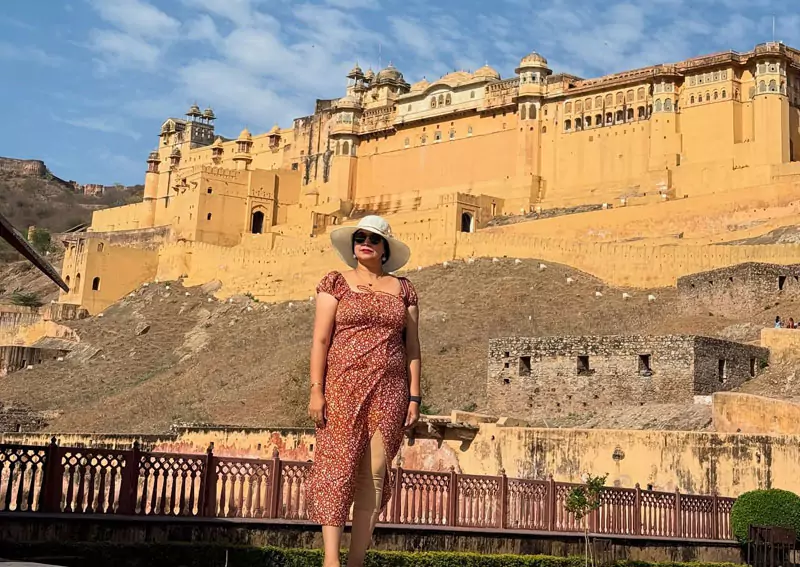
Day five cannot contain every major Jaipur attraction and a relaxed return to Delhi. Choose one hill-fort experience and one old-city cluster.
Start at Amber Fort
Leave around 7:30 AM, depending on the season and official opening time. Amber Fort stands about 11 kilometres from central Jaipur, though road time varies.
The palace complex unfolds through courtyards, gateways, audience halls, private rooms and defensive views. Sheesh Mahal is a highlight, but it can become crowded.
How to Reach the Entrance
Options may include walking, jeep transfer or other locally regulated transport. Elephant rides have long raised animal-welfare concerns. Travellers who prioritise responsible tourism can choose a jeep or walk according to fitness and weather.
How Much Time to Allow
Allow 90 minutes to two hours for a focused visit. Add more when visiting Jaigarh Fort or exploring slowly with a guide.
In a five-day itinerary, skip Jaigarh unless military architecture is a major interest. The extra drive and visit can remove time from City Palace and Jantar Mantar.
Jal Mahal Photo Stop
Jal Mahal sits in Man Sagar Lake and is normally viewed from the roadside promenade. It is a photo stop rather than a standard palace interior visit.
Keep the stop brief. Vendors and traffic make it easy to lose 30 minutes without adding much to the experience.
Hawa Mahal
Hawa Mahal’s famous façade is best viewed from across the road or from one of the elevated cafes opposite. The interior offers a different perspective through ramps, small windows and city views.
When time is tight, choose either the exterior viewpoint or the interior rather than trying to do both slowly.
City Palace
City Palace remains partly connected to Jaipur’s royal family and contains museums, courtyards and several ticket categories.
Premium areas can cost substantially more than the standard ticket. Decide whether you value exclusive rooms and guided access before paying for the highest category.
Jantar Mantar
Jantar Mantar sits beside City Palace and is one of the easiest sites to combine with it. The giant astronomical instruments are visually striking, but their purpose is difficult to understand without explanation.
A guide adds real value here. Even a focused 30-to-45-minute visit can make sense of the major instruments.
Lunch and Departure Decision
Eat an early lunch and leave Jaipur by around 1:30 or 2:00 PM when the goal is to reach Delhi that evening.
A later departure increases the chance of meeting heavy traffic near Gurugram and Delhi. Avoid booking a same-evening international flight based on the fastest map estimate.
Better Endings to the Trip
- Sleep in Delhi and fly the next day
- Fly from Jaipur when the route and airline work
- Add a second Jaipur night and extend the trip
- Continue deeper into Rajasthan rather than returning to Delhi
Do Not Promise Yourself a 5-Hour Jaipur-to-Delhi Transfer
It may happen in light traffic, but it should not be the foundation of a non-refundable flight connection.
A Faster Alternative
Alternative Five-Day Route for an Early Delhi Arrival
Travellers landing early and feeling rested can shift one Delhi sightseeing block to day one and leave for Agra late on day two.
| Day | Alternative Plan | Night |
|---|---|---|
| Day 1 | Arrival, Qutub Minar, Humayun’s Tomb and central Delhi | Delhi |
| Day 2 | Old Delhi, Red Fort exterior or visit, then late-afternoon drive to Agra | Agra |
| Day 3 | Taj Mahal, Agra Fort and Mehtab Bagh | Agra |
| Day 4 | Fatehpur Sikri and Jaipur arrival, evening old city | Jaipur |
| Day 5 | Amber Fort, City Palace and finish in Jaipur or return Delhi | According to onward plan |
This version gives Agra more time and makes day four easier. It works only when day-one arrival is early and the group can handle a full afternoon.
Do not use this version after a long flight when everyone needs sleep.
Choose the Right Travel Style
Private Car, Train or Mixed Transport?
Private Car and Driver
A private car is the simplest choice. The same vehicle handles hotel transfers, sightseeing, luggage and intercity travel.
It is particularly valuable on the Agra-to-Jaipur day because Fatehpur Sikri fits naturally into the road route.
Train
Fast trains can reduce the Delhi-to-Agra road journey. You still need station transfers, local Agra transport and a road vehicle for Fatehpur Sikri and Jaipur.
Train tickets also create fixed departure times, which can be helpful or restrictive depending on your style.
Mixed Route
A useful compromise is a fast Delhi-to-Agra train followed by a private car from Agra through Jaipur. This provides a rail experience while preserving flexibility on the section where a car matters most.
| Factor | Private Car | Train and Local Cars | Mixed Route |
|---|---|---|---|
| Door-to-door service | Excellent | Limited | Good after Agra |
| Lowest possible cost | No | Yes | Moderate |
| Fatehpur Sikri stop | Easy | Separate arrangement | Easy |
| Luggage handling | Simple | Repeated transfers | One major station transfer |
| Schedule flexibility | High | Low | Moderate |
| Best for | Couples and families | Budget travellers | Rail enthusiasts |
See the full Delhi Agra Jaipur Private Driver Cost Guide before comparing road quotations.
Realistic 2026 Planning
How Much Does a Five-Day Golden Triangle Trip Cost?
The earlier draft’s ₹25,000 to ₹40,000 mid-range figure is too low for many foreign visitors once current Jaipur tickets, good hotels, private transport and meals are included.
A comfortable five-day private trip for two people sharing one room more often falls around ₹40,000 to ₹70,000 per person, excluding international flights and visa. Budget travellers using trains and simple rooms can spend less. Luxury travellers can spend several times more.
| Expense | Budget Per Person | Comfortable Mid-Range Per Person | Luxury Per Person |
|---|---|---|---|
| Four hotel nights | ₹5,000–₹10,000 | ₹12,000–₹28,000 | ₹45,000–₹1,50,000+ |
| Transport share | ₹4,000–₹8,000 | ₹8,000–₹16,000 | ₹20,000–₹45,000+ |
| Food | ₹3,000–₹6,000 | ₹7,000–₹14,000 | ₹20,000–₹50,000+ |
| Monument tickets | Depends on citizenship and selected sights | ₹6,000–₹10,000 for many foreign visitors | ₹10,000–₹25,000 with premium access |
| Guides and activities | ₹1,500–₹4,000 | ₹5,000–₹12,000 | ₹15,000–₹40,000+ |
| Tips and contingency | ₹1,500–₹3,000 | ₹3,000–₹7,000 | ₹8,000–₹20,000+ |
| Indicative total | ₹18,000–₹35,000 | ₹40,000–₹70,000 | ₹1,20,000–₹3,00,000+ |
What These Figures Assume
- Two people share one room
- Private-car cost is shared
- No international flights or Indian visa
- No major shopping
- No Christmas or New Year palace-hotel rates
- No Ranthambore safari extension
For a deeper cost breakdown, read India Golden Triangle Tour Cost: Budget vs Luxury.
2026 Ticket Planning
Monument Entry Fees and Important Updates
Taj Mahal
The official Taj Mahal website lists ₹1,100 for a foreign visitor and an additional ₹200 for the main mausoleum. Indian visitor pricing is lower.
The monument is closed on Fridays for general sightseeing. Opening is linked to sunrise rather than a single year-round clock time.
Delhi ASI Monuments
Major ASI-managed Delhi monuments such as Qutub Minar, Humayun’s Tomb and Red Fort commonly use different prices for Indian and foreign visitors. Verify current prices through the official ASI ticket portal because old blogs often show outdated rates.
Jaipur’s 2026 Fee Increase
Rajasthan increased entry fees at several state-managed monuments from January 2026. Reported foreign visitor prices include ₹1,000 at Amber Fort and ₹600 at Hawa Mahal and Jantar Mantar.
Older web pages still show Amber Fort at ₹500 and Hawa Mahal at ₹200. Do not build the budget around those older figures.
City Palace Jaipur
City Palace is separately managed and offers different ticket categories. Premium rooms and special access can cost far more than standard museum entry.
Safe Ticket Buying
- Start from official government or monument websites
- Check the web address carefully
- Avoid unknown sponsored links
- Keep the digital ticket and payment confirmation
- Carry identification when required
- Do not pay a stranger to “activate” an official ticket
Sleep Where Tomorrow Starts
Where to Stay on a Five-Day Golden Triangle Tour
Delhi
Central Delhi provides the best balance for a two-night first visit. South-Central Delhi works well for Humayun’s Tomb and Qutub Minar. Aerocity is practical only when airport timing is the priority.
Agra
Stay near the East Gate or Taj Ganj for the easiest sunrise transfer. Confirm whether “Taj view” belongs to the booked room, rooftop or selected public area.
Jaipur
Stay centrally for a one-night itinerary. Bani Park, C-Scheme and well-selected hotels near the old city reduce the morning drive.
A resort in Kukas or near Amer can work when Amber Fort is the first stop, but it may add time to City Palace and Hawa Mahal.
| City | Best Area for This Itinerary | Avoid When Time Is Short |
|---|---|---|
| Delhi | Central or South-Central Delhi | Remote edge of NCR for a full city plan |
| Agra | East Gate, Taj Ganj or Fatehabad Road | Far resort without a clear Taj transfer |
| Jaipur | Central Jaipur, C-Scheme or Bani Park | Remote palace resort reached late at night |
See Best Places to Stay in India’s Golden Triangle for specific hotel styles and locations.
Eat Well Without Losing the Day
Food Planning for First-Time Visitors
North Indian food is one of the route’s highlights, but five consecutive heavy restaurant meals can become tiring.
Delhi
Delhi offers everything from street food and old family restaurants to modern Indian dining. Use the Old Delhi morning for carefully selected snacks and choose a calmer lunch afterward.
Agra
Agra is known for Mughlai food and petha, a sweet made from ash gourd. Restaurant quality near tourist areas varies, so use recent reviews rather than following the most persistent recommendation.
Jaipur
Try dal baati churma, ker sangri, kachori or laal maas according to dietary preferences. Rajasthan’s traditional food can be rich, so order several dishes to share rather than one heavy plate per person.
Basic Food Safety
- Choose busy restaurants with high turnover
- Eat food cooked fresh and served hot
- Use sealed bottled or properly filtered water
- Wash or sanitise hands before eating
- Be careful with raw salad and cut fruit
- Avoid ice when the water source is unclear
- Do not overeat simply because the buffet is included
Vegetarian and Vegan Travel
Vegetarian food is widely available. Vegan travellers should clarify ghee, butter, cream, yoghurt and paneer rather than asking only whether a dish contains meat.
Allergies
Carry a translated allergy card and repeat the requirement clearly. Kitchens may use shared oil, utensils and preparation surfaces.
Pack for Monuments and Road Days
What to Pack for Five Days
Essential Day Bag
- Small secure crossbody bag or backpack
- Reusable water bottle where permitted
- Sun hat and sunscreen
- Tissues and hand sanitiser
- Phone power bank
- Small amount of cash
- Copy of passport and insurance details
- Personal medication
- Light scarf for religious sites and sun
Clothing
Choose breathable clothes that cover shoulders and knees comfortably. This works for religious sites, sun protection and air-conditioned cars.
Winter mornings can be cold, especially before sunrise at the Taj Mahal. Carry layers rather than one heavy coat.
During April, May and June, heat changes the itinerary. Loose clothing, sun protection and early starts become essential.
Footwear
Wear broken-in shoes with grip. Monument surfaces include stone, marble, ramps, stairs and uneven courtyards.
Easy-to-remove shoes help at mosques, temples and mausoleum areas.
What Not to Carry Into the Taj Mahal
Leave large bags, food, tripods, drones and unnecessary electronics at the hotel. Check the official prohibited-items list shortly before the visit because security rules can change.
Choose the Month Carefully
Best Time for a Five-Day Golden Triangle Trip
October and November
Weather becomes more comfortable, though late-autumn air quality in Delhi can be poor. Festival dates increase domestic travel and hotel demand.
December and January
Days can be pleasant, while mornings and evenings feel cold. Fog may delay flights, trains and road journeys and can hide the Taj Mahal at sunrise.
February and March
These are among the most comfortable months. Days warm gradually, gardens look attractive and early starts remain manageable.
April to June
Temperatures can become extreme. Sightsee early, rest during the hottest hours and avoid overloading the itinerary.
July to September
Monsoon weather brings humidity and occasional heavy rain. Hotel value can improve, but road timing and outdoor visits need flexibility.
| Season | Main Advantage | Main Problem |
|---|---|---|
| October–November | Comfortable sightseeing | Air quality and festival demand |
| December–January | Cool days | Fog and cold mornings |
| February–March | Balanced weather | High demand |
| April–June | Lower hotel rates | Strong heat |
| July–September | Greener landscapes and value | Rain and humidity |
Practical, Not Fearful
Safety and Common Tourist Problems
Millions of visitors travel the Golden Triangle, but the route still requires normal big-city awareness.
Transport Safety
- Use a traceable operator or hotel-arranged pickup
- Confirm driver and vehicle details
- Use seat belts where available
- Do not pressure the driver to speed
- Avoid unnecessary overnight road travel
- Keep valuables with you at stops
Shopping Commissions
Drivers and guides may recommend shops that pay commissions. This does not automatically mean the products are fake, but the recommendation is not always neutral.
Say clearly that you want no shopping stops. A professional operator should respect the request.
Unofficial Guides
At monuments, persistent people may offer quick guiding, special entry or closed-area access. Use an arranged or authorised guide and agree the price before beginning.
Ticket Scams
Fake ticket websites and unofficial resellers can look convincing. Begin with official sources and check the domain carefully.
Money
Cards and UPI are common in cities, but foreign-issued cards do not work everywhere. Carry modest cash for small purchases, tips and local transport.
Use bank-affiliated ATMs in secure locations. Cover the keypad and avoid accepting help from strangers.
Health
Travel insurance matters. Carry prescribed medicines in original packaging and keep a written list of active ingredients.
Air pollution can affect people with asthma or respiratory conditions, particularly in Delhi during late autumn and winter.
Women Travellers
Advice for Solo Women and Women-Only Groups
Women travel this route independently every day. Preparation makes the experience calmer.
- Share the itinerary and live location with a trusted person
- Use verified airport pickup
- Request driver details before arrival
- Choose hotels with staffed reception and strong recent reviews
- Avoid isolated late-night walks
- Keep drinks in sight
- Use a crossbody bag that closes securely
- Trust discomfort and leave a situation without worrying about politeness
Clothing
You do not need to wear traditional Indian clothing. Loose trousers, long skirts, T-shirts, shirts and dresses that cover shoulders and knees work well.
Interaction
Some people may request photographs. You can decline firmly. “No, thank you” followed by walking away is enough.
Read the Women-Friendly Golden Triangle Travel Guide for more focused planning.
Adjust the Pace
Five Days With Children or Senior Travellers
With Young Children
Reduce the number of afternoon monuments. Build in hotel pool or rest time and carry familiar snacks.
Old Delhi can be exciting but intense. A short guided rickshaw-and-walk route is usually better than several hours in crowded lanes.
With Teenagers
Give each day a different focus: street life in Delhi, architecture in Agra and forts in Jaipur. Include one food, craft or photography activity rather than only historical lectures.
With Senior Travellers
Choose a larger vehicle, centrally located hotels and rooms near lifts. Request wheelchairs at major monuments when available, but do not assume complete step-free access.
Skip Mehtab Bagh or an extra Delhi monument when the group needs rest. The Taj Mahal and Amber Fort mornings matter more.
Best Changes for a Gentler Route
- Use seven days instead of five
- Stay two nights in Jaipur
- Book porter assistance
- Choose hotels with lifts and walk-in showers
- Carry a folding walking stick if useful
- Avoid midday heat
Walking Is a Major Part of the Trip
Accessibility and Physical Demands
The Golden Triangle is not a fully step-free route. Monument complexes include long approaches, uneven stone, stairs, ramps and security queues.
Delhi
Qutub Minar and Humayun’s Tomb involve open grounds and uneven sections. Old Delhi has crowds, broken pavements and narrow lanes.
Agra
Taj Mahal access involves movement from the vehicle parking area to the gate, security and the main platform. Electric transport is available on designated approaches, but crowd conditions vary.
Agra Fort includes sloping paths and stone surfaces.
Jaipur
Amber Fort sits on a hill. Vehicle or jeep access reduces the climb, but internal courtyards and stairs remain.
City Palace is easier in many sections, while Hawa Mahal’s interior uses ramps and narrow passages.
Before Booking
- Ask about wheelchair availability
- Confirm hotel lift access
- Request a vehicle with an easy step height
- Explain mobility needs to the guide
- Allow more time at security
- Identify accessible toilets in advance
Better Photos Without Chasing Every Sunrise
Photography Tips for the Five-Day Route
Delhi
Old Delhi rewards observation more than wide monument photographs. Ask before taking close portraits. Humayun’s Tomb works well in late-afternoon light.
Taj Mahal
Arrive early, but prepare for fog, haze or crowds. Take a few classic central images, then move to side paths and mosque-side angles.
Tripods and drones are not suitable for normal entry. Keep equipment simple.
Fatehpur Sikri
Courtyards create strong lines and shadows. Midday light can be harsh, so use architectural details and shaded passages.
Jaipur
Amber Fort’s courtyards and gateways photograph well in the morning. Hawa Mahal’s exterior receives useful light earlier in the day.
Jal Mahal is a roadside viewpoint. Long-lens photographs can reduce the visual clutter near the promenade.
Ethical Photography
Do not photograph people in vulnerable situations for visual drama. Ask vendors, craftspeople and families before close portraits.
Respect Makes the Trip Easier
Local Etiquette and Responsible Travel
Religious Sites
- Cover shoulders and knees
- Remove shoes where instructed
- Keep voices low
- Do not enter restricted prayer areas
- Ask before photographing worshippers
Tipping
Tipping is optional but common for good service. Keep small notes and tip according to service quality, duration and your own comfort.
A driver working five days and a guide working three hours are different service relationships. Do not feel pressured by a fixed amount stated by someone who benefits from it.
Animal Experiences
Consider welfare before booking elephant rides, posed-animal photographs or activities involving captive animals. Jeep and walking alternatives exist at Amber Fort.
Water and Waste
Refill water where safe, avoid unnecessary single-use plastic and keep rubbish until you find a bin.
Local Crafts
Buying directly from credible artisans can support skilled work. Ask questions and purchase because you value the object, not because the visit became uncomfortable.
Protect the Best Parts of the Trip
What to Skip When Five Days Feels Too Busy
Skip One Delhi Monument
Choose Humayun’s Tomb or Qutub Minar rather than forcing both after a late arrival.
Skip Agra Shopping
Remove commission stops when Taj Mahal and Fatehpur Sikri timing is tight.
Skip Jaipur Hill Sunset
Nahargarh sunset is attractive but adds a separate road climb and evening traffic.
Skip Jaigarh Fort
Amber Fort already provides the essential hill-fort experience on a short visit.
Skip Hawa Mahal Interior
Use the exterior viewpoint when City Palace and Jantar Mantar matter more.
Skip a Late-Night Transfer
Sleep properly rather than creating more sightseeing hours through unsafe driving.
Avoid These Planning Errors
Common Five-Day Golden Triangle Mistakes
- Planning the Taj Mahal on Friday: it is closed to general visitors.
- Counting a late arrival as a sightseeing day: usable hours matter more than calendar dates.
- Booking a Jaipur resort too far from the city: one-night stays need practical locations.
- Scheduling an international flight after the Jaipur drive: road traffic creates serious risk.
- Using old Jaipur ticket prices: several fees increased in 2026.
- Visiting too many Delhi monuments: traffic and security make the list unrealistic.
- Forcing the Taj Mahal and Delhi-to-Agra drive into one rushed day: an Agra overnight provides a better experience.
- Assuming every driver is a guide: the roles are different.
- Choosing a vehicle by passenger count only: luggage needs space.
- Accepting mandatory shopping stops: tell the operator when you want a no-shopping route.
- Ignoring heat or fog: season changes daily timing.
- Carrying too much into monuments: security checks become slower.
- Eating heavily before long drives: keep road-day meals simple.
- Booking every hotel non-refundable: flights and visas can change.
- Trying to photograph everything: put the camera down long enough to experience the place.
Continue the Journey
Where to Go After the Golden Triangle
Ranthambore
Add at least two nights for a realistic safari extension. Wildlife sightings are never guaranteed, and safari permits should be booked in advance.
Udaipur
Udaipur adds lakes, palaces and a slower atmosphere. Flying or using a planned Rajasthan road route is more efficient than returning to Delhi first.
Jodhpur
Jodhpur works well after Jaipur for travellers continuing through Rajasthan. Mehrangarh Fort provides a very different fort experience from Amber.
Varanasi
Fly or take a suitable train rather than trying to connect by a long road transfer. Varanasi deserves at least two nights.
Kerala or Goa
Use a flight from Delhi or Jaipur according to schedule. These regions provide a strong contrast after the dry northern cities.
Himalayan Foothills
Rishikesh, Shimla and other northern destinations require additional travel planning and seasonal awareness.
Explore more options on the Golden Triangle Tour Packages page.
Related Planning Guides
Complete the Trip With the Right Details
Want This Route Matched to Your Flights?
Plan a Private Five-Day Golden Triangle Tour
Share your arrival time, departure city, group size, hotel preference and travel month. The route can be adjusted around Friday closure, weather, family pace and onward flights.
- Private sedan, Innova and group vehicles
- Budget, boutique and luxury hotels
- Local guides in Delhi, Agra and Jaipur
- Clear ticket and transport inclusions
Common Questions
Frequently Asked Questions About the Five-Day Golden Triangle
Open a question below for a direct answer.
Is five days enough for Delhi, Agra and Jaipur?
Yes. Five days provides a compact introduction when transport, hotels and monument timing are organised. Seven days is better for a slower pace.
How many nights should I spend in each city?
A practical five-day plan uses two Delhi nights, one Agra night and one Jaipur night. Add a final Delhi night before an international flight.
Can I visit the Taj Mahal on Friday?
No. The Taj Mahal is closed on Fridays for general sightseeing.
What time does the Taj Mahal open?
The official site states that it opens 30 minutes before sunrise on normal visiting days, so the clock time changes by season.
Should I visit the Taj Mahal at sunrise?
Sunrise usually offers cooler temperatures and attractive light, but winter fog and early crowds can still occur.
Is one night in Agra enough?
Yes for most visitors. It allows Agra Fort in the afternoon and the Taj Mahal the next morning.
Should I visit Fatehpur Sikri?
Yes. It fits naturally between Agra and Jaipur and adds important context about Emperor Akbar.
Can I do Fatehpur Sikri and Jaipur sightseeing on the same day?
Only a small Jaipur evening activity is realistic. Save Amber Fort and the major old-city sights for the next morning.
Is a private driver necessary?
No, but it is the simplest option for a five-day route, especially when including Fatehpur Sikri and travelling with luggage.
Can I use trains instead?
Yes. Delhi to Agra works well by train, but local transfers and the Agra-to-Jaipur road section still need planning.
How much does the trip cost?
A comfortable private mid-range trip often costs around ₹40,000 to ₹70,000 per person when two people share a room and vehicle, excluding international flights.
What is the best month for the route?
February and March often provide a good weather balance. October to January is popular but may bring air pollution, cold mornings or fog.
Is December a good time?
Yes, but early mornings can be cold and fog may affect road, train and monument views.
Can I travel during summer?
Yes, with very early sightseeing, midday rest, hydration and a lighter schedule.
Where should I stay in Agra?
Choose the East Gate, Taj Ganj or a suitable Fatehabad Road hotel for practical Taj Mahal access.
Where should I stay in Jaipur for one night?
Central Jaipur, C-Scheme or Bani Park is usually more practical than a remote resort.
Is Old Delhi safe to visit?
It is a busy visitor area, but crowds and narrow lanes require awareness. A local guide makes the experience easier for first-time visitors.
Do I need guides in all three cities?
No. Local guides are most useful for Old Delhi, the Taj Mahal, Fatehpur Sikri and Jantar Mantar.
Can women travel this route safely?
Yes. Use verified transport, well-reviewed hotels, normal big-city awareness and clear communication with the operator.
Is the itinerary suitable for children?
Yes, but reduce afternoon monuments and allow rest. Seven days is easier for very young children.
Is the trip suitable for senior travellers?
It can be, with a larger vehicle, accessible hotels, early starts and fewer optional stops. Monument walking remains significant.
What should I wear?
Wear breathable clothes that comfortably cover shoulders and knees, with good walking shoes and seasonal layers.
Can I carry a large bag into the Taj Mahal?
Avoid large bags. Security is strict, and carrying only permitted essentials makes entry easier.
Are Jaipur monument prices higher in 2026?
Yes. Rajasthan increased fees at several state-managed monuments from January 2026.
Can I fly out of Delhi on day five?
A late flight may be possible, but it is risky after a road journey from Jaipur. A final Delhi night is safer.
Can I finish the tour in Jaipur?
Yes. This often creates a better final day and works well when a suitable onward flight or Rajasthan extension is available.
Should I include Nahargarh Fort?
Not on the standard five-day route unless Jaipur sunset is a major priority. It adds a separate hill drive.
Is Amber Fort the same as Amer Fort?
Yes. Both names refer to the same major fort-palace complex outside Jaipur.
Should I take an elephant ride at Amber Fort?
Travellers concerned about animal welfare can choose a jeep or walk instead.
How much cash should I carry?
Carry a modest amount for small purchases and tips while using cards or other secure payment methods for larger expenses.
Final Recommendation
Keep the Route Focused and the Days Human
A five-day Golden Triangle tour works because the three cities tell a connected story. Delhi shows the layers of power that came before and after the Mughals. Agra reveals imperial ambition at its most refined. Jaipur shifts the mood toward Rajput courts, hill forts and living bazaars.
The route stops working when every empty hour receives another monument. Leave room for traffic, lunch, a slow cup of tea and the moment when the Taj Mahal first appears through the gate.
For a first visit, protect three experiences above everything else: a thoughtful Old Delhi morning, an unhurried Taj Mahal visit and an early Amber Fort start. Build the hotels, transport and ticket plan around those moments.
Five days will not show you all of North India. It will show you enough to understand why so many travellers return.