
Best Time to Visit Agra: Morning or Evening? Taj Mahal, Weather & Sightseeing Guide
Morning is the stronger overall choice for visiting Agra, especially if the Taj Mahal is your priority. An early start means cooler temperatures, softer light for photography, and a full day left over for Agra Fort, Itimad-ud-Daulah and the rest of the city. Evening has its own case: warmer sunset tones, a slower start to the day, and Taj Mahal views from across the Yamuna that morning simply can’t offer.
The right answer depends on what you actually want from the day. First-time visitors and photographers chasing the classic shot are usually better off with the Taj Mahal at sunrise. Travellers who’ve already seen the monument, or who arrive in Agra mid-afternoon, often get more out of an evening built around Mehtab Bagh, a riverside walk and a relaxed dinner.
This guide compares morning against evening in Agra properly — official Taj Mahal opening and closing rules, sunrise versus sunset, crowd patterns, seasonal weather differences, and the sightseeing order that actually works for a single day, an overnight stay, or a Delhi day trip.
Quick Answer
Is Morning or Evening Better for Visiting Agra?
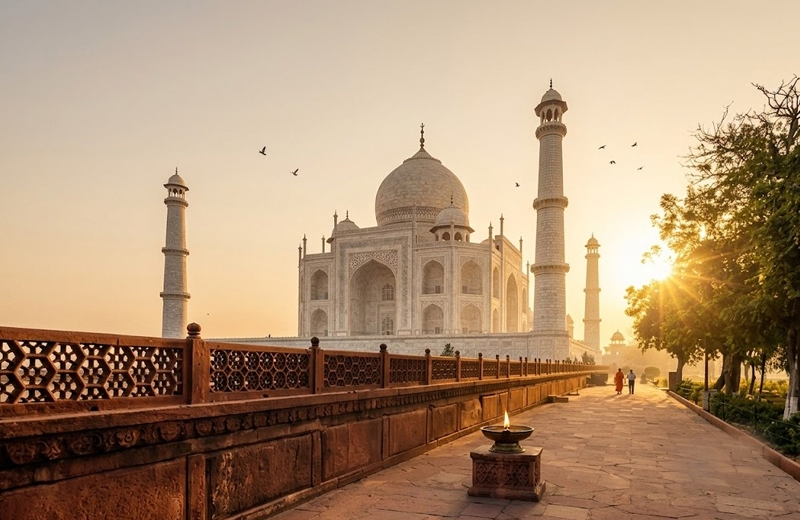
Morning works best for most first-time visitors. The Taj Mahal officially opens 30 minutes before sunrise, so an early visit gives you the changing morning light along with the entire rest of the day for Agra Fort and other sights. Evening suits travellers whose priority is sunset photography, a Mehtab Bagh visit, or simply a later, more relaxed start.
Best Overall
Morning in Agra
- Best choice for first-time visitors
- Softer, changing Taj Mahal light
- Cooler temperatures
- Full day remaining for sightseeing
- Strongest option in summer
- No pressure from closing time
Best Alternative
Evening in Agra
- Warm golden-hour light
- Ideal for Mehtab Bagh views
- Relaxed, unhurried finish to the day
- Works well for afternoon arrivals
- Strong riverside photography
- Good after an Agra Fort visit
At a Glance
Agra Morning vs Evening: Which Is Better?
| Factor | Morning | Evening |
|---|---|---|
| Best for first visit | Excellent | Good |
| Taj Mahal photography | Soft, cool-toned light | Warmer, golden light |
| Temperature | Usually cooler | Improves after afternoon heat |
| Schedule flexibility | High | Lower — closing time approaches fast |
| Rest of Agra sightseeing | Whole day remains | Usually already completed |
| Summer comfort | Best | Good only right at sunset |
| Winter fog risk | Can be higher very early | Usually clearer by late afternoon |
| Mehtab Bagh | Good, quieter | Excellent for sunset colour |
For most travellers, morning wins overall. Evening becomes especially attractive when winter fog affects sunrise visibility, or when a Taj Mahal sunset view from across the Yamuna matters more to you than maximum sightseeing time.
The Rule That Decides Everything
How Does the Taj Mahal’s Official Schedule Actually Work?
The Taj Mahal doesn’t run on a fixed clock — it runs on the sun. According to the official Taj Mahal visiting-hours page, the monument opens 30 minutes before sunrise and closes 30 minutes before sunset on normal operating days, and it is closed to general visitors every Friday. Ticket counters at the Eastern and Western gates open around an hour before sunrise and stop selling roughly 45 minutes before sunset.
Because sunrise and sunset shift through the year, the practical clock times move with the seasons — broadly around 6:00 AM to 6:30 PM in winter, extending somewhat later into the evening in summer when sunset comes later. This is exactly why “morning or evening” isn’t a fixed-hour question here: it’s a question of which end of the daylight window suits your priorities.
Morning Advantage
Why Is Morning the Best Time to Visit Agra?
Morning gives you the strongest combination of comfortable temperatures, attractive light and itinerary flexibility. Sunrise is popular with visitors specifically because of how the marble’s appearance changes as the light develops, and because it lets you get ahead of the day’s heat, particularly outside the winter months.
Advantages of Visiting Agra in the Morning
- Cooler walking conditions
- Softer, changing Taj Mahal photography light
- More time available after sightseeing
- Better option during hot months
- No pressure from an approaching closing time
- Easy to continue straight to Agra Fort afterward
- Works well for same-day Delhi travellers
If you only have one day in Agra, the safest approach is to put your most important attraction first. For almost every first-time visitor, that’s the Taj Mahal.
Evening Advantage
When Is Evening Better for Visiting Agra?
Evening works better when sunset photography matters more to you than maximising sightseeing hours. It also suits travellers arriving in Agra after lunch, or anyone who’d rather not start before dawn.
Choose Evening If You:
- Want warm sunset light
- Plan to photograph the Taj Mahal from Mehtab Bagh
- Arrive in Agra during the afternoon
- Prefer a slower morning
- Are visiting during a stretch of winter fog
- Have already seen the Taj Mahal earlier in the trip
The trade-off is flexibility. As the Taj Mahal’s closing time approaches, a delay at security, in traffic, or finding parking suddenly matters a lot more than it would first thing in the morning.
Best Overall Experience
Is Sunrise the Best Time to Visit the Taj Mahal?
For most visitors, yes. The Taj Mahal officially opens 30 minutes before sunrise on normal operating days, and gate queues typically start forming even before that. Arriving right at opening is the closest you’ll get to seeing the complex without the bulk of the day’s crowds already inside.
Beyond the light itself, an early start also helps you avoid the strongest midday heat for most of the year and gives you first access to the classic reflecting-pool photo angle before it fills with people.
Sunrise Is Best For:
- First-time visitors
- Couples
- Photographers
- Summer travellers
- Visitors staying overnight in Agra
- Travellers with a full sightseeing day ahead
Evening Light
Is the Taj Mahal Better in the Evening?
The Taj Mahal can look beautiful in the evening, but “better” depends on what you’re after — it isn’t automatically superior to sunrise. The experience is different rather than universally better.
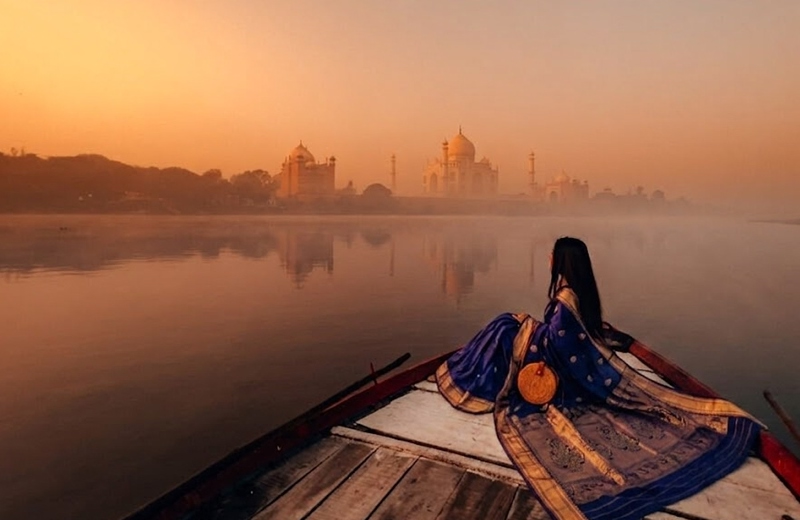
Late-afternoon light turns warmer and more golden as closing time nears, and the sky over the Yamuna often takes on attractive tones around sunset. The catch is timing: the monument closes 30 minutes before actual sunset, so you won’t be inside to watch the sun disappear.
A Different Kind of Evening
Can You See the Taj Mahal at Night?
Yes, but only on specific dates and through a separate booking process. The Archaeological Survey of India permits limited full-moon night viewing on the night of the full moon plus two nights before and two nights after — five nights per lunar cycle in total — with entry typically between roughly 8:30 PM and 12:30 AM in small timed batches. Night viewing is not available on Fridays or during Ramadan, and tickets generally need to be booked at least a day in advance directly through the ASI, so this isn’t something you can plan spontaneously on the day.
If a full-moon date happens to line up with your Agra trip, it’s worth checking current availability — it’s a genuinely different experience from a standard daytime visit — but don’t build your itinerary around it unless you’ve confirmed the date and booked ahead.
Photography
Morning or Evening: Which Is Better for Taj Mahal Photography?
| Photography Goal | Best Time |
|---|---|
| Classic Taj Mahal front view | Early morning |
| Soft pastel light on the marble | Sunrise |
| Lower summer heat while shooting | Morning |
| Warm golden tones | Late afternoon, before closing |
| Taj Mahal from across the river | Evening, from Mehtab Bagh |
| Full sightseeing flexibility | Morning |
If you only get one chance to photograph the Taj Mahal from inside the complex, choose morning. If you have an overnight stay, do both: the monument itself at sunrise, and a river-side perspective at sunset.
Crowd Planning
Is the Taj Mahal Less Crowded in the Morning or Evening?
Arriving right at opening generally puts you ahead of the bulk of the day’s visitors, but sunrise itself isn’t a secret — it’s one of the most popular times to visit. The Taj Mahal is among the most-visited monuments in the world, so don’t expect an empty complex at any hour.
Weekends, national holidays and the peak October-to-March travel season can bring heavy visitor numbers at almost any time of day, including early morning.
To Reduce Waiting Time
- Arrive ahead of your preferred sightseeing window
- Buy tickets through an official ASI channel where possible
- Travel with minimal belongings to speed up security
- Keep a government-issued ID ready
- Avoid carrying items that may be flagged or delayed at security
- Allow extra time on weekends and public holidays
Comfort
Does Morning or Evening Have Better Weather in Agra?
The answer changes with the season.
Summer (April–June)
Morning wins clearly. Temperatures climb quickly, and midday sightseeing can become genuinely exhausting.
Winter (Dec–Feb)
Late morning can sometimes beat very early morning when fog reduces visibility right at sunrise.
Monsoon (Jul–Sep)
Mornings tend to be cooler, but rain and cloud cover can occur at any hour without much warning.
Shoulder Season (Oct & Mar)
Morning and evening are both comfortable, giving you the most flexibility to choose based on preference rather than necessity.
April to June
What Is the Best Time to Visit Agra in Summer?
Morning is by far the better choice during the hottest months. Visit the Taj Mahal as early as practical and avoid scheduling your longest outdoor walking for the middle of the afternoon, when temperatures in Agra regularly climb into the high 30s and 40s Celsius.
Good Summer Schedule
- Taj Mahal at sunrise
- Breakfast
- Agra Fort in the morning
- Lunch and hotel rest during peak heat
- Late-afternoon sightseeing once it cools slightly
- Evening river view or dinner
December to February
Is Morning or Evening Better in Agra During Winter?
Morning remains a strong overall choice, but winter needs some built-in flexibility because North India can see dense fog, particularly in December and January. A very early Taj Mahal visit on a foggy day can produce atmospheric, moody photographs, but it can also mean genuinely reduced visibility of the monument itself.
If the forecast points to heavy fog, a slightly later morning visit often gives clearer views. Evening also performs well on clear winter days, when the light is soft without the summer haze.
Winter Photography Tip
Don’t build a once-in-a-lifetime Taj Mahal visit entirely around a minute-perfect sunrise photograph — weather can’t be controlled. If your schedule allows it, stay overnight in Agra so you have more than one opportunity to see the monument in good light.
July to September
Morning or Evening in Agra During Monsoon?
Morning is usually more comfortable for walking, but monsoon weather is genuinely unpredictable. Rain, humidity and sudden cloud cover can occur during either part of the day, sometimes with little warning.
- Wear breathable clothing that dries quickly
- Carry compact, permitted rain protection
- Protect your phone and travel documents from sudden showers
- Use comfortable, grippy footwear for wet stone surfaces
- Build extra time into your schedule
- Avoid packing attractions too tightly back-to-back
Agra Fort
What Is the Best Time to Visit Agra Fort?
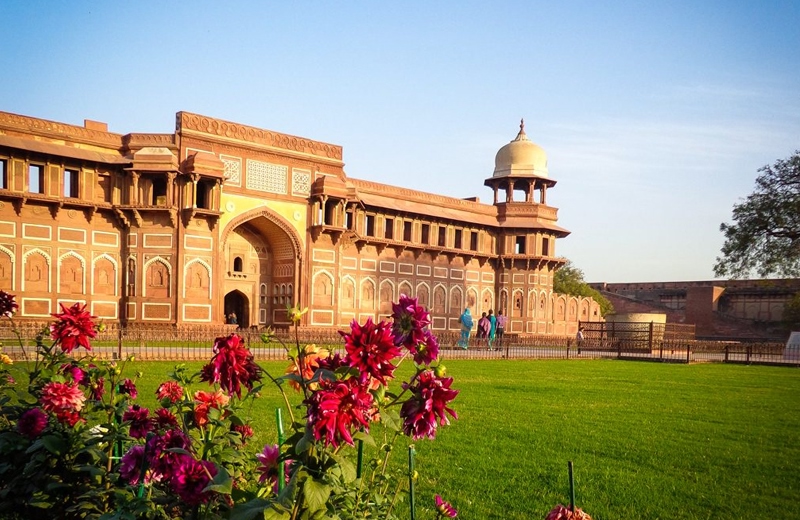
Late morning is often the most practical time for Agra Fort, right after an early Taj Mahal visit. Agra Fort operates from sunrise to sunset every day of the week, roughly 6:00 AM to 6:00 PM depending on the season, and — unlike the Taj Mahal — it does not close on Fridays.
The fort sits only around 2.5 km from the Taj Mahal, which makes the two monuments a natural pair for the same morning. Some visitors also enjoy Agra Fort specifically in the evening, when the red sandstone takes on a warm glow in the setting sun, and several operators run evening light-and-sound shows there as a separate paid add-on.
Recommended Sequence
Taj Mahal → Breakfast → Agra Fort
This order prioritises the changing morning light at the Taj Mahal, then moves to the fort once you’re properly awake and ready for a more detailed historical walk-through.
Sunset
Why Is Evening Good for Mehtab Bagh?
Mehtab Bagh, on the opposite bank of the Yamuna, is one of the most logical evening experiences after a morning Taj Mahal visit. The garden is open daily from sunrise to sunset, broadly around 6:00 AM to 7:00 PM, with a modest entry fee reported at roughly ₹25 for Indian nationals and around ₹200 for foreign nationals — figures worth reconfirming locally since ASI ticket rates are periodically revised.
Rather than trying to see the Taj Mahal twice from inside the complex in one busy day, Mehtab Bagh lets you experience its architecture up close in the morning and then view it from a distance, framed by the river, as the evening light changes.
Best Combination
- Morning: Taj Mahal
- Late morning: Agra Fort
- Afternoon: Lunch and rest
- Late afternoon: Itimad-ud-Daulah, if time allows
- Evening: Mehtab Bagh or another river viewpoint
Other Attractions
What Are the Timings for Other Agra Sights?
A quick reference for the other monuments that commonly appear in an Agra itinerary, all of which follow the same sunrise-to-sunset pattern as Agra Fort and Mehtab Bagh:
| Attraction | Typical Timings |
|---|---|
| Taj Mahal | 30 min before sunrise to 30 min before sunset; closed Fridays |
| Agra Fort | Sunrise to sunset daily (~6:00 AM–6:00 PM) |
| Itimad-ud-Daulah (“Baby Taj”) | Sunrise to sunset daily |
| Mehtab Bagh | Sunrise to sunset daily (~6:00 AM–7:00 PM) |
| Akbar’s Tomb, Sikandra | Sunrise to sunset; closed Fridays |
| Fatehpur Sikri | Sunrise to sunset daily |
Because every one of these follows local sunrise and sunset rather than a fixed clock time, treat the hours above as a planning guide and confirm the specific timing for your travel date if you’re working to a tight schedule.
Best Day Plan
What Is the Best One-Day Agra Itinerary?
| Part of Day | Recommended Activity |
|---|---|
| Early Morning | Taj Mahal |
| Morning | Breakfast / brunch |
| Late Morning | Agra Fort |
| Afternoon | Lunch and rest |
| Later Afternoon | Itimad-ud-Daulah |
| Evening | Mehtab Bagh / Taj Mahal river view |
| Night | Dinner or onward journey |
This itinerary gives you both experiences: the Taj Mahal itself in morning light, and a second perspective on the monument during the evening. Fitting in a third major monument on top of this — say, adding Fatehpur Sikri the same day — usually means starting before 6:00 AM and accepting a more rushed pace, so weigh that trade-off honestly before overloading a single day.
Delhi to Agra
Morning or Evening: Which Is Better on a Delhi to Agra Day Trip?
Morning is significantly better if you’re doing Agra as a single day trip from Delhi. Leave Delhi early enough that the Taj Mahal is your first major stop in Agra, not your last.
Don’t deliberately save the Taj Mahal for the evening on a day trip. Delhi–Agra highway traffic, an unplanned stop, or delays at any earlier attraction can eat into your buffer right when the monument’s closing time matters most.
Delhi Day-Trip Priority
- Leave Delhi early
- Visit the Taj Mahal first
- Have breakfast or brunch
- Visit Agra Fort
- Have lunch
- Add one optional attraction if time allows
- Return to Delhi
See our Taj Mahal Tours for private Delhi to Agra sightseeing options.
Best Experience
What Is the Best Plan If You Stay Overnight in Agra?
Staying overnight gives you the strongest possible morning-and-evening combination, without trying to squeeze both into one exhausting day.
Day 1
- Arrive in Agra
- Visit Agra Fort
- See Itimad-ud-Daulah if time allows
- Enjoy Taj Mahal views from Mehtab Bagh in the evening
- Stay overnight
Day 2
- Early Taj Mahal visit
- Breakfast
- Continue toward Delhi, Jaipur or your next destination
This plan is particularly useful for travellers following a Golden Triangle India Tour.
Practicalities
What Should You Know About Tickets Before Choosing a Time?
Your choice of morning or evening also affects how you should handle tickets. Because ticket counters at the Taj Mahal open around an hour before sunrise and stop selling roughly 45 minutes before sunset, a late-afternoon arrival leaves very little margin if there’s a queue or a payment issue. Booking online in advance through the official ASI channel where available removes some of that pressure, particularly for an evening visit close to closing time.
Carry a valid government-issued photo ID regardless of when you visit, since it may be checked alongside your ticket at security. If you’re combining monuments in one day, keep tickets for each site separate and easily accessible rather than digging through a bag at every gate.
Avoid These Problems
10 Mistakes When Choosing Morning or Evening in Agra
- Leaving the Taj Mahal until the final hour. Traffic and queues can unravel the plan.
- Assuming sunrise means no crowds. Early morning is popular too.
- Ignoring winter fog. Build in some flexibility rather than fixing everything to one exact minute.
- Visiting at midday in summer. Heat can make sightseeing genuinely uncomfortable.
- Planning only for photographs. Leave time to actually experience the monument, not just photograph it.
- Trying to see every attraction before lunch. Agra works better at a sensible pace.
- Not checking the Friday closure. The Taj Mahal is closed for general viewing every Friday.
- Arriving exactly at your ideal viewing time. Security screening takes time on top of that.
- Planning a sunset view from inside the complex. The Taj Mahal closes 30 minutes before sunset, not after it.
- Using one fixed rule across every season. Summer heat and winter fog call for different strategies.
Plan Your Agra Visit
Want to See Agra at the Best Times of Day?
Share your travel date, pickup location and available time. We can help plan a private Agra itinerary that puts the Taj Mahal, Agra Fort and evening river views in the right order without rushing your visit.
- Private air-conditioned vehicle
- Professional driver
- Delhi or Agra pickup
- Taj Mahal morning visit
- Agra Fort sightseeing
- Professional local guide options
- Flexible evening sightseeing
People Also Ask
Frequently Asked Questions About the Best Time to Visit Agra
Is it better to visit Agra in the morning or evening?
Morning is generally better for first-time visitors because temperatures are usually more comfortable, the Taj Mahal has attractive early light, and you keep the rest of the day free for sightseeing.
Is morning the best time to visit the Taj Mahal?
For most visitors, yes. Sunrise gives you the changing morning light on the marble, cooler conditions for most of the year, and a head start ahead of the day’s busiest hours.
Is the Taj Mahal better at sunrise or sunset?
Sunrise is usually stronger for visiting inside the Taj Mahal complex itself, while evening is better for warm-light views from Mehtab Bagh or another suitable viewpoint across the Yamuna.
What time does the Taj Mahal open?
The official schedule opens the Taj Mahal 30 minutes before sunrise and closes it 30 minutes before sunset on normal operating days. It is closed for general viewing every Friday.
Can I see sunset from inside the Taj Mahal?
No — the monument closes 30 minutes before actual sunset, so you won’t be inside for the sun going down. Travellers wanting a sunset view typically use Mehtab Bagh or another riverside viewpoint instead.
Can I visit the Taj Mahal at night?
Limited night viewing is permitted on the full moon night plus two nights before and after — five nights per lunar cycle — typically between roughly 8:30 PM and 12:30 AM in small batches. It isn’t available on Fridays or during Ramadan, and tickets need to be booked in advance through the ASI.
What is the best time to visit Agra Fort?
Late morning works well after an early Taj Mahal visit. Agra Fort is open from sunrise to sunset every day, including Fridays, unlike the Taj Mahal.
Which time is best for Taj Mahal photography?
Early morning is best for soft light and a flexible visit. Late afternoon and evening suit warmer tones and river-side Taj Mahal views from Mehtab Bagh.
Is morning better in Agra during summer?
Yes. Early morning is significantly more comfortable, since Agra becomes very hot through the middle of the day from April to June.
Is sunrise always best in winter?
Not always. Winter fog can occasionally reduce visibility at sunrise, so a slightly later morning or a clear winter evening may give better views on some days.
How much time should I spend at the Taj Mahal?
Most first-time visitors plan for roughly two to three hours for a comfortable visit, allowing time for the walk in from the gate, the grounds and the mausoleum itself.
Can I visit the Taj Mahal and Agra Fort in one morning?
Yes. An early Taj Mahal visit followed by breakfast and Agra Fort is one of the most practical sightseeing sequences in Agra, and the two sites are only around 2.5 km apart.
What should I do in Agra in the evening?
Mehtab Bagh for sunset views of the Taj Mahal, a relaxed riverside walk, or a quieter heritage stop are all reasonable options depending on opening hours and how the rest of your day has gone.
Final Answer
So, Is Morning or Evening the Best Time to Visit Agra?
For most first-time travellers, morning is the best time to visit Agra. Start with the Taj Mahal early, while the light is at its most attractive and temperatures are still comfortable, then move on to Agra Fort and the rest of the city.
Evening shouldn’t be dismissed, though. The strongest full-day Agra itinerary usually uses both ends of the day: the Taj Mahal from inside the complex in the morning, and a second view of it from across the Yamuna in the evening.
If you can stay overnight, that combination gives you the best balance of photography, comfortable sightseeing pace and a more relaxed overall experience. If you only have a single day, prioritise the morning and treat the evening as a bonus rather than the main event.