
6 Days Golden Triangle India Itinerary: Best Delhi, Agra & Jaipur Route
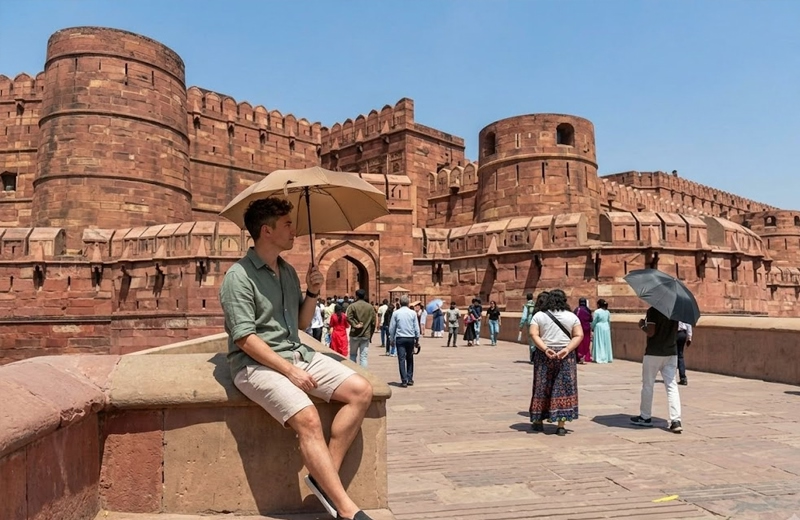
A 6-day Golden Triangle India itinerary is one of the best ways to explore Delhi, Agra and Jaipur without making the trip feel rushed. Six days gives you enough time to experience Old and New Delhi, see the Taj Mahal and Agra Fort, stop at Fatehpur Sikri, and spend a full sightseeing day exploring Jaipur’s forts, palaces and historic Pink City.
This itinerary is designed especially for first-time visitors to India who want a practical balance of sightseeing, road travel and rest. The recommended route is Delhi → Agra → Jaipur → Delhi, with two days in Delhi, one night in Agra and two nights in Jaipur. This keeps the journey simple while covering the most important Golden Triangle experiences.
You can complete the route by private car and driver, combine trains with local transport, or book it as a private Golden Triangle tour. For most travellers, a private air-conditioned car offers the easiest door-to-door experience because luggage, hotel transfers and the Fatehpur Sikri stop can all be handled within one journey.
Quick Answer
Is 6 Days Enough for the Golden Triangle in India?
Yes. Six days is an excellent length for a first Golden Triangle India trip. It gives you about two days in Delhi, one night in Agra for the Taj Mahal and Agra Fort, two nights in Jaipur and enough time to travel between the cities without turning every day into a race.
Best route
Delhi → Agra → Jaipur → Delhi
- 2 days for Delhi sightseeing
- 1 night in Agra
- Taj Mahal and Agra Fort
- Fatehpur Sikri between Agra and Jaipur
- 2 nights in Jaipur
- Full Jaipur sightseeing day
- Return to Delhi on Day 6
Best for
First-Time India Visitors
- Couples and honeymooners
- Families wanting a manageable itinerary
- Travellers with about one week in North India
- Senior travellers who prefer less rushing
- Visitors interested in history, architecture and local culture
Trip Overview
What Is the Best 6-Day Golden Triangle India Itinerary?
The most practical six-day route is Delhi → Agra → Jaipur → Delhi. You begin with two days in Delhi, travel south to Agra, continue west through Fatehpur Sikri to Jaipur and then complete the Golden Triangle by returning to Delhi. The route avoids unnecessary backtracking and places the main road journeys in a logical order.
| Day | Route | Main Experiences | Night |
|---|---|---|---|
| Day 1 | Delhi | Arrival, Old Delhi, Jama Masjid area, Chandni Chowk, India Gate | Delhi |
| Day 2 | Delhi | Humayun’s Tomb, Qutub Minar, optional Lotus Temple area, central New Delhi | Delhi |
| Day 3 | Delhi → Agra | Road journey, Agra Fort, Mehtab Bagh or relaxed evening | Agra |
| Day 4 | Agra → Jaipur | Taj Mahal, Fatehpur Sikri, road journey to Jaipur | Jaipur |
| Day 5 | Jaipur | Amber Palace, Jal Mahal, Hawa Mahal, City Palace, Jantar Mantar | Jaipur |
| Day 6 | Jaipur → Delhi | Optional morning activity, return drive, departure or Delhi overnight | Departure/Delhi |
This itinerary works best when you arrive in Delhi early enough to use at least part of Day 1. If your flight reaches Delhi late in the evening, keep the first day for arrival and move Old Delhi sightseeing into Day 2. The route can still work, but actual flight times should always take priority over a fixed sightseeing schedule.
Day 1
What Should You See in Delhi on Day 1?
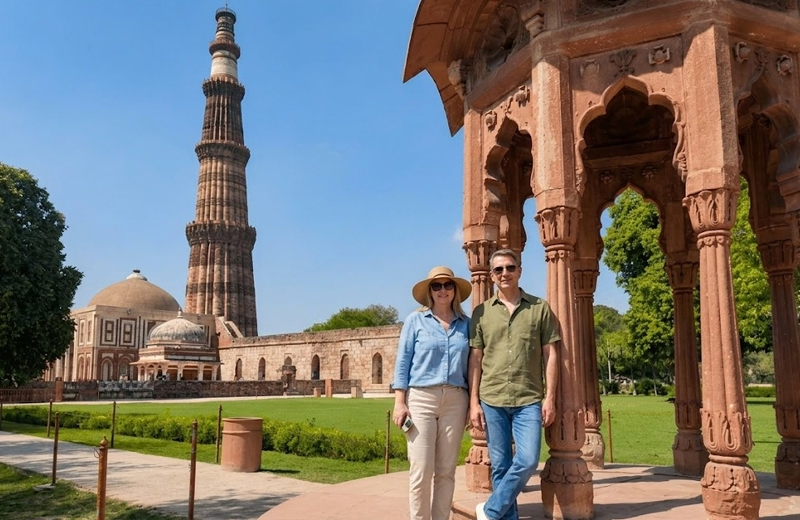
Use Day 1 as an introduction to Delhi rather than trying to see the entire city. Your exact sightseeing plan should depend on your arrival time, hotel location and energy after the flight.
Airport Pickup and Hotel Check-In
If this is your first visit to India, arranging an airport pickup makes arrival easier. Check into the hotel, leave your luggage, eat something and rest briefly before beginning sightseeing. If your room is not ready, most hotels can normally store luggage until check-in time.
Old Delhi: Jama Masjid and Chandni Chowk
If you arrive early enough, begin in Old Delhi around Jama Masjid and Chandni Chowk. This part of Delhi introduces you to narrow market lanes, cycle rickshaws, food stalls, old havelis, religious buildings and some of the capital’s busiest commercial streets.
A short rickshaw ride through Chandni Chowk can be more enjoyable than trying to walk every lane after a long flight. It gives you the atmosphere of Old Delhi while preserving enough energy for the rest of the day.
Raj Ghat or Red Fort Area
If time allows, add Raj Ghat or the Red Fort area. Because this itinerary already includes Agra Fort and Amber Palace, travellers with limited energy do not necessarily need to spend hours inside every fort on the route.
India Gate and New Delhi
Finish with central New Delhi and the India Gate area. The wide avenues and planned government district create a dramatic contrast with Old Delhi and help first-time visitors understand how many different versions of Delhi exist inside one city.
First-Day Rule
If you arrive after a long overnight flight, finish sightseeing earlier rather than later. Proper sleep on the first night will improve the entire six-day itinerary more than squeezing another attraction into Day 1.
Day 2
How Should You Plan a Full Day of Delhi Sightseeing?
Use the second day for Delhi’s major Mughal and historic attractions without repeating the intensity of Old Delhi. Having two days in the capital is one of the biggest advantages of choosing a six-day Golden Triangle itinerary.
Morning: Humayun’s Tomb
Start with Humayun’s Tomb. Its formal gardens, red sandstone, white marble and large central mausoleum provide an important introduction to Mughal architecture before you visit the Taj Mahal in Agra.
Give yourself enough time to walk through the gardens and surrounding structures. Visiting earlier in the morning can also make the experience more comfortable during warmer months.
Late Morning: Qutub Minar
Continue to the Qutub Minar complex. Although the minaret is the best-known structure, the surrounding arches, ruins, courtyards and early Indo-Islamic architectural details make the wider complex worth exploring.
Lunch and Rest
Take a proper lunch break. Delhi sightseeing involves more walking, security checks, parking and road travel than many visitors expect, so a slower meal can make the afternoon much more enjoyable.
Afternoon Options
Choose one or two additional stops based on your interests. Options can include the Lotus Temple area, Lodhi Garden, a museum, a market or another heritage site. The goal is not to complete every Delhi attraction in two days but to experience different parts of the city without exhausting yourself.
Central Delhi and Evening
Use the late afternoon or evening for Connaught Place, central Delhi or a relaxed market visit. This is also a good evening for dinner outside the hotel because Day 3 begins with a road transfer rather than an early sunrise monument visit.
Day 3
What Is the Best Way to Travel From Delhi to Agra?
Leave Delhi after breakfast and travel directly to Agra, then use the afternoon for Agra Fort. This keeps the day comfortable and preserves the Taj Mahal for the following morning.
Drive From Delhi to Agra
A private car and driver is convenient because you can leave directly from your Delhi hotel, keep your luggage with you and arrive at your Agra accommodation without changing transport. Keep roadside stops sensible so enough daylight remains for sightseeing.
Hotel Check-In and Lunch
Check into your hotel and have lunch before beginning the afternoon sightseeing. Even though Agra is more compact than Delhi, combining a road transfer with several hours at a monument can still be tiring.
Agra Fort
Visit Agra Fort in the afternoon. The complex includes palaces, courtyards, audience halls and defensive architecture connected with several Mughal rulers. Seeing the fort before the Taj Mahal also gives useful historical context to the following morning.
A knowledgeable guide can be especially useful here because the fort contains different architectural layers and royal spaces that are easier to understand with historical explanation.
Sunset Option: Mehtab Bagh
If you still have enough time and energy, visit Mehtab Bagh for a view toward the Taj Mahal across the Yamuna River. If you are tired, skip the extra stop and prepare for the early Taj Mahal visit instead.
Have dinner at a sensible time and prepare your clothes, camera and essential items before sleeping. A relaxed evening makes the sunrise visit much easier.
Day 4
How Do You Plan the Taj Mahal, Fatehpur Sikri and Agra to Jaipur?

Visit the Taj Mahal first, return to your hotel for breakfast, then continue toward Jaipur with Fatehpur Sikri as the main stop along the way. This is one of the longest but most rewarding days of the six-day route.
Early Morning: Taj Mahal
Visit the Taj Mahal early according to the opening arrangements for your travel date. Early morning is popular because temperatures are often more comfortable and the changing light can create a memorable atmosphere.
Do not rush immediately from the main entrance to the central mausoleum. Take time to notice the symmetry, marble inlay, calligraphy, gardens and architectural details that become more visible as you approach the monument.
Many first-time visitors are comfortable spending around two to three hours at the complex, although photographers and travellers interested in architecture may prefer more time.
Breakfast and Check-Out
Return to your hotel for breakfast and check out before beginning the road journey. This break is valuable after an early start and prevents the entire day from feeling like one continuous transfer.
Fatehpur Sikri
Continue toward Fatehpur Sikri, the historic Mughal city located west of Agra. Its red-sandstone palaces, courtyards and monumental gateways provide a different architectural experience from both Agra Fort and the Taj Mahal.
Because Fatehpur Sikri sits naturally on the broader Agra-to-Jaipur route, it is one of the most logical historical additions to a six-day Golden Triangle itinerary.
Road Journey to Jaipur
Continue toward Jaipur after sightseeing. Treat the remaining road journey as downtime rather than trying to add another major attraction on arrival.
Check into your Jaipur hotel, have dinner and rest. Travellers interested in heritage accommodation may find Jaipur a particularly good place to choose a restored haveli or palace-style property.
Day 5
What Is the Best Order for Jaipur Sightseeing?
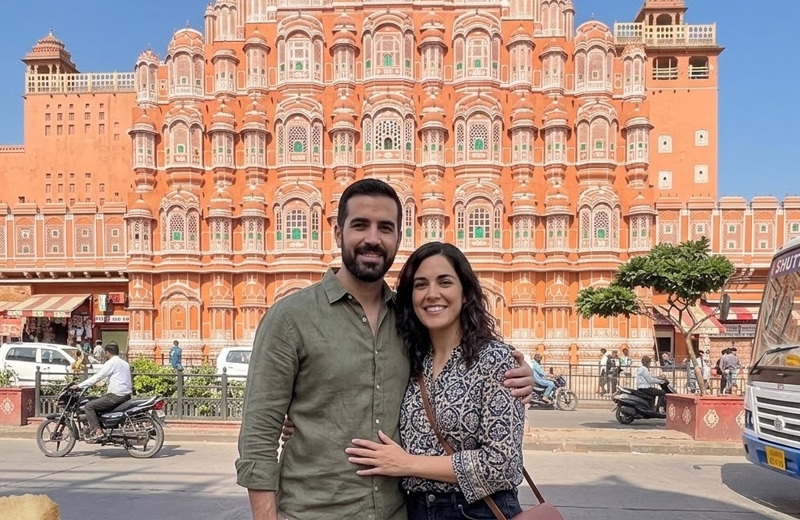
A practical Jaipur sightseeing order is Amber Palace → Jal Mahal → Hawa Mahal → City Palace → Jantar Mantar. Starting at Amber keeps the hill-fort visit in the cooler part of the day and groups Jaipur’s central attractions together afterward.
Morning: Amber Palace
Start early at Amber Palace. The hill setting, fortified walls, gateways, courtyards and decorated palace rooms make this one of the most important attractions on the Golden Triangle route.
Wear comfortable walking shoes because the complex includes stairs, uneven surfaces and exposed areas. In warmer months, the early start is particularly useful for avoiding the strongest midday heat.
Jal Mahal Photo Stop
Stop briefly at Jal Mahal while returning toward central Jaipur. For most travellers, this is primarily a viewpoint and photography stop rather than a long sightseeing visit.
Hawa Mahal
Continue to Hawa Mahal in Jaipur’s old city. The famous façade and rows of small windows are among the most recognisable architectural images of Rajasthan.
City Palace
Visit City Palace next. Its courtyards, museum collections, gateways and royal architecture provide a useful introduction to Jaipur’s ruling history.
Jantar Mantar
Jantar Mantar is located nearby and fits naturally into the same sightseeing block. Its large astronomical instruments become much more interesting when you understand how they were designed to measure time and celestial movements.
Lunch and Shopping
Take lunch before any major shopping session. Jaipur is known for textiles, block printing, jewellery, gemstones, carpets and handicrafts, but shopping should remain optional rather than taking over the sightseeing day.
Evening Options
Choose one relaxed evening activity such as a market walk, rooftop dinner, Nahargarh viewpoint, Albert Hall area or time at your hotel. After five active days, a slower evening can be more enjoyable than adding another long sightseeing stop.
Best Jaipur Sequence
Amber first, followed by Jal Mahal, Hawa Mahal, City Palace and Jantar Mantar. Keeping the attractions in a logical geographical order reduces unnecessary driving and makes the day easier.
Day 6
How Should You Plan Jaipur to Delhi on Day 6?
Plan the final day around your flight or onward journey rather than adding a full sightseeing program. Jaipur to Delhi is a significant road journey, and traffic can affect arrival times near the capital.
Option 1: Late-Night Flight From Delhi
If your international flight leaves late at night, depart Jaipur in the morning and keep a generous travel buffer. Reaching the airport early is much safer than depending on the fastest possible road time.
Option 2: Overnight in Delhi
If your flight departs early on Day 7, staying in Delhi or near the airport on the night of Day 6 is usually more comfortable. This can be particularly useful for families, senior travellers and anyone who wants to avoid a stressful same-day airport transfer.
Option 3: Continue From Jaipur
If your journey continues from Jaipur, you may not need to return to Delhi at all. Jaipur provides useful onward connections for travellers continuing toward Udaipur, Jodhpur or other Rajasthan destinations.
Optional Jaipur Morning Stop
If you have plenty of time before departure, choose one short morning activity such as a temple visit, market walk or relaxed breakfast. Avoid turning your final travel day into another full sightseeing schedule.
Getting Around
What Is the Best Transport for a 6-Day Golden Triangle Tour?
For most travellers, a private car with a professional driver is the easiest way to complete Delhi, Agra and Jaipur in six days. It provides door-to-door transport, easy luggage handling and enough flexibility to include Fatehpur Sikri between Agra and Jaipur.
Private Car & Driver
Best overall. Direct hotel pickups, luggage stays with you and sightseeing stops are easy to coordinate.
Train
Good for rail travellers. Delhi–Agra can work particularly well, although station transfers and local sightseeing transport are still required.
Bus
Best for budget travel. Lower flexibility for departure times, hotel pickups, luggage and sightseeing stops.
Flights
Usually unnecessary. Airport transfers, check-in and waiting time can remove much of the advantage between Golden Triangle cities.
Approximate Road Times
| Route | Typical Planning Range | Notes |
|---|---|---|
| Delhi to Agra | About 3–4 hours | Depends on Delhi traffic and exact pickup location |
| Agra to Jaipur | About 4–5 hours | Allow additional time when visiting Fatehpur Sikri |
| Jaipur to Delhi | About 5–6+ hours | Traffic approaching Delhi may increase travel time |
Use these figures only as planning ranges. Traffic, road conditions, weather, meal stops and hotel locations can all change actual journey times.
Where to Stay
Where Should You Stay in Delhi, Agra and Jaipur?
Delhi
Central New Delhi is convenient for many major attractions and gives easy access to Connaught Place and surrounding landmarks. Aerocity works well for travellers prioritising airport access, while parts of South Delhi can be useful when Humayun’s Tomb and Qutub Minar are major priorities.
Agra
Choose accommodation with convenient access to the Taj Mahal, particularly if you plan to visit early in the morning. For a one-night stay, cleanliness, quiet rooms and easy transport often matter more than extensive resort facilities.
Jaipur
Jaipur is a good place to choose a heritage-style hotel because you have two nights and may actually have time to enjoy the property. Check the location carefully, because a remote hotel can add unnecessary road travel to the full sightseeing day.
| City | Main Priority | Best For |
|---|---|---|
| Delhi | Balance between airport and sightseeing access | First two nights |
| Agra | Easy Taj Mahal access | Early-morning visit |
| Jaipur | Atmosphere plus practical location | Two-night stay |
When to Go
What Is the Best Time for a 6-Day Golden Triangle India Itinerary?
October to March is generally the most comfortable broad period for sightseeing in Delhi, Agra and Jaipur. Cooler conditions make forts, tombs, palaces and outdoor heritage complexes easier to explore, although every season has different advantages.
October and November
These months generally provide comfortable sightseeing conditions and are a popular period for first-time visitors who want pleasant temperatures without the coldest winter mornings.
December and January
Daytime sightseeing can be comfortable, but early mornings may feel cold in Delhi and Agra. Winter fog can sometimes affect visibility, so a sunrise Taj Mahal visit does not automatically guarantee a clear view.
February and March
February offers an excellent overall balance for many travellers. March becomes progressively warmer, but earlier parts of the month can still work very well for a Golden Triangle trip.
April to June
Heat becomes an important planning factor. Begin sightseeing earlier, use air-conditioned transport and consider resting during the strongest midday temperatures.
July to September
Monsoon conditions can bring humidity and rain, although landscapes become greener and some sightseeing areas may feel different from the main winter season. Keep each day flexible around weather conditions.
For a detailed seasonal breakdown, read our Best Time to Visit Golden Triangle India guide.
Trip Cost
How Much Does a 6-Day Golden Triangle India Trip Cost?
There is no single fixed cost for a six-day Golden Triangle trip. The final price depends on hotel category, vehicle type, travel season, private guides, monument tickets, meals and whether the tour is private or independently arranged.
Instead of relying only on one package price, divide the budget into hotels, transport, guides, monument entry fees, meals and personal expenses.
| Budget Area | Where to Save | Where Quality Matters |
|---|---|---|
| Hotels | Choose well-reviewed 3- or 4-star properties | Location, cleanliness and sleep quality |
| Transport | Choose the correct vehicle size | Professional driver, AC and transparent inclusions |
| Guides | Use guides mainly for important heritage visits | Taj Mahal, Agra Fort and Jaipur monuments |
| Food | Mix local restaurants with hotel meals | Hygiene and safe drinking water |
| Shopping | Set your own budget | Avoid pressured purchases |
For many travellers, a comfortable vehicle and well-located hotels improve the overall trip more than upgrading every property to a luxury category.
Choose Your Pace
Who Is a 6-Day Golden Triangle India Itinerary Best For?
First-Time Visitors
Excellent fit. Six days gives enough time to understand Delhi while keeping Agra and Jaipur comfortable.
Couples
Very good fit. Two Jaipur nights allow more time for a heritage-hotel experience and a relaxed evening.
Families
Better than a shorter itinerary. Two Delhi days provide more room for breaks and reduce daily pressure.
Senior Travellers
Good with sensible pacing. Use comfortable transport and avoid adding too many attractions in one day.
Photographers
Good but structured. Six days offers more time than a five-day route, although seven days provides greater flexibility.
Slow Travellers
Consider seven days. Six days is balanced but still follows a defined sightseeing schedule.
What to Pack
What Should You Pack for a 6-Day Golden Triangle India Trip?
- Comfortable walking shoes
- Light breathable daytime clothing
- Scarf or modest layer for religious sites
- Warm jacket or fleece for colder winter mornings
- Sunglasses and sunscreen
- Hat or cap during warmer months
- Small day bag
- Power bank and charging cable
- Reusable water bottle where safe refilling is available
- Compact umbrella or rain shell during monsoon
- Copies of important travel documents
- Regular personal medication
Even with a private car, you will walk extensively inside monuments, forts and palace complexes. Comfortable footwear and practical clothing are therefore more important than packing a large amount of luggage.
Avoid These
What Are the Biggest Mistakes on a 6-Day Golden Triangle Tour?
- Using the sixth day to add another major destination. The extra time works better when Delhi, Agra and Jaipur remain comfortable.
- Forgetting the Taj Mahal Friday closure. Confirm your Agra date before finalising the itinerary.
- Planning a tight international flight connection after Jaipur. Leave a substantial road buffer.
- Overloading Delhi Day 2. Two days in Delhi still does not mean seeing every major monument.
- Adding too many stops between Agra and Jaipur. Fatehpur Sikri is enough for most six-day itineraries.
- Allowing shopping to dominate Jaipur sightseeing. Decide your shopping priorities in advance.
- Ignoring seasonal weather. Summer heat, winter mornings and monsoon conditions require different schedules.
- Choosing distant hotels only to save money. Extra traffic can remove the benefit.
- Treating road times as guaranteed. Always leave extra time.
- Making every evening busy. Rest improves the quality of the following day.
Trip Length
5 Days vs 6 Days Golden Triangle India: Which Is Better?
For most first-time visitors, six days is better than five because it gives Delhi more time and creates a more balanced overall pace. A five-day itinerary still works for travellers with limited time, but sightseeing and road transfers are more compressed.
| Feature | 5 Days | 6 Days |
|---|---|---|
| Delhi Time | Usually 1–1.5 days | About 2 days |
| Agra | 1 night | 1 night |
| Jaipur | About 1 full day | 1 full day + 2 nights |
| Overall Pace | Active | More balanced |
| Best For | Short schedules | First-time visitors wanting more comfort |
If you can spare the additional day, the six-day itinerary is the stronger all-round option. Travellers with very limited holiday time can still see the core Golden Triangle highlights in five days.
Route Options
What Are the Best Alternative 6-Day Golden Triangle Routes?
Delhi → Agra → Jaipur → Delhi
Best for most travellers. This is the standard Golden Triangle loop and works particularly well when arriving and departing from Delhi.
Delhi → Jaipur → Agra → Delhi
The reverse direction can work when flight schedules, hotel availability or your Taj Mahal visit date make it more convenient.
Arrive Delhi, Depart Jaipur
If your onward journey begins in Jaipur, removing the return drive to Delhi can free Day 6 for more sightseeing or a slower departure day.
Can You Add Ranthambore?
Ranthambore is difficult to include comfortably within the same six days. A proper wildlife extension normally needs additional nights so safari drives and road transfers do not make the Golden Triangle portion unnecessarily rushed.
Can You Add Varanasi?
Varanasi works better as a separate extension rather than being compressed into the same six-day Delhi, Agra and Jaipur itinerary.
Food & Daily Rhythm
How Should You Plan Meals on a 6-Day Golden Triangle Trip?
Use meals to support the sightseeing schedule rather than interrupt it. Hotel breakfast works well before road-transfer days, lunch is easiest near the day’s sightseeing area and dinner can be the meal where you slow down.
Delhi offers everything from Old Delhi food traditions to modern restaurants. Agra is known for North Indian and Mughlai influences, while Jaipur offers Rajasthani dishes alongside a wide choice of familiar Indian cuisine.
First-time visitors should be sensible about hygiene and drinking water. Choose reputable restaurants, use safe drinking water and avoid making the first day of the trip a competition to try every street-food option.
Before You Book
What Should You Confirm Before Booking a 6-Day Golden Triangle Tour?
- Check that your planned Taj Mahal visit does not fall on Friday.
- Confirm whether car pricing includes fuel, tolls, parking, taxes and driver allowance.
- Check hotel breakfast arrangements for early Taj Mahal visits.
- Confirm whether local guides are included or charged separately.
- Check current monument timings before travelling.
- Keep a substantial buffer before international flights.
- Tell your operator about mobility requirements or child-seat needs.
- Confirm whether Day 1 and Day 6 contain full sightseeing time or are mainly arrival and departure days.
This final point is particularly important. A package described as “six days” may contain fewer full sightseeing days once flight arrival, hotel check-in and departure times are considered. Compare actual usable hours rather than only the number of days shown in the itinerary title.
Plan Your 6-Day Trip
Want a 6-Day Golden Triangle Tour Planned Around Your Flights?
Share your travel dates, arrival and departure times, number of travellers and preferred hotel category. Your Delhi, Agra and Jaipur itinerary can then be organised around your actual travel schedule instead of forcing every traveller into the same fixed route.
- Private air-conditioned car with professional driver
- Flexible Delhi, Agra and Jaipur sightseeing
- Budget, comfortable, heritage and luxury hotel options
- Local guides available in each city
- Airport pickup and departure planning
Common Questions
Frequently Asked Questions About a 6-Day Golden Triangle India Itinerary
Direct answers to common questions about planning six days in Delhi, Agra and Jaipur.
Are 6 days enough for the Golden Triangle in India?
Yes. Six days is an excellent length for many first-time visitors because it gives Delhi about two days, allows one night in Agra and gives Jaipur a full sightseeing day plus two nights.
What is the best 6-day Golden Triangle route?
The most practical route for most travellers is Delhi → Agra → Jaipur → Delhi. It avoids unnecessary backtracking and allows Fatehpur Sikri to fit naturally between Agra and Jaipur.
How many nights should I stay in Delhi, Agra and Jaipur?
A practical plan is two nights in Delhi, one night in Agra and two nights in Jaipur, with Day 6 used for the return to Delhi or onward departure.
Is the Taj Mahal closed on Friday?
Yes. The Taj Mahal is closed to general sightseeing visitors on Fridays, so plan the Agra portion of your Golden Triangle itinerary around that closure.
Is sunrise the best time to visit the Taj Mahal?
Early morning is popular because temperatures are often cooler and the light can be attractive. Winter fog can sometimes reduce visibility, so sunrise does not guarantee a perfectly clear view.
Is six days better than five days for the Golden Triangle?
For most first-time visitors, yes. The sixth day gives Delhi more breathing room and creates a more balanced pace across Delhi, Agra and Jaipur.
Can I travel the Golden Triangle by train?
Yes. Train travel can work well, particularly between Delhi and Agra, but you will still need station transfers, local sightseeing transport and separate arrangements for stops such as Fatehpur Sikri.
Can families do the Golden Triangle in 6 days?
Yes. Six days is a good option for families because it gives more room for breaks and reduces the pressure of fitting Delhi into one sightseeing day.
What is the best time of year for a 6-day Golden Triangle trip?
October to March is generally the most comfortable broad period for sightseeing. February and November are particularly attractive choices for many travellers.
Can I add Ranthambore to a 6-day Golden Triangle itinerary?
It is possible to create a very fast route, but it is not ideal. Adding additional nights gives Ranthambore safari planning and the Golden Triangle cities enough time to work properly.
Which Golden Triangle city deserves the most time?
Delhi benefits most from additional time because its major attractions are spread across a much larger area and represent several different periods of Indian history.
Should I hire guides in Delhi, Agra and Jaipur?
It is optional, but knowledgeable local guides can add valuable historical context at major heritage sites, particularly the Taj Mahal, Agra Fort and Jaipur’s palace complexes.
Final Planning Advice
Is 6 Days the Best Length for a First Golden Triangle India Trip?
For many first-time visitors, six days is one of the best-balanced ways to experience Delhi, Agra and Jaipur. It gives Delhi enough time to feel like a destination rather than only an arrival point, keeps the Taj Mahal central to the Agra stay, allows Fatehpur Sikri to fit naturally into the road journey and gives Jaipur a proper full sightseeing day.
The simplest plan is two days in Delhi, one night in Agra, two nights in Jaipur and a return toward Delhi on Day 6. Keep the sightseeing order practical, allow extra time for road transfers and avoid filling every evening with another attraction. A good Golden Triangle itinerary should feel like a journey through three different cities, not a race between monuments.