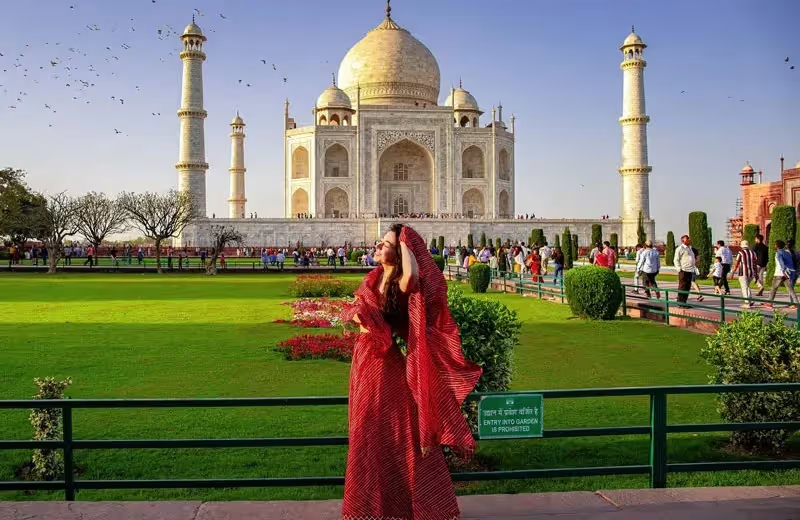
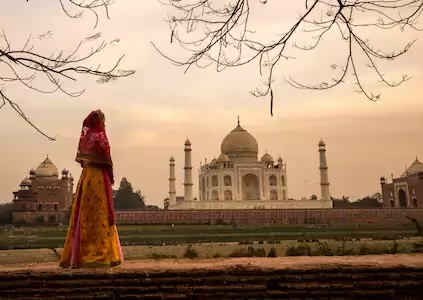
Most people visit the Taj Mahal once in their life. But the ones who do this 2-day tour see it twice in the same trip and they will tell you the second time is just as breathtaking as the first. On Day 1 evening you watch the white marble turn amber and gold at sunset from Mehtab Bagh garden across the Yamuna River. On Day 2 morning you stand inside the Taj Mahal gates as they open at sunrise and watch the monument shift from pale silver to warm gold in the first light of the day. Two completely different experiences. One monument that genuinely deserves both.
This 2-day Delhi to Agra private tour departs from Delhi in the morning by private air-conditioned vehicle, drives you comfortably to Agra via the Yamuna Expressway and gives you a full afternoon and evening to explore Agra Fort, Akbar’s Tomb at Sikandra and the Tomb of Itimad-ud-Daulah before the sunset at Mehtab Bagh. You sleep in Agra, wake up fresh and head straight to the Taj Mahal at sunrise for a guided tour of one of the greatest monuments ever built. Day 2 then continues with Fatehpur Sikri on the drive back and optional visits to Mathura and Vrindavan before your evening return to Delhi. This is the most complete and most rewarding way to experience Agra in two days.
| Destination | Delhi → Agra |
| Duration | 2 Days |
| Tour Type | Taj Mahal Tours |
Tour Plan
01Day 1: Delhi to Agra
Morning: Departure from Delhi
Your driver will pick you up from your hotel, airport or railway station in Delhi between 6:00 AM and 10:00 AM depending on your preference and the activities you want to fit into the day. The drive from Delhi to Agra covers approximately 200 kilometers via the Yamuna Expressway and takes around 3 to 4 hours under normal conditions.
The Yamuna Expressway is a 6-lane access-controlled highway and one of the smoothest long-distance roads in North India. The early morning drive is pleasant and most travelers use this time to relax, have some light snacks and get ready for the day ahead.
Midday: Arrival in Agra and Hotel Check-In
You will arrive in Agra around noon. Your driver will take you to your hotel for check-in. Take a short break, freshen up and have lunch before beginning the afternoon sightseeing.
Afternoon: Akbar’s Tomb at Sikandra
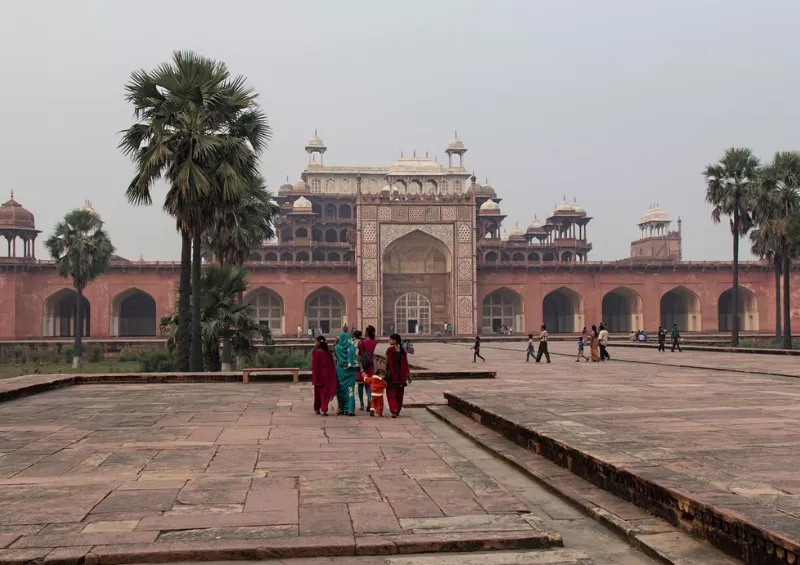
The first stop of the afternoon is Akbar’s Tomb at Sikandra, located on the outskirts of Agra on the Delhi road. Emperor Akbar himself began designing and constructing this mausoleum before his death and it was completed by his son Jahangir in 1613.
The tomb is set within beautiful Mughal gardens and the entrance gateway is flanked by four white marble minarets. The main structure is a five-story blend of red sandstone and white marble, combining Hindu and Islamic architectural styles in a way that reflects Akbar’s famous policy of religious tolerance. The gardens are home to a large population of deer, which roam freely around the monument and add a unique character to the visit.
Late Afternoon: Tomb of Itimad-ud-Daulah (Baby Taj)
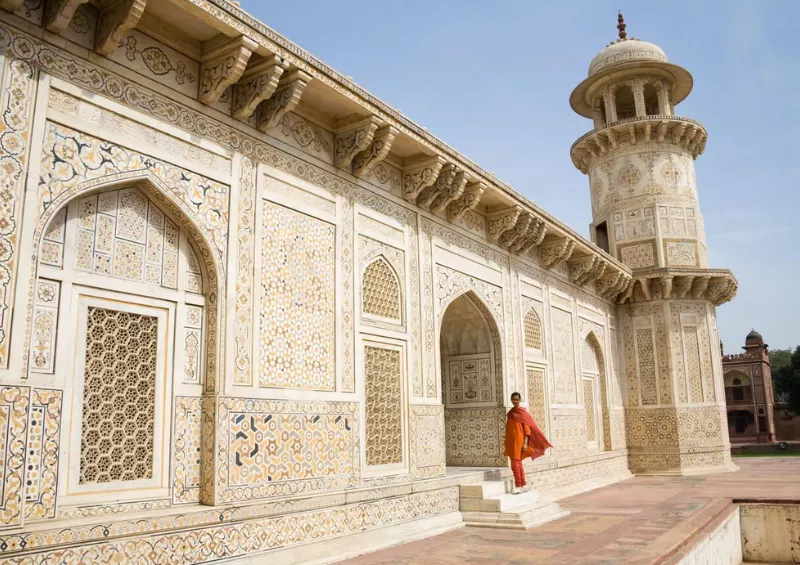
Next, visit the Tomb of Itimad-ud-Daulah, one of Agra’s most beautiful and underrated monuments. Built by Empress Nur Jahan for her father between 1622 and 1628, this is the first Mughal structure to be built entirely in white marble and the first to extensively use pietra dura, the technique of inlaying semi-precious stones into the marble surface to create intricate floral patterns.
The result is extraordinary. The walls shimmer with inlaid cornelian, jasper, onyx and topaz. The detail work is so fine that many historians consider this tomb the direct architectural inspiration for the Taj Mahal, which was built two decades later using the same techniques at a far grander scale.
The Baby Taj sits directly on the eastern bank of the Yamuna River and its setting is beautiful and quiet. It is far less crowded than the Taj Mahal and you can take your time appreciating the craftsmanship up close.
Evening: Agra Fort
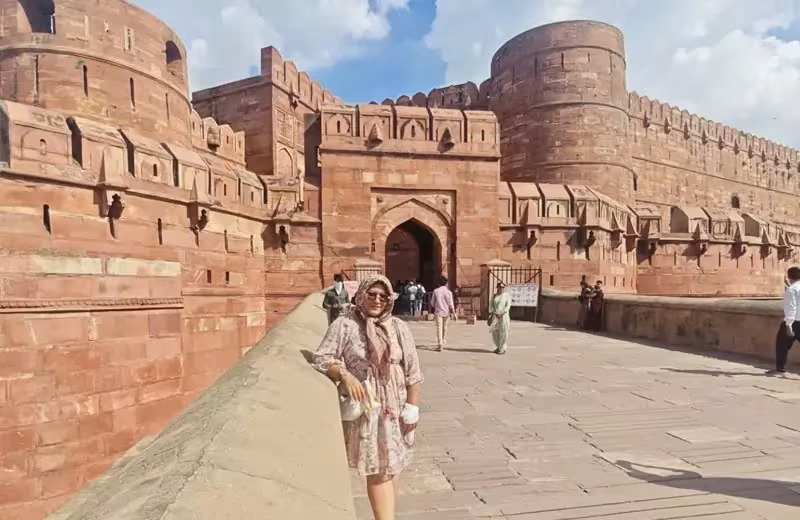
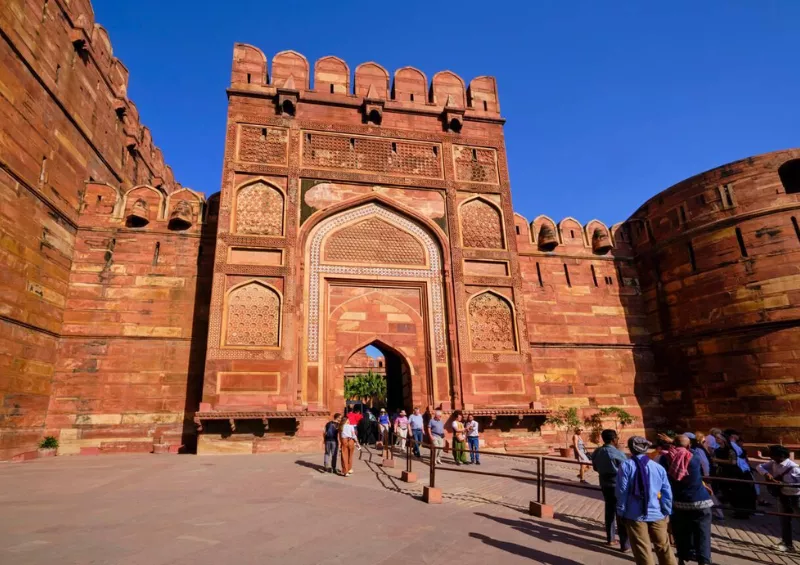
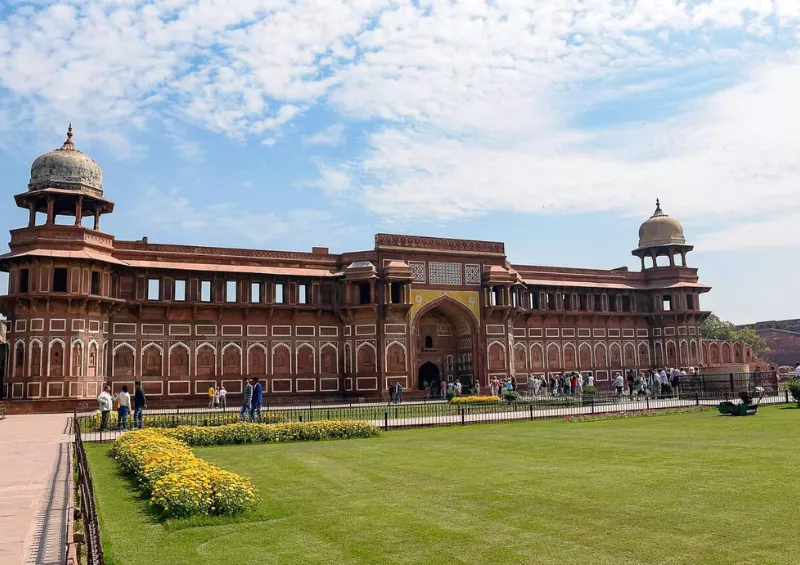
From the Baby Taj, drive to Agra Fort, another UNESCO World Heritage Site located about 2.5 kilometers from the Taj Mahal along the Yamuna. This massive red sandstone fortification was begun by Emperor Akbar in 1565 and expanded by Jahangir and Shah Jahan over the following decades.
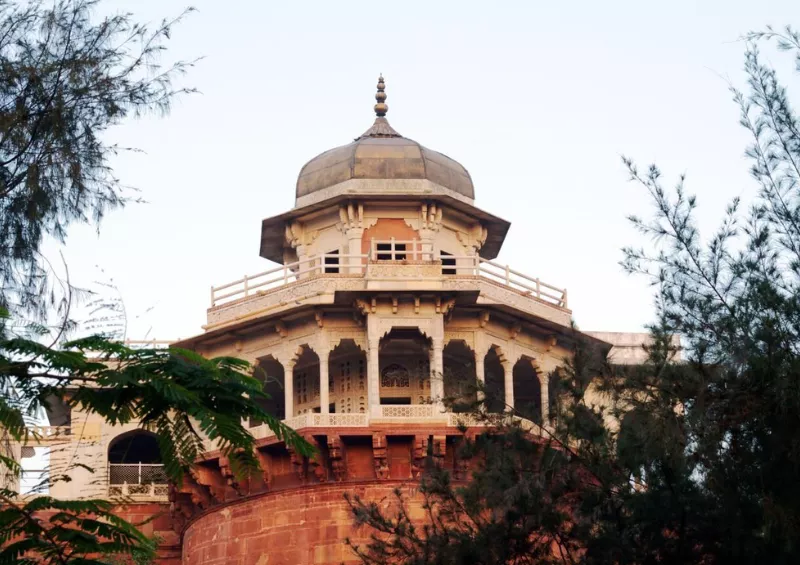
Inside the fort complex, you will explore Jahangir’s Palace, the Khaas Mahal, the Diwan-i-Aam and the Diwan-i-Khas. The most emotional part of the visit is the Musamman Burj tower where Shah Jahan spent the final years of his life under house arrest, looking at the Taj Mahal through a small mirror positioned at his window.
Sunset: Mehtab Bagh and Taj Mahal Sunset View
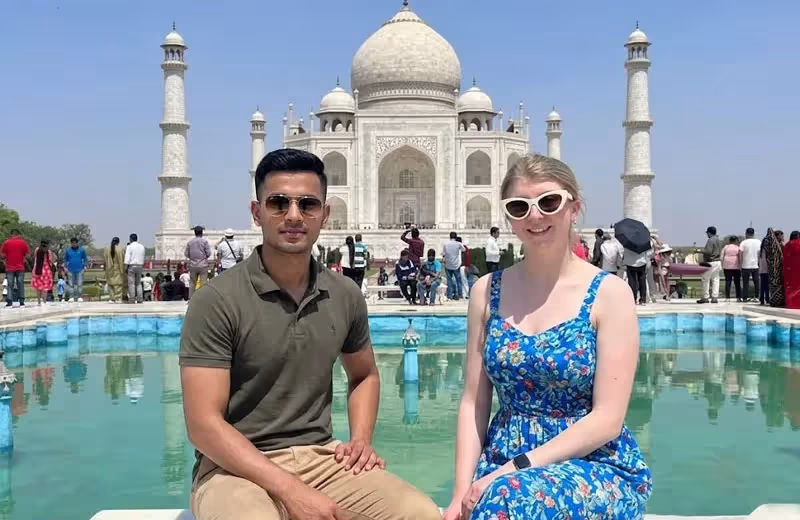
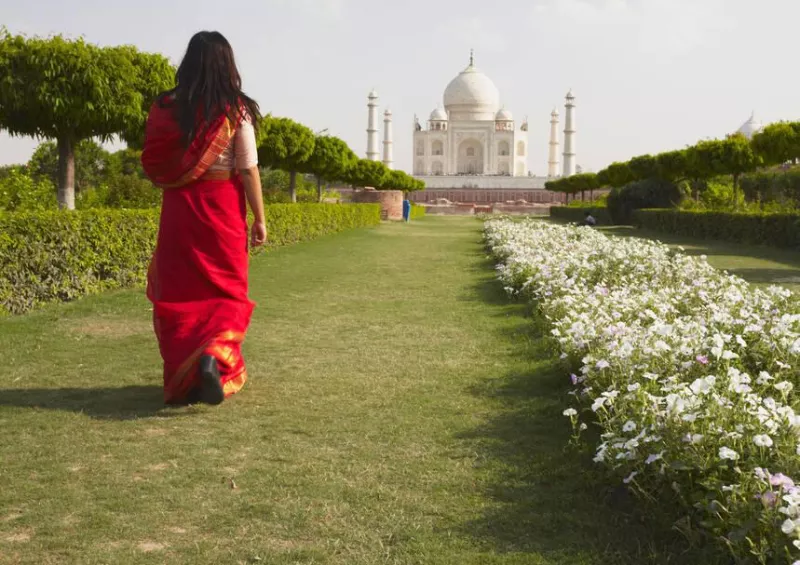
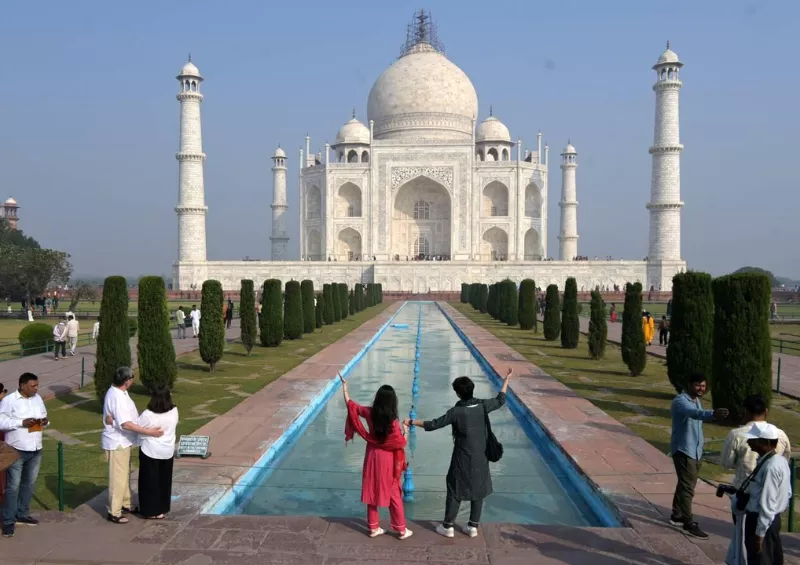
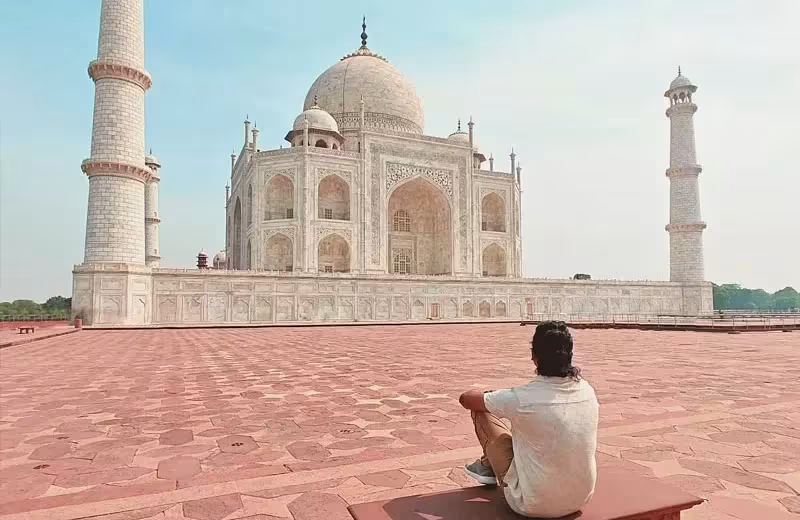
As the sun begins to set, head to Mehtab Bagh, the Moonlit Garden on the opposite bank of the Yamuna River. From inside this historic Mughal garden, you have a completely unobstructed view of the Taj Mahal across the water. At sunset, the white marble turns a deep warm amber and the entire monument glows against the evening sky.
This is one of the finest photography spots in all of India and the view from Mehtab Bagh is often more stunning than the view from inside the Taj Mahal complex itself because you can see the entire structure including all four minarets and the surrounding gardens in a single frame.
Evening: Marble Workshop and Dinner
After sunset, you have the option of visiting a local marble inlay workshop where artisans demonstrate the same pietra dura technique used in the Taj Mahal. Watching a craftsman work a piece of stone with hand tools to create the patterns you just saw on the walls of the Baby Taj puts the artistry of the monuments in a completely new perspective.
Return to the hotel for dinner and a well-deserved overnight rest.
Overnight stay in Agra.
02Day 2: Taj Mahal at Sunrise and Return to Delhi
Early Morning: Taj Mahal Sunrise
Wake up early. This is the moment the entire trip has been building toward.
You will reach the Taj Mahal gates before they open at sunrise. As the first light touches the white marble, the monument begins to change color. From pale silver it shifts to soft pink, then to a warm golden glow as the sun rises fully. The air is cool and clean. The gardens are quiet. The reflection pools catch the image of the Taj and hold it perfectly still.
Your experienced English-speaking guide will walk you through the entire complex, sharing the history, the architecture and the stories behind every detail. You will enter the main mausoleum and see the cenotaphs of Shah Jahan and Mumtaz Mahal surrounded by extraordinarily delicate marble screens inlaid with precious stones. The interior is dim and cool and the craftsmanship is breathtaking up close.
Note: The Taj Mahal is closed every Friday. Please keep this in mind when selecting your travel dates.
Morning: Breakfast and Hotel Checkout
After the sunrise visit, return to the hotel for a proper breakfast. Check out of the hotel and prepare for the drive back toward Delhi.
Mid Morning: Fatehpur Sikri
On the road between Agra and Delhi, stop at Fatehpur Sikri, Emperor Akbar’s abandoned capital city built in red sandstone in the 16th century.
Akbar constructed this entire city in the 1570s after a Sufi saint named Sheikh Salim Chisti correctly predicted the birth of his son. The city was built as a tribute and became the Mughal capital for about 14 years before it was mysteriously abandoned. Most historians believe the city was deserted due to a shortage of water, though the exact reasons are still debated.
What makes Fatehpur Sikri so fascinating is how well preserved it is. Walking through it genuinely feels like the people just left yesterday. You will visit Buland Darwaza, one of the tallest gateways in the world built to commemorate Akbar’s victory over Gujarat. You will explore Diwan-i-Aam and Diwan-i-Khas, the public and private audience halls. You will see Jodha Bai Palace, also known as Mariam-uz-Zamani Palace, a beautiful blend of Rajput and Islamic architecture. And you will visit the Tomb of Sheikh Salim Chisti, a white marble structure covered in intricate carved marble screens called jaalis, which is still a major pilgrimage site for people seeking blessings for children.
Optional: Mathura and Vrindavan
If you have chosen to include the Mathura and Vrindavan extension, the afternoon continues with a visit to Mathura, the birthplace of Lord Krishna and one of the seven sacred cities of Hinduism. The Shri Krishna Janmabhoomi Temple here marks the exact spot where Lord Krishna is believed to have been born more than 5,000 years ago.
From Mathura, drive a short distance to Vrindavan, the city where Lord Krishna spent his childhood. Vrindavan is home to more than 5,000 temples and is one of the most important pilgrimage destinations in all of India. The centerpiece of an evening visit here is Prem Mandir, a spectacular white marble temple built by Jagadguru Shri Kripalu Ji Maharaj. After dark, the entire temple is illuminated in changing colored lights and the effect is genuinely breathtaking. The evening light show runs from around 7:30 PM and draws large crowds of devotees and tourists alike.
After Vrindavan, your driver will take you back to Delhi, arriving between 10:30 PM and 11:30 PM.
If you are not including the Mathura and Vrindavan extension, the drive back to Delhi begins after lunch in Agra and you arrive in Delhi by early evening at a more relaxed pace.
Evening: Arrival in Delhi
Your driver will drop you off at your hotel, airport or railway station in Delhi based on your preference. The 2-day Agra tour comes to a close with memories of one of the most historically and architecturally rich destinations in the entire world.