
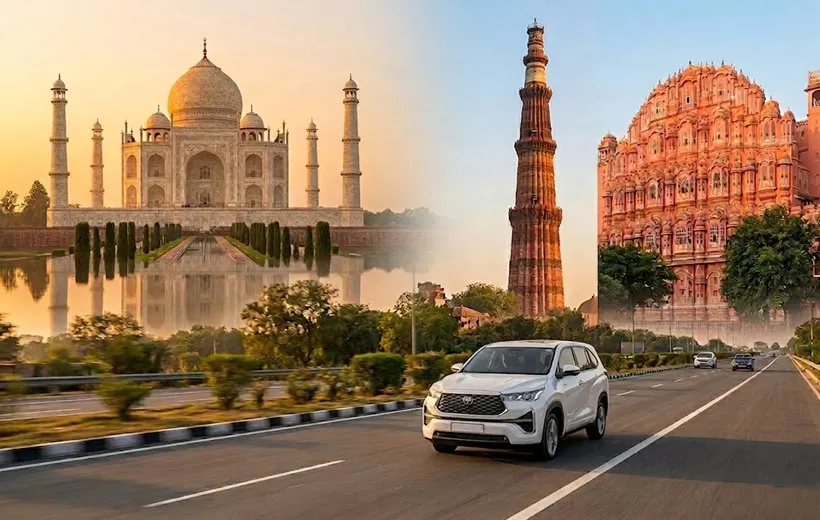
If you have ever dreamed of seeing the Taj Mahal at sunrise, wandering through Jaipur’s pink-hued bazaars, and soaking up the chaos and charm of Delhi in one trip, the Golden Triangle is probably already on your radar. What most travellers still struggle with, though, is the money side of it: how much does a Golden Triangle tour in India actually cost, and what is the real difference between doing it on a tight backpacker budget and going all-in on a luxury experience? The honest answer is that this route can feel surprisingly affordable or beautifully indulgent depending on how you travel, where you sleep, how you get around, and which little extras you say yes to along the way. In this guide, you will see exactly how the costs break down for budget, mid-range, and luxury Golden Triangle tour, so you can choose the style that fits your wallet without missing the magic of Delhi, Agra, and Jaipur.
Operators and travel planners often describe budget daily costs in India starting from around ₹1,500–₹4,000 per person per day for basic accommodation and local transport, while mid-range travellers spend closer to ₹4,500–₹7,000 and luxury visitors may budget upwards of ₹7,500–₹13,500 per day. Within the Golden Triangle, prices tend to sit at the higher end of national averages because Delhi and Jaipur rank among India’s more expensive cities for hotels and activities. Many private Golden Triangle tours by car list package prices in the range of roughly ₹11,000–₹27,000 and above for the vehicle and driver alone for multi-day itineraries, depending on car type and trip length.
This guide explains how Golden Triangle tour costs break down in practical terms, compares budget, mid-range, and luxury travel styles, and offers example price brackets so travellers can estimate realistic budgets for their chosen comfort level.
What Drives the Cost of a Golden Triangle Tour?
Several major factors shape how much a Golden Triangle trip costs, regardless of whether someone chooses a budget or luxury style.
Trip Duration and Itinerary
The number of days on the road directly influences hotel nights, transport distance, and entrance fees. A typical five to 7 Days Golden Triangle tour allows time for major sights in each city, while extended trips that add Ranthambore, Pushkar, or other destinations require additional days and higher transport costs. Shorter three- or four-day itineraries compress sightseeing but reduce the total number of nights and kilometres.
Season and Demand
Delhi, Agra, and Jaipur experience peak travel seasons from roughly October to March when the weather is cooler and more comfortable for outdoor sightseeing. During this period, hotel rates often rise and popular tours may sell out more quickly, especially around major holidays and festivals. In contrast, the hotter months and monsoon season can offer lower rates but may feel less comfortable for long days outdoors.
Style of Accommodation
Accommodation represents one of the largest cost differences between budget and luxury Golden Triangle trips. Budget travellers often stay in hostels or simple guesthouses, while mid-range visitors choose 3-star or boutique hotels and luxury travellers book heritage palaces or 5-star brands. As a result, hotel budgets can range from a few hundred rupees per night for basic dorms to several hundred dollars per night for high-end suites.
Transport Choices
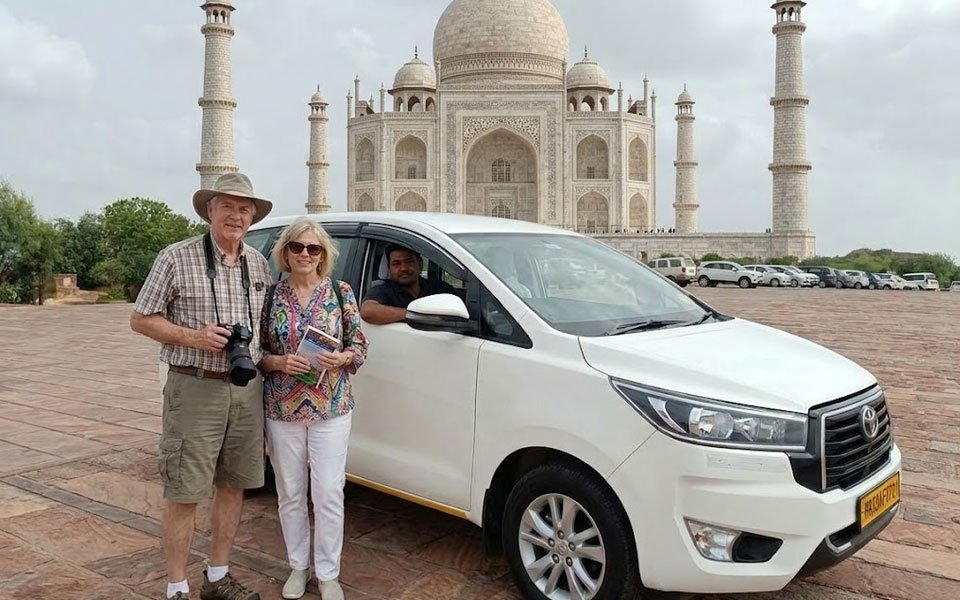
Transport between Delhi, Agra, and Jaipur can include private cars with drivers, trains, buses, or a mix of these. Many private driver packages charge on a per-kilometre basis, with sedan rates cited around ₹10–15 per kilometre and SUVs around ₹15–21 or higher, often with a daily minimum distance requirement. Travellers who choose trains or public buses may reduce transport costs but trade some comfort and flexibility.
Guided Tours and Experiences
Guided tours, cooking classes, cultural shows, and other experiences add to overall cost but also deepen the experience. In Delhi and Agra, monument entry fees and guided tours contribute a noticeable portion of daily expenses. In a luxury trip, private guides and curated experiences at each stop significantly increase the budget.
Group Size
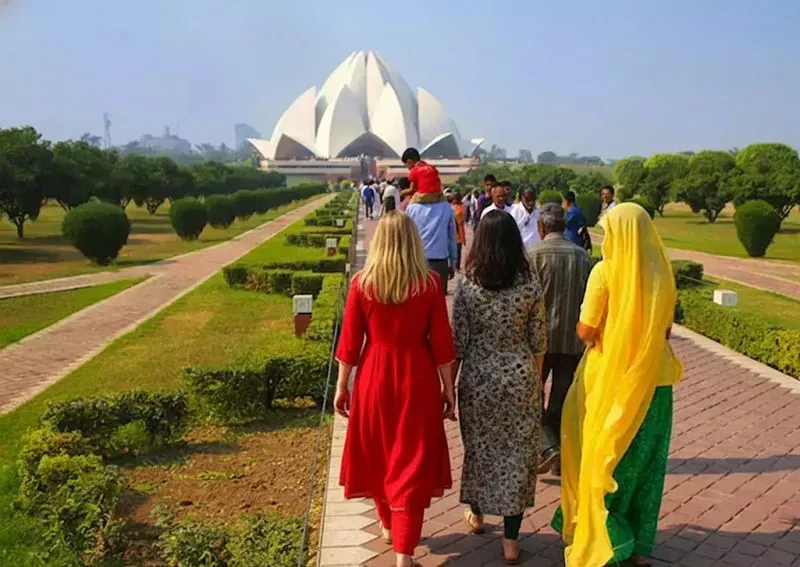
Per-person cost often decreases as group size increases, particularly when hiring a private car and driver because the vehicle cost spreads across more travellers. Solo travellers pay a premium for private transport and single hotel rooms, while couples or small groups usually find a more favourable per-person rate.
Budget vs Mid-Range vs Luxury: Daily Cost Benchmarks
Travel cost studies and tour planners in India often classify travellers into three broad categories: budget, mid-range, and luxury, each with its own typical daily range. These ranges include accommodation, local transport, and food, and they offer a useful starting point for Golden Triangle budgeting.
Indicative Daily Cost Ranges in India
The following table summarises indicative daily ranges per person for travel in India:
| Travel Style | Daily Cost Range (Approx.) | Typical Inclusions |
| Budget | ₹1,500–₹4,000 per day | Basic rooms or hostels, local transport, simple meals |
| Mid-range | ₹4,500–₹7,000 per day | 3-star or boutique hotels, mix of local and private cars transport, and restaurant meals |
| Luxury | ₹10,500–₹15,500+ per day | 4–5 star or heritage hotels, private cars, fine dining, curated activities |
Because Delhi and Jaipur count among India’s pricier cities, Golden Triangle travellers may find their daily costs near the upper portion of these bands, especially for mid-range and luxury stays.
How Much Does a Golden Triangle Tour Cost at Different Levels?
While exact prices vary by operator, season, and inclusions, available tour listings and cost breakdowns help outline typical ranges for Golden Triangle trips.
Budget Golden Triangle Cost Overview
Budget travellers who use a mix of local transport, occasional shared taxis, and simple accommodation can often keep daily spending near the lower ranges cited above. A realistic daily range for most budget travellers across India sits around ₹1,500–₹3,500, with some sources extending up to ₹4,000 depending on city and activities.
In the Golden Triangle, budget travellers might expect:
- Basic guesthouse or hostel stays rather than branded hotels
- Mostly local transport (buses, trains, auto-rickshaws) instead of private cars
- Street food and local eateries instead of fine dining
- Selective paid activities and monument entries rather than every optional add-on
Mid-Range Golden Triangle Cost Overview
Mid-range travellers often wish to balance comfort with sensible spending, choosing comfortable hotels with private bathrooms, occasional private driver services, and a mix of local and restaurant meals. Cost guides place mid-range daily expenses in India in the approximate bracket of ₹4,500–₹7,000 per person, which typically covers more comfortable stays and some private transport.
Within the Golden Triangle, a mid-range visitor might:
- Stay in 3-star or characterful boutique hotels
- Hire a private car and driver for intercity transport while using taxis or autos within cities
- Eat at a mix of local restaurants and hotel dining rooms
- Pay for guided tours at major monuments and a few special experiences such as cooking classes or cultural shows
Luxury Golden Triangle Cost Overview
Luxury travellers prioritise comfort, ambience, and curated experiences over strict budgeting. Sources describe high-end travellers in India spending between roughly ₹7,500–₹13,500 or more per person per day, with upper limits rising significantly when staying in palace hotels or international luxury chains.
A luxury Golden Triangle itinerary often includes:
- Stays at heritage palaces or 5-star hotels in all three cities
- A private car and driver throughout the trip, sometimes with larger SUVs or premium vehicles
- Fine dining, rooftop restaurants, and curated food experiences
- Private guides at major monuments and bespoke activities such as sunrise photography sessions, exclusive tours, or spa treatments
Real-World Examples: Private Car and Package Costs
Published fare structures for Golden Triangle car tours illustrate how vehicle and driver costs scale with trip length and car type.
Car and Driver Pricing
Some tour providers quote per-kilometre rates with minimum daily distances, while others present flat package fares. Recent examples show sedan cars priced around ₹10–11 per kilometre with a 250 km per day minimum, and SUVs in the ₹15–17 per kilometre range with similar minimums. Another breakdown of Golden Triangle car and driver costs notes typical sedan ranges of roughly ₹12–15 per kilometre and SUV ranges of around ₹17–21 per kilometre, with higher rates for premium vehicles such as the Innova Crysta.
For structured Golden Triangle by car packages, some operators list five-day tours at approximately ₹13,750 for a sedan and ₹20,000–₹22,500 for larger vehicles, while six-day versions may reach around ₹16,500 for sedans and ₹24,000–₹27,000 for SUVs. These figures usually cover only the vehicle, driver, and basic road costs, with hotels and entrance fees separate unless explicitly bundled.
Package Tour Price Ranges
On multi-day tour platforms, private Golden Triangle packages frequently advertise prices per adult beginning around ₹11,000–₹17,000 and higher for three- or four-day private car itineraries, with more extended luxury-focused trips reaching beyond ₹20,000 per person, and sometimes significantly more depending on hotel class and inclusions. One example five-day private Delhi–Agra–Jaipur tour by car on a major tour marketplace lists a starting price equivalent to roughly ₹60,000–₹70,000 for a private group, varying by group size and travel dates.
These examples illustrate the spread between basic transport-only packages and high-end tours that bundle premium hotels, guides, and entrance tickets.
Cost Breakdown by Category
Understanding how expenses split across accommodation, transport, food, and activities helps travellers decide where to save and where to upgrade.
Accommodation Costs in the Golden Triangle
India-wide cost studies suggest that mid-range travellers may pay around ₹4,000–₹5,000 per night for a private room with bathroom at a decent hotel, with some heritage or boutique options at the higher end of that range. Budget travellers who choose hostels or very basic guesthouses can reduce nightly costs substantially, especially when sharing rooms.
In the Golden Triangle cities:
- Budget: shared hostel dorms or simple guesthouses, often under typical mid-range averages
- Mid-range: comfortable 3-star or boutique hotels in central areas, near ₹4,000–₹5,000 per room per night
- Luxury: heritage palaces or 5-star properties, with prices rising far above mid-range, especially in high season
Transport Costs
Transport in and between Delhi, Agra, and Jaipur can vary widely. Budget travellers rely heavily on buses, trains, and shared autos, while mid-range and luxury travellers often hire private drivers for convenience and time savings.
Some cost guides propose average daily transport budgets around ₹1,200 for travellers using mostly public transport, while private driver arrangements naturally add to that figure. A detailed Golden Triangle car and driver analysis, for example, estimates fuel costs alone for a basic Delhi–Agra–Jaipur loop at roughly ₹7,300–₹9,200 for about 1,000 kilometres of driving, excluding tolls, parking, and driver allowances.
Food and Dining
Food costs in India remain relatively low compared to many other destinations, but style of dining changes the budget. Budget travel resources suggest that backpackers can often manage with around ₹400–₹800 per day for food by focusing on street food and local eateries, while mid-range travellers spend more at sit-down restaurants.
Broader India cost summaries estimate budget travellers spending between ₹5–10 per day in US dollar terms on food, mid-range travellers around ₹15–25, and luxury visitors upwards of ₹40 when eating at upscale restaurants and hotel dining rooms. In Delhi and Jaipur, international and high-end restaurants can raise this figure further.
Entrance Fees and Activities
In Delhi, major monuments such as the Red Fort and Qutub Minar charge foreign visitors approximate entry fees in the range of about US$7–10, while other attractions such as the Lotus Temple and India Gate remain free. In Agra, the Taj Mahal entry fee for foreigners sits around US$15–20, with additional tickets required for sites such as Agra Fort and optional gardens.
Because Golden Triangle itineraries often include multiple monuments each day, entry fees can add a meaningful daily cost for international travellers. Activities such as boat rides, cultural performances, or day trips might add another US$5–20 per activity depending on location.
Sample Budget, Mid-Range, and Luxury Golden Triangle Scenarios
To illustrate how the above components come together, consider several simplified scenarios. These are not fixed package prices but conceptual combinations based on published daily ranges and car costs.
Budget Traveller Scenario (5 Days)
A budget traveller on a five-day Golden Triangle itinerary might:
- Travel partly by train or bus between cities
- Use local buses and auto-rickshaws within cities
- Stay in simple hostels or guesthouses
- Focus on street food and small local eateries
Using the lower end of national budget ranges around ₹1,500–₹3,500 per person per day including food, basic accommodation, and local transport, a five-day budget trip could roughly fall in a band around ₹7,500–₹17,500 per person, excluding international flights and visas.
Mid-Range Traveller Scenario (6 Days)
A mid-range traveller on a six-day Golden Triangle trip might:
- Hire a private sedan car and driver for the full route
- Stay in 3-star or boutique hotels with breakfast included
- Eat at a mix of local restaurants and hotel dining rooms
- Include entry fees for all major monuments plus one or two special experiences
Drawing on mid-range daily ranges of approximately ₹4,500–₹7,000 per person per day across India, a six-day Golden Triangle trip might land in the vicinity of ₹27,000–₹42,000 per person, again excluding international flights and visas. The car and driver portion of this might align with published Golden Triangle sedans or SUVs, which show multi-day packages in the ₹13,750–₹24,000+ range depending on trip length and vehicle type.
Luxury Traveller Scenario (7 Days)
A luxury traveller on a seven-day Golden Triangle route might:
- Stay exclusively in heritage hotels or 5-star properties in each city
- Use a private SUV or premium car with driver throughout
- Dine frequently at high-end restaurants
- Hire private guides at key sites and book curated experiences such as spa sessions or exclusive tours
High-end travellers in India may spend between ₹7,500 and ₹13,500 or more per person per day on average once accommodation, transport, meals, and activities are considered. Over seven days, that can translate into a range of roughly ₹52,500–₹94,500 per person or higher, depending on hotel and activity choices.
Budget Golden Triangle: How to Keep Costs Low
Travellers who want to experience the Golden Triangle without overspending can use several strategies informed by India-wide budget travel guidance.
Use Trains and Public Transport Where Practical
Indian Railways connects Delhi and Agra with multiple daily services, and buses also link the major cities at lower cost than private cars. Budget travellers who book train tickets in advance and use state-run buses for some legs can significantly reduce transport costs.
Choose Simple Accommodation
Hostels and basic guesthouses often cost much less than mid-range hotels, especially when travellers share rooms. Even in Delhi and Jaipur, basic private rooms at budget hotels can fall well below typical mid-range nightly averages.
Focus on Street Food and Local Eateries
Street food and small local restaurants in India typically provide filling meals at a fraction of the cost of hotel restaurants or upscale venues. Budget travellers benefit from exploring local neighbourhoods and sampling inexpensive dishes while keeping daily food expenses low.
Prioritise Key Paid Sights
Since entry fees at major monuments such as the Taj Mahal and Red Fort represent significant costs for foreign visitors, budget travellers may choose to prioritise a core list of must-see monuments and complement them with free or low-cost experiences such as markets, neighbourhood walks, and public parks.
Luxury Golden Triangle: Where the Money Goes
At the other end of the spectrum, luxury travellers on the Golden Triangle focus on immersive experiences, convenience, and premium comfort.
High-End Accommodation
Luxury cost breakdowns show that hotel budgets represent a large share of overall expenses, with 5-star city hotels and palace properties costing many times more than mid-range options. In the Golden Triangle, high-end travellers might choose iconic properties in Delhi, premium hotels with Taj Mahal views in Agra, and heritage palaces or upscale resorts in Jaipur.
Private Transport and Guides
Private SUVs, premium sedans, and chauffeur-driven vehicles add cost but maximise comfort and flexibility, especially during long drives between cities. Luxury travellers also frequently hire private guides at monuments for in-depth interpretation and personalised pacing.
Fine Dining and Curated Experiences
Fine dining, rooftop cocktails, and curated experiences such as private boat rides, exclusive cultural performances, or spa treatments contribute additional daily spending beyond typical mid-range costs. For many visitors, these experiences form a key part of a once-in-a-lifetime Golden Triangle journey.
Hidden and Often Overlooked Costs
Several less obvious costs can affect Golden Triangle budgets, whichever level travellers choose.
Tolls, Parking, and Driver Allowances
Private driver packages must account for highway tolls, city parking fees, and driver allowances for accommodation and meals, all of which are typically included in per-kilometre rates or package fares. Understanding whether a quoted price includes these items helps avoid surprises.
Tips and Gratuities
Tips for hotel staff, guides, and drivers are customary in India and can add a small but consistent cost over the course of a week-long trip, especially on luxury itineraries with multiple service providers. Many travellers choose to carry small denomination notes specifically for gratuities.
Bank Fees and Currency Exchange
Bank charges for ATM withdrawals, dynamic currency conversion, and card transaction fees can erode the value of a traveller’s budget. Some cost guides therefore recommend using local ATMs with favourable fee structures and avoiding less favourable currency exchange services at airports or hotels.
Frequently Asked Questions
1. Is the Golden Triangle in India expensive?
Compared with many Western destinations, India offers relatively good value, but the Golden Triangle cities of Delhi, Agra, and Jaipur sit among the more expensive areas of the country for accommodation and activities. Budget travellers can manage on modest daily budgets, while luxury travellers can spend significantly more on hotels and curated experiences.
2. How much does a 5-day Golden Triangle tour cost?
Costs vary widely by hotel choice, transport, and inclusions. Budget travellers might assemble a five-day Golden Triangle trip in a broad range around ₹7,500–₹17,500 per person using India-wide budget daily ranges, while mid-range and luxury travellers will spend more when booking private cars and higher-class hotels. Private car and driver packages for this kind of itinerary may quote vehicle fares in the ₹13,750–₹24,000+ range depending on car type and distance, with hotels and entry fees on top.
3. Is a private driver worth the cost on the Golden Triangle?
Private driver cost breakdowns emphasise the convenience, safety, and flexibility of having one driver across multiple cities, particularly for sunrise visits, hill-top forts, and complex sightseeing days. For mid-range and luxury travellers, the per-person cost becomes reasonable when shared between two or more people, making it a popular choice.
4. Can budget travellers still enjoy the Golden Triangle?
Yes. Budget travellers who rely on trains, buses, and local guesthouses can still visit the same monuments and markets as higher-budget visitors, though they may spend more time planning logistics. Street food, public ceremonies, and neighbourhood walks provide rich experiences at modest cost.
5. What about international flights and visas?
Most cost breakdowns present internal India expenses and treat international flights and visa fees as separate budget items. Because flight prices vary considerably by origin country and season, travellers should research those costs independently and add them on top of Golden Triangle estimates.
6. Does travelling in a group reduce the cost per person?
Sharing hotel rooms and splitting private car costs across two or more travellers usually reduces the per-person expense compared with solo travel. Many tour platforms also structure prices per adult in a way that becomes more favourable as group size increases.
7. Which is cheaper: booking a package or arranging everything independently?
The relative cost of packages versus independent planning depends on specific deals and how much travellers value convenience. Some mid-range and luxury packages bundle hotels, transport, and guides at competitive rates, while experienced budget travellers sometimes save money by booking trains, guesthouses, and activities individually.
Key Takeaways: Budget vs Luxury on the Golden Triangle
Cost comparisons and published daily ranges from India-wide travel budgets and Golden Triangle car packages suggest several practical conclusions.
Budget travellers using public transport, basic accommodation, and local eateries can experience the Golden Triangle on relatively modest daily budgets that align with typical country-wide budget ranges. Mid-range travellers who prioritise comfortable 3-star hotels, a private car for intercity legs, and a mix of restaurant meals will need a higher daily allowance but often gain significant convenience. Luxury travellers opting for palace hotels, premium vehicles, fine dining, and curated experiences should plan for a much higher budget per day but enjoy a particularly memorable version of the Delhi Agra Jaipur route.