
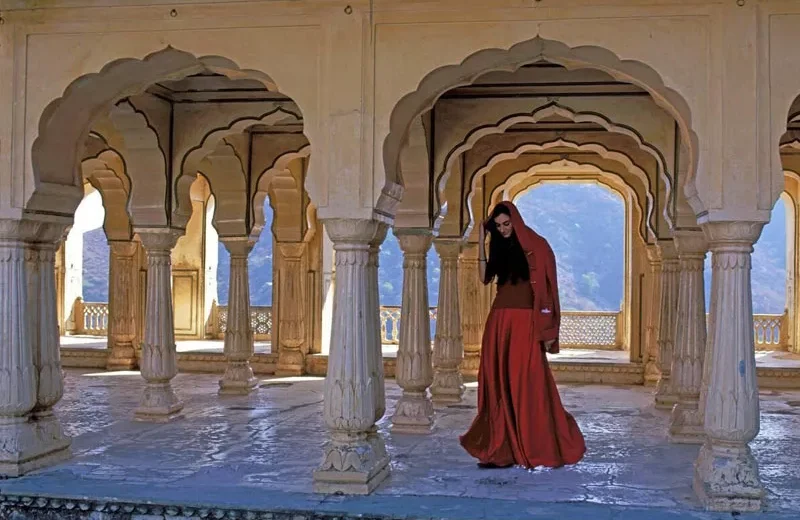
Delhi, Agra, and Jaipur create India’s classic Golden Triangle—a 720‑kilometre circuit of Mughal icons, Rajput forts, and buzzing bazaars that gives first‑time visitors a powerful introduction to the country in just a few days. A smart 5‑day Golden Triangle itinerary gives you enough time to see the big‑ticket sights, feel the energy of each city, and still rest between long travel days, which matters when you arrive jet‑lagged and slightly overwhelmed. Instead of racing through monuments, you move in a steady rhythm: two nights in Delhi to understand the capital, one night in Agra for the Taj Mahal and Agra Fort, and one or two nights in Jaipur for Amber Fort, City Palace, and markets. With a good driver, pre‑booked tickets, and realistic daily distances, this route balances comfort, cost, and culture much better than many rushed 3‑day packages.
Why 5 Days Works Best for First-Time India Visitors
Three‑day Golden Triangle tours exist, but they pack in so much driving that you barely remember which fort stood where. A five‑day plan still feels short and focused, yet it gives you breathing room to adjust to the climate, noise, and new routines.
You benefit from:
- Two partial days in Delhi rather than a single tick‑box city tour.
- A full day around the Taj Mahal and Agra Fort instead of a rushed same‑day dash.
- Time in Jaipur for both hilltop forts and walled‑city markets.
The classic 5‑day loop usually covers:
- Total driving time: roughly 12–15 hours by private car across all highway legs.
- Best season: October to March, when daytime temperatures often sit in a comfortable mid‑teens to mid‑20s Celsius and humidity stays low.
- Typical budget range: about ₹25,000–₹40,000 per person for mid‑range hotels, entries, meals, and shared car if two travellers split costs.
For many first‑time visitors, this timeframe hits the sweet spot: long enough to feel the story behind the monuments, short enough to plug into a wider India itinerary.
Day 1: Arrive in Delhi – From Airport to Iconic Landmarks

You land at Indira Gandhi International Airport, clear immigration, and meet your driver or pre‑booked taxi for the ride into central Delhi or a well‑located South Delhi base. Many first‑timers choose a mid‑range hotel near Connaught Place or in a quieter neighbourhood with good metro access, which keeps you connected without dropping you into the densest traffic straight away.
Morning: Settle In and Stretch Your Legs
After check‑in, drink plenty of water, take a shower, and step out for a light walk instead of trying to force a full city tour on a jet‑lagged brain. You can start with:
- India Gate and the ceremonial boulevard of Rajpath (now Kartavya Path), where you see colonial planning and modern national symbolism in one frame.
- Quick photo stops near the President’s House and Parliament buildings, which highlight Delhi’s role as the political capital.
These wide, airy avenues ease you into India gently before you tackle older, denser neighbourhoods.
Afternoon: Qutub Minar and Early Mughal Heritage
Head south to Qutub Minar, one of Delhi’s UNESCO World Heritage sites. You wander among a 12th‑century minaret, mosque ruins, and carved pillars that show the shift from earlier Hindu and Jain structures to Indo‑Islamic styles. The complex gives you your first taste of the deep history that underpins the Golden Triangle.
Evening: Easy Dinner and Early Night
Return towards Connaught Place or your chosen area for dinner. Many first‑timers appreciate a well‑known restaurant where hygiene and spice levels feel manageable. Keep day one light: one or two major sites, a gentle walk, and an early sleep. That way, your body catches up before the busier days ahead.
Day 2: Old Delhi – Bazaars, Forts, and Lanes
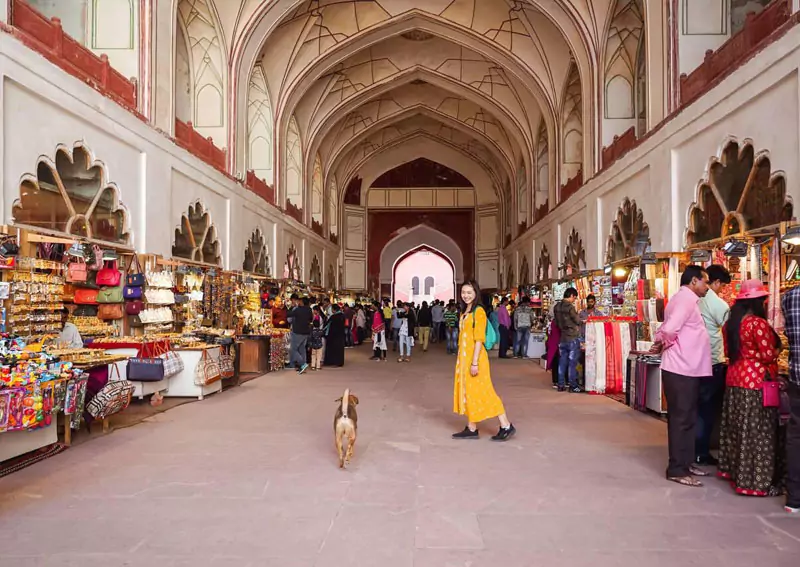
On day two, you go deeper into Delhi’s heart and see why the city served as a power centre for multiple empires. Old Delhi delivers sensory overload—smells of frying snacks, rows of textiles, honking rickshaws—but it also anchors the history that led to the Mughal flowering you see later in Agra.
Morning: Jama Masjid and Chandni Chowk
Start near Jama Masjid, one of India’s largest mosques, built by Shah Jahan. Climb a minaret if you feel comfortable, and you gain sweeping views across the old city, with domes, minarets, and tangled lanes stretching into the haze.
From there, you ride a cycle‑rickshaw or walk part of Chandni Chowk, the grand bazaar that once saw Mughal processions. Spices, bridal wear, silver, and street food all crowd the same lanes, and even a short visit gives you a feel for old trading routes and neighbourhood rhythms.
Afternoon: Red Fort and a Change of Pace
Continue to the Red Fort, another UNESCO site and a key symbol of Mughal authority and later Indian independence. Strolling through its palaces, halls of audience, and gardens teaches you how emperors staged power, ceremony, and everyday life. In the late afternoon, consider shifting to a quieter space like the Lotus Temple or Lodhi Garden to reset your senses after the crush of Old Delhi.
Evening: Stay Put in Delhi
Most first‑time travellers sleep a second night in Delhi rather than rushing immediately to Agra. This choice keeps your schedule realistic, lets you recover from a busy day on your feet, and avoids a late‑night highway drive when you still adjust to local driving patterns.
Day 3: Drive to Agra – Taj Mahal and Agra Fort

On day three, you leave Delhi for Agra, usually by private car via the Yamuna Expressway. Highways have improved significantly over the last decade, and the expressway cuts the journey to around three to four hours in normal traffic.
Morning: Delhi to Agra via Expressway
You depart after an early hotel breakfast to avoid peak city traffic. Once you reach the expressway, the drive becomes smoother, with service plazas for rest breaks, tea, and snacks. If you start around 7:00–8:00 AM, you typically arrive in Agra by late morning, leaving plenty of time for sightseeing.
Check into a hotel near the Taj Mahal or in a central, well‑reviewed area. Staying close to the monument makes sunrise or early‑morning visits much easier the next day.
Afternoon: Agra Fort and Mehtab Bagh
Many travellers reverse the usual pattern and save the Taj Mahal for sunrise, using the first afternoon in Agra to explore Agra Fort instead. The fort, another UNESCO site, tells the story of Akbar, Jahangir, and Shah Jahan through thick sandstone walls, marble pavilions, and views of the Yamuna River.
Later, you can cross the river to Mehtab Bagh for a classic rear‑view perspective of the Taj Mahal framed by gardens and water. This quieter spot helps you absorb the monument’s scale and symmetry without the crowds of the main complex.
Evening: Rest and Light Shopping
If you feel interested in local crafts, you can watch a marble inlay demonstration or visit a reputable handicraft store. Agra’s marble industry has both genuine artisans and aggressive touts, so choosing a place recommended by your hotel or driver usually works better than stepping into random shops. Finish with a simple dinner and early night to prepare for a pre‑dawn Taj visit.
Day 4: Taj Mahal at Sunrise, Fatehpur Sikri, and Drive to Jaipur
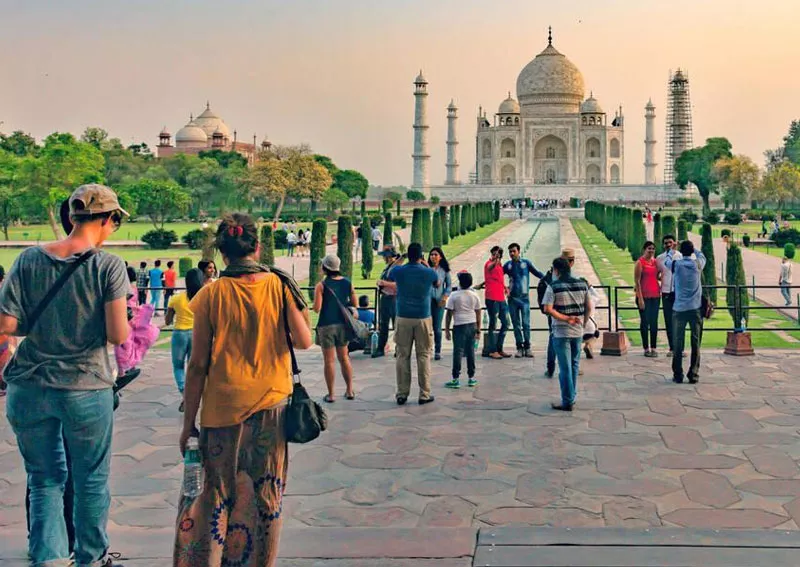
Day four packs some of the trip’s biggest moments: sunrise at the Taj Mahal, a stop at the abandoned Mughal capital of Fatehpur Sikri, and the transition into Rajasthan’s pink‑washed capital, Jaipur.
Early Morning: Sunrise at the Taj Mahal
You reach the Taj Mahal gates early, often around 30–60 minutes before official opening, to join the queue and clear security in time for first light. As the sun rises, the marble changes from soft grey to warm pink and then bright white, while reflections in the long water channels bring symmetry to life. A licensed guide can walk you through the love story of Shah Jahan and Mumtaz, the architectural tricks that keep the minarets resilient, and the inlay work that adds colour to the stone.
After you exit, return to your hotel for breakfast and check‑out.
Late Morning: Drive to Fatehpur Sikri
On the way to Jaipur, you detour to Fatehpur Sikri, Akbar’s short‑lived capital built in the 16th century. Here, you walk through courtyards, audience halls, palaces, and the imposing Buland Darwaza gate, all done in red sandstone with intricate carving. Guides often emphasise Akbar’s experiments in governance and religious tolerance, which gives context to later Mughal shifts.
Afternoon: Continue to Jaipur
After your visit, you resume the drive into Rajasthan. The highway passes fields, small towns, and roadside dhabas; a good driver will suggest clean places for lunch and tea. You usually reach Jaipur by mid‑afternoon or early evening, leaving enough time to check into a heritage‑style hotel or modern property, depending on your budget.
Evening: First Glimpse of the Pink City
If you still have energy, you can drive past Hawa Mahal to see the honeycomb facade glowing in evening light, or walk a short stretch of Johari Bazaar and Bapu Bazaar to get a feel for Jaipur’s markets. Dinner at a rooftop restaurant lets you watch traffic wind through the old city while you sample Rajasthani dishes like dal baati churma or laal maas.
Day 5: Jaipur Highlights and Return to Delhi
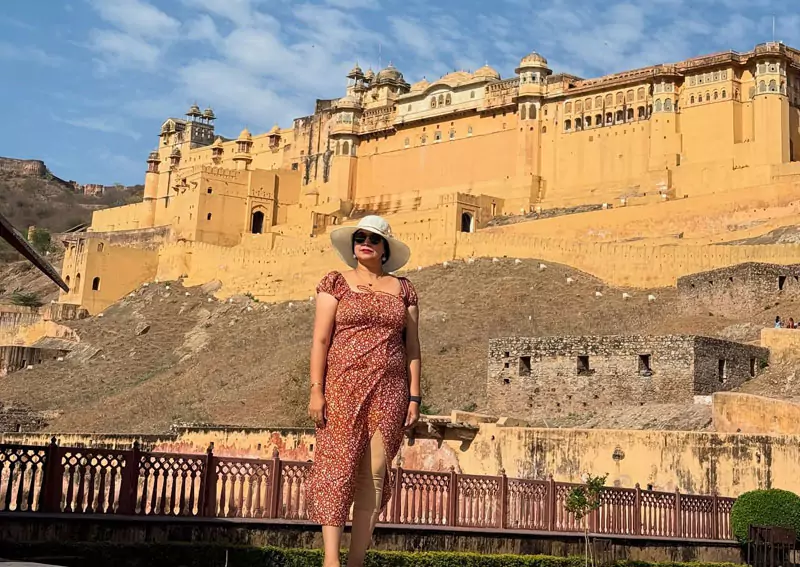
The final day focuses on Jaipur’s forts and city highlights before you loop back to Delhi. You can either sleep in Jaipur and drive back very early the next morning for a flight, or start back to Delhi in the late afternoon of day five itself, depending on your onward connections.
Morning: Amber Fort and Hilltop Views
Start early and head to Amber (Amer) Fort, set on a hill above Maota Lake. You can ride a jeep or drive up to the main entrance, then explore courtyards, painted gateways, mirrored halls, and ramparts with views across the valley. The site tells you how Rajput rulers balanced defence, aesthetics, and court life while negotiating alliances with the Mughals.
On your way back, pause near Jal Mahal for photos of the “water palace” sitting in the middle of Man Sagar Lake.
Late Morning: City Palace and Jantar Mantar
Return to the old city to visit City Palace, where museums display royal costumes, weapons, and textiles, and where courtyards show off a blend of Rajput and Mughal styles. Nearby, Jantar Mantar houses giant astronomical instruments that measured time, star positions, and planetary movements with surprising precision.
Afternoon: Hawa Mahal Viewpoint and Departure
Round off your Jaipur sightseeing with a café stop opposite Hawa Mahal, where you can photograph the latticed facade from an elevated angle. After lunch, your driver can start the journey back to Delhi along the highway, which usually takes around five to six hours depending on traffic. Many travellers aim to reach Delhi by late evening and sleep overnight before flying out the following day.
Practical Essentials for First-Time Golden Triangle Travellers
A strong itinerary needs good logistics behind it. For first‑time visitors, a private car with driver usually delivers the right mix of safety, flexibility, and value, especially when you share the cost between two or more people.
Transport
- Private car and driver for 5 days: Many mid‑range operators quote packages that include fuel, tolls, and driver allowances for Delhi–Agra–Fatehpur Sikri–Jaipur–Delhi. Costs vary, but you typically see rates that make sense when shared between two to four travellers.
- Trains: If you love rail travel, you can swap the Delhi–Agra leg for a fast morning train and meet your driver in Agra, then continue by car through to Jaipur and back to Delhi.
Tickets and Entry Fees
- Major sites like the Taj Mahal, Agra Fort, Amber Fort, and City Palace have separate entry fees for domestic and international visitors. Buying tickets online in advance or using combined passes where available saves time at ticket counters.
Accommodation
Examples of mid‑range options that many Golden Triangle travellers use include contemporary design hotels in Delhi, comfortable chain or boutique hotels in Agra near the Taj, and heritage havelis or modern properties in Jaipur’s quieter neighbourhoods. Nightly rates often land in the ₹4,000–₹8,000 range for a double room with breakfast, depending on season and exact category.
Food and Health
- Eat at busy, well‑reviewed restaurants rather than empty places.
- Stick to bottled or filtered water and avoid ice when you feel unsure about its source.
- Carry basic medicines for stomach upsets, motion sickness, and headaches.
Dress and Etiquette
- Cover shoulders and knees at religious and more conservative sites.
- Remove shoes before entering temples and some tomb complexes.
- Ask before photographing people, especially in markets and rural areas.
Budget Snapshot for a 5‑Day First-Time Golden Triangle Trip
Costs fluctuate by season, hotel level, and how many people share transport, but a realistic mid‑range estimate per person for two travellers might look like this:
- Private car and driver: a share of the total package that usually lands in the low‑thousands of rupees per person per day.
- Accommodation: four nights in solid mid‑range hotels, often making up the largest slice of your budget.
- Entry fees: Taj Mahal, forts, palaces, and museums together add up to a few thousand rupees per person.
- Food: simple restaurant meals and snacks cost less than many Western equivalents if you eat local.
- Extras: shopping, tips for drivers and guides, and optional activities like cultural shows or evening experiences.
Taken together, many first‑time travellers report spending somewhere in the ₹25,000–₹40,000 range per person for a comfortable 5‑day Golden Triangle experience excluding international flights, and they often say it felt like strong value for the density of sights and experiences they gained.
The right Golden Triangle itinerary does more than string together Delhi, Agra, and Jaipur; it builds a story that starts with sultanate power, peaks in Mughal elegance, and ends in Rajput resilience. If you tell me your month of travel, approximate budget, and whether you prefer a private car, trains, or a mix of both, I can turn this 5‑day outline into a personalised day‑by‑day plan with suggested hotels, ideal departure times, and trusted driver options tailored to your comfort level.