
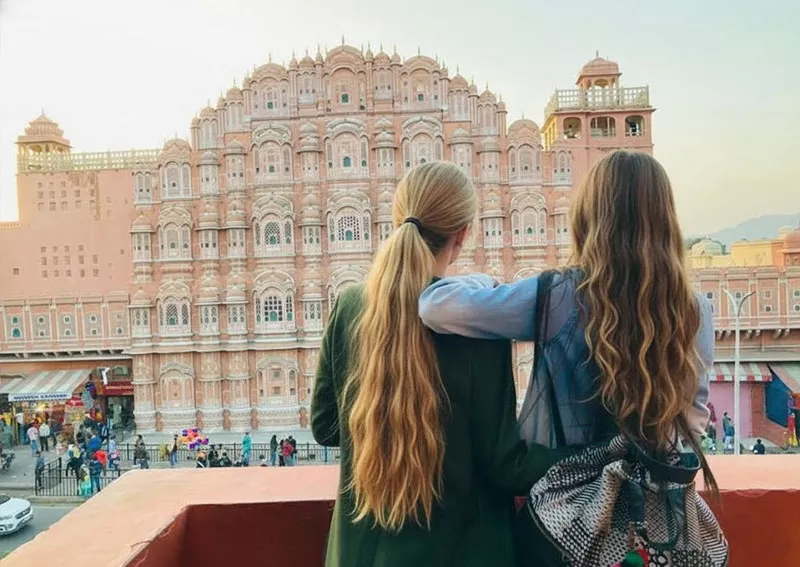
Women-Friendly Golden Triangle Travel Guide: Delhi, Agra and Jaipur With Confidence
The Golden Triangle can be an exciting first trip to India for women travelling solo, with a friend, as a mother and daughter, or in a small group. Delhi, Agra and Jaipur have busy airports, established hotels, major tourist sites and well-used road and rail links. That makes the route easier to organise than many less-visited parts of the country.
Easy to organise does not mean completely effortless. Delhi can feel intense after a long flight. Old-city markets are crowded. Some people stare. Drivers and shopkeepers may be persistent. A late arrival at the wrong station or a poorly chosen hotel can turn a manageable trip into a stressful one.
The answer is not to travel in fear. It is to remove avoidable uncertainty. Book traceable transport. Stay in a practical area. Keep your phone connected. Know what you will do when a situation feels wrong. Leave enough time in the schedule so you never have to accept an unsafe shortcut.
This guide does not promise that nothing uncomfortable can happen. No honest safety guide can make that promise anywhere. It shows how to reduce risk, recognise common pressure tactics and travel through Delhi, Agra and Jaipur with more control.
Quick Answer
Is the Golden Triangle Safe for Women Travellers?
Many women complete the route safely every year, including solo travellers. The most comfortable plan uses verified daytime transport, well-reviewed hotels with staffed reception, early sightseeing, reliable mobile data and a clear emergency plan.
Lowest-stress transport
Private Car With Driver
Good Practice
- Daytime road travel
- Shared live location
- Written itinerary
- Company support number
Best hotel strategy
Location Before Luxury
Confirm
- 24-hour reception
- Recent women’s reviews
- Vehicle access
- Working room locks
Emergency preparation
Save the Right Numbers
Also Save
- Hotel reception
- Tour operator
- Embassy or consulate
- Travel insurer
Start With the Truth
What Safety on the Golden Triangle Really Means
Safety is not a single yes-or-no label. A woman taking a pre-arranged airport transfer to a central hotel at 8:00 PM is in a different situation from someone arriving alone at an unfamiliar railway station after midnight with no working phone.
The Golden Triangle has advantages. Major monuments use security screening. Hotels and tour companies understand international visitors. The main road links are well travelled. Delhi Metro has a coach reserved for women, located at the first end of the train in the direction of travel. India also operates a national emergency number and a multilingual tourist helpline.
The route also has challenges. Crowds make pickpocketing easier. Some men may stare or ask for photographs. Auto-rickshaw and taxi negotiations can become tiring. Commission-based shops may apply pressure. Traffic means a location that looks nearby on a map can feel isolated at night.
Risk Usually Increases When Several Small Problems Combine
- Your flight is delayed and the hotel does not know
- Your phone has no data
- The driver’s identity was never confirmed
- The hotel lies down a poorly lit lane
- You are tired and agree to a different drop point
- A stranger offers help before you ask
- You feel uncomfortable but do not want to appear rude
Good planning breaks that chain. You confirm the driver. You message the hotel. You share the live location. You decline route changes. You enter the lobby before ending the ride.
Awareness Is Useful. Constant Fear Is Not.
Stay observant, but do not spend the whole trip treating every interaction as a threat. Most people you meet will be ordinary workers, families, students and travellers going about their day.
Preparation Creates Freedom
What Women Travellers Should Arrange Before the Trip
1. A Traceable First Transfer
Your first transfer matters more than almost any later taxi. Book it through the hotel, a recognised operator or a service that records the driver and vehicle.
Ask for the driver’s name, phone number, vehicle number and meeting location before departure. Send the flight number so the company can monitor delays.
2. Working Mobile Data
Arrange international roaming, an eSIM or a local SIM. Do not depend only on airport Wi-Fi after leaving the terminal.
Save offline maps for Delhi, Agra and Jaipur. Download hotel addresses in English and, when available, in Hindi.
3. Hotels With Useful Reception
Recent reviews matter more than a high score built over many years. Search recent comments for reception response, taxi handling, room locks, street approach and experiences of solo female guests.
4. A Shared Itinerary
Send flights, hotels, driver company and approximate daily route to someone you trust. You do not need to report every movement. A basic record helps if communication suddenly stops.
5. Travel Insurance
Choose a policy covering medical treatment, cancellation, theft and missed connections. Read the exclusions rather than assuming every incident qualifies.
6. Copies of Important Documents
- Passport identity page
- Indian visa or electronic authorisation
- Travel insurance certificate
- Flight confirmation
- Hotel reservations
- Emergency contacts
- Prescription details
Store copies securely online and keep one offline copy separate from the passport.
7. A Simple Communication Plan
Agree on a daily check-in with family or a friend. Avoid posting your hotel room, live location or exact solo itinerary publicly.
Control the Journey
Private Driver, Trains, Delhi Metro and App Taxis
| Transport | Best Use | Main Advantage | Main Caution |
|---|---|---|---|
| Private car and driver | Entire Golden Triangle route | One vehicle for luggage and hotels | Book through a traceable company |
| Fast intercity train | Delhi to Agra | Quick and budget-friendly | Station transfers and luggage handling |
| Delhi Metro | Daytime Delhi journeys | Predictable and inexpensive | Crowds during peak hours |
| App-based taxi | Short city journeys | Recorded trip and digital route | Pickup confusion and cancellations |
| Auto-rickshaw | Short daytime local rides | Useful in congested areas | Fare and route need agreement |
| Hotel taxi | Night transfer or unfamiliar route | Easy accountability | Often costs more |
Private Car With Driver
For a first visit, a private car offers the simplest logistics. You avoid repeated station arrivals, carry luggage in one vehicle and stop at Fatehpur Sikri between Agra and Jaipur.
Book through a company that provides an office contact, written itinerary and replacement support. Ask whether fuel, tolls, parking, state taxes and driver allowance are included.
Before entering the car, check the registration number against the message. Do not accept “the original driver sent his cousin” without confirmation from the company.
Share the live location during the first transfer. Sit where you feel comfortable. Keep passport, phone and money with you rather than in the boot.
Trains
Fast daytime trains work well between Delhi and Agra. AC Chair Car and Executive Chair Car usually suit this short route better than sleeper accommodation.
Book through an official railway channel or a reputable agent. Indian Railways lists a Ladies Quota and specific accommodations for women on certain services, but availability and application vary by train and class.
Arrive early, identify the platform and coach position, and avoid accepting luggage help without agreeing on a porter’s charge.
Keep your phone, passport and wallet in a small bag attached to you. A suitcase can remain in the visible luggage area, but valuables should not.
Delhi Metro
The Delhi Metro is useful for independent daytime travel. The first coach in the direction of movement is reserved for women. Platform signs show where it will stop.
Use the women’s coach when it makes you more comfortable, but remain aware of your bag in any coach. Peak hours can be extremely crowded.
DMRC operates a 24-hour helpline. Save the current number from its official website before travel because contact details can change.
App-Based Taxis
Check the number plate, driver photograph and vehicle model before entering. Ask the driver to state your name rather than offering it first.
Use in-app calling. Share trip status with a trusted person. Follow the route on your own map without confronting the driver over every minor navigation change.
When the route changes substantially, ask calmly why. If the explanation does not make sense, request a stop at a busy hotel, petrol station or public area.
Auto-Rickshaws
Autos can be convenient for short daytime rides. Agree to the meter or price before moving. Use a map to understand the general direction.
Do not let a driver redirect you to a “better” closed monument, hotel, shop or travel office.
Your First Hour in India
Arriving at Delhi Airport Safely

Before Leaving the Terminal
- Connect the phone to mobile data
- Message the hotel or driver
- Confirm the vehicle registration
- Use the toilet and refill or buy water
- Check that passport and wallet are secure
- Take a screenshot of the hotel address
Meeting the Driver
Official pickup zones can be busy. Do not leave with the first person displaying your name. Confirm the company, phone number and car details.
A legitimate driver will not object to verification.
When the Driver Is Missing
Stay inside or close to the staffed terminal area. Contact the operator and hotel. Do not accept an unsolicited offer from someone claiming the driver asked him to help.
Late-Night Arrival
Use a pre-arranged transfer or official airport taxi. Aerocity is a practical first-night area when the flight arrives very late and the next day’s route allows a hotel change.
Do not save a small amount of money by booking an unknown property in a difficult lane after midnight.
Hotel Arrival
Ask the driver to wait until reception confirms the booking and you are inside. Check the room lock, windows and connecting door. Call reception immediately when something does not work.
Location Before Chandeliers
How to Choose a Comfortable Hotel
What to Look For
- Recent positive reviews from women
- 24-hour staffed reception
- Direct vehicle access or clear arrival instructions
- Strong room and secondary locks
- In-room safe or secure reception storage
- Well-lit entrance
- Reliable breakfast and drinking water
- Clear visitor policy
- Responsive management
Delhi
Central Delhi and South-Central Delhi provide a useful balance. Connaught Place has restaurants and transport, but exact street quality varies. Lodhi Road and nearby areas feel calmer. Aerocity is strongest for airport access.
Paharganj contains both good and poor options. A low room rate does not compensate for a badly lit approach, constant touting or weak reception.
Agra
Taj East Gate and established Taj Ganj or Fatehabad Road hotels reduce the early-morning transfer. Ask whether the hotel car can reach the entrance directly.
Jaipur
C-Scheme, Bani Park and well-chosen central areas suit a short stay. A resort near Amer may feel secure and peaceful, but it creates longer journeys to central restaurants and markets.
At Check-In
Avoid saying the room number aloud in a crowded lobby. Ask staff to write it down. Do not leave the passport at reception longer than required for registration.
Inside the Room
- Test the door lock
- Check any connecting door
- Know the emergency exit
- Keep the room key away from the room number
- Use the safe for spare cards and passport when appropriate
- Do not open the door to unexpected visitors
Call reception to verify anyone claiming to be housekeeping or maintenance when you did not request service.
See the Best Places to Stay in India’s Golden Triangle for detailed area and hotel guidance.
City Guide
Women’s Safety Guide to Delhi
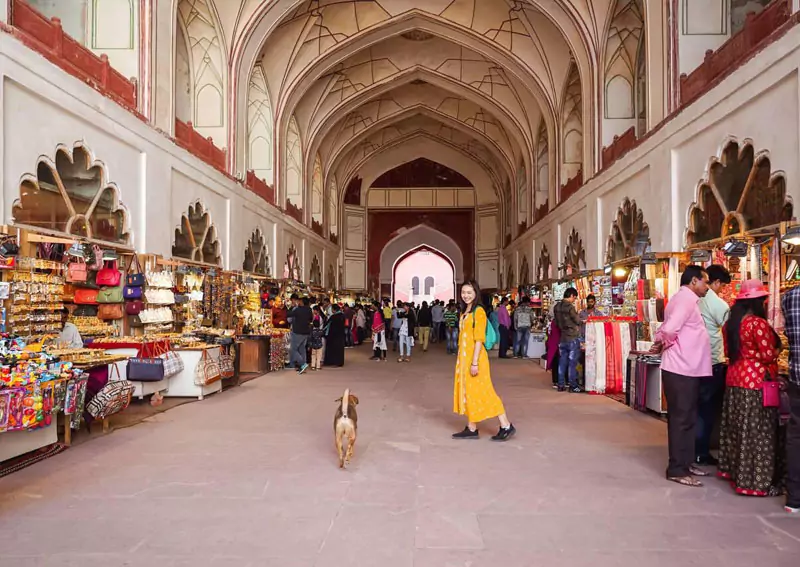
Delhi creates the strongest first impression. It is huge, fast and socially varied. One neighbourhood can feel polished and quiet while another feels chaotic only a few kilometres away.
Old Delhi
Visit in the morning with a guide or a clear route. Carry a small zipped bag. Your private car cannot follow through every lane, so agree on the pickup point before separating from the driver.
Jama Masjid and Chandni Chowk attract families, worshippers, shoppers and tourists. Crowds are normal. Move with purpose and step aside before checking maps.
Do not follow anyone to a rooftop, private shop or “secret view” unless it is part of a verified tour.
Connaught Place
The inner and outer circles contain shops, restaurants and transport. The area remains active into the evening, but quieter blocks and underground passages deserve normal caution.
Ignore people who claim the official tourism office, railway office or attraction is closed and offer to take you elsewhere.
India Gate and Central Government District
These are popular public areas. Security restrictions and road closures can change. Stay within lit, active zones after dark and use a pre-arranged pickup point.
South Delhi Monuments
Qutub Minar, Humayun’s Tomb and Lodhi Garden are established visitor sites. Arrive during opening hours and avoid lingering alone in quiet corners near closing time.
Delhi Metro Tips
- Use the women’s coach when preferred
- Avoid peak time with large luggage
- Keep the phone out of easy reach near doors
- Stand away from the platform edge
- Know the exit gate number before arriving
- Ask uniformed staff for help
Delhi at Night
A hotel restaurant, established dining district or pre-booked cultural event is easier than unplanned bar hopping. Use a verified car both ways.
Do not walk alone from a nightlife venue to save a short taxi fare.
City Guide
Women’s Safety Guide to Agra
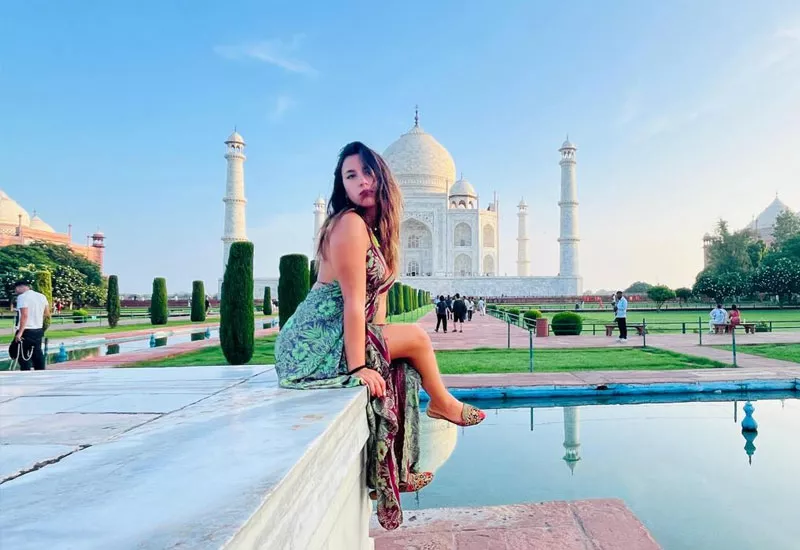
Agra’s tourist experience is concentrated around the Taj Mahal, Agra Fort and the main hotel corridors. The city can feel more persistent than Delhi because many businesses compete for a shorter visitor stay.
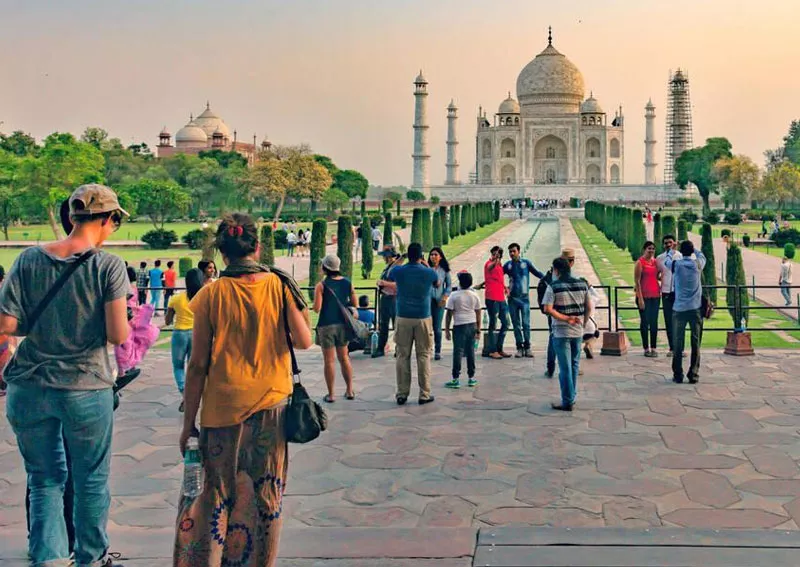
Taj Mahal Morning
Leave the hotel with a verified guide or driver. Carry only permitted essentials. The Taj Mahal normally opens 30 minutes before sunrise and is closed to general sightseeing on Fridays.
Security lines may separate men and women. Keep your phone and bag under control while moving through screening.
People may request photographs with you. Say no when you do not want to participate. One accepted photograph can quickly attract more requests.
Guides
Book in advance or use an authorised guide. Agree on the fee, duration and whether shopping is included.
A guide who insists on a shop visit after you decline is not respecting the agreed service.
Taj Ganj and East Gate Area
These areas contain hotels, cafes and shops. Walk during active hours and use a car after dark when the street or route is unfamiliar.
Agra Fort
The monument is well visited and screened. Stay aware in crowded viewpoints and passages. Do not place a phone or camera unattended while taking group photographs.
Mehtab Bagh
Visit during official hours and leave before the area empties. Arrange the return car before sunset rather than searching for transport afterward.
Shopping Pressure
Marble workshops may offer demonstrations followed by strong sales pressure. You are not required to buy. Do not provide a home address, passport copy or large card deposit without understanding the seller and shipping terms.
City Guide
Women’s Safety Guide to Jaipur
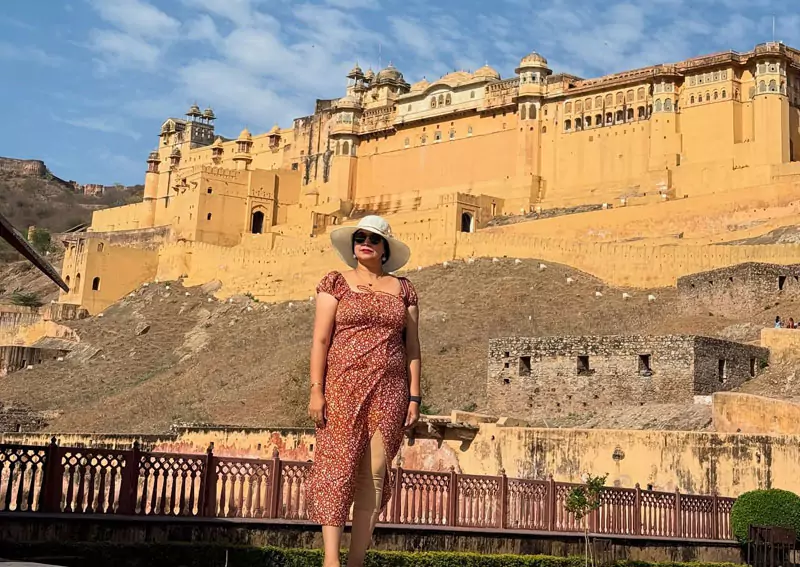
Jaipur often feels more relaxed than Delhi, but its markets and tourist corridors contain the same mix of genuine hospitality, sales pressure and traffic.
Amber Fort
Visit shortly after opening. Use a driver, official transfer or planned jeep. Travellers concerned about animal welfare can avoid elephant rides.
Agree on the return meeting point because network coverage and vehicle access can vary around the fort approach.
Hawa Mahal and the Old City
The bazaars around Hawa Mahal are busy and visually attractive. Keep bags closed and step inside a shop or cafe before checking directions.
Shopkeepers may invite you to rooftop viewpoints. Use known cafes or recommendations rather than following an unknown person through a building.
City Palace and Jantar Mantar
These established sites sit close together and work well in daytime. Ticket categories at City Palace differ, so decide what you want before accepting an upgrade.
Bazaars
Johari Bazaar and Bapu Bazaar are useful for jewellery, textiles, shoes and souvenirs. Ask the price, compare and walk away when the conversation becomes uncomfortable.
Do not allow a stranger to take you to a “government-approved” jewellery wholesaler simply because the market is allegedly closed.
Jaipur Evenings
Rooftop restaurants and hotel cultural programmes are practical choices. Return by a pre-booked car or app taxi.
Nahargarh sunset requires a hill road. Arrange the return transport before going up and avoid remaining after most visitors leave.
Comfortable and Culturally Practical
What Women Should Wear on the Golden Triangle
You do not need a sari, salwar suit or any costume that feels unnatural. Wear clothes that allow you to walk, sit in a car, enter religious spaces and manage heat.
Useful Everyday Clothing
- Loose trousers
- Long or midi skirts
- Breathable T-shirts or shirts
- Dresses covering shoulders and knees
- Light scarf
- Comfortable walking shoes
- Sandals with secure straps
Why Modest Clothing Helps
It reduces attention in conservative settings, protects against sun and makes entry to religious sites easier. It does not guarantee safety and should never be used to blame a woman for someone else’s behaviour.
Summer
Choose loose cotton or moisture-wicking fabrics. Avoid dark, heavy clothes and plan for sweat. Carry sunscreen and a hat.
Winter
Delhi, Agra and Jaipur mornings can feel surprisingly cold. The Taj Mahal before sunrise may require a sweater, light jacket and scarf.
Religious Sites
Cover shoulders and knees. Remove shoes where instructed. A scarf is useful for head covering when requested.
Swimming Pools and Luxury Hotels
Normal swimwear is common at established hotels. Use a cover-up when walking through public hotel areas.
Confidence Without Confrontation
Handling Staring, Photograph Requests and Persistent Conversation
Some women experience staring, especially when their appearance is unusual locally. Most staring does not lead to direct harassment, but it can feel intrusive.
Body Language
- Walk with a clear direction
- Keep your head up
- Do not stop in the middle of a crowd to appear lost
- Move into a shop, hotel or cafe to check maps
- Use a firm voice when declining
Photograph Requests
You may accept or refuse. You do not owe anyone a photograph. Use a short answer: “No photo, thank you.” Keep moving.
Be especially careful when one request begins attracting a group.
Questions About Marriage and Family
Strangers may ask whether you are married, where your husband is or why you travel alone. These questions can be social curiosity rather than danger.
You may answer vaguely, change the subject or invent a nearby friend when that feels safer. Personal honesty is not required in a random interaction.
Persistent Sellers
Do not enter a long explanation. A clear “No, thank you” followed by disengagement works better.
When Friendliness Feels Wrong
Move toward families, women, security staff or a staffed business. Call someone while walking. Do not let concern about appearing impolite override your instincts.
Act Early
What to Do if Someone Harasses or Follows You
In a Crowded Public Place
- Move toward uniformed security or police
- Stand beside a family or group of women
- Say clearly, “Stop following me”
- Enter a hotel, pharmacy or established shop
- Call 112 when you feel in immediate danger
In a Taxi
Ask to stop at a busy public place. Use the app’s emergency or support feature. Call the hotel or operator on speaker.
Do not jump from a moving vehicle. Focus on reaching a staffed location.
At a Hotel
Call reception, request the duty manager and document what happened. Ask to change rooms when someone has learned your room number.
At a Monument
Approach security staff, ticket staff or an authorised guide. Major attractions have visible security systems and controlled entry.
Documenting an Incident
When safe, record the vehicle number, location, time, screenshots and description. Do not put yourself at greater risk to film someone.
Reporting
Use 112 for immediate emergencies. The Government of India’s tourist helpline is 1363 or 1800-11-1363 for multilingual tourist support.
Contact your embassy or consulate for serious incidents involving loss of passport, arrest, hospitalisation or crime.
Pressure Is More Common Than Violence
Common Golden Triangle Tourist Scams
“Your Hotel Is Closed”
A driver claims the road, hotel or neighbourhood is closed and suggests another property. Call your hotel directly. Do not agree to a substitute based only on the driver’s statement.
Fake Tourism Office
Someone near Connaught Place or a station directs you to an unofficial travel office claiming to represent the government.
Do not alter bookings or buy an expensive replacement package without independent verification.
Commission Shopping
A guide or driver says a craft centre is educational or required. It is usually a sales visit. Decline when you are not interested.
Fake Monument Ticket Website
Unknown sites may imitate official booking pages. Start from the official monument or government website rather than clicking the first advertisement.
Overpriced Auto or Taxi
Agree on the fare, use the meter or book through an app. Keep small notes so you do not need change from a large amount.
Friendship and Investment Conversations
Be cautious when a new acquaintance quickly moves the conversation toward jewellery export, investment, shipping or a business opportunity.
Closed Attraction
A stranger says the monument opens later and offers a market tour. Check official hours yourself.
Forced Donation
At religious sites, give only when you choose. Ask for the amount before accepting a bracelet, blessing, flower or ritual item.
Your Phone Is Part of the Safety Plan
SIM Cards, Maps and Digital Privacy
Connectivity
Use roaming, an eSIM or a registered local SIM. Keep enough battery for maps and calls throughout the day.
Useful Phone Preparation
- Download offline maps
- Save hotel pins
- Store emergency contacts
- Enable phone tracking
- Set a strong screen lock
- Back up passport copies securely
- Carry a power bank
Sharing Location
Share live location privately during long transfers or late arrivals. Do not post your real-time hotel or solo plans on a public social account.
Public Wi-Fi
Avoid banking or sensitive account access on unknown networks. Use mobile data or a trusted connection.
Photographs and Hotel Information
Remove visible room numbers, boarding passes and booking references before posting photographs.
Dating Apps
Meet only in a busy public venue, arrange your own transport, tell someone where you are and do not disclose the room number.
Keep Payment Simple
Cash, Cards, ATMs and Shopping
Cash
Carry enough for tips, small food purchases and autos, but do not keep all cash in one place.
Cards
Use cards at hotels, established restaurants and reputable shops. Keep the card in sight where possible and enable transaction notifications.
UPI
UPI is widely used in India, but access for foreign visitors depends on current provider and eligibility arrangements. Do not assume your normal foreign banking app will work.
ATMs
Use machines attached to banks, airports or established malls. Avoid help from strangers. Cover the keypad and inspect the card slot.
Jewellery and High-Value Shopping
- Research the seller
- Ask for a detailed invoice
- Understand stone certification
- Check return and shipping terms
- Do not feel pressured by tea or hospitality
- Avoid large deposits through unfamiliar links
Enjoy the Food Without Losing the Trip
Food, Water, Medication and Health
Food Safety
- Choose busy restaurants
- Eat food cooked fresh and served hot
- Use sealed bottled or properly filtered water
- Avoid raw salad when the water source is unclear
- Peel fruit yourself
- Wash or sanitise hands before eating
Street Food
Street food is not automatically unsafe, and restaurants are not automatically safe. Look for high turnover, clean handling and food cooked in front of you.
Start slowly rather than eating several rich snacks on the first day.
Medication
Carry personal medicines in original packaging. Bring enough for the full trip plus a small delay.
Consult a qualified medical professional before travel for vaccination and personal health advice.
Menstrual Health
Sanitary pads are widely available in cities. Your preferred tampon, menstrual cup product or specific brand may be harder to find, so pack enough.
Carry disposal bags and hand sanitiser for monument toilets.
Heat
April to June can be extremely hot. Sightsee early, use sun protection and take indoor breaks.
Air Pollution
Delhi’s air can be poor, particularly in late autumn and winter. Travellers with asthma or respiratory conditions should discuss preparation with a doctor and monitor local air-quality information.
Travel Sickness
Agra-to-Jaipur and hill roads around Jaipur may bother sensitive travellers. Sit toward the front, eat lightly and carry suitable medication.
Plan the Return Before Going Out
Evenings, Restaurants and Nightlife
Women do not need to remain in the hotel after sunset. The important part is knowing the venue, return transport and neighbourhood.
Safer Evening Choices
- Hotel restaurant or rooftop
- Well-reviewed restaurant in an active district
- Ticketed cultural performance
- Group food tour
- Established bar with hotel-arranged return
Before Leaving
Charge the phone, save the venue and arrange the return. Avoid relying on finding transport in an isolated area after closing.
Alcohol
Watch your drink, avoid becoming heavily intoxicated in an unfamiliar setting and do not accept an opened drink from a stranger.
Walking Back
A ten-minute daytime walk can feel very different after shops close. Take a verified car when the route is quiet or unfamiliar.
Hotel Visitors
Follow hotel visitor rules and meet new acquaintances in public hotel areas rather than immediately sharing the room number.
Choose the Style That Fits You
Solo Travel Versus Travelling With Friends
| Factor | Solo Travel | With a Friend or Group |
|---|---|---|
| Freedom | Complete control of timing | Requires compromise |
| Transport cost | Higher per person | Shared |
| Attention | May feel more noticeable | Often easier to manage |
| Decision-making | Fast and personal | Shared responsibility |
| Evenings | Need more return planning | May feel more relaxed |
| Confidence gain | Strong independence | Shared experience |
Solo Travel Works Best When
- You have travelled independently before
- You use verified transport
- You are comfortable saying no
- You maintain phone connectivity
- You do not overload the schedule
Travelling With Friends Works Best When
- You agree on budget and hotel level
- You discuss shopping expectations
- You share emergency information
- No one wanders off without communication
- You respect different energy levels
Joining Day Tours
A solo traveller can use a private driver for road days and join a small walking or food tour in each city. This creates company without giving up the whole itinerary.
Personal Safety and Privacy
LGBTQ+ Women Travellers
Same-sex relationships are legal in India, but social attitudes vary by family, neighbourhood and city. Delhi, Agra and Jaipur tourism businesses regularly host diverse international visitors, though public openness may feel different from your home country.
Hotels generally focus on standard identification and booking requirements. Public displays of affection attract attention for many couples, regardless of orientation.
Use discretion according to the setting, choose established hotels and meet new contacts in public places. Do not share sensitive personal information with strangers who become intrusive.
Trans travellers may encounter additional questions during identity checks when documents and appearance differ. Carry consistent official documents and allow additional time at airports or controlled entrances.
Different Ages Need Different Plans
Mothers, Daughters and Senior Women Travellers
Mother-and-Daughter Trips
The Golden Triangle works well for a shared trip because the route offers history, food, shopping and comfortable hotel choices. Discuss shopping budgets and walking ability before travel.
Travelling With Teenagers
Give teenagers some control over restaurants, photography or shopping. Review phone and separation rules before entering crowded markets.
Write the hotel address and driver number on paper in case a phone battery fails.
Senior Women
Choose a spacious vehicle, hotels with lifts and rooms near reception. Ask for walk-in showers or grab rails when needed.
Reduce optional monuments. Early starts, heat and repeated hotel changes can be more tiring than expected.
Medication and Medical Needs
Keep medicine in hand luggage. Carry a list of conditions, allergies and medication names. Identify a suitable hospital or clinic in each city before travel when a condition requires close management.
Ask Specific Questions
Accessibility and Disabled Women Travellers
The main route is possible for many travellers with disabilities, but access is inconsistent. Historic monuments contain uneven stone, ramps, stairs and long walking approaches.
Before Booking
- Request photographs of accessible rooms
- Confirm lift dimensions
- Ask about step-free vehicle access
- Check wheelchair availability at monuments
- Explain assistance needs to the operator
- Allow additional security time
Taj Mahal
Electric vehicles cover designated approach sections. Internal movement still involves crowds and surfaces that may require assistance.
Amber Fort
Vehicle or jeep access reduces the hill climb, but complete step-free access is not available throughout the complex.
Invisible Disabilities
Carry medical information and explain needs clearly. A sunflower lanyard or similar symbol may not be recognised everywhere.
Take Photos Without Giving Away Control
Photography, Social Media and Personal Privacy
Getting Your Own Photograph
Ask a guide, uniformed staff member, family or another woman traveller. Keep the phone locked to the camera when the device supports it.
Photograph Requests From Strangers
Decline when you feel uncomfortable. Do not allow someone to place an arm around you for a photograph.
Posting Online
Post after leaving a location when travelling alone. Avoid visible hotel keys, boarding passes and exact room views that identify your room.
Photographing Local People
Ask permission before close portraits. Avoid photographing women, children or religious activity in a way that feels intrusive.
Drones and Tripods
Drones face strong restrictions around major monuments and security-sensitive areas. Do not bring one without understanding national and local rules.
Pack for Independence
Women’s Golden Triangle Packing Checklist
Documents
- Passport and visa
- Insurance details
- Hotel confirmations
- Emergency contacts
Personal Safety
- Door wedge where lawful
- Small torch
- Whistle
- Crossbody bag
Health
- Medication
- Sanitiser
- Menstrual products
- Oral rehydration salts
Technology
- Unlocked phone
- Power bank
- Universal adapter
- Offline maps
Clothing
- Loose trousers
- Shoulder-covering tops
- Light scarf
- Walking shoes
Day Bag
- Water
- Tissues
- Small cash
- Sunscreen
Personal Safety Devices
Rules for sprays, alarms and other devices vary, especially on flights and at security-controlled monuments. Check airline and local rules before packing anything restricted.
A loud personal alarm or whistle may be simpler to carry, but no device replaces leaving early and seeking help.
Know the Steps Before You Need Them
Emergency Numbers and Response Plan
| Contact | Number or Action | Use |
|---|---|---|
| National emergency response | 112 | Immediate police, fire or medical emergency |
| Tourist helpline | 1363 or 1800-11-1363 | Multilingual support for tourists |
| Delhi Metro | Check current DMRC helpline before travel | Metro security, lost items and assistance |
| Hotel | Save reception and duty manager | Transport, local assistance and room issue |
| Tour company | Save office and after-hours contact | Driver, vehicle and itinerary problems |
| Embassy or consulate | Save country-specific contact | Passport loss and serious incidents |
| Travel insurer | Policy assistance number | Medical and covered travel emergencies |
The 112 India System
India’s official emergency response system allows users to dial 112. The official service also describes smartphone panic activation and a 112 India mobile app with features intended for women and children.
Set up any emergency application before the trip rather than during a crisis.
When Your Passport Is Lost
- Report the loss to local police
- Contact your embassy or consulate
- Use your digital passport copy
- Inform the airline when travel is near
- Contact the insurer
Medical Emergency
Call 112 or ask the hotel to arrange emergency transport. Inform the insurer as soon as practical. Do not delay urgent treatment while searching for the cheapest option.
When You Feel Unsafe but It Is Not Yet an Emergency
Move to a staffed public place, call the hotel or operator, and change the plan. You do not need proof of danger before choosing to leave.
A Calmer Route
Safer Five-Day Golden Triangle Itinerary for Women
| Day | Plan | Safety Focus |
|---|---|---|
| Day 1 | Airport pickup, hotel, India Gate or Humayun’s Tomb | Pre-arranged transfer and early night |
| Day 2 | Guided Old Delhi, lunch, Qutub Minar | Guide in crowded lanes and daylight sightseeing |
| Day 3 | Daytime drive to Agra, Agra Fort and Mehtab Bagh | Verified driver and hotel near Taj Mahal |
| Day 4 | Taj Mahal, Fatehpur Sikri and Jaipur | Early start and planned roadside stops |
| Day 5 | Amber Fort, City Palace and return or Jaipur departure | Avoid tight same-day Delhi flight |
Why This Route Works
Intercity driving happens in daylight. Old Delhi uses a guide. Agra accommodation reduces the pre-sunrise transfer. Jaipur sightseeing begins early, and the route does not depend on an overnight highway journey.
See the complete 5-Day Golden Triangle Itinerary for First-Time Visitors.
Small Decisions Matter
Common Mistakes Women Travellers Should Avoid
- Booking the cheapest unknown airport transfer: accountability matters most on the first night.
- Arriving without mobile data: maps and communication are part of the safety plan.
- Choosing a remote hotel based only on photographs: check the actual street and vehicle access.
- Travelling between cities late at night: use daylight whenever possible.
- Sharing the room number publicly: keep it private.
- Posting the live solo itinerary: share privately with trusted people instead.
- Accepting an unverified replacement driver: confirm changes through the company.
- Allowing politeness to override discomfort: leave early.
- Carrying all money and cards together: separate backups.
- Following strangers to unofficial tourism offices: verify independently.
- Assuming modest clothing prevents harassment: it may reduce attention but never shifts responsibility from the offender.
- Drinking too much in an unfamiliar setting: preserve your ability to make decisions.
- Letting someone handle an unlocked phone: use camera-only access or ask trusted people.
- Booking a same-night international flight after Jaipur: traffic can destroy the plan.
- Ignoring intuition because nothing “serious” has happened: discomfort is enough reason to change location.
Related Planning Guides
Build a Comfortable and Well-Organised Trip
Planning a Solo or Women-Only India Trip?
Request a Women-Friendly Golden Triangle Itinerary
Share your dates, arrival time, group size, hotel budget and preferred travel pace. The route can be planned around verified transport, practical hotel locations and daytime intercity travel.
- Verified private driver options
- Central and well-reviewed hotels
- Local guides for Old Delhi and major monuments
- Clear airport pickup and support arrangements
Common Questions
Frequently Asked Questions for Women Travelling the Golden Triangle
Open a question below for a direct answer.
Is the Golden Triangle safe for solo women?
Many solo women travel the route safely. Use verified transport, well-reviewed hotels, daylight intercity travel and reliable phone connectivity.
Is Delhi safe for a woman travelling alone?
Delhi requires stronger planning than Agra or Jaipur because of its size and intensity. Stay in a practical area, use recorded transport and avoid isolated late-night travel.
What is India’s national emergency number?
Dial 112 for an immediate police, fire or medical emergency.
What is India’s tourist helpline?
The multilingual tourist helpline is available on short code 1363 or toll-free number 1800-11-1363.
Is a private driver safer than trains?
A verified private driver usually creates simpler logistics. Daytime trains can also be safe and practical when station transfers are planned.
Does Delhi Metro have a women’s coach?
Yes. The first coach in the direction of travel is reserved for women, with platform signage showing its position.
Can women use app taxis in Delhi?
Yes. Check the vehicle and driver, share the trip, follow the route and use the app’s support features.
Should I avoid railway stations?
No. Arrive early, use daytime trains, keep valuables attached to you and arrange transport at both ends.
Where should a solo woman stay in Delhi?
Central Delhi, Lodhi Road and established South-Central areas are useful. Aerocity works well for late arrivals and early flights.
Where should a woman stay in Agra?
Choose a well-reviewed hotel near the Taj East Gate, Taj Ganj or established Fatehabad Road corridor.
Where should a woman stay in Jaipur?
C-Scheme, Bani Park and suitable central areas offer practical access. Resorts are better when hotel time is part of the plan.
What should women wear in India?
Loose trousers, longer skirts, shoulder-covering tops and comfortable shoes work well. Carry a scarf for religious sites.
Do women need to wear Indian clothes?
No. Wear comfortable modest clothing that suits the weather and religious-site requirements.
How should I respond to staring?
Keep moving with confident body language. Move toward staff or families when attention becomes persistent.
Can I refuse photograph requests?
Yes. Say “No photo, thank you” and continue walking.
Is Old Delhi safe for solo women?
Visit in daylight with a guide or a clear route. Crowds and narrow lanes require good bag and pickup planning.
Can a woman visit the Taj Mahal alone?
Yes. Use a nearby hotel, arrive during official hours and book an authorised guide when you want assistance.
Is Jaipur safer than Delhi?
Many travellers find Jaipur less intense, but normal precautions still apply in markets, taxis and quiet areas after dark.
Can women go out at night?
Yes. Choose established venues and arrange verified return transport before leaving the hotel.
Is street food safe?
Choose busy vendors, freshly cooked hot food and safe drinking water. Start slowly if your stomach is not used to local food.
Should I carry cash?
Carry modest cash for small purchases while keeping backup money and cards separate.
Can I buy a SIM card in India?
Yes, subject to current identification and activation requirements. An eSIM or roaming plan may be easier for immediate arrival connectivity.
Should I share my live location?
Share it privately during transfers or late arrivals. Avoid publishing your real-time solo location publicly.
Are women-only group tours available?
Yes. Availability varies by operator and date. Private women-only groups can also arrange their own car, hotels and guides.
Is the route suitable for mother-and-daughter travel?
Yes. Use a comfortable vehicle, central hotels and a pace suited to both travellers.
Can senior women travel the Golden Triangle?
Yes, with accessible hotels, a spacious vehicle, early starts and fewer optional monuments.
Should I carry pepper spray?
Check airline, security and local rules before carrying any restricted device. A personal alarm may be simpler, but no device replaces safe planning.
What should I do if my driver changes?
Confirm the new driver and vehicle through the company before entering the car.
What should I do if someone follows me?
Move toward security, hotel staff, families or a busy business. Call 112 when you feel in immediate danger.
Is five days enough for a women-friendly Golden Triangle trip?
Yes, with two Delhi nights, one Agra night and one Jaipur night. Seven days is easier for a slower pace.
Final Recommendation
Stay Aware Without Letting Anxiety Run the Trip
The Golden Triangle is not a place where women need to hide inside hotels. It is a route where preparation improves freedom.
A verified driver means you can stop when needed. A central hotel means you can return without a long isolated transfer. A working phone means you can check the route and contact help. A firm no means a conversation ends when you choose.
Delhi may feel overwhelming on the first day. Agra may feel commercial around the Taj Mahal. Jaipur’s markets may require patience. None of those experiences has to define the journey.
Give yourself enough time. Use people and companies that can be held accountable. Trust your instincts before a problem becomes serious.
The reward is a trip filled with far more than safety calculations: the quiet before sunrise at the Taj Mahal, the sound of Old Delhi waking up, the mirrored rooms of Amber Fort and the confidence that comes from navigating a new place on your own terms.